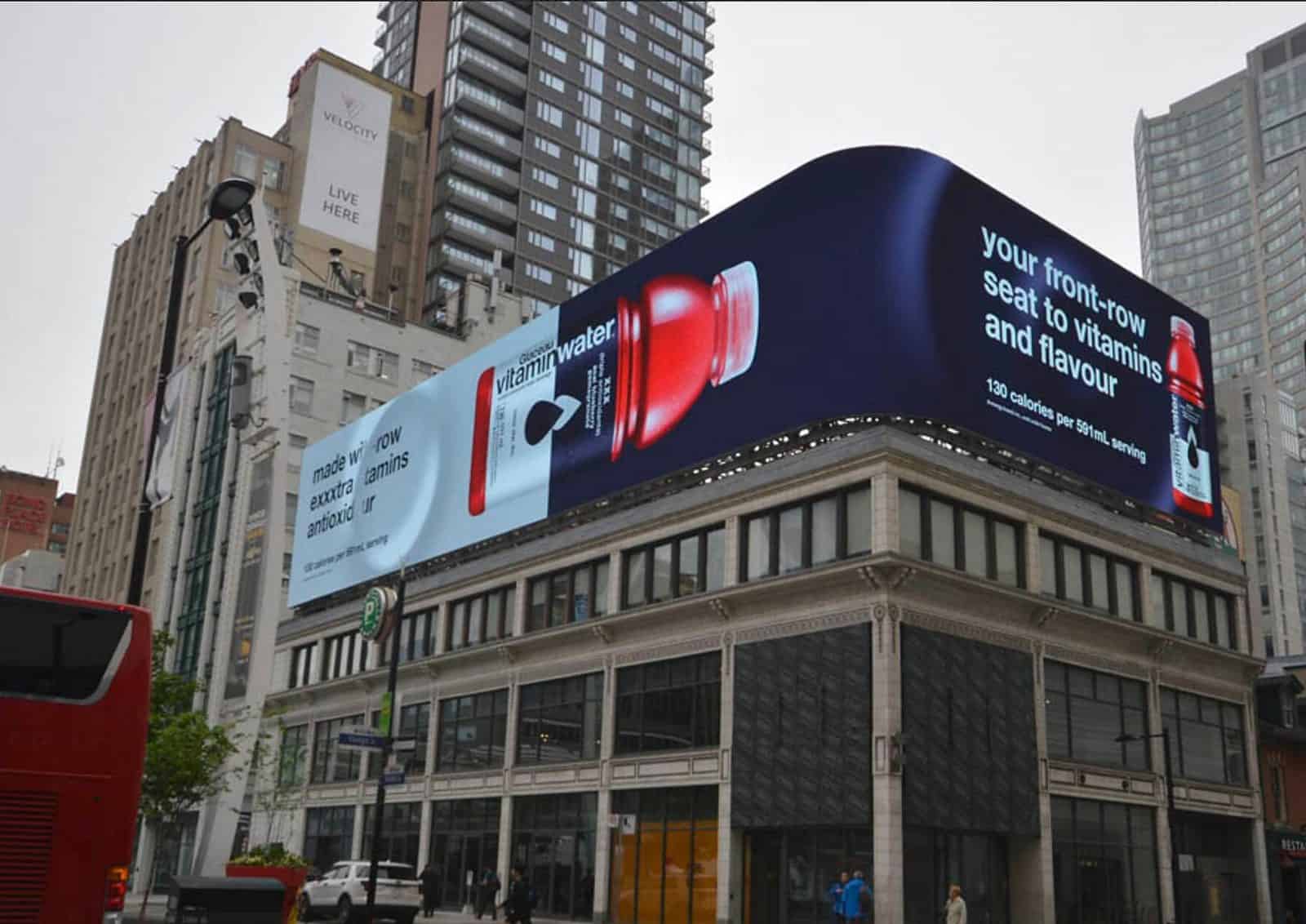
DHB Series at a glance: Dynamo High Bright, a 10,000-nit high brightness LED screen for permanent outdoor installation. Pixel pitch 6.67 mm, 8 mm or 10 mm. 960 × 960 × 75 mm aluminium cabinets at 23 kg, front-serviced, IP67 front and IP68 rear, 7,680 Hz refresh. Built fixed, curved, cornered or foot-mounted, and installed nationwide by Dynamo’s own engineers.
What is a high brightness LED screen?
A high brightness LED screen, also called a high bright LED display, is an outdoor LED display with enough light output to stay legible in direct sunlight. Standard outdoor LED screens are rated at around 5,000 to 6,500 nits. High brightness models such as the DHB Series are rated at 10,000 nits, for south-facing, roadside and high-level sites.
The DHB Series is Dynamo’s high brightness LED screen for permanent installations. It suits roadside signs, building facades, car park and retail park entrances and stadium exteriors. Every screen comes with a Dynamo LED controller, the free Dynamo CMS and a 3-year return-to-base warranty. It sits alongside the DVO Series in our outdoor LED display range, on the same 960 mm cabinet grid. Choose the DHB Series where brightness, cabinet depth, front service or a curved build decide the job.
Brochure: Download the DHB Series brochure (PDF, 4.5 MB). Six spreads cover the cabinet, the formats, installation, the full specification and what a Dynamo supply includes.
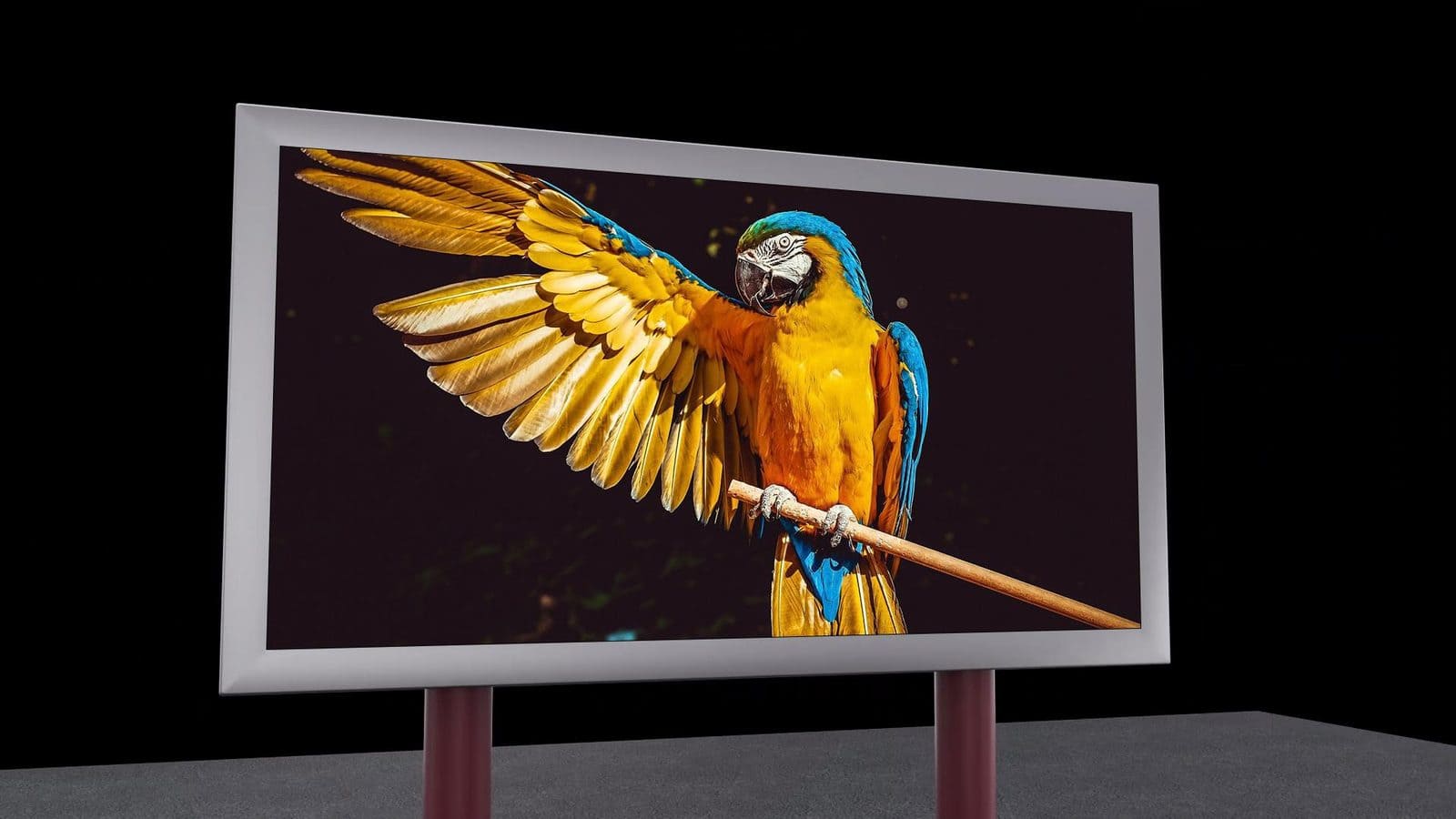
How many nits does an outdoor LED screen need?
In the UK, a standard outdoor LED screen of 5,000 to 6,500 nits is enough where the screen is shaded or faces north. Plan on 10,000 nits where the sun lands on the LED face for much of the day. That means south- and west-facing walls, roadside signs read against a bright sky, high-level facades and screens beside glass or pale cladding. Indoor LED screens need far less, typically 600 to 1,200 nits.
| Setting | Typical rated brightness | What it is for |
|---|---|---|
| Indoor LED screen | 600 to 1,200 nits | Lobbies, retail interiors and meeting rooms under controlled lighting |
| Indoor high brightness LED screen (window-facing) | 3,000 to 4,500 nits | Shop windows and glazed shopfronts where the screen faces the street and competes with daylight through the glass; see the DX HB Series and our LED window displays |
| Standard outdoor LED screen | 5,000 to 6,500 nits | Shaded, covered or north-facing outdoor positions |
| DHB Series high brightness LED screen | 10,000 nits (product datasheet, all three pitches) | Direct sunlight: south- and west-facing, roadside, high-level and open sites |
Rated brightness is the peak the screen can reach, not the level it runs at. A 10,000-nit screen in the UK spends most of its hours well below maximum, lifted on bright afternoons and dimmed at dusk. That headroom keeps low-contrast content readable at the brightest time of day. Running below peak is also easier on the LEDs over the life of the screen. The 7,680 Hz refresh rate reduces the banding seen when a screen is filmed on a phone.
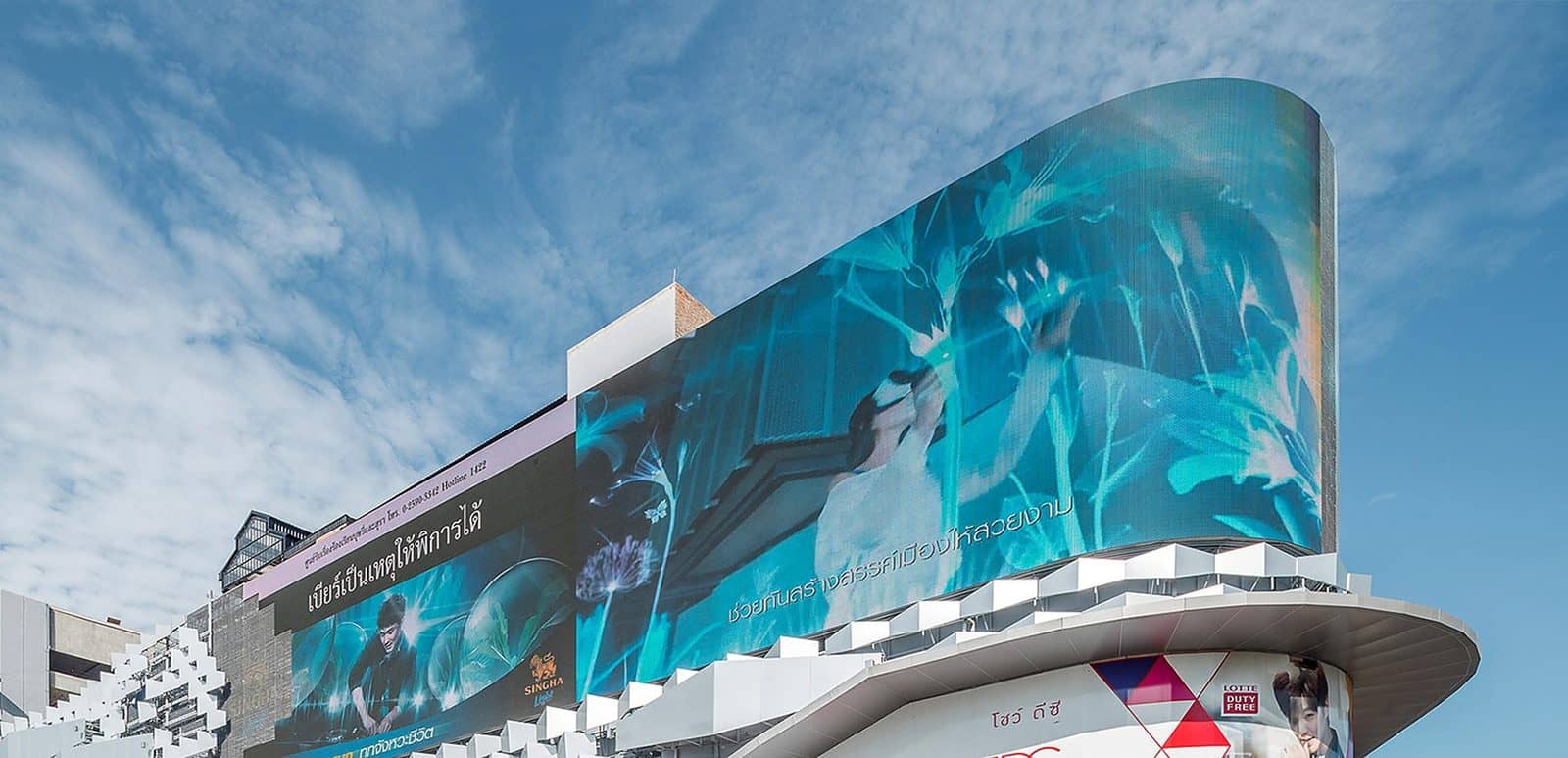
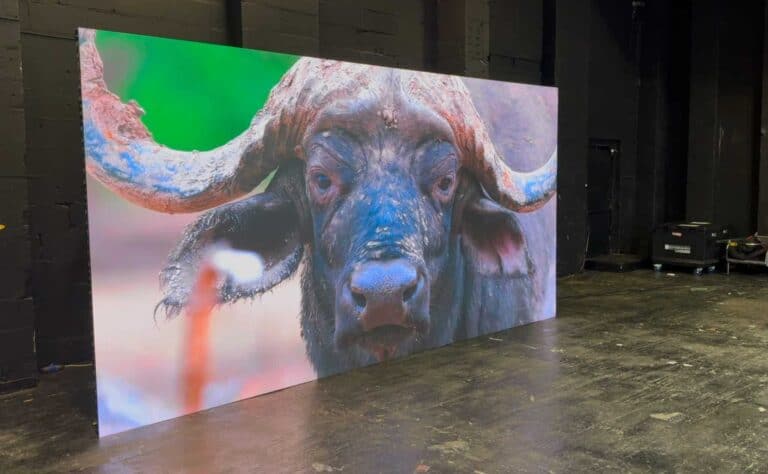
Photograph of an installed screen built from this cabinet series.
When you need 10,000 nits
- South- and west-facing elevations, with the sun on the LED face through the afternoon.
- Roadside signs and LED billboards read against a bright sky from a moving vehicle.
- High-level facades and gable ends with no shading from neighbouring buildings or trees.
- Car park and retail park entrances, surrounded by pale cladding, glass and wet tarmac that reflect the sky.
- Stadium exteriors and concourses seen across open hard-standing.
- Coastal and open sites with no shelter from reflected light.
A shaded, north-facing or covered position usually does not need 10,000 nits, and the DVO Series is often the better fit there. Our guide to outdoor LED brightness in direct sunlight explains how to read a site. Or send us a photograph of the position and which way it faces.
Auto-dimming and night-time brightness limits
A 10,000-nit screen should never run at 10,000 nits after dark. Every DHB Series installation is commissioned with a brightness schedule in the control system, and an ambient light sensor where the site calls for it. The sensor tracks daylight. The schedule caps the screen at an agreed level from dusk until morning, with a gradual ramp between the two.
In England and Wales an illuminated sign normally needs advertisement consent. Local authorities routinely attach a condition limiting night-time luminance, stated in candelas per square metre (the same unit as nits), with curfew hours. Screens on or near Transport for London’s road network are also assessed against TfL’s guidance for roadside digital advertising. That guidance covers brightness, transitions between adverts and driver distraction. We set the night-time cap to the condition and record the settings at commissioning. We can also supply an LED planning support statement for the application. See our guides to outdoor LED night-time dimming and cold weather LED screen performance.
Cabinet: 960 × 960 mm, 75 mm deep, 23 kg
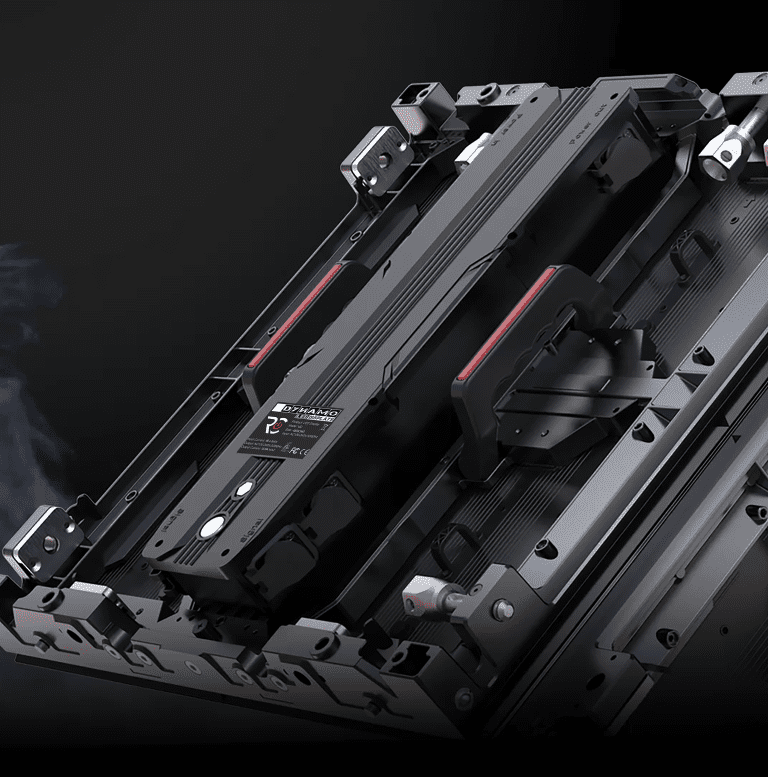
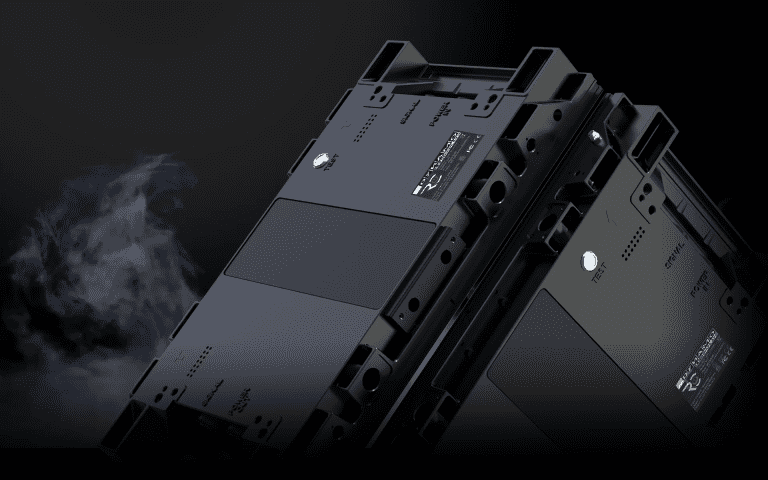
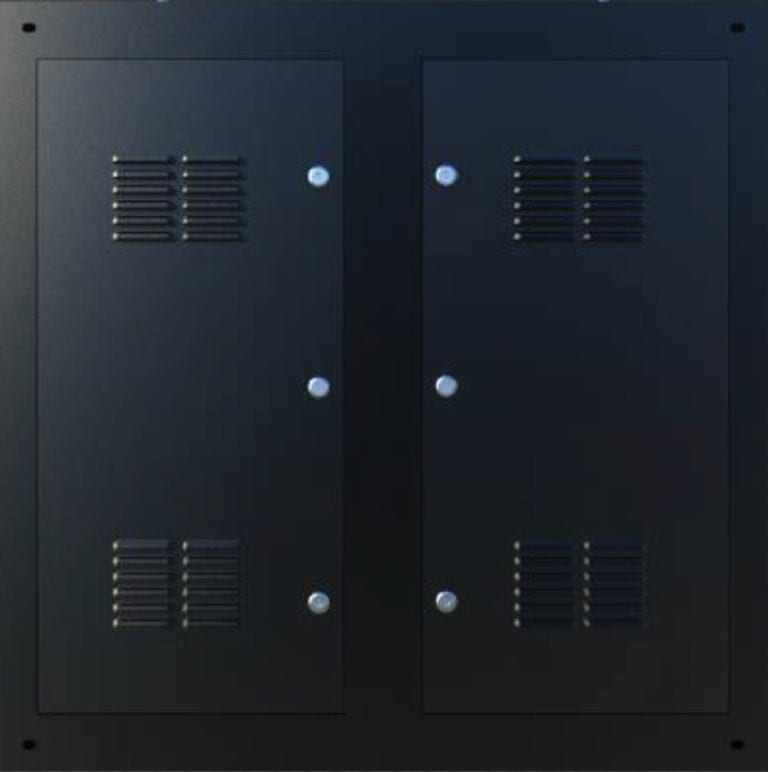
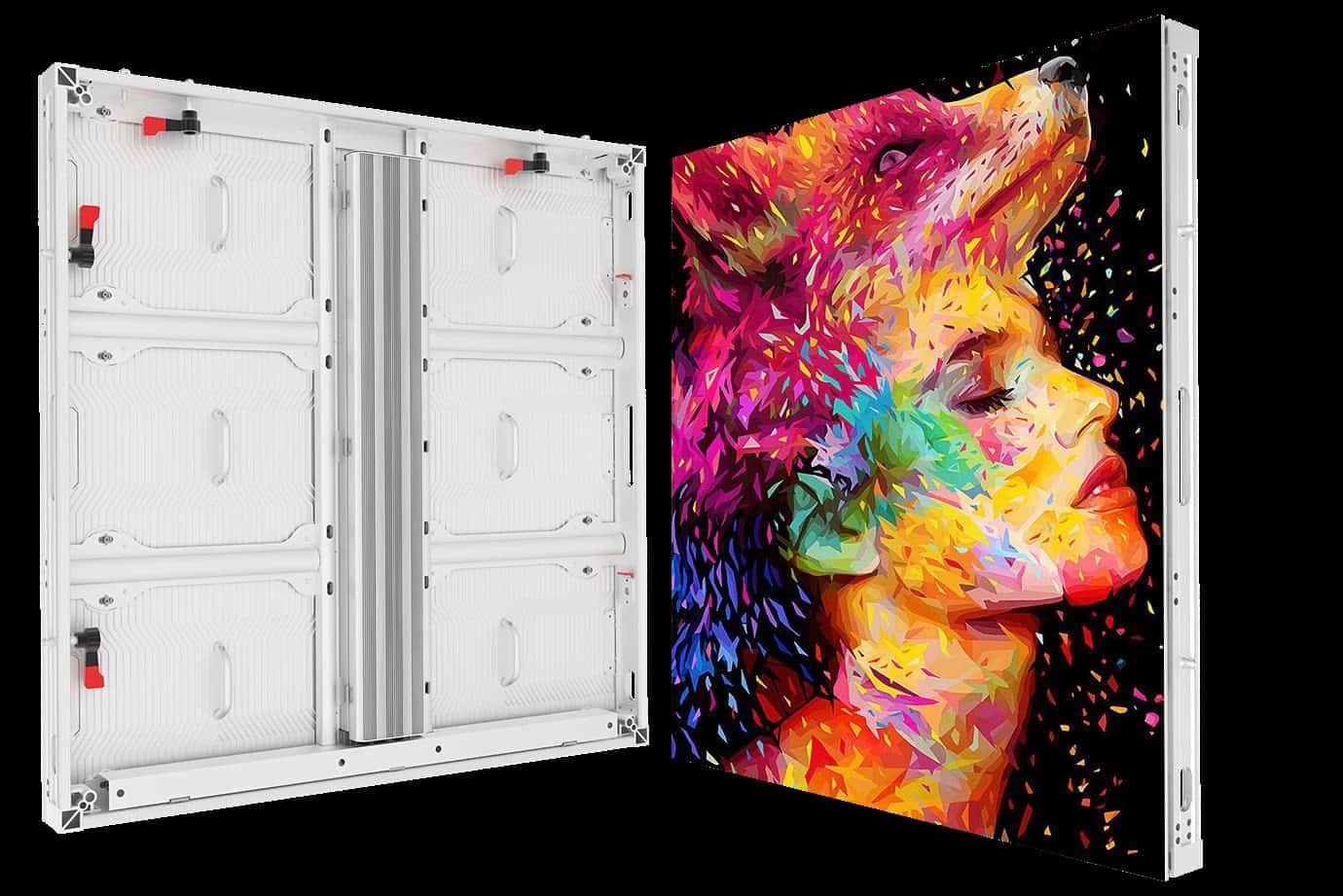
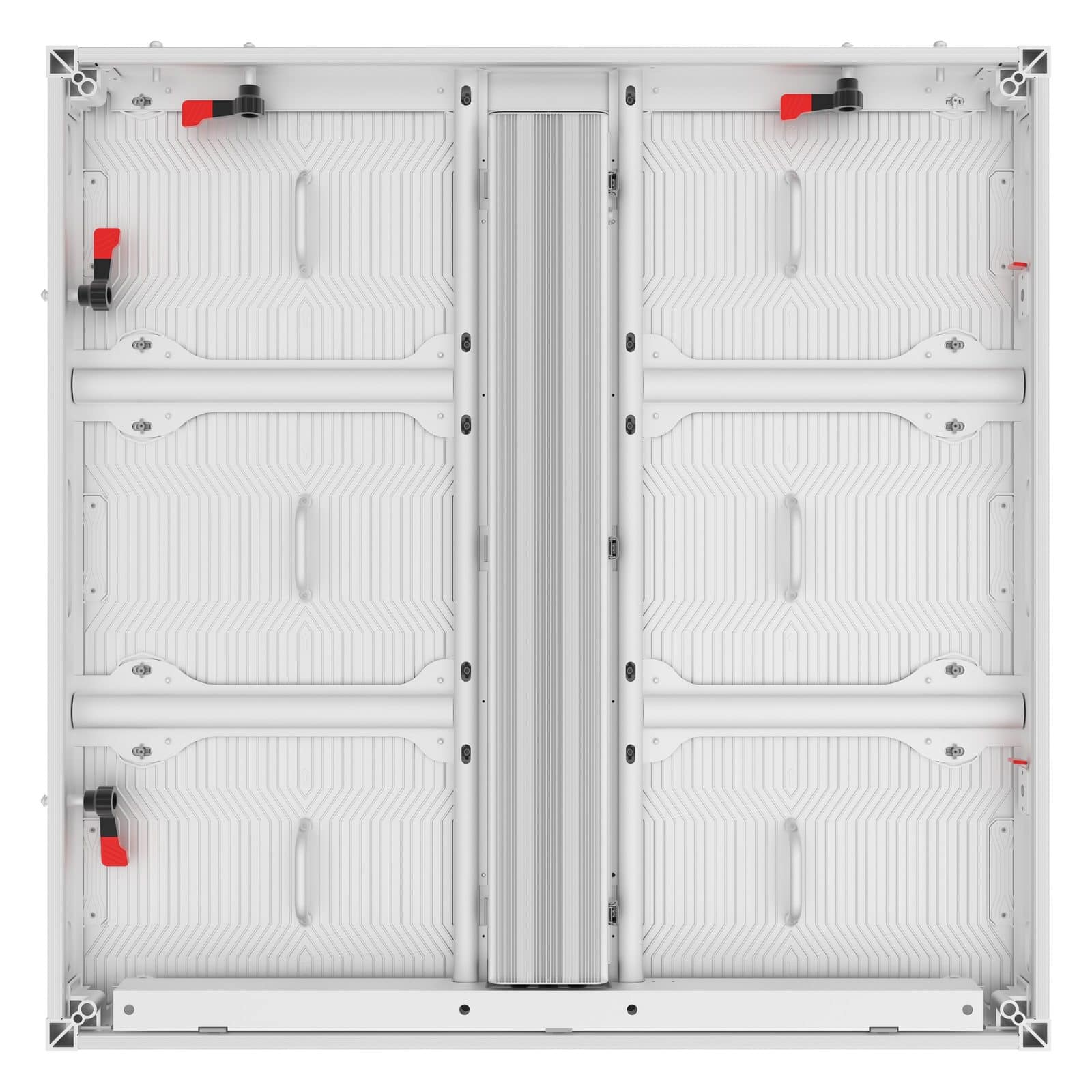
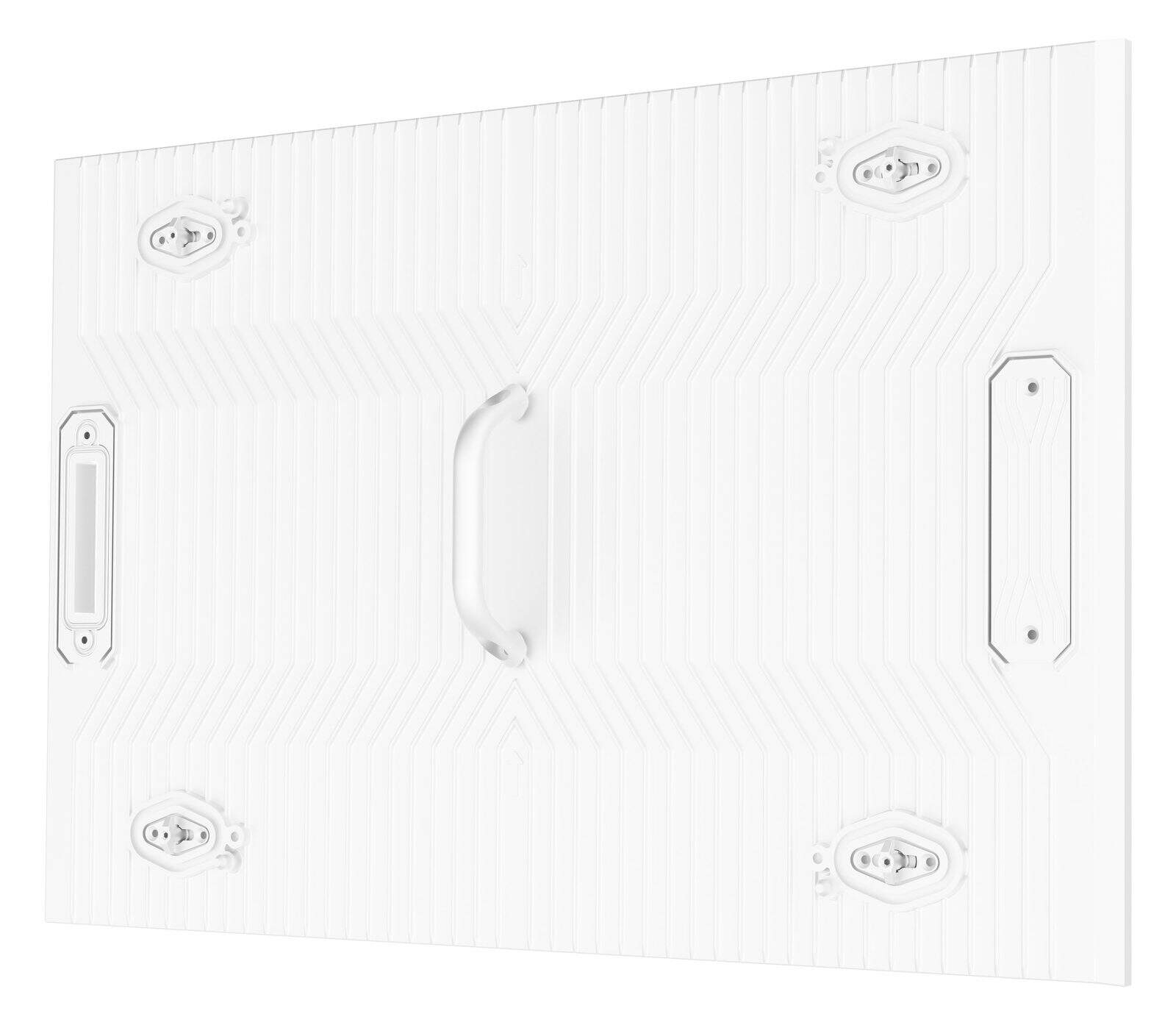
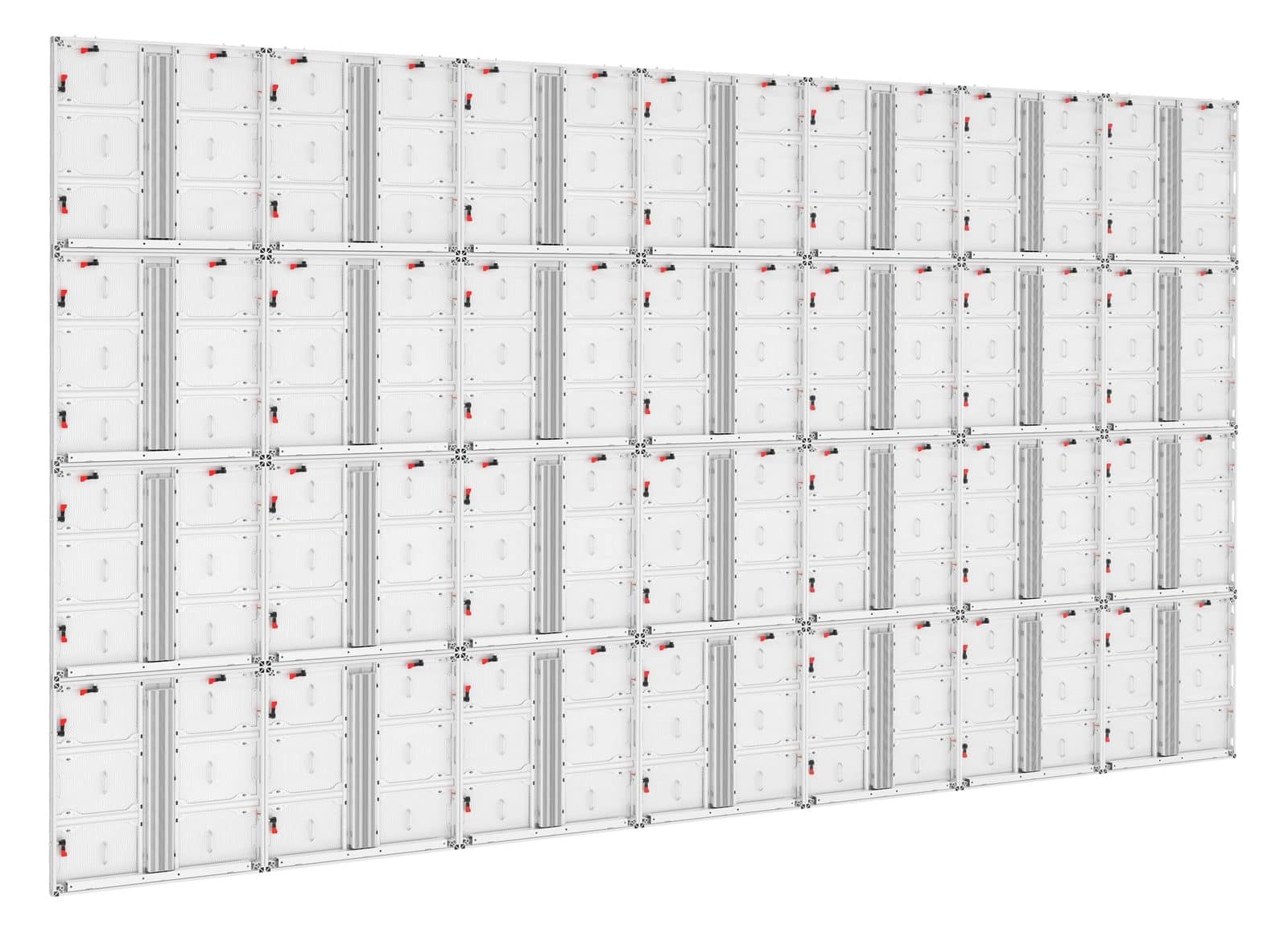
Each cabinet is a 960 × 960 mm aluminium frame carrying six 480 × 320 mm die-cast aluminium modules, two across and three down. At 75 mm deep and 23 kg it keeps a facade screen close to the wall line and the support steel light. The die-cast module chassis doubles as the heat path for the LEDs, which matters most on a high brightness screen. Our guide to outdoor LED thermal management explains why.
Why the 960 mm grid matters
A DHB Series screen is always a whole number of cabinets in each direction. The size, the steelwork and the resolution are therefore predictable from the first drawing. 3,840 × 2,880 mm is a 4 × 3 grid; 5,760 × 2,880 mm is 6 × 3. Resolution follows: 144 × 144 pixels per cabinet at 6.67 mm, 120 × 120 at 8 mm, 96 × 96 at 10 mm.
Cabinet formats
The 960 × 960 mm cabinet is the standard unit. The same module also builds 960 × 1,280 mm, 1,440 × 960 mm and 1,440 × 1,280 mm cabinets, plus a 320 mm curve cabinet and a 45-degree corner cabinet. The screen is shaped to the building rather than the building to the screen.
Front service
The datasheet installation method is front service. A module is released from the face of the screen with the supplied service tool, hinged out and swapped. A screen fixed flush to a wall is therefore maintained from a cherry picker or a tower, without rear access. The power and data units sit in the open rear of the cabinet and can be reached from behind where the site has a walkway.
Pixel pitch for a high brightness LED screen: P6.67, P8 or P10
DHB P6.67
144 × 144 pixels per cabinet, 22,500 pixels per m². The pitch for places where people walk or queue near the screen. Retail park entrances, stadium concourses, forecourts and facades over a pavement.
DHB P8
120 × 120 pixels per cabinet, 15,625 pixels per m². The middle pitch, for facades and entrances read from the street and the approach road.
DHB P10
96 × 96 pixels per cabinet, 10,000 pixels per m². The pitch for roadside signs, gable ends and anything read from a moving vehicle or across a car park.
Our pixel pitch guide explains how viewing distance drives the choice, or send us the site and we will advise.
DFS: the curved DHB cabinets
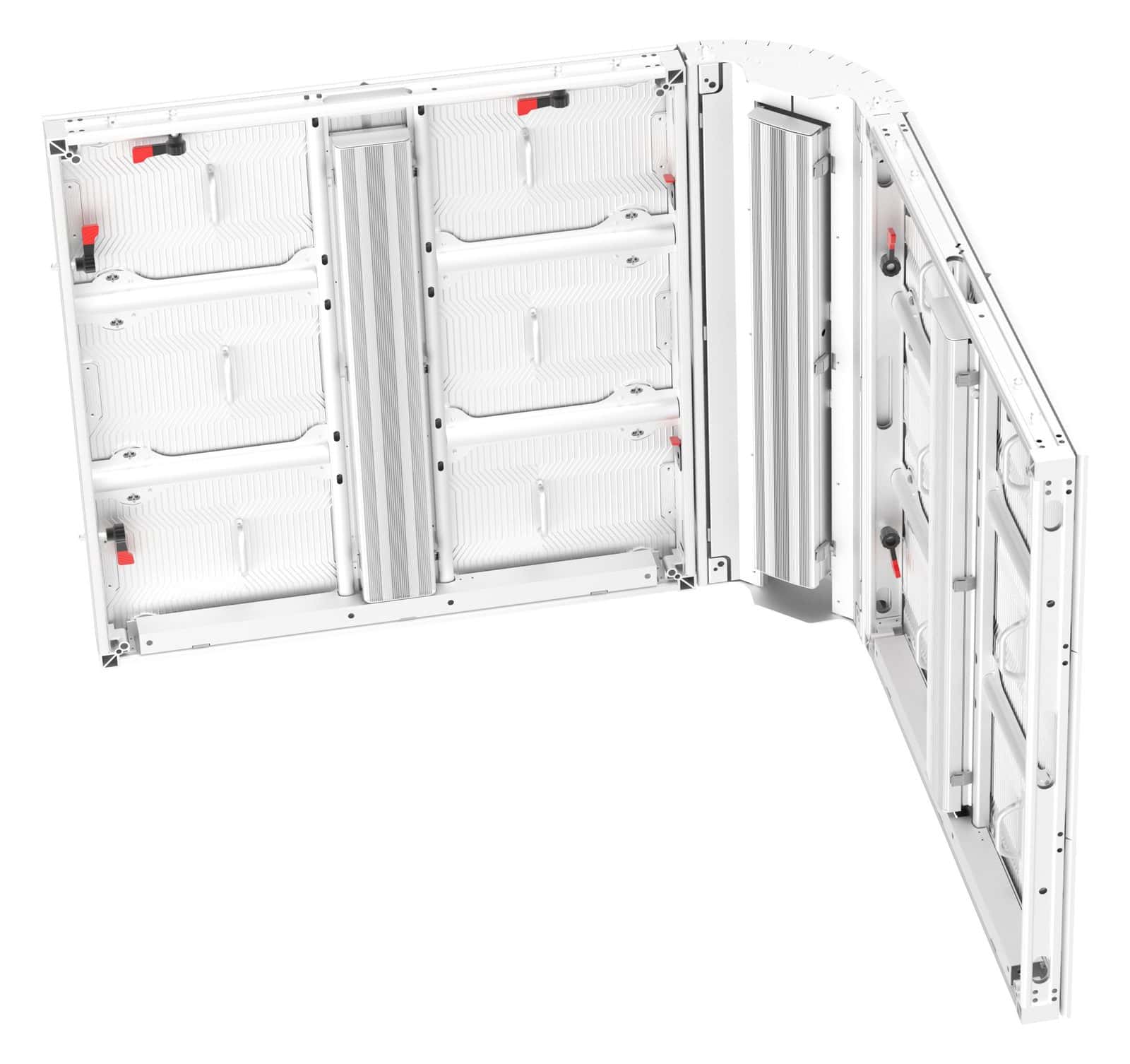
DFS is the curved variant of the DHB Series high brightness LED screen: a 640 × 960 mm curve cabinet built on a 320 mm curve module, and a 45-degree corner cabinet, both at the same 10,000 nits, 7,680 Hz, IP67 front and IP68 rear as the flat 960 × 960 mm cabinet. DFS cabinets are available at 6.67 mm, 8 mm and 10 mm, and they let a DHB screen follow a column, turn a building corner or wrap a rotunda in one continuous picture.
Where a tender, specification or bill of quantities names a Dynamo DFS-P8MM facade system, that is the DHB Series P8 built with DFS curve cabinets at the corners: flat DHB cabinets on the elevations, DFS cabinets where the screen bends. The datasheet, brochure and drawings on this page apply to both.
Typical screen sizes
Common starting points; any other whole-cabinet size can be built. Resolutions are in pixels, derived from the cabinet grid.
| Screen size (W × H) | Cabinets | Area | P6.67 | P8 | P10 |
|---|---|---|---|---|---|
| 2,880 × 1,920 mm | 3 × 2 = 6 | 5.53 m² | 432 × 288 | 360 × 240 | 288 × 192 |
| 3,840 × 2,880 mm | 4 × 3 = 12 | 11.06 m² | 576 × 432 | 480 × 360 | 384 × 288 |
| 5,760 × 2,880 mm | 6 × 3 = 18 | 16.59 m² | 864 × 432 | 720 × 360 | 576 × 288 |
| 7,680 × 3,840 mm | 8 × 4 = 32 | 29.49 m² | 1,152 × 576 | 960 × 480 | 768 × 384 |
| 9,600 × 4,800 mm | 10 × 5 = 50 | 46.08 m² | 1,440 × 720 | 1,200 × 600 | 960 × 480 |
Installation options
Fixed
Cabinets bolted to a steel sub-frame on a wall or elevation, serviced from the front where the screen sits flush.
Curved (DFS cabinets)
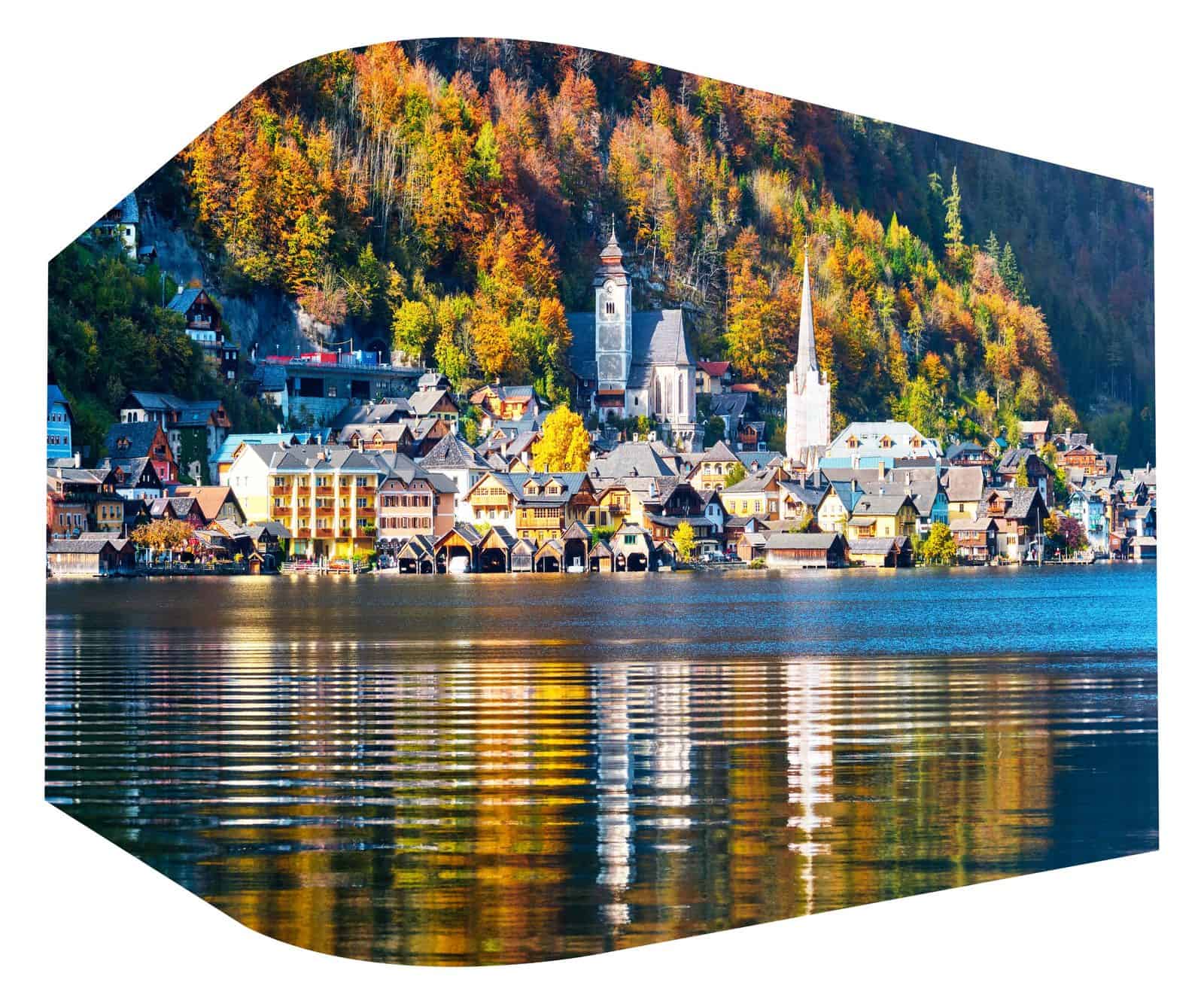
The 320 mm curve cabinet follows a curved facade in whole-cabinet steps. Standard cabinets can also be set at an angle to one another at each joint. The angles are agreed on the drawings and built into the steel frame, so the curve is fixed rather than flexed on site.
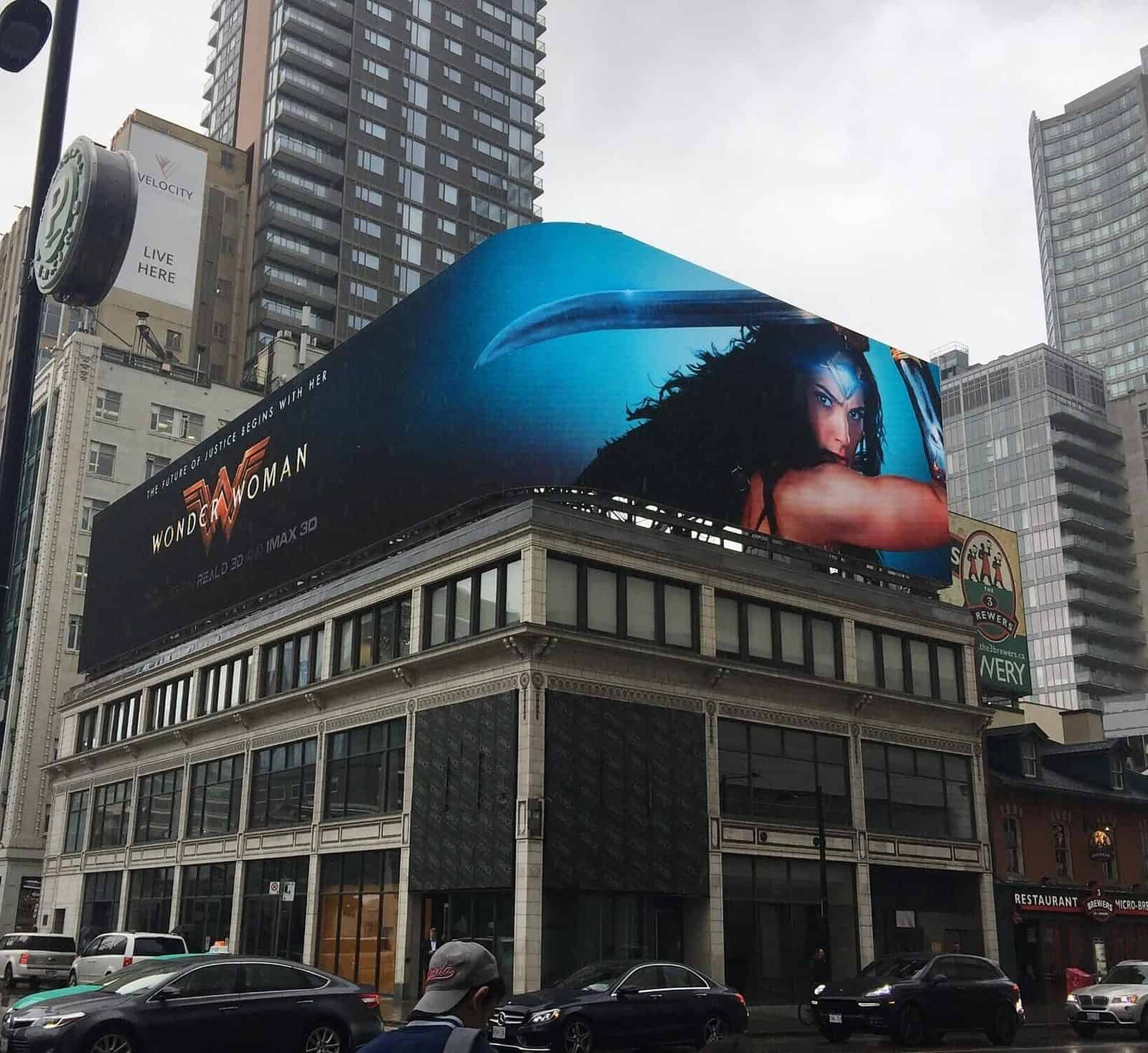
Photograph of an installed screen built from this cabinet series.
Cornered
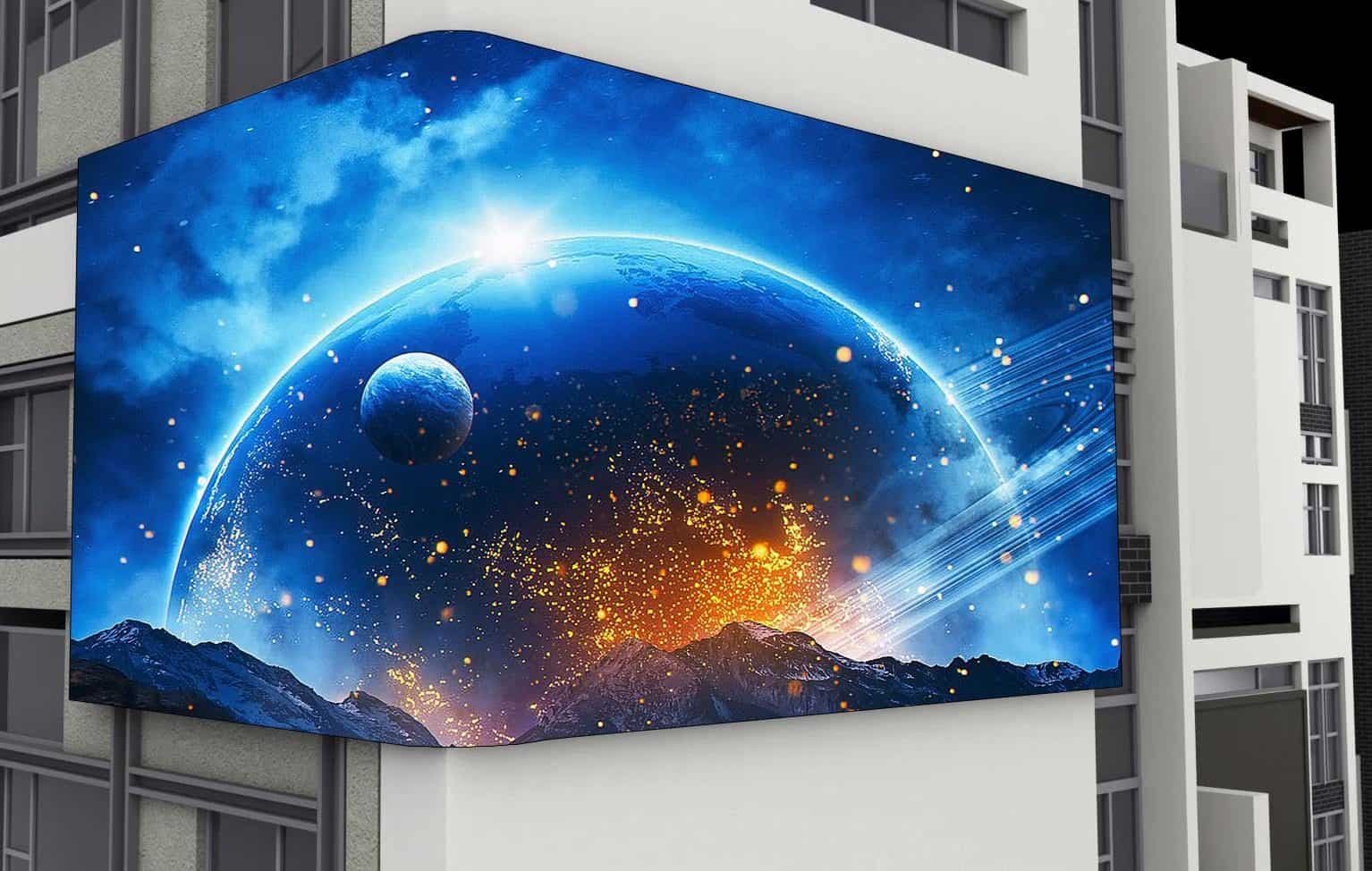
The 45-degree cabinet turns a building corner without a gap in the picture, so one screen wraps two elevations.
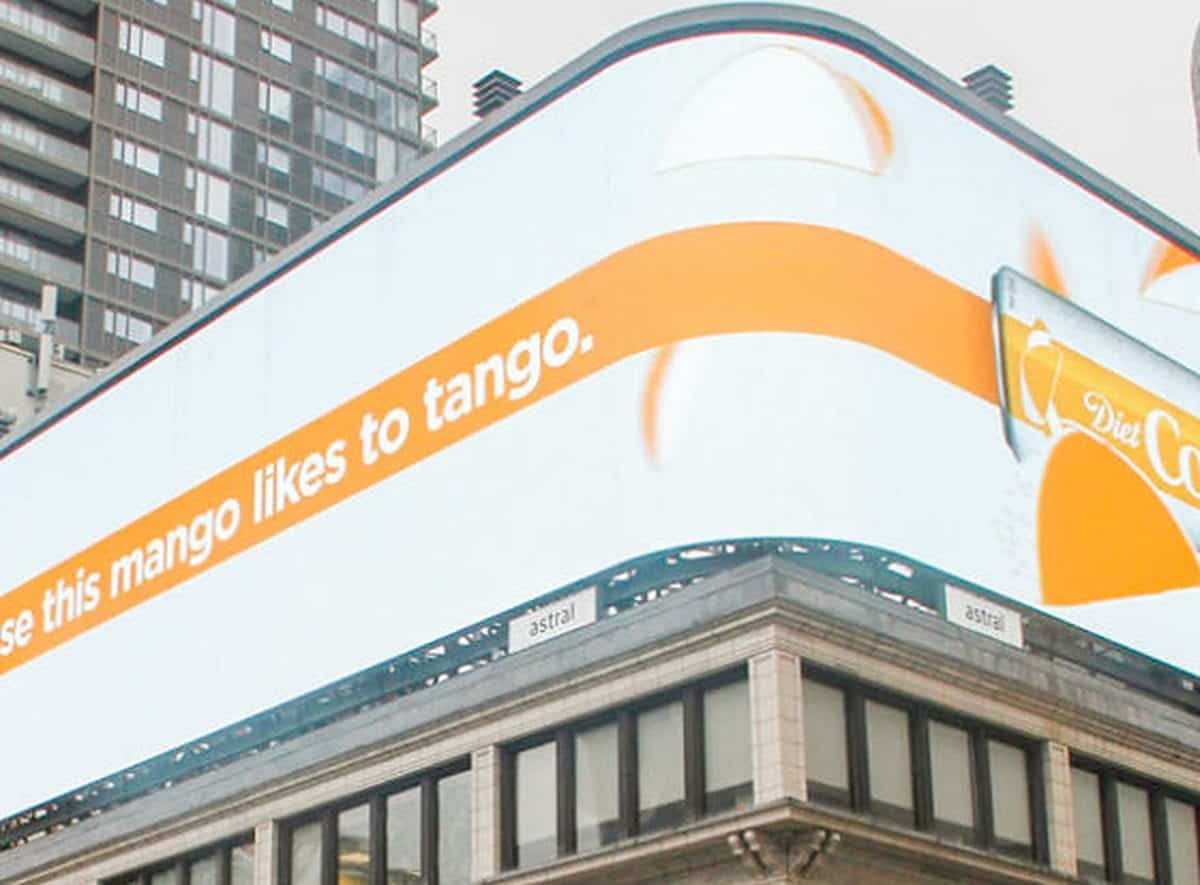
Photograph of an installed screen built from this cabinet series.
Foot-mounted
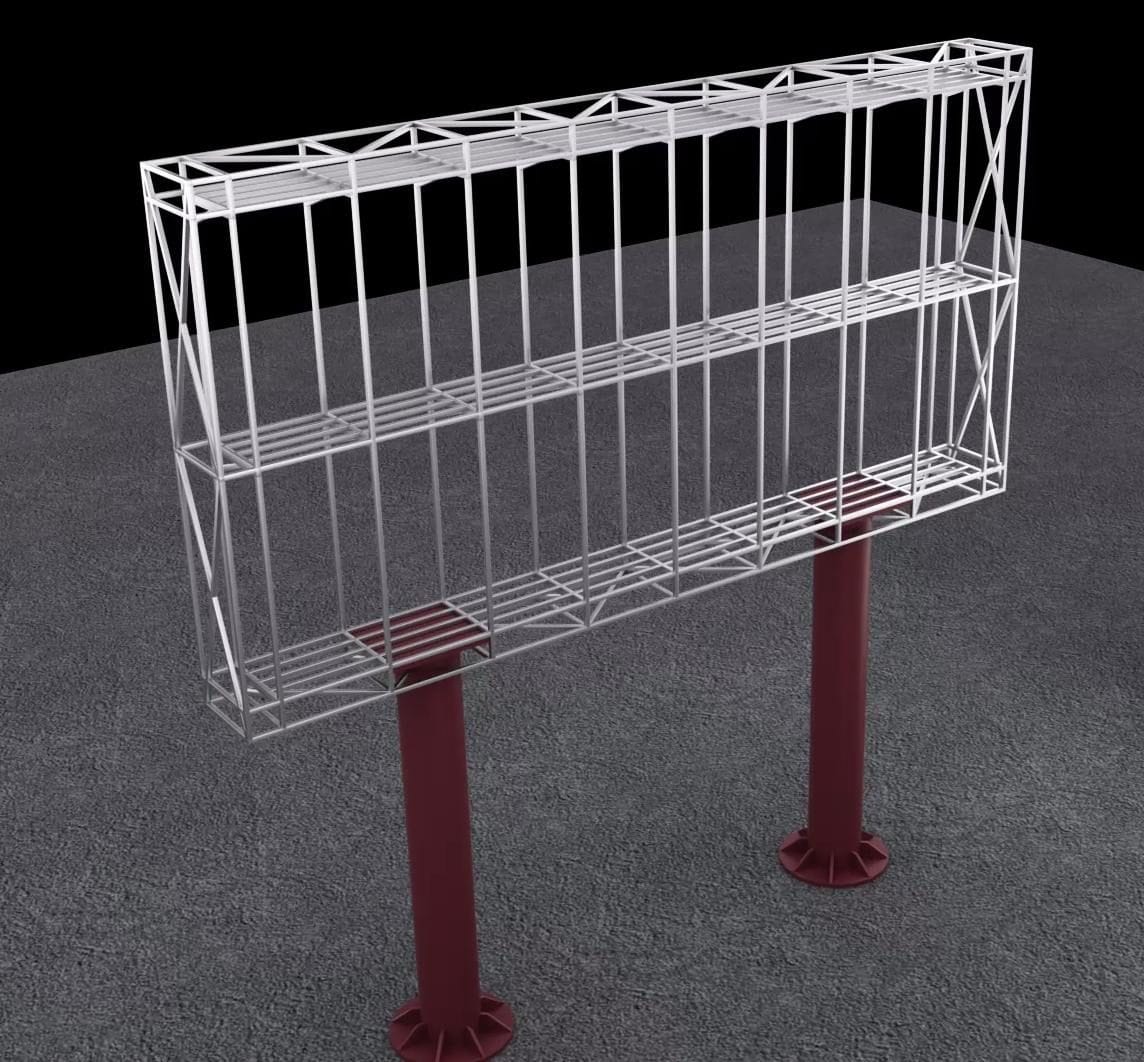
A free-standing screen on posts for roadside, forecourt and car park positions. Posts and foundations are designed to the site’s wind load. See our guide to LED screen wind load and structural design.
Specification
| Item | DHB P6.67 | DHB P8 | DHB P10 |
|---|---|---|---|
| Pixel pitch | 6.67 mm | 8 mm | 10 mm |
| Brightness | 10,000 nits | ||
| LED type | Kinglight Gold | ||
| Module | 480 × 320 mm, die-cast aluminium; six per 960 × 960 cabinet (2 across × 3 down) | ||
| Module resolution | 72 × 48 pixels | 60 × 40 pixels | 48 × 32 pixels |
| Cabinet size (W × H × D) | 960 × 960 × 75 mm, aluminium, 23 kg | ||
| Cabinet resolution | 144 × 144 pixels | 120 × 120 pixels | 96 × 96 pixels |
| Pixel density | 22,500 per m² | 15,625 per m² | 10,000 per m² |
| Other cabinet formats | 960 × 1,280 mm, 1,440 × 960 mm, 1,440 × 1,280 mm, 320 mm curve cabinet, 45-degree cabinet | ||
| Refresh rate | 7,680 Hz | ||
| Grey scale | 14 to 16 bit processing | ||
| Colour temperature | 3,200 to 9,300 K | ||
| Viewing angle | 140° horizontal, 140° vertical | ||
| Power consumption, maximum | 550 W per m² | ||
| Power consumption, average | Not stated on the datasheet; confirmed with the quotation | ||
| Supply | 100 to 240 V AC | ||
| Ingress protection | IP67 front, IP68 rear | ||
| Operating temperature | −20 to +60 °C, 10 to 80% RH | ||
| Fire rating | V0 cabinet materials | ||
| Service | Front service | ||
| Installation | Fixed (wall or steel frame), curved, cornered, foot-mounted | ||
| Control | Dynamo LED controller; HDMI input or scheduled playback through the Dynamo CMS | ||
| Warranty | 3-year return-to-base | ||
Figures are from the product datasheet for each pitch; pixel density is derived. Specifications may change without notice.
Dynamo CMS and warranty
Every DHB Series screen bought from Dynamo includes the Dynamo CMS, with no licence fee and no per-screen subscription. Log in from a browser to upload, schedule, publish and check playback, with logins for your team, up to 5 GB of storage and up to 200 players. It runs through a compatible cloud media player specified per installation. Each player stores the playlist locally, so the screen keeps playing if the site connection drops.
The LED display carries a 3-year return-to-base warranty. A spares allowance of modules, power supplies and receiving cards is included in each supply. Installation and commissioning are available nationwide from Dynamo’s own engineers. Steelwork and foundations are quoted separately to the site.
Where a high brightness LED screen is used
- Roadside and forecourt signs, including LED billboards read from a moving vehicle.
- Building facades, where the 75 mm cabinet keeps the screen tight to the wall; see media facade LED screens.
- Car parks and retail parks: entrance and tenant LED advertising screens.
- Stadium exteriors: concourse and approach screens, as at our LED screen spectacular at Arsenal Football Club.
- Shopping centre and leisure entrances: screens above entrances, on gable ends and around corners.
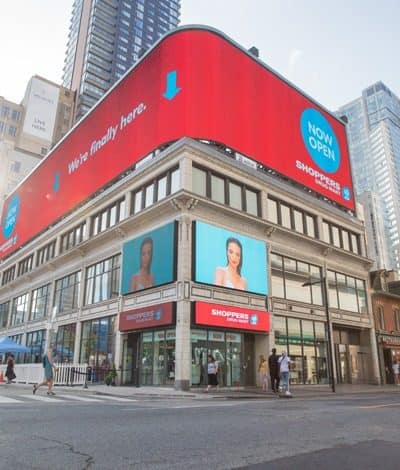
Photograph of an installed screen built from this cabinet series.
Get a quote for a DHB Series high brightness LED screen
Send us the location, the wall or post position, which way it faces and the size you have in mind. We will reply with a whole-cabinet layout, the resolution at each pitch and a quotation.
Contact us or call +44 (0)203 489 9878.
High brightness LED screen: frequently asked questions
What is a high brightness LED display?
A high brightness LED display is an outdoor LED screen rated well above the 5,000 to 6,500 nits of a standard outdoor model. It stays legible with the sun on its face. The DHB Series is rated at 10,000 nits at every pitch. The extra output is headroom, used on bright afternoons and dimmed at night.
How many nits do I need for direct sunlight?
In the UK, 5,000 to 6,500 nits is enough for a shaded or north-facing outdoor screen. Choose 10,000 nits where the LED face is in direct sun for much of the day. That means south- or west-facing walls, roadside signs read against the sky, high-level facades and sites surrounded by glass or pale cladding.
Is 10,000 nits too bright at night?
It would be, which is why we commission every outdoor screen so that it does not run at full output after dark. The brightness schedule in the control system caps the screen from dusk until morning at the level set in the planning condition. An ambient light sensor is added where the site needs one. The rated figure is daytime headroom, not a running level.
What pixel pitch should a roadside LED sign use?
DHB P10 for signs read from a moving vehicle or across a car park. DHB P8 where the screen is also read from a pavement or an approach road. DHB P6.67 where people stand or queue close to the screen, such as a retail park entrance or a stadium concourse.
How much power does a high brightness LED screen use?
The datasheet gives a maximum of 550 W per square metre for all three DHB pitches. That is the figure to use for the electrical supply. Average consumption is not stated on the datasheet, because it depends on the content and the brightness schedule. We confirm it with the quotation. A dimmed screen at night draws a fraction of the maximum.
Can a high brightness LED screen be curved or turn a corner?
Yes. The 320 mm curve cabinet follows a curved elevation. The 45-degree cabinet turns a building corner without a gap in the picture. Standard cabinets can also be set at an angle to one another at each joint. The angles are built into the steel frame, so the curve is fixed and repeatable rather than flexed on site.
What is the lead time for a DHB Series screen?
Lead time depends on the cabinet count, the formats in the build and the steelwork. We confirm it on the quotation rather than quoting a standard figure. Tell us the target date when you enquire. We will plan the structural design, the planning submission and the installation visit around it.
What does DHB stand for?
Dynamo High Bright, the name of our 10,000-nit high brightness LED screen range. It is sold in 6.67 mm, 8 mm and 10 mm pixel pitch on a 960 × 960 mm aluminium cabinet. The Dynamo CMS is included, with a 3-year return-to-base warranty.