Most spec sheets quote 5,000 nits or higher for outdoor LED screens. That figure comes from markets where 100,000+ lux of direct sunlight is routine — Dubai in July, the American Southwest. UK conditions are different. Peak solar illuminance in southern England rarely exceeds 80,000 lux, and for most of the year sits well below that. Choosing outdoor LED nits sunlight ratings without adjusting for actual UK conditions means either overspending on brightness you’ll never need or underspecifying because you assumed all outdoor installs are the same.
For UK outdoor LED screens in direct sunlight, the realistic brightness target is 5,000–7,000 nits — not the 8,000–10,000 nits quoted for Middle Eastern or subtropical installations.
The useful question isn’t maximum brightness — it’s how bright the screen needs to be at the times that matter, with enough thermal headroom to sustain it.
Key takeaways
- For outdoor LED nits sunlight planning in the UK, treat 5,000 to 7,000 nits as the normal design range for faces that receive direct sun.
- North-facing or shaded outdoor LED screens often work well at 3,500–5,000 nits, saving energy costs without sacrificing readability.
- A datasheet nit figure is maximum white output under lab conditions. Installed, calibrated and content-driven brightness is lower — and that’s by design.
- Contrast matters as much as peak brightness. Darker face materials, louvres and high-contrast content all improve legibility more cheaply than extra nits.
- Running an outdoor LED screen at maximum brightness all day increases heat, energy use and long-term LED stress. Automatic dimming should be part of every outdoor design.
- Pixel pitch still matters outdoors — a bright screen with the wrong pitch for the viewing distance delivers unreadable content.
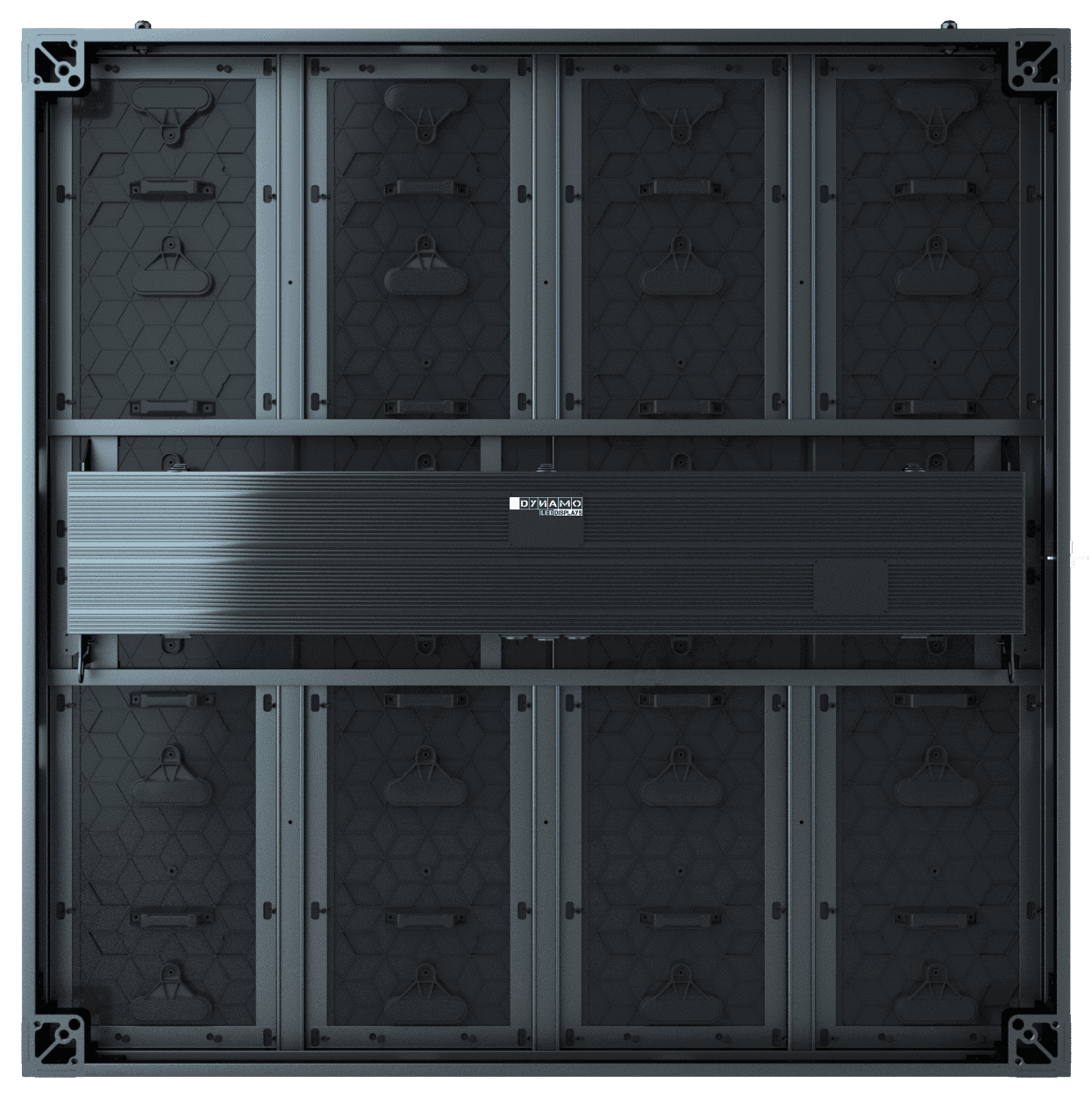
- Permanent outdoor installations require IP65-rated fixed-install cabinets with serviceable power supplies — rental-grade hardware lacks the thermal and weatherproofing design for multi-year deployment.
How many nits does an outdoor LED screen need in the UK?
| Factor | Detail |
|---|---|
| South-facing, direct sun | 5,500–7,000 cd/m² (nits) |
| East or west-facing, low sun periods | 5,000–6,500 cd/m² |
| North-facing or indirect daylight | 3,500–5,000 cd/m² |
| Shaded outdoor (canopy, overhang) | 3,000–4,500 cd/m² |
| UK peak solar illuminance | ~60,000–80,000 lux (June, clear sky) |
| Typical overcast illuminance | 10,000–25,000 lux |
| Common outdoor pixel pitch range | P2.5–P10, depending on viewing distance |
| Recommended control approach | Ambient light sensor with scheduled limits |
| IP rating (outdoor permanent) | IP65 front, IP54 rear minimum |
| Typical operating brightness (daily average) | 40–60% of rated maximum |
What are nits?
A nit is a unit of luminance — one candela per square metre (cd/m²). It measures how much light an outdoor LED screen emits toward the viewer. It doesn’t measure the ambient light hitting the screen, which is measured in lux. The confusion between these two units is where most specification errors start.
Why datasheet nit ratings are misleading
When a manufacturer quotes 7,000 or 8,000 nits, that’s the panel’s peak output under lab conditions, usually based on maximum white output. Real content rarely runs as a full white field. Video, brand graphics and advertising artwork have different average picture levels, which changes the electrical and thermal load. Control systems may also apply brightness limits, colour calibration, gamma settings and ambient dimming.
A screen sold as 6,000 nits won’t spend its working life at 6,000 nits. In most cases, that’s exactly what we want. A screen with headroom can run at lower levels in normal daylight, lift during bright periods, then dim at night to avoid glare and reduce energy use.
The issue is when a screen is specified with no headroom. If a site genuinely needs 6,000 nits at key times, choosing an outdoor LED screen that only just reaches that figure under ideal conditions leaves little margin for ageing, dirt on the face, thermal derating or calibration drift. We build in operating headroom and then control the screen properly.
Brompton and Novastar processing both handle brightness management well — Brompton’s platform supports per-tile brightness calibration via light sensor input, while Novastar’s controllers handle scheduled dimming profiles natively. But the processor manages the signal and control behaviour; it can’t create luminance the hardware doesn’t produce.
UK sunlight versus global assumptions
The brightness figures on most outdoor LED data sheets are designed for global markets. In subtropical and desert climates, direct solar illuminance regularly hits 100,000–120,000 lux. Outdoor LED screens specified for those conditions need 6,000–8,000 nits as a starting point.
The UK sits at roughly 50–55° north latitude. Even in midsummer, the sun angle is lower than in equatorial markets, and direct illuminance typically peaks around 60,000–80,000 lux on clear June days. For the rest of the year — and this is the part that matters for total cost of ownership — ambient levels are significantly lower:
- October to March: Overcast conditions dominate. Typical illuminance ranges from 5,000 to 20,000 lux. A 3,000-nit screen is comfortably readable.
- April to September: Mixed conditions. Bright but overcast days sit around 25,000–40,000 lux. Clear sunny days push 50,000–80,000 lux, but direct sun on the screen face depends entirely on orientation.
- Urban shading: Many UK outdoor LED screens sit in high-street locations, retail parks or transport hubs where surrounding buildings provide partial shade. Local shading can reduce effective ambient light by 30–50% compared to an unobstructed rooftop mount.
For UK installs, the harshest visibility periods are often bright spring or autumn days with low sun on an east- or west-facing elevation. For roadside LED billboard installations along dual carriageways, that low-sun scenario on east and west faces is the governing condition. If the screen carries safety information, directional signage or paid advertising at those times, design for that scenario rather than average daylight.
For most permanent UK outdoor installations, 5,000–6,000 nits of rated brightness provides enough headroom for direct summer sun while leaving margin for longevity. Outdoor LED screens that face north or sit in partially shaded locations can be specified at 3,500–4,500 nits without any loss in readability during normal operating hours.
Why contrast matters more than peak nits in direct sunlight
Direct sun increases the amount of light hitting the front of the outdoor LED screen. That light reflects back towards the viewer from the module face, masks, lenses and any protective surfaces. Once the black level lifts, the whole image looks flatter. Direct sun also adds heat, and the control system may need to protect the screen if the design has too little thermal headroom.
This is why two screens with the same nit rating can look different on site. An outdoor LED screen with strong black levels and a darker face can look clearer at 5,500 nits than a more reflective screen at 6,500 nits. The viewer doesn’t see the nit rating. They see the difference between bright pixels, dark areas and reflected sunlight. We’ve confirmed this on site using a luminance metre at typical viewing distance — the measured contrast ratio tells a different story from the datasheet.
Several practical choices improve contrast without adding nits:
- Darker mask materials around the LED packages
- Louvre or shader design to reduce sun strike on the LED face
- Cabinet angles that avoid direct reflection towards the main viewer position
- High-contrast artwork with fewer low-contrast mid-tone gradients
- Sensible font weights and minimum text sizes for the viewing distance
- Regular cleaning where pollution, salt, dust or road grime can dull the face
Matching pixel pitch to brightness for outdoor readability
Brightness alone doesn’t make a sunlight-readable outdoor LED screen legible. Pixel pitch — the distance in millimetres between the centre of one LED cluster and the next — determines how much detail the screen can resolve at a given viewing distance.
| Pixel pitch | Typical outdoor viewing use |
|---|---|
| 2.5mm to 3.9mm | Close-range retail, entrances, pedestrian areas |
| 4.8mm to 6.6mm | Mixed pedestrian and roadside viewing |
| 8mm to 10mm | Longer-distance roadside, large-format signage |
A useful rule of thumb: minimum comfortable viewing distance in metres is roughly equal to the pixel pitch in millimetres. A P4 screen is readable from about 4 metres; a P2.5 screen resolves cleanly from about 2.5 metres. For sites where the audience is predominantly vehicular traffic at 20+ metres, a P6 or P8 gives full readability at lower cost per square metre.
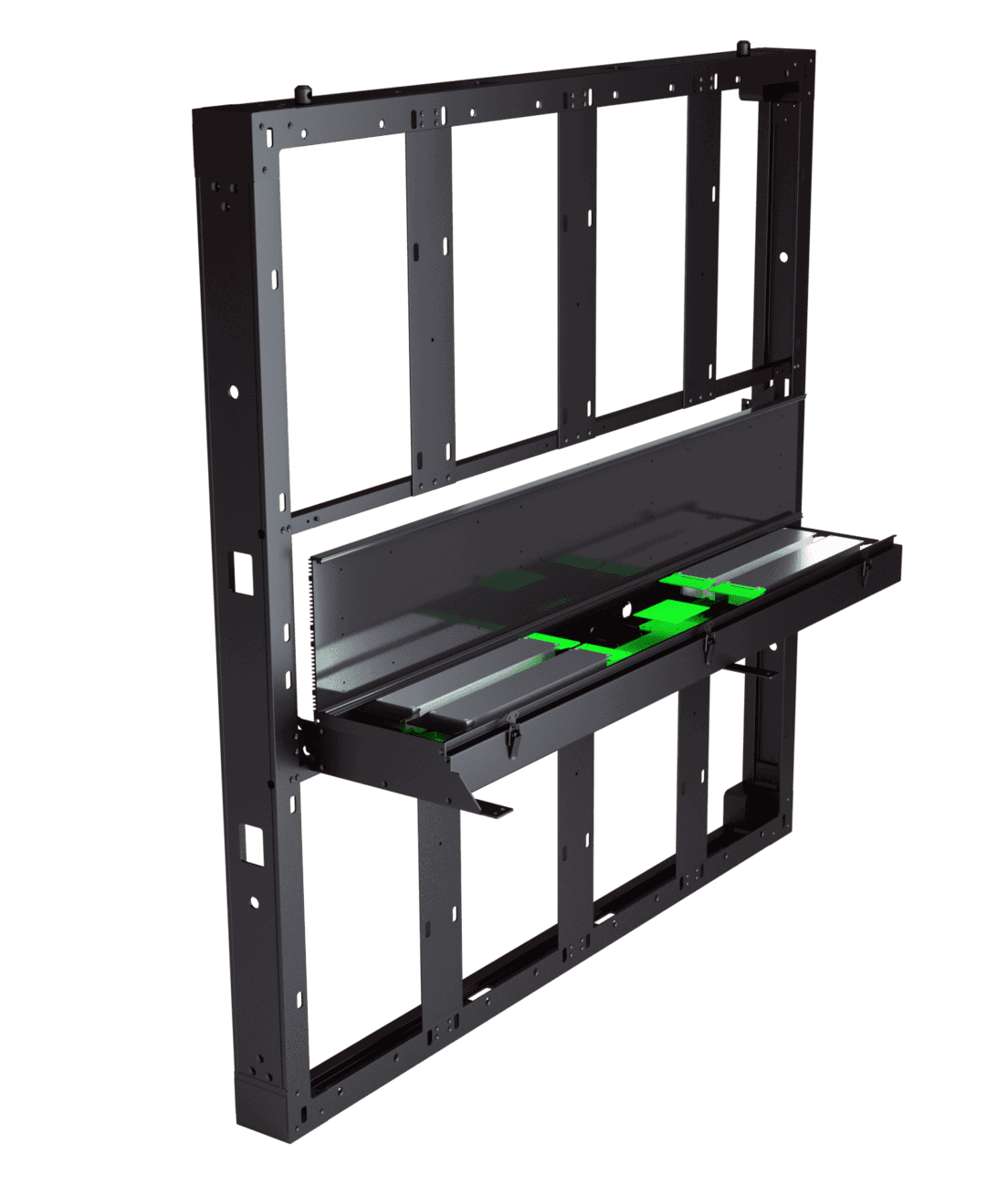
The DVO range is built for permanent outdoor installations where both brightness and pixel density need to hold up over years of continuous operation. We don’t default to a rental product for a fixed-install outdoor LED screen just because the project is outdoors.
You can model your outdoor installation with the correct specifications for your viewing distance and orientation using the outdoor LED displays.
Automatic dimming is not optional
Any permanent outdoor LED screen should include an ambient light sensor and automatic brightness management. This isn’t a premium add-on — it’s a basic requirement for any installation expected to run for years.
The sensor reads ambient light levels and adjusts screen output in real time. An outdoor LED screen might need 6,000 nits at midday, 3,000 nits on an overcast afternoon and a few hundred nits after dark.
This matters for three reasons. First, energy cost — an outdoor LED screen running at full brightness around the clock consumes roughly double the power of one with proper ambient dimming. Second, LED lifespan — LEDs degrade faster at higher drive currents, and running at 40% brightness most of the time extends useful life considerably. Third, planning compliance for outdoor LED screens — many UK local authorities impose brightness conditions on outdoor digital signage, particularly after dark near residential areas or roads. Automatic dimming with logging makes compliance straightforward and auditable.
Scheduled dimming adds another layer. A retail park screen may need different behaviour during trading hours, closing time and overnight. A roadside LED billboard may have specific luminance conditions attached to planning consent. The screen needs to be readable without becoming a nuisance.
From the field — specifying outdoor LED screen brightness across UK sites
The single most common over-specification for UK outdoor LED screens is brightness — clients quote 8,000–10,000 nits from Middle East spec sheets when a north-facing UK install needs 5,000–6,000 nits.
I’ve specified outdoor LED screens for sites across the UK — from south-facing digital totems in open retail parks to shaded transport hub screens that only needed 3,000 nits. I always walk the site first with a lux metre, check orientation and surrounding buildings, and look at the time of day the screen will be most active. Getting this right at specification stage saves thousands over the life of the installation and means the screen runs cooler, lasts longer, and still looks sharp in every condition. — Daniel, Dynamo LED Displays
Outdoor LED nits sunlight: Frequently Asked Questions
How many nits does an outdoor LED screen need in direct sunlight?
For UK direct-sunlight conditions, we usually plan around 5,500 to 7,000 nits. A shaded or north-facing outdoor LED screen may be clear at 3,500 to 5,000 nits, but a south-facing or exposed face needs more headroom; our DHB Series high brightness LED screen is rated at 10,000 nits for those positions. The final target depends on orientation, content contrast, viewing distance and whether the screen must perform at the brightest time of day.
Is 5,000 nits enough for an outdoor LED screen?
5,000 nits can be enough for many UK outdoor LED screens, especially where the screen is shaded, north-facing or used mainly in indirect daylight. It may be marginal for a south-facing screen that receives direct sun on the LED face. If the screen carries paid advertising or critical information, we’d check the site exposure using a lux metre at peak sun hours before accepting 5,000 nits as the target. Run your orientation and viewing distance through the high-brightness outdoor LED screens to check.
Is 7,000 nits too bright for the UK?
7,000 nits isn’t automatically too bright, but it should be controlled. In direct sun, that level provides useful daytime headroom. At night, it would be far too bright if left unchecked. A permanent outdoor LED screen should use ambient light sensing and scheduled limits so it can lift during bright periods and dim after dark.
Why does an outdoor LED screen look washed out even with a high nit rating?
A high nit rating doesn’t guarantee strong perceived contrast. Direct sunlight reflects from the LED face and lifts the black level, making the image look flat. Reflective masks, low-contrast artwork, poor viewing angles and dirt on the face can all reduce clarity. Darker face materials, better content design and the right installation angle often improve visibility more than additional brightness.
Do outdoor LED screens need automatic brightness control?
Yes, for almost every serious outdoor install. Automatic brightness control reduces glare at night, saves energy and helps the screen respond to changing weather. It’s also useful where planning conditions require specific luminance limits. Without dimming control, the screen is either too bright after dark or not bright enough in strong daylight.
Does screen orientation affect the brightness I need?
Significantly. A south- or west-facing outdoor LED screen receives direct afternoon sun and needs higher brightness to maintain contrast. A north-facing screen in a UK location rarely receives direct sunlight and can be specified at a lower nit rating. East-facing screens get morning sun but are typically shaded during the higher-traffic afternoon and evening hours.
What is the difference between lux and nits for outdoor LED?
Lux measures light falling onto a surface — a clear UK summer day reaches 60,000–80,000 lux. Nits (cd/m²) measure light emitted from the screen toward the viewer. For outdoor LED, the specification challenge is producing enough nits to overcome ambient lux and reflected sunlight on the panel face.
Do UK planning rules limit outdoor LED screen brightness?
Many local planning authorities impose conditions on outdoor digital signage, including maximum brightness levels — particularly after dark in residential areas or near roads. Automatic brightness control with logging makes it straightforward to demonstrate compliance. Check your local authority’s supplementary planning guidance for digital advertising before finalising the specification.
Specifying outdoor LED brightness for UK conditions
Getting outdoor LED nits sunlight specifications right isn’t about chasing the highest number on a data sheet. It’s about matching brightness, pixel pitch, orientation and contrast to the actual conditions at your site.
For most permanent UK outdoor installations, 5,000–7,000 nits of rated brightness with automatic dimming provides the right balance of readability, energy efficiency and long-term reliability. Lower-rated panels work well for shaded or north-facing positions. Contrast, thermal design and the right fixed-install product line carry just as much weight as peak output. Our LED display guide explains those wider choices — display types, pixel pitch and viewing distance — alongside brightness.
If you’re specifying an outdoor LED screen and want the nits and sunlight exposure checked before procurement, start with the outdoor LED display specification or speak to us on +44 (0)203 489 9878. You can also send the site details through our contact page and we’ll help narrow the pitch, brightness range and control approach.