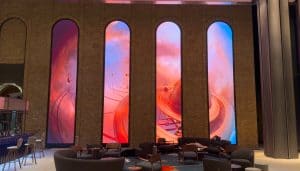

MicroLED has stopped being a trade show prototype and started landing in UK projects. Samsung The Wall is now specified into private cinemas in Knightsbridge and Mayfair. Sony Crystal LED is in boardrooms in the City. This guide is for architects, interior designers and main contractors specifying premium displays for luxury residential briefs, flagship retail fit-outs and Grade A boardroom refreshes — it covers what pure MicroLED actually is, how it compares to OLED, where it fits in 2026, and what UK availability and pricing look like.
Most callers we speak to are working from incomplete information. The term “MicroLED” is being used loosely by retailers and AV integrators to mean almost anything with small LEDs in it. That is a problem when you are specifying a £150,000 to £400,000 display for a client who expects the brief to be met precisely.
Key Takeaways
- Pure MicroLED uses individual inorganic LED sub-pixels under 100 microns — no backlight, no liquid crystal, no organic compounds — delivering absolute black levels, sustained brightness above 1,500 nits and no burn-in risk.
- MicroLED is not the same as MiP (Micro LED-in-Package), COB (Chip-on-Board) or fine-pitch SMD — specifying the wrong technology against a MicroLED brief carries design liability risk.
- For luxury residential home cinemas at 130–220 inches, MicroLED is the only technology that delivers reference-grade imagery without a projector and without burn-in concerns.
- OLED remains cheaper per square metre at consumer sizes (77–97 inches), but MicroLED is where the premium display category is heading for projects that need specification longevity.
- Genuine MicroLED in the UK costs £150,000 to £350,000 supplied and installed for a typical 165-inch configuration, with lead times of 10 to 16 weeks.
- Fine-pitch conventional LED still wins for large-format installs above 4 metres wide, outdoor applications, tight budgets and fast turnarounds.
- Only a handful of UK integrators — Dynamo included — work with genuine MicroLED end-to-end from survey through calibration to post-installation service.
What Pure MicroLED Is (and What It Is Not)
Pure MicroLED is a self-emissive display technology where each sub-pixel is an individual microscopic inorganic LED, typically under 100 microns across, mounted directly onto the substrate. There is no backlight, no liquid crystal layer and no organic compounds. Every pixel emits its own light independently, producing absolute black when off and sustained brightness above 1,500 nits when on.

Quick Definitions
- MicroLED: A display technology using microscopic inorganic LED chips (under 100 microns) as individual sub-pixels, mounted directly on the substrate without packaging.
- MiP (Micro LED-in-Package): Tiny LED chips encapsulated into a small package, then mounted like a conventional SMD LED. Easier to manufacture than pure MicroLED.
- COB (Chip-on-Board): LED chips bonded directly to the PCB and coated with a protective resin layer. Robust, good contrast, commonly used in fine-pitch fixed installations.
- SMD (Surface-Mount Device): LED packages soldered to a PCB. The established workhorse of the LED industry at all pixel pitches.
- Pixel pitch: The distance in millimetres between the centre of one pixel and the next. Lower pitch means higher pixel density and supports closer viewing distances.
- Nits: A unit of luminance (candelas per square metre). Higher nits means a brighter image, particularly important in rooms with ambient light.
That distinction matters because most “MicroLED” product marketed in the UK is not pure MicroLED. It is one of three close relatives:
- MiP (Micro LED-in-Package): tiny LED chips encapsulated into a small package, then mounted like a conventional SMD LED. Excellent product, far easier to manufacture, but not pure MicroLED. We have a full MiP guide covering where it fits.
- COB (Chip-on-Board): LED chips bonded directly to the PCB and flooded with resin. Robust, good contrast, used heavily in fine-pitch fixed installations. Not MicroLED.
- SMD: surface-mount LED packages soldered to a PCB. The workhorse of the LED industry. Not MicroLED at any pixel pitch.
The distinction is not pedantic. Pure MicroLED gives you absolute black, near-infinite contrast, brightness well over 1,500 nits sustained, and a service life past 100,000 hours with no burn-in risk. The other technologies approach those numbers in places, but they are not the same product. When a designer specifies “MicroLED” on a drawing and the integrator delivers MiP or COB, the client may never see the difference — but the architect carries the risk if they do.
In plain terms: If the specification says MicroLED, check what is actually being quoted. MiP and COB are good technologies in their own right, but they are not MicroLED. Getting this wrong on a six-figure display project creates liability.
MicroLED vs OLED: An Honest Comparison
MicroLED vs OLED is the live comparison for luxury residential and boutique commercial projects. For most specifiers choosing a premium display above 77 inches, the question is not MicroLED against fine-pitch LED — it is MicroLED against a high-end OLED reference panel such as an LG 97-inch or Samsung 83-inch unit.
| Factor | MicroLED | OLED |
|---|---|---|
| Sustained brightness | 1,500+ nits, sustained all day | 800–1,000 nits peak, drops under sustained use |
| Black levels | Absolute black (pixel-level off) | Absolute black (pixel-level off) |
| Burn-in risk | None — inorganic emitters | Yes — organic compounds degrade under static content |
| Service life | 100,000+ hours | 30,000–50,000 hours typical |
| Max screen size | Modular — 110 to 220+ inches, any aspect ratio | Fixed panels up to 97 inches |
| Cost (2026 UK) | £150,000–£350,000 for 165 inches | £3,000–£25,000 for 77–97 inches |
| Lead time (UK) | 10–16 weeks | Available from stock |
| Ambient light performance | Excellent — holds image in bright rooms | Reflective at high ambient light levels |
MicroLED wins in sustained brightness, longevity and scalability. In a south-facing London penthouse with full-height glazing, 1,500+ nits sustained versus 800 nits peak is the difference between a watchable picture and a compromise. MicroLED also handles static content — logos, dashboards, conference UIs — without burn-in degradation, making it the only viable option for boardrooms running persistent displays.
OLED wins on cost per square metre and immediate availability. If the brief is a standard 77-inch or 83-inch screen flush into a media wall, OLED is the faster, lower-risk specification.
In plain terms: OLED is cheaper today for standard sizes. MicroLED is where the premium display market is heading, and for clients who value specification longevity — a display that will perform identically in year seven as in year one — that trajectory matters.
Where MicroLED Makes Sense in 2026
MicroLED earns its place when the brief demands performance that no other display technology can deliver. The three strongest use cases in the UK market today are luxury residential home cinemas, executive boardrooms, and flagship retail environments.
Luxury Residential Home Cinema

For clients who want a 130-inch to 220-inch reference-grade image with no projector, no screen drop and no compromise on black levels, MicroLED is the only technology that delivers. A projector requires a darkened room and regular lamp or laser maintenance. OLED stops at 97 inches. MicroLED fills the wall, handles ambient light, and has no consumable parts. See our home cinema reference page for more on display sizing and room design.
Executive Boardrooms and Grade A Offices
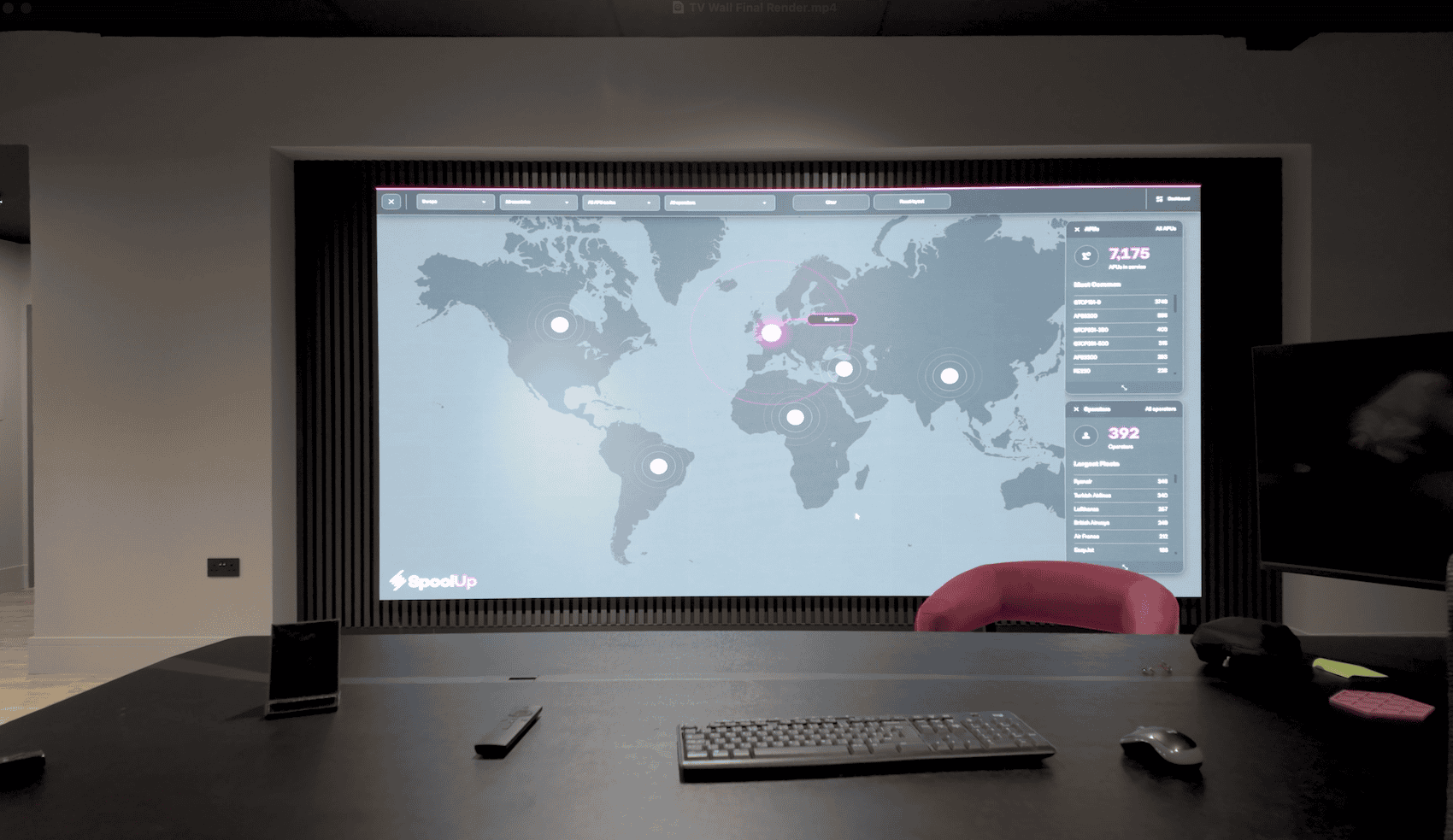
A boardroom running a static dashboard, video conferencing UI or corporate branding for eight hours a day will burn-in an OLED panel within 12 to 18 months of use. MicroLED handles persistent static content indefinitely. For executive briefing centres and Grade A office lobbies where the display is a permanent architectural feature, MicroLED removes the maintenance liability. We cover executive display specifications in our executive LED displays guide.
Flagship Retail and Architectural Installations
Where the display is the architecture — pure black backgrounds, no bezels, custom geometry — MicroLED is the specification. Projects like our 40 Leadenhall installation demonstrate the kind of architectural integration that demands self-emissive, modular, bezel-free technology. For retail flagship stores in Mayfair, Knightsbridge or the West End, MicroLED creates a visual experience that standard display technology cannot replicate.
Where Fine-Pitch LED Still Wins
MicroLED is not the right answer for every brief. Fine-pitch conventional LED — whether COB or MiP — still wins clearly in several scenarios:
- Large-format installations above 4 metres wide. Once past that scale, the cost delta against MicroLED becomes difficult to justify and the visual gain at normal viewing distances narrows. Our Aldar London Square Westminster Tower marketing suite is a good example of where fine-pitch was the correct answer for a luxury residential sales gallery.
- Outdoor-facing or semi-exterior applications. MicroLED is an indoor product in 2026. For outdoor requirements, see our outdoor LED displays page.
- Budget-conscious projects. A 1.2 mm fine-pitch COB wall delivers a visually impressive image at a fraction of the MicroLED cost.
- Fast turnaround. Fine-pitch stock is available in the UK in weeks. MicroLED lead times run months.
In plain terms: Fine-pitch LED is not a lesser product — it is a different product for different briefs. A well-specified 1.2 mm COB wall in the right environment can look exceptional. The decision should be driven by the brief, not the marketing.
UK Availability, Lead Times and Cost Reality
Most “MicroLED” displays marketed in the UK are not MicroLED. They are fine-pitch SMD or COB panels rebadged with the MicroLED label because it sells. If a quote lands at £40,000 for a 165-inch “MicroLED” wall, it is not pure MicroLED.
Genuine pure MicroLED in the UK is premium priced. A typical 165-inch Samsung The Wall or equivalent specification sits in the £150,000 to £350,000 range supplied and installed, depending on pixel pitch, processing chain and rigging complexity. Lead times run 10 to 16 weeks from order to commissioning, sometimes longer for custom geometry.
Calibration and processor selection matters as much as the panel choice. A 0.6 mm pixel pitch MicroLED wall driven by the wrong processor will underperform a properly calibrated 0.9 mm system. Processor selection — Brompton Tessera, NovaStar MCTRL series or equivalent — should be specified alongside the panels, not treated as an afterthought.
Turnkey supply and installation of genuine MicroLED in the UK is thin. There are perhaps half a dozen integrators working with the real product end-to-end — survey, structural design, processor selection, calibration and post-installation service. Dynamo is one of them. For non-standard configurations, we also build custom LED solutions tailored to the architectural brief.
Warranty and Service Cover
Every MicroLED installation Dynamo supplies comes with a five-year return-to-base warranty as standard, covering panel and module replacement against manufacturing defect. The five-year term reflects the technology — inorganic emitters do not degrade like OLED organics, so the panels are built to last well past warranty. Onsite service visits, replacement modules and processor support are quoted separately as part of an ongoing service agreement when the brief calls for one. For mission-critical installations — boardrooms running 12 hours a day, retail flagships open seven days a week — we usually recommend an annual service contract on top of the standard warranty.
In plain terms: If the price seems too good to be true, it probably is not MicroLED. Ask for the exact chip technology and manufacturer data sheet. Genuine MicroLED from Samsung, Sony or equivalent tier manufacturers has a price floor that reflects the technology.
Specifying a premium display for a luxury residential, boardroom or flagship retail project? We are happy to discuss whether MicroLED, fine-pitch LED or OLED is the right fit for your brief — no hard sell, honest technical guidance. Get in touch or call +44 (0)203 489 9878.
From the Field
I have been specifying and installing LED displays for over a decade, and MicroLED is the most significant shift in display technology I have seen since the industry moved from DIP to SMD packaging. But I would rather lose a job than spec the wrong product into a brief.
The reality is that most projects we are asked about do not need pure MicroLED. A well-calibrated 0.9 mm COB wall with the right processor chain delivers a result that most clients — and most architects — cannot distinguish from MicroLED at normal viewing distances. Where MicroLED earns its premium is longevity under static content, sustained brightness in high-ambient environments, and the confidence that the display will perform identically in year ten as it did in year one. If that matters to the brief, MicroLED is worth the investment. If it does not, a fine-pitch solution at a third of the cost may be the smarter specification.
Frequently Asked Questions
What is MicroLED and how is it different from standard LED?
MicroLED is a self-emissive display technology where each sub-pixel is an individual inorganic LED chip under 100 microns in size, mounted directly onto the substrate. Unlike standard LED displays that use packaged LED modules (SMD), MicroLED eliminates the packaging layer entirely. This produces absolute black levels, sustained brightness above 1,500 nits and no burn-in risk — characteristics that standard LED, COB and MiP technologies approach but do not fully match.
Is MicroLED available to buy in the UK in 2026?
Yes, but supply is limited. Samsung The Wall and Sony Crystal LED are the primary genuine MicroLED products available through UK channels. Lead times run 10 to 16 weeks from order, and only a handful of UK integrators — including Dynamo — handle the full end-to-end process from survey and structural design through calibration and commissioning. Expect to budget £150,000 to £350,000 for a typical 165-inch installation.
Is MicroLED better than OLED for a home cinema?
For home cinemas above 100 inches, MicroLED is the stronger specification. It offers sustained brightness of 1,500+ nits (OLED peaks at 800–1,000 and drops), modular sizing up to 220+ inches, no burn-in risk, and a service life exceeding 100,000 hours. OLED remains the better choice for standard sizes (77–97 inches) where cost and immediate availability are priorities.
How much does a MicroLED display cost in the UK?
A genuine MicroLED installation in the UK typically costs £150,000 to £350,000 supplied and installed for a 165-inch configuration; for conventional LED video wall pricing by size and pitch, our LED video wall cost guide has current figures. The final price depends on pixel pitch, processing chain, structural requirements and installation complexity. If a quote arrives significantly below this range for a “MicroLED” product, verify the exact chip technology — it is likely MiP or COB, not pure MicroLED.
What is the difference between MicroLED and MiP?
MicroLED mounts bare LED chips (under 100 microns) directly onto the substrate. MiP (Micro LED-in-Package) encapsulates small LED chips into a package first, then mounts them like conventional SMD LEDs. MiP is easier and cheaper to manufacture, making it more widely available. Both deliver excellent image quality, but MicroLED offers marginally better contrast, brightness consistency and longevity. Our MiP guide covers this in detail.
Can MicroLED be used outdoors?
No. In 2026, MicroLED remains an indoor-only technology. The microscopic LED chips are sensitive to moisture, UV exposure and temperature extremes. For outdoor or semi-exterior applications, fine-pitch LED with appropriate IP ratings (IP65 or higher) is the correct specification. See our outdoor LED displays page for options.
How long does a MicroLED display last?
MicroLED displays have a projected service life exceeding 100,000 hours — roughly 11 years of continuous 24/7 operation. Because MicroLED uses inorganic emitters rather than organic compounds, there is no degradation from static content and no burn-in. By comparison, OLED typically lasts 30,000 to 50,000 hours before noticeable luminance decline.
What warranty does Dynamo offer on MicroLED installations?
Every MicroLED installation we supply comes with a five-year return-to-base warranty as standard, covering panel and module replacement against manufacturing defect. For boardrooms, flagship retail and other mission-critical environments, we recommend an annual service contract alongside the warranty to cover onsite visits, calibration checks and processor support.
Do I need a specialist integrator for MicroLED installation?
Yes. MicroLED installation requires precise structural surveying, custom mounting solutions, careful panel alignment to sub-millimetre tolerances, processor configuration and professional calibration. A poorly calibrated MicroLED wall will underperform a well-calibrated fine-pitch LED system. Turnkey MicroLED integrators in the UK handle the full chain: site survey, structural design, supply, installation, processor selection, calibration and post-installation service.
Summary
MicroLED in the UK in 2026 is a real, available, premium display technology — not vapourware and not a trade show demo. For luxury residential home cinemas, executive boardrooms running static content, and flagship retail environments where the display is architectural, MicroLED delivers performance that no other technology matches: sustained high brightness, absolute black, no burn-in, modular sizing, and a service life past 100,000 hours.
It is not the right answer for every brief. Fine-pitch COB and MiP deliver excellent results at significantly lower cost for projects where the specific advantages of pure MicroLED are not required. The right display for a brief is the one that meets the client’s expectations for the next ten years, not the one with the most impressive marketing sheet.
Working on a luxury residential, boardroom or flagship retail display project? We will tell you honestly whether MicroLED is the right fit — or whether a fine-pitch alternative delivers the same result for your brief at a fraction of the cost. Start a conversation or call us on +44 (0)203 489 9878.
Related reading: COB vs GOB vs SMD LED Technology — A Practical Guide.