Outdoor LED Displays: The Complete Guide to Performance, Durability & Applications
An outdoor LED display is one of the most effective ways to deliver high-impact visual content in open-air environments — from high-street advertising and sports venues to retail fascias and live events. But choosing the right outdoor LED screen means understanding the technical fundamentals: IP ratings, brightness levels, pixel pitch, structural requirements and UK planning rules. This guide covers everything property owners, venue managers, advertisers and event organisers need to know before specifying or commissioning an outdoor LED display.
Quick Answer: Outdoor LED Displays
Outdoor LED displays use weatherproof LED panels (IP65 rated or higher) with brightness levels of 5,000-10,000 nits to remain visible in direct sunlight. They are used for building facades, outdoor advertising, sports venues, retail exteriors, and event screens. Dynamo LED Displays, based in London and operating since 2013, supplies and installs outdoor LED displays across the UK. Outdoor LED display costs typically range from £2,500 to £4,000 per square metre for supply only, excluding installation and structural works, and excluding VAT.
Key Takeaways
- Outdoor LED displays must be rated at least IP65 (front face) for reliable weather protection in the UK climate.
- A minimum of 5,000 nits brightness is required for direct-sunlight readability — most quality outdoor panels deliver 6,000–8,000 nits.
- Pixel pitch selection depends on minimum viewing distance: a P6 screen suits 6-metre-plus viewing, while P10 works well at 10 metres and beyond.
- UK installations typically require planning permission and may need advertisement consent under the Town and Country Planning (Control of Advertisements) Regulations 2007.
- Outdoor LED cabinets are engineered for wider operating temperature ranges (typically -20°C to +50°C) and higher ingress protection than indoor equivalents.
- Proper structural assessment and installation safety planning are non-negotiable — outdoor screens are heavy and wind-loaded.
- With correct maintenance, a well-specified outdoor LED display will deliver 80,000–100,000 hours of operational life.
What Is an Outdoor LED Display?
An outdoor LED display is a large-format screen assembled from weather-sealed LED modules engineered to operate reliably in direct sunlight, rain, wind and temperature extremes. Outdoor LED screens use high-brightness diodes (typically 5,000–8,000 nits), IP65-rated or higher enclosures for full weather protection, and wider pixel pitches optimised for longer viewing distances — making them the standard technology for digital billboards, sports venues, building fascias and live events across the UK.
For a hire example, see the 10mm outdoor LED billboard Dynamo installed in Cannes for the Cannes Lions festival.
The core technology is the same as any LED video wall — surface-mount LEDs arranged into modules, assembled into cabinets, and driven by dedicated processing hardware. The difference is in the engineering. Every component in an outdoor LED cabinet must withstand moisture ingress, UV exposure, thermal cycling and physical impact. That means sealed power supplies, conformal-coated PCBs, reinforced cabinet frames (typically aluminium or steel), and front-access service designs that allow module replacement without scaffolding from behind.
Outdoor LED displays range from small single-cabinet units (under 2m²) to massive multi-screen billboard arrays exceeding 200m². They’re used for digital out-of-home (DOOH) advertising, live event production, permanent architectural installations, wayfinding signage and sports venue scoreboards.
IP Ratings Explained — IP65, IP66, IP67 for Outdoor LED Screens
The IP (Ingress Protection) rating tells you exactly how well an outdoor LED screen resists dust and water. It’s a two-digit code defined by IEC 60529: the first digit rates solid particle protection (0–6), the second rates liquid ingress protection (0–9).
For outdoor LED displays in the UK, these are the ratings that matter:
IP65 — Dust-tight, protected against water jets
The baseline for outdoor LED screens. IP65 means no dust ingress and protection against low-pressure water jets from any direction. This is adequate for most permanent outdoor installations where the screen is vertically mounted and not subject to pooling water. The majority of quality outdoor LED cabinets are rated IP65 on the front face and IP54 on the rear.
IP66 — Dust-tight, protected against powerful water jets
A step up, offering protection against high-pressure water jets. Useful for coastal installations, ground-level screens exposed to road spray, or venues where pressure-washing nearby is routine. IP66 front-face rating is increasingly common on premium outdoor LED panels.
IP67 — Dust-tight, protected against temporary immersion
IP67-rated panels can withstand temporary submersion in water (up to 1 metre for 30 minutes). This rating is specified for floor-mounted outdoor LED screens, stage applications where standing water is possible, and any installation where flooding is a risk.
In plain terms: The first digit of an IP rating tells you how well the screen keeps out dust and debris (6 = completely dust-tight). The second digit tells you how well it resists water (5 = low-pressure jets, 6 = high-pressure jets, 7 = temporary submersion). For any outdoor LED screen in the UK, you want at least a 6 and a 5 — that’s IP65.
Our recommendation: For a standard wall-mounted or structure-mounted outdoor LED display in the UK, IP65 front / IP54 rear is the practical minimum. If the screen is ground-level, near water features, or in an exposed coastal location, specify IP66 or IP67.
Brightness for Outdoor Use — Why Nits Matter
Brightness — measured in nits (candelas per square metre, cd/m²) — is the single most important spec separating outdoor LED screens from indoor panels. An outdoor LED display must overpower ambient sunlight to remain legible.
Here’s how brightness requirements compare across environments:
| Environment | Typical Ambient Light | Recommended Screen Brightness |
|---|---|---|
| Indoor (office/retail) | 300–500 lux | 800–1,500 nits |
| Semi-outdoor (covered atrium, canopy) | 1,000–5,000 lux | 2,500–4,000 nits |
| Outdoor (overcast UK day) | 10,000–25,000 lux | 5,000–6,000 nits |
| Outdoor (direct sunlight) | 50,000–100,000 lux | 6,000–8,000+ nits |
Running an outdoor LED screen below 5,000 nits in the UK will result in washed-out content on bright days. Conversely, running at maximum brightness 24/7 shortens LED lifespan and wastes energy. Modern outdoor displays use ambient light sensors to auto-dim at night and ramp up in daylight — this is standard on any competent installation and essential for both longevity and neighbour relations.
A note on honesty: some manufacturers quote peak brightness figures that are only achievable on a white screen at full power for short bursts. What matters is calibrated brightness at realistic content levels. We always specify and calibrate based on real-world operating conditions, not datasheet maximums.
Pixel Pitch for Outdoor LED — Recommended Viewing Distances
Pixel pitch is the centre-to-centre distance between adjacent LED pixels, measured in millimetres. A smaller pixel pitch means higher resolution at a given screen size — but also higher cost and, for outdoor applications, often unnecessary detail.
The general rule of thumb: minimum comfortable viewing distance (in metres) ≈ pixel pitch (in mm). So a P6 screen is best viewed from 6 metres or more, and a P10 from 10 metres or more.
| Pixel Pitch | Min. Viewing Distance | Typical Outdoor Application |
|---|---|---|
| P3–P4 | 3–4 metres | Retail window displays, close-proximity outdoor signage |
| P5–P6 | 5–6 metres | Retail fascias, pedestrian-level advertising, entrance screens |
| P8 | 8 metres | Medium-distance advertising, sports perimeter boards |
| P10 | 10 metres | Roadside billboards, large venue screens |
| P16–P20 | 16–20 metres | Highway billboards, stadium scoreboards, long-distance signage |
Specifying a finer pixel pitch than your viewing distance demands is a common and expensive mistake. A P4 panel viewed from 20 metres delivers no perceptible quality advantage over a P10 — but costs significantly more per square metre and consumes more power. We always start with the viewing distance and work backwards to the right pixel pitch.
Applications: Where Outdoor LED Displays Excel
Advertising Billboards
Digital out-of-home (DOOH) advertising is the largest market for outdoor LED screens. Digital billboards allow multiple advertisers to share a single site with time-scheduled content rotations, dramatically increasing revenue per location compared to traditional printed billboards. Standard billboard sizes in the UK include 48-sheet (6.096m × 3.048m) and 96-sheet formats. Our out-of-home advertising guide covers the full range of OOH formats and the latest UK revenue figures.
Sports Venues
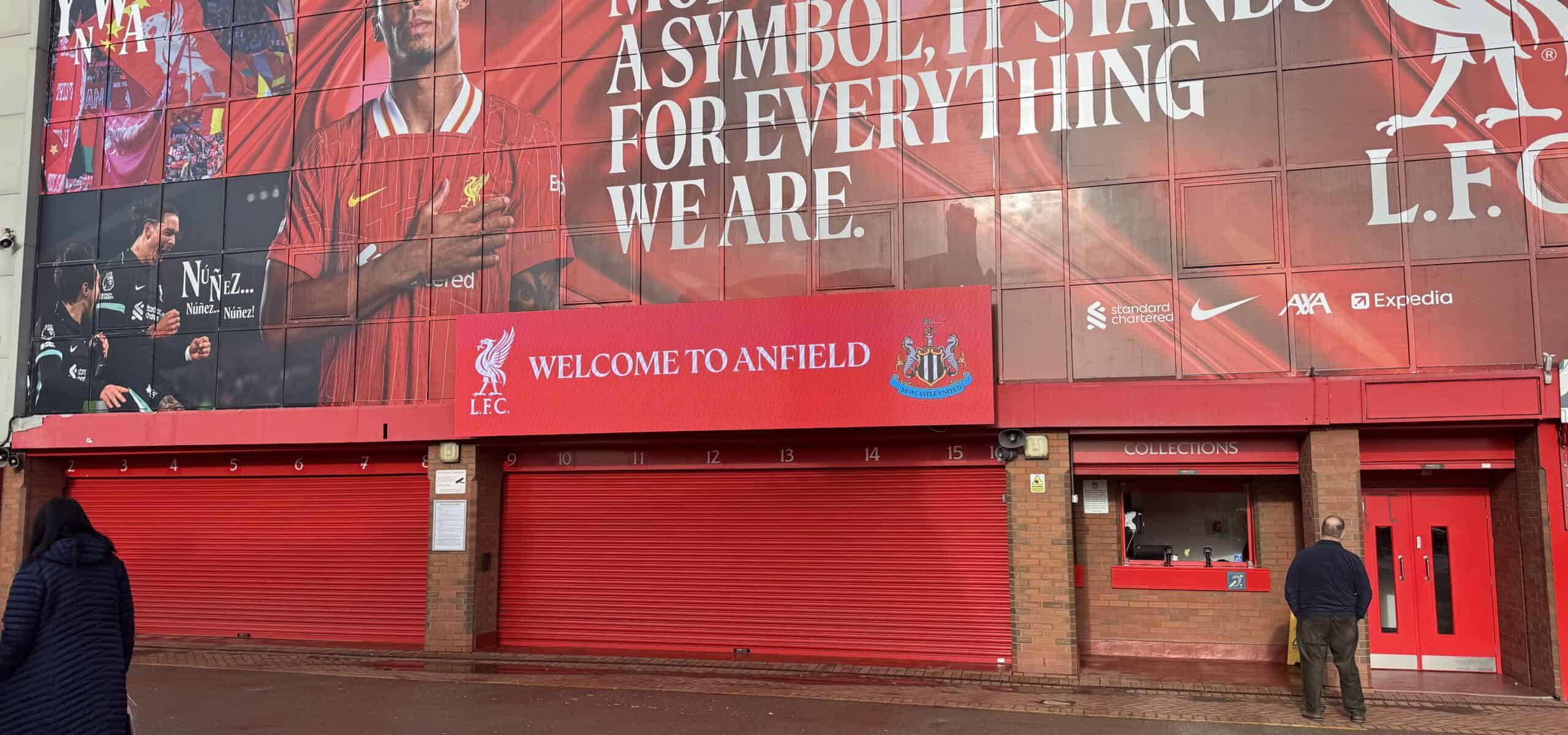
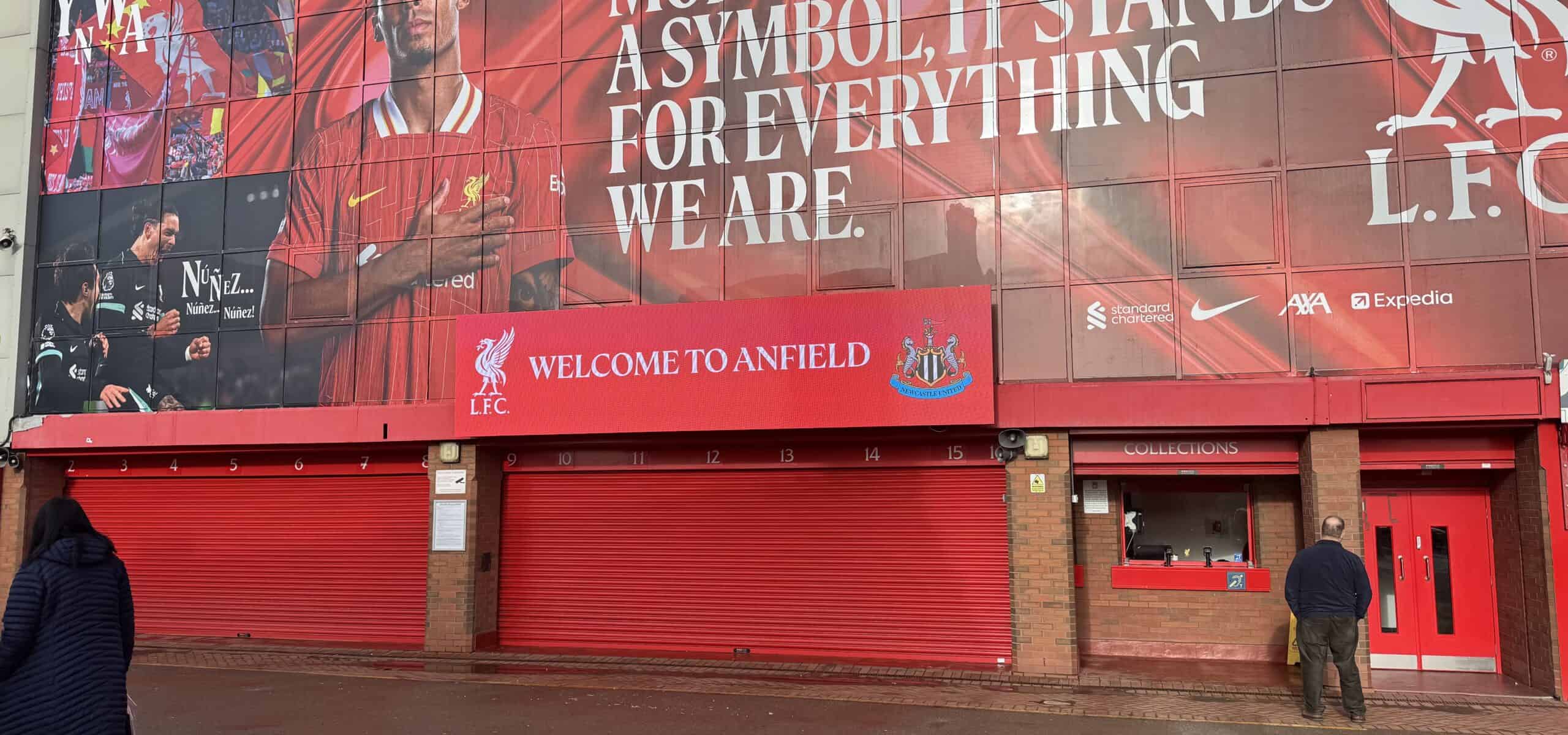
From perimeter advertising boards to giant replay screens, outdoor LED displays are standard equipment at professional sports venues. Requirements here include high refresh rates (3,840Hz+) for broadcast-quality camera capture, rapid content switching, and robust control systems. We installed an outdoor LED display at Liverpool FC’s stadium ticket office, rated IP65 and calibrated to remain legible in direct sunlight across an entire football season — a good example of what’s involved at this level.
Retail Fascias and Window Displays
High-street retailers increasingly use outdoor LED screens as dynamic fascia signage — replacing static lightboxes with full-motion content. Finer pixel pitches (P4–P6) suit these closer-viewing applications. These installations often sit within the building envelope, which can simplify planning requirements.
Wayfinding and Public Information
Transport hubs, universities, hospitals and public spaces use outdoor LED displays for real-time information — departure boards, campus maps, emergency messaging and directional signage. Reliability and readability in all conditions are paramount here.
Live Events and Festivals
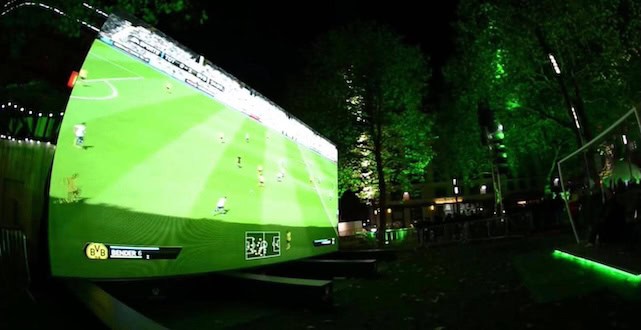
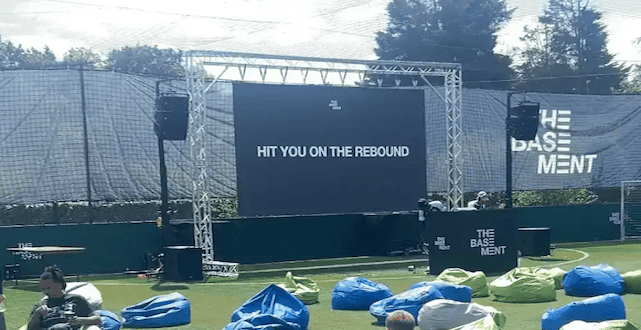
Temporary outdoor LED screens for concerts, festivals and sporting events require rapid deployment, robust weatherproofing and high brightness. LED screen hire is the standard route for event applications, with touring-grade cabinets designed for repeated assembly and disassembly.
Key Specifications for Outdoor LED Displays
When evaluating outdoor LED screens, these are the specifications that matter most:
| Specification | Typical Outdoor Range | Why It Matters |
|---|---|---|
| IP Rating (front) | IP65–IP67 | Weather and dust protection — non-negotiable for outdoor use |
| Brightness | 5,000–8,000 nits | Sunlight readability |
| Operating Temperature | -20°C to +50°C | Year-round UK operation (including cold snaps and heat events) |
| Refresh Rate | 1,920–3,840 Hz | Flicker-free appearance on camera and to the naked eye |
| Power Consumption | 400–800 W/m² (max) | Ongoing energy costs and electrical supply sizing |
| Cabinet Weight | 28–45 kg/m² | Structural loading calculations |
| Pixel Pitch | P4–P20 | Resolution vs viewing distance vs budget |
| Viewing Angle | 140° horizontal / 140° vertical | Off-axis visibility for wide audience coverage |
Power consumption deserves particular attention. A 20m² outdoor LED screen at maximum brightness can draw 10–16 kW — that’s a dedicated three-phase supply and a meaningful line item on the electricity bill. Average consumption is typically 30–40% of maximum, but electrical infrastructure must be sized for peak draw.
Outdoor LED vs Indoor LED — Comparison Table
The difference between outdoor and indoor LED cabinets goes far beyond brightness. Here’s a direct comparison:
| Feature | Outdoor LED Display | Indoor LED Display |
|---|---|---|
| IP Rating | IP65–IP67 (front) | IP20–IP40 (not weatherproof) |
| Brightness | 5,000–8,000+ nits | 800–1,500 nits |
| Pixel Pitch | P4–P20 (wider common) | P0.9–P4 (finer common) |
| Operating Temp Range | -20°C to +50°C | 0°C to +40°C |
| Cabinet Construction | Sealed aluminium/steel, conformal coating | Lightweight aluminium, open ventilation |
| Weight per m² | 28–45 kg | 8–20 kg |
| Cooling | Forced-air or fanless sealed design | Passive or fan-assisted |
| Power Consumption | 400–800 W/m² (max) | 150–350 W/m² (max) |
| Typical Applications | Billboards, venues, building fascias | Retail, corporate, broadcast studios |
Using indoor panels outdoors is a false economy — they will fail quickly from moisture ingress and thermal stress. Using outdoor panels indoors is technically possible but wasteful: you’re paying for weatherproofing and brightness you don’t need, and the wider pixel pitch may produce a visibly coarser image at indoor viewing distances.
Installation Considerations for Outdoor LED Displays in the UK
Planning Permission and Advertisement Consent
In England, most outdoor LED displays used for advertising require advertisement consent — and we offer a dedicated LED Planning Support Pack to help you put together a planner-ready submission under the Town and Country Planning (Control of Advertisements) (England) Regulations 2007. This is separate from standard planning permission, though both may be needed depending on the installation. Listed buildings, conservation areas and Areas of Outstanding Natural Beauty face stricter controls. Under UK planning regulations, most outdoor digital advertising displays require advertisement consent from your local authority — guidance is available via the UK Planning Portal (planningportal.co.uk). We recommend engaging with your local planning authority early — application timelines of 8–12 weeks are typical.
Screens used purely for information (not advertising) may fall under different rules, but this is a grey area that benefits from professional planning advice.
Structural Loading
Outdoor LED cabinets are heavy — typically 28–45 kg per square metre — and they’re exposed to wind loading. A structural engineer’s assessment is essential before any installation. The assessment must consider dead load (screen weight), live load (maintenance access), wind load (based on location, height and exposure), and snow/ice load. Most building-mounted installations require a steel sub-frame, which adds further weight.
For ground-mounted or pole-mounted screens, foundation design is critical. This typically means reinforced concrete pads with holding-down bolts, designed to the structural engineer’s specification.
Power Supply
As noted above, outdoor LED screens have significant power requirements. A dedicated electrical supply — often three-phase for larger installations — must be provided. This means coordination with the Distribution Network Operator (DNO) for new connections or upgrades, which can add 8–16 weeks to project timelines.
Maintenance Access
Outdoor LED screens need periodic maintenance: module replacement, cleaning, recalibration, and inspection of electrical connections. Front-access cabinet design is strongly preferred for wall-mounted installations where rear access is restricted. Permanent maintenance platforms or cradle systems may be required for high-level installations. Our maintenance guide covers this in more detail.
Plan maintenance access before finalising the installation position — not after. We’ve seen too many projects where a screen is installed in a location that requires expensive scaffolding for every service visit.
Ready to Discuss Your Outdoor LED Project?
Whether you’re planning a permanent installation or need outdoor LED screens for an event, we can help with specification, design and delivery. Call us on +44 (0)203 489 9878 or get in touch online.
From the Field — Daniel Reynolds
I’ve been specifying and installing outdoor LED displays for over a decade, and the single biggest lesson is that the screen itself is only half the project. The other half — the structural engineering, the electrical supply, the planning application, the maintenance strategy — is what separates an installation that runs reliably for ten years from one that becomes a headache within twelve months.
The technology has improved enormously. Cabinets are lighter, brighter and more energy-efficient than they were five years ago. But the UK climate hasn’t changed — we still get driving rain, salt air on the coast, and the occasional heatwave followed by a hard frost. Any outdoor LED display we specify has to handle all of that without fuss. When clients ask me what matters most, I tell them the same thing every time: get the IP rating right, get the brightness right, and invest properly in the installation. The screen will do the rest.
Quick Definitions
- IP Rating (Ingress Protection): A two-digit code (e.g. IP65) that rates how well an enclosure resists dust (first digit, 0–6) and water (second digit, 0–9). Higher numbers mean better protection.
- Nits: The unit of screen brightness, measured in candelas per square metre (cd/m²). Outdoor LED screens typically need 5,000–8,000 nits to remain visible in direct sunlight.
- Pixel Pitch: The distance in millimetres between the centre of one LED pixel and the next. Smaller pitch = higher resolution = higher cost. Written as P followed by the number (e.g. P6 = 6mm pitch).
- Refresh Rate: How many times per second the screen redraws its image, measured in hertz (Hz). Higher refresh rates (1,920–3,840Hz) eliminate visible flicker, especially on camera.
- Ingress Protection: See IP Rating — the two terms are interchangeable. “Ingress” simply means the entry of foreign matter (dust or water) into the cabinet.
Frequently Asked Questions
What IP rating do I need for an outdoor LED screen?
For a standard wall-mounted outdoor installation in the UK, a minimum of IP65 on the front face is required. This provides full dust protection and resistance to water jets. Ground-level or exposed coastal installations should specify IP66 or IP67 for additional water ingress protection. The rear of the cabinet is typically rated IP54.
How bright should an outdoor LED display be?
A minimum of 5,000 nits is recommended for outdoor LED screens in the UK. For installations facing south or in direct sunlight for extended periods, 6,000–8,000 nits provides better readability. All outdoor screens should include automatic brightness sensors to dim at night and avoid light pollution.
What pixel pitch is best for outdoor LED screens?
The best pixel pitch depends on your minimum viewing distance. As a guide: P6 for 6-metre viewing, P8 for 8 metres, P10 for 10 metres, and P16 for highway or long-distance applications. Specifying a finer pixel pitch than your viewing distance requires wastes budget without improving perceived image quality.
Do outdoor LED displays need planning permission in the UK?
In most cases, yes. Outdoor LED screens used for advertising require advertisement consent under the Town and Country Planning (Control of Advertisements) Regulations 2007. Additional planning permission may be needed depending on the installation’s size and location. Listed buildings and conservation areas face stricter requirements. Allow 8–12 weeks for the application process.
How long do outdoor LED displays last?
A well-specified and properly maintained outdoor LED display has an expected operational lifespan of 80,000–100,000 hours — roughly 10–12 years at 18 hours per day. Lifespan depends on operating brightness, thermal management, component quality and maintenance frequency. Regular calibration helps maintain colour uniformity as LEDs age.
What is the difference between indoor and outdoor LED cabinets?
Outdoor LED cabinets are weatherproofed (IP65+ vs IP20–40), significantly brighter (5,000–8,000 nits vs 800–1,500), built with sealed and conformal-coated components, and designed for wider operating temperature ranges (-20°C to +50°C vs 0°C to +40°C). They are also heavier, consume more power, and typically use wider pixel pitches than indoor equivalents.
Conclusion
An outdoor LED display is a significant investment that delivers measurable returns — whether that’s advertising revenue, brand visibility, audience engagement, or public information delivery. But realising that return depends on getting the specification right from the start.
The fundamentals are consistent: choose the right IP rating for your environment, ensure brightness is sufficient for daylight readability, match pixel pitch to your actual viewing distances, and invest properly in structural engineering and installation. Cut corners on any of these, and you’ll spend more fixing problems than you saved.
At Dynamo LED Displays, we handle the full scope — from initial specification and site survey through to installation, commissioning and ongoing maintenance. We work across permanent video wall installations and LED screen hire for events, and we’re always happy to talk through a project before any commitment.
Get Expert Advice on Your Outdoor LED Display
Sources & Further Reading
- IEC 60529 IP Rating Code — Wikipedia — full breakdown of Ingress Protection ratings for electronic enclosures
- UK Planning Portal — advertisement consent and planning permission guidance for outdoor digital displays
- HSE — Electrical Safety at Work — UK Health & Safety Executive guidance on electrical equipment installation outdoors
- AVIXA — AV industry installation and specification standards
- Display Daily — industry publication covering outdoor display technology developments
Outdoor LED specifications referenced against published industry datasheets and Novastar technical documentation. For outdoor display standards, see AVIXA (avixa.org).
Related Guides
- Indoor LED Displays: Complete Guide
- Transparent LED Displays: Complete Guide
- The Complete Guide to LED Video Wall Technology
- How Much Does an LED Video Wall Cost in the UK?
- LED Display Companies UK
- Kinetic LED Hire UK
- Flexible LED Screens: Complete Guide
- Request a quote for your outdoor LED project
Frequently Asked Questions
How bright does an outdoor LED display need to be?
Outdoor LED displays should have a minimum brightness of 5,000 nits to remain visible in ambient daylight. For direct sunlight environments, 8,000-10,000 nits is recommended. Indoor LED displays typically operate at 800-1,500 nits.
What IP rating do outdoor LED displays need?
Outdoor LED displays require a minimum IP65 rating for the front face. In exposed or coastal environments, IP66 or IP67 may be more appropriate.
How much does an outdoor LED display cost in the UK?
Outdoor LED display costs in the UK range from £2,500 to £4,000 per square metre for supply only. A typical 6m x 3m outdoor LED billboard costs between £55,000 and £90,000 including installation. All prices exclude VAT.
What pixel pitch is best for outdoor LED?
For outdoor LED displays viewed from 5 metres or more, P3.9 to P5 is typically appropriate. For larger displays viewed from 10 metres or more, P6 to P10 is more cost-effective without visible image quality loss.
Who installs outdoor LED displays in the UK?
Dynamo LED Displays is a specialist outdoor LED display supplier and installer based in London, with outdoor LED projects across the UK and internationally since 2013.