Augmented reality (AR) overlays digital content on a live view of the real world. It works by capturing the scene with a camera, working out where the device is with sensors and computer vision, then rendering graphics in the right place on a screen, headset or LED display in real time.
Updated September 2026. First published October 2020.
This guide explains what augmented reality is, where it came from, the four main types, the hardware it needs and where it is used, from smartphone filters to LED virtual production stages.
Key takeaways
- AR adds digital objects to a live camera view; virtual reality replaces the view entirely.
- Every AR system needs a camera, positional sensors, computer vision and a display to show the result.
- The four common types are markerless, marker-based, projection-based and superimposition-based AR.
- Retail, education, medicine, maintenance and gaming are the largest current uses.
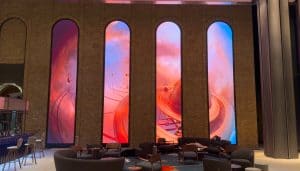
- LED video walls are the display end of camera-based mixed reality: a virtual production stage renders the background in real time behind the actor.
What is augmented reality?
Essentially, augmented reality takes a live camera feed, say from a mobile phone or smart device, and adds digital content to it, providing the user with an enhanced, 3D vision of their real-world environment.
One of the most famous examples of augmented reality can be seen through “filters” on apps like Snapchat or Instagram.
However, while this is only one example of how augmented reality can be used, there are, in fact, dozens of different real-world applications for this new and innovative technology.
But before we get ahead of ourselves, let’s start by taking a look at the history of augmented reality, where the idea came from, and who thought it up.
The history of augmented reality
Over the decades, there’s no doubting the fact that augmented reality (AR) has come a long way.
Only a couple of decades ago, this novel and instrumental technology was nothing more than a thing of the imagination. And even once it was brought to the mainstream, the costs associated with using it were so outrageous that it usually wasn’t financially viable for designers to work with.
Today, however, the tables have turned and augmented reality is now available on most smartphones and devices.
But where did the idea for augmented reality come from?
Who invented augmented reality?
In reality, the history and invention of augmented reality technology have been a collective undertaking by digital designers, coders, and technology companies worldwide. Therefore, there’s no single person whose works are attributed to the invention of the tech itself.
However, throughout history, there are a few notable figures who have contributed to its development and have helped create augmented reality as we know it today.
One of the earliest mentions of a form of technology similar to augmented reality (AR) is attributed to a 1901 novel by Frank L. Baum, in which some of his characters used electronic glasses that “mapped data onto people”. In the story, Baum’s fictional technology was referred to as a “character marker”.
Then, in 1957, a cinematographer by the name of Morton Heilig invented what he called the “Sensorama”, which was capable of delivering audio, visual, and even smell to its users. However, the “Sensorama” was manually controlled, and it wasn’t until years later that we would see the first computer-generated forms of AR in the real world.
A little over ten years later, in 1968, Ivan Sutherland invented a head-mounted AR device. However, the technology available at the time made the device impractical for mass use.
Throughout the 1970s and 1980s, there were several more developments in terms of technologies capable of generating the first “virtual reality” interfaces, which allowed users to interact and manipulate 3D models and objects in a computer-generated world.
But even these weren’t augmented reality as we know it today. It wasn’t until 1990 that Thomas P. Caudell coined the term “augmented reality”.
Finally, the very first modern Augmented Reality (AR) system was developed by Louis Rosenberg in 1992.
The computer application was called Virtual Fixtures and was an incredibly complicated robotic system compared to most modern AR systems today.
Since then, there have been many other notable contributions to the development of this powerful technology, including some made by military bodies, governments, giant tech firms, and even small-time computer developers.
The different types of augmented reality
Today, there are many different types of AR technology being used for a wide range of personal, commercial, industrial, and even military and medical applications.
But before we get into the specifics applications of AR, let’s take a look at the different types of mainstream AR you can find today.
Markerless AR
Markerless AR is used to refer to AR software applications that don’t need any prior data of the user or their environments to be able to generate 3D models and display new, “augmented” content.
In other words, markerless AR is capable of placing 3D objects and overlays in a virtual environment based on the environment’s real physical features, as opposed to identifying pre-determined markers. Essentially, markerless AR technology doesn’t need any object tracking system to detect and map out real-world objects accurately.
This is made possible thanks to improvements to digital photography, processing power, and algorithms.
Today, markerless AR is the most popular option for AR applications.
Marker-Based AR
Before markerless AR hit the scene, the majority of the first augmented reality systems were marker-based.
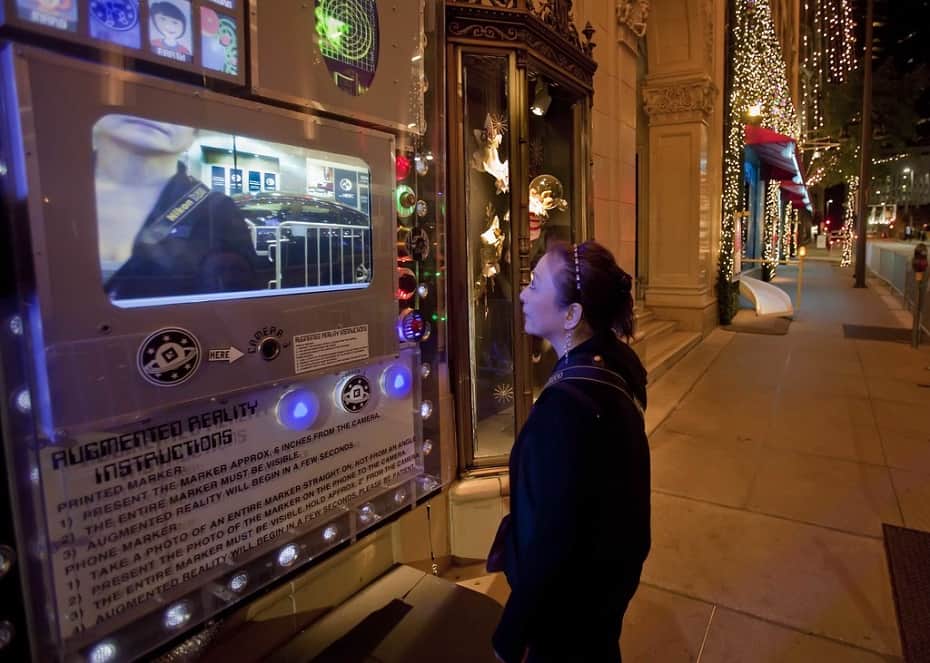
Marker-based AR systems and computer applications use target markers, referred to as “target images” to place digital overlays on a given space. In turn, these markers are used by the AR system to determine where to place its digital content into the user’s field of vision.
Projection-Based AR
When it comes to manufacturing processes, projection-based AR is quickly taking the entire industry by storm.
With the ability to deliver better, more accurate results than most other AR systems that generate 3D models, projection-based AR is often used to simplify the many complicated or tedious manual tasks that are part of a business’ manufacturing process.
But these highly-effective, and highly-accurate AR systems aren’t only used to make factory floors simpler and more efficient, they can also make the overall manufacturing process safer and less arduous for those involved.
Superimposition-Based AR
Using marker-based object recognition, superimposition-based AR is used to replace the original image from a live video feed with either a part of or a full augmented image.
You’ll often see this type of AR being used in the medical field, where health care providers might superimpose the content or image of an X-ray onto a patient.
How does augmented reality affects our lives and is changing the world?
With many different types of AR-based technology available, it’s no wonder that it’s capable of affecting us all on a personal level, as well as shaping the way the world in which we live operates.
Amongst many other changes, AR is having a considerable influence on the way we play video games, both individually and collectively.
This is most popularly seen in the mainstream video game, Pokemon Go, which uses AR technology to display the characters and objects of the game onto the player’s camera view.
Additionally, AR tech is changing the way we seek and receive real-time information, no matter where we go.
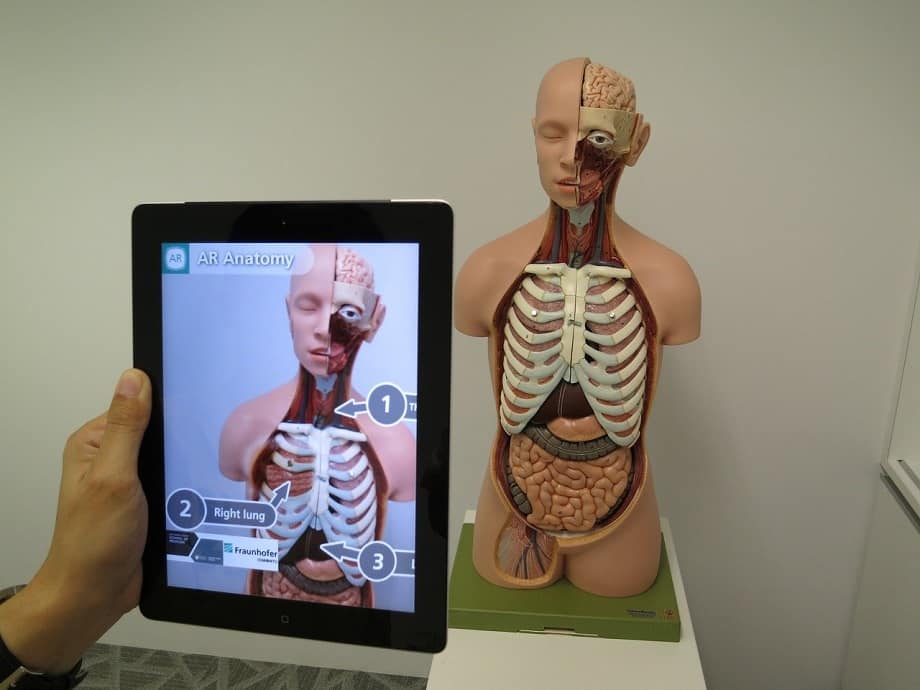
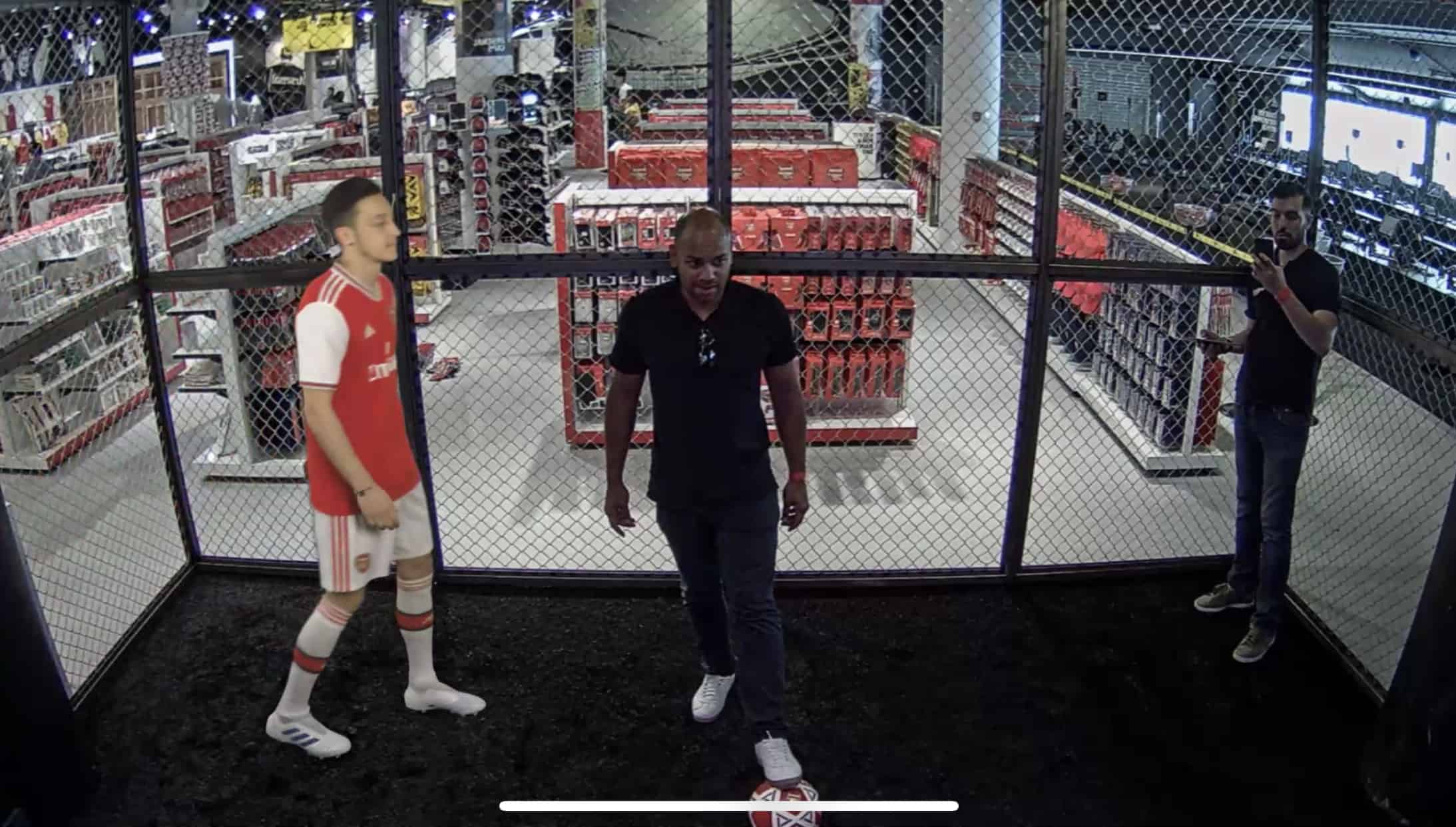
For instance, an augmented reality map might be used to help tourists find their way around a foreign city. Or, it could be used to translate signs and directions from other languages, in real-time.
In the future, these, and many new, innovative applications of augmented reality are predicted to have a significant impact on the way that we all see and interact with the world around us.
But by using AR, not only will we be able to see the world differently, but we’ll also be able to learn more about our local environments, in real-time, which has the capability of impacting and disrupting virtually all sectors of industry in some way or another.
What hardware does AR require?
Although an AR system can either be extremely simple or super complex, there are only a few critical pieces of hardware that are needed for it to work.
Let’s take a look at the components of an AR system, and what they do to help you understand how augmented reality is created and how does it work.
- Depth-sensing camera – The primary component of any AR system is a high-quality, depth-sensing camera, capable of capturing visual information about the local environment, while also determining distance and angles accurately.
- Sensors And Registration Tools – Most AR systems use accelerometers and motion sensors, which helps the computer system learn about the space in which it’s located, as well as helping it understand where to superimpose or overlay the augmented visual information.
- Computer Vision – Using a machine learning algorithm, the AR system will gradually learn more and more about its environment and the objects that it’s looking at. For instance, when an AR camera is trained to identify a person’s face, it will use the pixels of that image as a reference point to be able to recognise other faces in the future. Then, the next time the system sees a human face, it would be able to recall this information, allowing it correctly to identify a face.
- Digital Display Or Output Device – Lastly, an AR system needs an output device, which it will use to provide a visual of its newly generated, augmented reality. This might be in the form of a smartphone display, computer monitor, or a high-powered projector.
With these, augmented reality or computer vision systems are capable of seeing and listening (mic and camera feed), knowing where it’s located in its environment (GPS), understanding what it’s looking at or hearing (processor), and then displaying content as an enhanced view of the real world, or an “augmented computer vision”.
What is augmented reality used for?
Because it’s such a versatile form of tech, there are many current applications for it.
But in the future, there will be more focus on developing these innovative systems, which means that we’re only just beginning to see what computer vision can be used for.
Smartphones
One of the most popular forms of augmented reality is the ever-so-prominent use of filters on apps like Snapchat, Instagram, and Facebook. These “filters” are a form of augmented reality (AR).
Additionally, AR systems can be used on smartphones and devices to give the user real-time information about their local environment.

For instance, displaying content, such as what stores or shops are nearby, or giving the user real-time information about the products or services available at those stores, all without the user needing to go in.
Public safety and security
When it comes to public safety and security, AR is capable of providing law enforcement with enhanced situational awareness, team cohesiveness, as well as better personnel management and command capabilities. All of which is especially useful during high-tension, dynamic, or dangerous situations, which are commonly seen by SWAT teams and police officers.
Essentially, AR technology can offer improved safety to the public, as well as better, more efficient emergency response from law enforcement.
Gaming and entertainment
You can already see many of the different applications of computer vision tech used in mobile applications, such as Snapchat and its use of filters, or a game like Pokemon Go.
As we speak, many other software applications and games are being developed that use augmented reality, combining elements of reality with enhanced computer vision.
For instance, the Nintendo Wii uses real-time processing power to track its users’ movements and display them, in real-time, on the screen.
In the future, we can only expect even more immersive entertainment and gaming experiences as AR tech continues to be developed and applied in new and innovative ways.
Travel and tourism
In terms of travel and tourism, AR has the capability of allowing for more immersive, creating virtual tours.
Whether we’re talking about a historical site or a hotel suite, company’s can use AR-based tech to provide completely hands-free virtual tours, which aren’t only convenient but are also safer and more hygienic than in-person tours.
Equipment maintenance
When it comes to equipment maintenance, AR technology is capable of providing staff with a completely automated tool for inspecting, maintaining, and managing equipment, machinery, and parts inventories.
For instance, an AR system could be used to inspect a piece of machinery. In turn, it would then analyse the equipment’s history to give a technician precise directions on what parts or components need to be serviced.
Plus, since this type of system is capable of tracking and recording information in real-time, tracking, and managing inventory can also be automated.
Military
Since long before AR technology was used for applications like Snapchat and Pokemon Go, militaries around the world were using this highly-innovative form of technology to create safer environments for soldiers, while also reducing the costs associated with warfare.
For instance, head-mounted displays are often employed, which can display real-time information to a soldier about their local environment.
For instance, this type of technology could be used to provide soldiers with instant location-based directions in real-time or to help them identify whether a target is friendly or not.
AR Implementation in marketing
Depending on the specific industry a company is in, there are many different ways that today’s modern brands can use real-world AR solutions to their advantage.
Regardless, AR allows brands to offer a better, more convenient user experience, which can be tailored to suit a consumer’s past and future behaviour.
For instance, home interior brands and designers can use AR systems to show consumers what new paint colours or designs might look like in their home. Or, furniture producers can offer their customers a way to see what a piece of furniture might look like in their living room before they buy it.
The idea is that companies can and should be looking for new, immersive ways to offer their products or services to consumers, which can often be achieved by displaying their digital content and objects as part of the physical real world, head-up display.

Dynamo’s part in this is the display end. Our LED video walls are the canvas for camera-based mixed reality: at Brook Sixth Form in East London we installed an XR stage of two 1.9mm DRE Series walls in an L-shape, 2,304 by 1,280 pixels each, over a 2,304 by 2,304 pixel LED floor, driven by NovaStar MX40 Pro processing, so students film actors against rendered backgrounds in real time. Our guide to LED virtual production studios explains how the technique works.
How can augmented reality help education?
Since 2020 far more teaching has moved online.
Children and adults alike now use e-learning alongside the classroom.
Through the use of computer vision models and developments, augmented reality systems can create more immersive, interactive classes for students, which allows them to focus on their practical skills, as opposed to only learning theoretical knowledge.
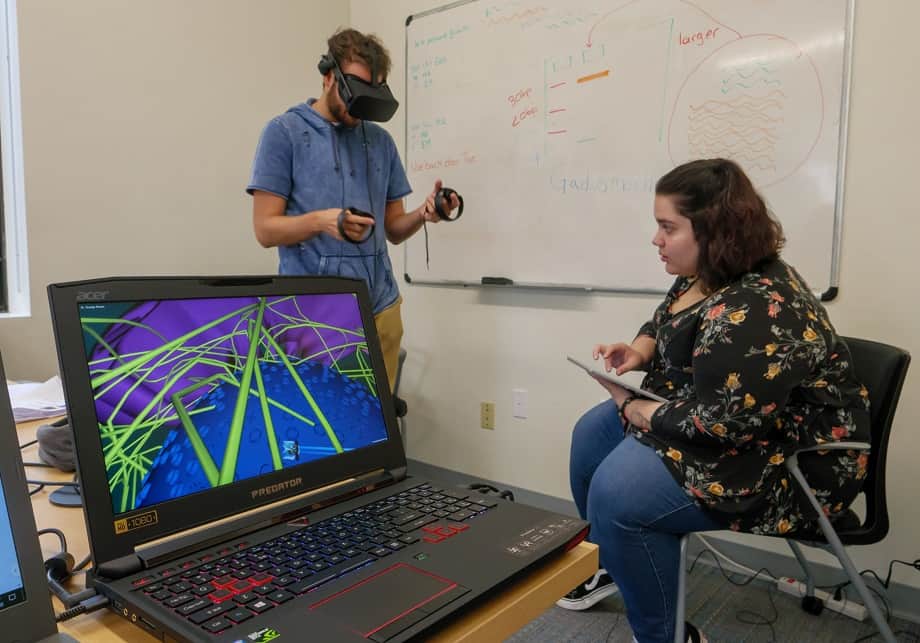
For this, AR can add virtual objects and images to the student’s real-world view so that they can practice their skills in real-time.
AR In Medicine
If you’ve ever watched Star Trek or other sci-fi shows, you’ve probably seen them use futuristic technology to either diagnose or treat people’s illnesses/injuries. Today, with the use of AR, this type of diagnosis and treatment isn’t so far-fetched.
In fact, since AR technology can be used to integrate digital information into a real-world environment, it can also be used in medicine to either diagnose or treat patients.
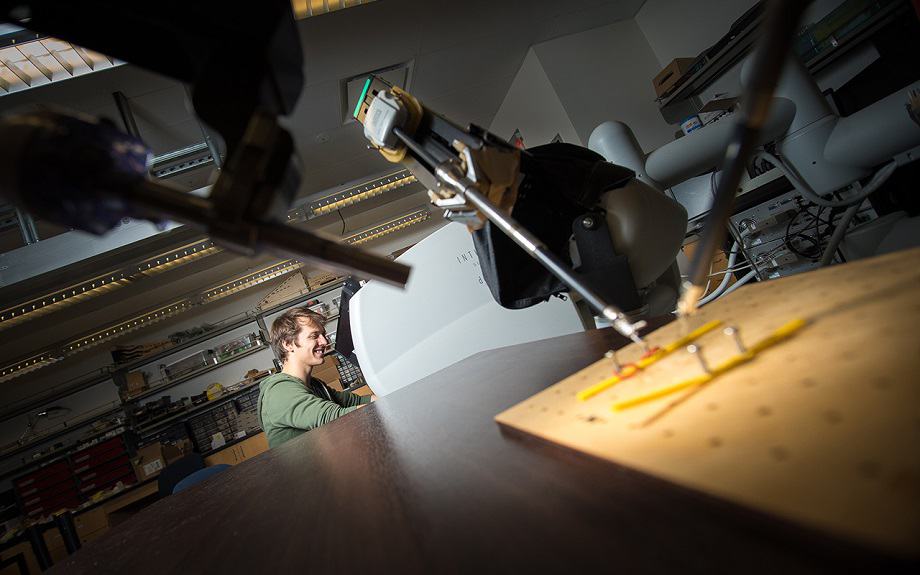
With this, medical professionals are now using superimposition AR for student education, as well as to help in planning surgery, creating treatment plans, or simply explaining medical issues to patients or their family members in a more hands-on way.
How to choose AR solutions for your business?
As already mentioned, there are many different ways that AR can be used, especially for businesses that trade online as much as in person.
But when it comes to choosing an augmented reality solution for your business, things get a bit more complicated.
For instance, before choosing an AR provider or partner, you’ll need to determine three things:
- what type of AR you need
- what type of digital content you’re planning on creating.
- how much you are willing to spend on AR
It’s also important to understand the many different types of AR and how they can be applied to your specific business needs. A sensible first step is to talk to a company that already delivers AR projects in your sector.
What are the limitations of augmented reality?
Although augmented reality is efficient and beneficial for its users, there are, of course, a few disadvantages and drawbacks to using it.
- For starters, the biggest drawbacks associated with AR is that, at least for most applications, there’s a serious lack of user privacy. For example, when using an app like Snapchat, there’s no telling what the data collected and stored will be used for.
- Many virtual reality or AR apps require access to a device’s microphone and camera content. So once again, there’s really no way to know what the owners of such apps are using your content for.
- Additionally, the computing and hardware requirements of these systems vary drastically, which leads to the most prominent drawback to AR; it can be extremely costly.
Is Augmented Reality Expensive?
The short answer is yes.
But depending on the specific applications you intend to use it for, the costs associated with augmented reality can vary significantly.
With that said, typically, it’s costly to plan, develop, implement any AR-based projects.
And even when a company or firm does develop an AR system, the maintenance and continuous updates required to keep its computer vision algorithms healthy only increase the costs of such projects.
The Future Of Augmented Reality
According to MobiDev, in 2019 alone, augmented reality saw record growth, and commercial support for AR technology is only expected to remain strong in the coming years, especially amongst tech giants like Apple, Google, Amazon, Facebook, and Microsoft.
In fact, as of May 2019, the estimated user base for AR-supporting devices surpassed 1.5 billion worldwide, and according to a study by Gartner, an estimated 100 million mobile users are expected to use AR-based shopping technologies in 2020 alone.
Therefore, in the coming years, it’s safe to say that we’re only going to see an increase in the adoption, as well as the use of Augmented Reality in all areas of industry.
Augmented reality: frequently asked questions
How does augmented reality work?
An AR system captures the real scene with a camera, uses sensors such as GPS, accelerometers and depth cameras to work out where the device is, and runs computer vision to recognise surfaces or markers. It then renders digital objects in the correct position and scale and shows the combined image on a phone, tablet, headset, projector or LED display, updating many times a second.
What is the difference between augmented reality and virtual reality?
Augmented reality adds digital content to a live view of the real world, so the user still sees their surroundings. Virtual reality replaces the view entirely with a rendered scene, usually inside a headset. Mixed reality sits between the two, with digital objects that respond to real surfaces and people, which is what an LED virtual production stage delivers for the camera.
What hardware does augmented reality need?
Four things: a camera to see the scene, sensors and registration tools such as GPS, accelerometers and depth sensors to place the device in space, a processor running computer vision to understand what the camera sees, and a display to show the result. The display can be a smartphone, a headset, a projector or an LED screen.
What are the main types of augmented reality?
Markerless AR places objects using the environment’s real features and is now the most common type. Marker-based AR anchors content to a printed target image. Projection-based AR projects light onto physical surfaces, often in manufacturing. Superimposition-based AR replaces part of the camera view with an augmented image, as in medical overlays.
Is augmented reality expensive?
It can be. Consumer AR on a phone costs little more than the app, but a bespoke AR system for a business needs software development, content, the hardware to run it and ongoing updates to keep its recognition models working. Costs vary widely with the application, so define what you need the system to do before asking for quotes.
How is augmented reality used with LED displays?
Two ways. In virtual production the LED wall shows a rendered background that moves with the tracked camera, so the actor is filmed inside a scene that exists only as data. In retail and events an LED screen becomes an AR portal or interactive wall that reacts to people in front of it. Dynamo installed the XR stage at Brook Sixth Form on this principle.
Get a quote for an LED display for AR or virtual production
Tell us the space, the camera set-up and what the screen has to do, and we will come back with a pixel pitch, a wall and floor layout and a written quote. Get a quote or call 020 3489 9878.