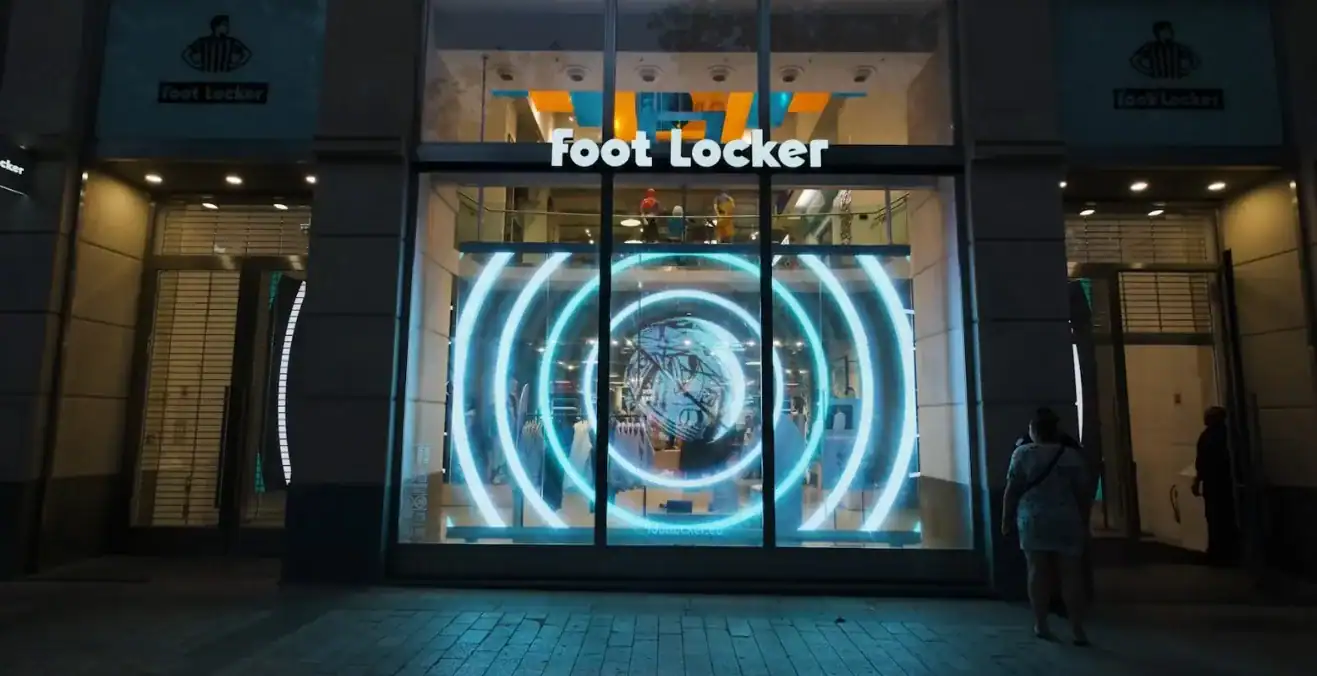
Every specifier working with transparent LED reaches the same fork: push for higher transparency to preserve natural light and sightlines, or tighten the pixel pitch for sharper image quality. The transparent LED transparency vs resolution trade-off is the inverse relationship between open aperture and pixel density — wider gaps between LED strips increase transparency but reduce pixels per square metre, while packing LEDs closer together sharpens the image but blocks more of the view behind. That constraint is physical, not technological, and it applies to every transparent LED product on the market.
Key takeaways
- Transparent LED panels achieve 30–93% transparency depending on format — from a fine-pitch FlexCurtain mesh at the lower end to a DGN glass panel at the upper end.
- Viewing distance is the deciding factor: if your audience is 8 metres away, you do not need a fine pitch.
- Transparent LED screens for retail windows typically need 65–85% transparency; architectural facades push above 85%.
- Content type matters as much as specs — motion graphics tolerate wider pitches far better than photographic stills or small text.
- A headline transparency percentage does not tell the full story; strip width, viewing angle and frame lines all change the perceived result.
- Always check the final pixel count, not just the pitch figure, before approving a specification.
- If you are unsure where your project sits on the curve, the LED screen configurator lets you model pitch and transparency against your dimensions before committing to a specification.
Transparent LED transparency vs resolution at a glance
| Design question | Typical working range | What it changes |
|---|---|---|
| Transparency | 30–93% depending on construction | Daylight through the glass, sightlines, perceived openness |
| Pixel pitch | P3.9 to P30 across transparent LED formats | Detail, text size, viewing distance, LED density |
| Comfortable viewing distance | Roughly pitch in mm expressed as metres | P10 is usually happier from around 10 metres than 2 metres |
| Brightness | Retail/window spec often 3,000–5,000+ nits | Helps against daylight and reflections |
| Content type | Large graphics, motion, logos, short copy | Transparent LED is less suited to paragraphs and fine detail |
| Installation depth | Usually slimmer than a full cabinet LED wall | Helps where the display sits behind or within glass lines |
Why transparent LED transparency and resolution pull in opposite directions
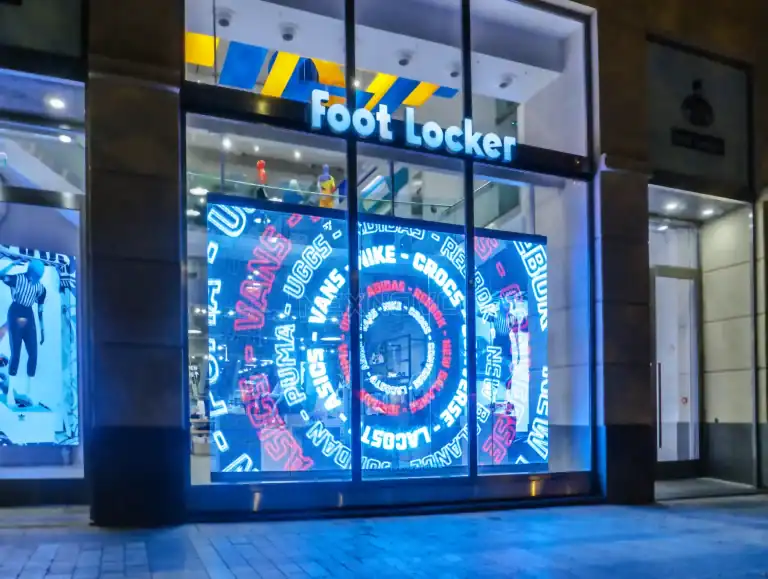
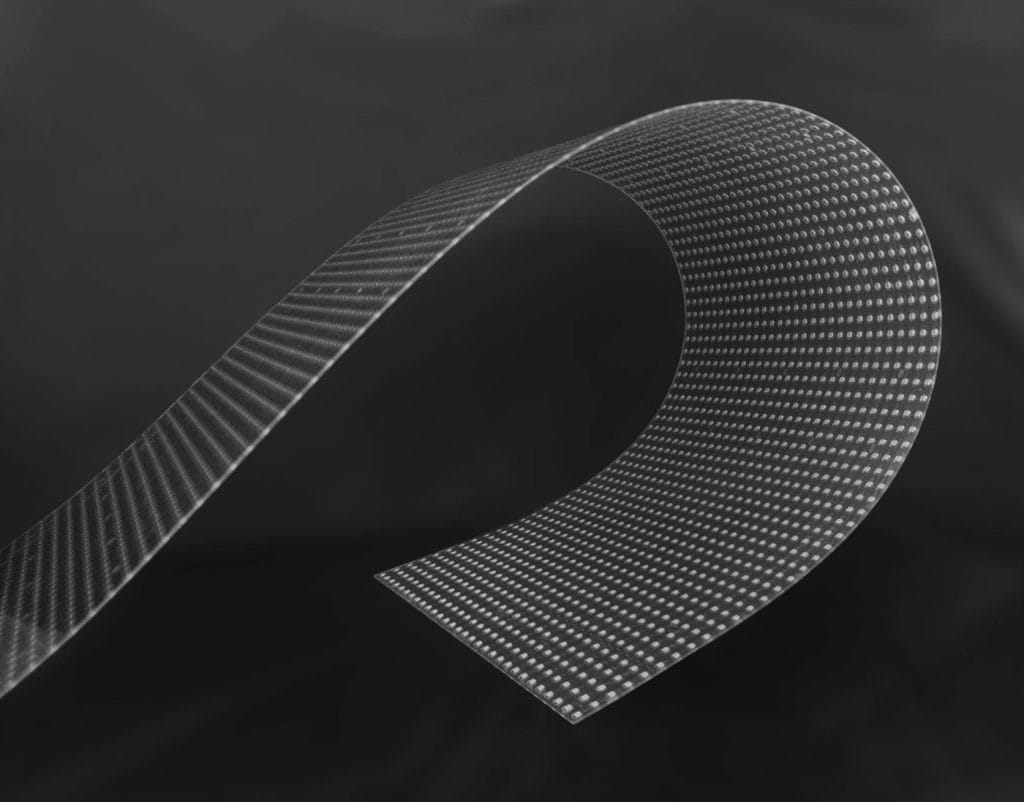
A transparent LED panel is not a continuous screen. It is a grid of thin LED strips separated by gaps. Light passes through those gaps — that is the transparency. The wider the gaps relative to the LED strips, the more light gets through and the higher the transparency percentage.
Resolution, measured as pixel density per square metre, depends on how many LEDs are packed into that grid. To increase density, you either shrink the LED package or reduce the gap between strips. Both approaches reduce the open area that light passes through, which lowers transparency.
This is not a limitation of a particular manufacturer or technology generation. It is a geometric constraint. A display with 93% transparency physically cannot hold as many pixels per square metre as one with 70% transparency, because the extra open space that creates that high figure is space where LEDs are not.
The relationship is not perfectly linear — LED package design, strip width and mounting rail thickness all influence the exact numbers — but the direction is always the same. More transparency means fewer pixels per square metre.
For a deeper explanation of how pixel pitch affects image clarity across all LED types, our pixel pitch guide sets out the calculation.
What viewing distance determines the right transparent LED pitch?
The right balance depends on how far away your audience will be.
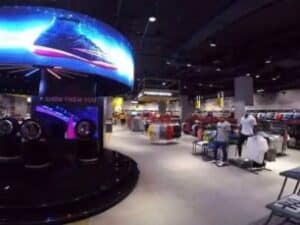
Close viewing (2–4 metres): Retail window displays, reception areas, museum lobbies. At this range, individual pixels become visible on coarser pitches. A P6 or tighter pitch with 70–85% transparency is the practical starting point. Content can include product photography and detailed text.
Mid-range viewing (4–8 metres): Hotel lobbies, showroom glazing, mezzanine-level installations. A P8 pitch with around 85–90% transparency handles motion graphics and branded content comfortably. Photographic stills remain legible but benefit from high-contrast treatment with generous spacing.
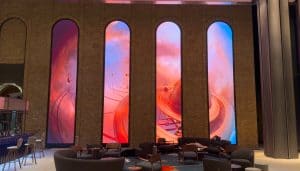
Long-distance viewing (8+ metres): Building facades, atrium features, exterior architectural wraps. At this distance, a P10 or wider pitch delivers effective visual impact with transparency above 90%. Content should be bold graphics, simple motion and large-format text. Fine detail is wasted at these distances regardless of pixel density.
A useful early test is to map the smallest required text or detail against the pixel pitch. If a letter is only five or six pixels high, it will look crude. Our LED screen configurator lets you plug in screen dimensions and pitch to see the resulting pixel count — run your artwork against that grid before sign-off. If you are unfamiliar with how pixel pitch translates to viewing distance across LED types, our pixel pitch guide covers the fundamentals.
The Dynamo transparent LED range covers each of these scenarios with different form factors — from glass-bonded panels for close-viewing retail to mesh systems for large-scale facades.
Product form factors and how they shift the trade-off
Not all transparent LED products sit at the same point on the transparency-resolution curve. The form factor changes where the trade-off lands.
Transparent LED glass panels (DGN Series): Transparent LED strips bonded directly to glass. These offer the highest transparency in the Dynamo range — 85% to 93% depending on pitch. The glass substrate provides structural rigidity without additional framing, keeping the open aperture high. Pixel pitches typically start around 6 mm. Read more on the transparent LED glass product page.
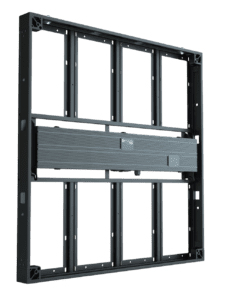
Flexible mesh curtain (LVW FlexCurtain): A lightweight mesh structure that can conform to curved surfaces. Transparency ranges from around 30% at P3.9 up to 60–70% at wider pitches. The mesh form factor trades some transparency for finer pitch options — a P3.9 mesh delivers a substantially sharper image than any glass panel, but blocks noticeably more light. Better suited to stage backdrops, curved architectural features and installations where image quality outweighs see-through requirements. When comparing transparent LED film vs LED glass vs mesh, the mesh sits between the two: more flexible than glass, higher resolution capability than film.
Transparent LED film: Ultra-thin adhesive films applied directly to existing glass. The advantage is retrofit simplicity — no structural modification to the glazing. However, film formats typically sit at coarser pitches with moderate brightness, so they suit large-format graphics rather than detailed content. For current transparent LED film options and availability, contact us.
For projects where transparency is not a hard requirement, an indoor LED screen or LED video wall can often deliver more detail per pound because the whole surface is available for pixels.
Content strategy: working with the resolution you have
The trade-off does not end at hardware selection. Content design is the second lever that determines whether a transparent LED installation looks sharp or falls flat.
Transparent displays are rarely the right medium for photographic stills viewed at close range. The pixel gaps that create transparency also break up fine image detail. But the same display running bold motion graphics, typographic animation or high-contrast branded content can read cleanly from the intended viewing distance.
- Use high-contrast colour palettes. Transparent panels lose subtlety in mid-tones because ambient light bleeds through the gaps. Saturated colours against dark backgrounds punch through effectively.
- Favour motion over static imagery. The human eye tracks movement naturally, which masks pixel structure. A static image invites the viewer to study the gaps between LEDs.
- Design for the black state. When parts of the content are black, those pixels switch off and the display becomes almost fully transparent. Dark backgrounds let the architecture show through while lit areas carry the message.
- Scale text larger than you would for a conventional screen. Content competes with daylight, reflections and a partially open structure at the same time. Short words, large type and generous spacing read far better than paragraphs or menu boards.
Processing also matters. We typically drive transparent installs with Novastar or Brompton controllers — per-cabinet calibration helps transparent displays reproduce colour accurately despite the uneven pixel geometry.
Specifying transparent LED: what to check before you approve
Before approving a transparent LED specification, confirm these points in writing:
- Real pixel count, not just pitch. Ask for the final pixel dimensions of the proposed screen. A pitch figure without width and height does not tell you whether the artwork can be displayed properly.
- Transparency at the installed angle. If the screen is mainly seen from 30 degrees off-axis, assess it from that angle. Straight-on transparency is only part of the story.
- Content proof at actual size. Scale key artwork to the proposed pixel count. If the logo, text or product detail fails at this stage, a brighter screen will not fix it.
- Off-state appearance. Many transparent LED projects are judged when the display is off as well as on. The strip pattern, cabling and framing should be acceptable during daylight and trading hours.
For outdoor-facing projects with weather rating and service access requirements, the brief moves into outdoor LED screen territory.
From the field
I usually ask clients to show me the smallest thing they expect the screen to display. If that item is a price, a sponsor line or a detailed product pack, my first concern is not the transparency percentage. My first concern is whether the proposed pitch gives it enough pixels to survive.
On a retail window project, we moved from P10 to P8 after reviewing the content plan, which dropped transparency from 93% to 90% but made the imagery noticeably crisper for pedestrians passing at 3–4 metres. That 3% transparency difference was invisible to anyone walking past. The image quality difference was not. I have also seen projects change direction after a simple viewing test — from straight-on, the sample looked open, but from the actual customer approach the LED structure was far more visible because the glass, mullions and display strips lined up differently. My advice is always to test from the position that matters commercially, not from the position that makes the sample look tidy. You can browse our transparent LED product range to see how different form factors suit different retail and architectural applications.
Transparent LED transparency vs resolution FAQ
Does higher transparency always mean lower image quality?
Yes, for any given product type and pitch. Higher transparency means wider gaps between LED elements, which reduces pixel density per square metre. However, the penalty is relative to viewing distance — at 10 metres, a high-transparency P10 panel can look perfectly sharp. The quality drop only becomes apparent when viewers are closer than the recommended distance for that pitch.
What transparency percentage do I need for a retail shop window?
Most retail window installations work well between 65% and 85% transparency. The lower end suits windows where image quality is the priority and some light reduction is acceptable. The upper end suits windows where maintaining natural daylight and street visibility is critical. Planning conditions or landlord requirements sometimes set a minimum transparency threshold.
What pixel pitch should I choose for transparent LED at close viewing distance?
For close viewing within a few metres, finer pitches such as P3.9 to P6 are usually easier to read than P10 or P15. Finer pitch often reduces transparency and may make the strip structure more visible. Each letter needs a minimum pixel height of around 7–8 pixels to remain legible, so check the actual content at the actual screen size before choosing.
Can transparent LED show small text clearly?
Small text is where transparent LED’s resolution compromise becomes most visible. The letter height needs enough pixels to form each character cleanly, and the content must compete with daylight, reflections and the background seen through the display. Short words, large type and strong contrast work far better than paragraphs or detailed terms and conditions.
Does brightness compensate for lower resolution?
Brightness helps visibility, especially in windows and atria, but it does not create extra pixels. A P15 screen remains a P15 screen even at high output. If the image lacks enough pixel detail, increasing brightness may make it more noticeable rather than more readable. Pitch, content scale and viewing distance still need to be right.
How should I compare transparency between different products?
Compare samples in the intended viewing conditions where possible. Check straight-on and angled views, off-state appearance, frame lines, cabling and the effect of nearby glass. Transparency percentages are useful for initial filtering, but they do not fully describe how open the display will feel once installed in a real building.
When is a conventional LED wall better than transparent LED?
A conventional LED wall is often better when image detail matters more than seeing through the display — close-range presentations, detailed retail pricing, fine brand artwork or content with small text. If the wall does not need to preserve daylight or sightlines, using the full surface for pixels is more efficient and typically more cost-effective. See our indoor LED screens or LED video walls for full-surface alternatives.
Conclusion
There is no single correct answer to the transparent LED transparency vs resolution question — it shifts with every project. Every transparent LED installation sits somewhere on the curve between maximum see-through and maximum image sharpness. The right position depends on your viewing distance, your content requirements, and any transparency minimums set by the project brief or planning conditions.
Start with the viewer and the content. How far away are people? What is the smallest detail they must read? How much of the shop, atrium or facade must remain visible? Once those questions are clear, the pitch and transparency range become easier to defend, and the specification can be built on evidence rather than headline figures.
To discuss the right balance of transparency and resolution for your transparent LED project, call us on +44 (0)203 489 9878 or get in touch through our contact page.