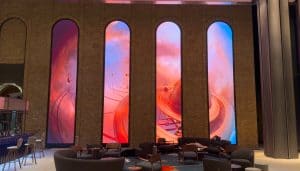
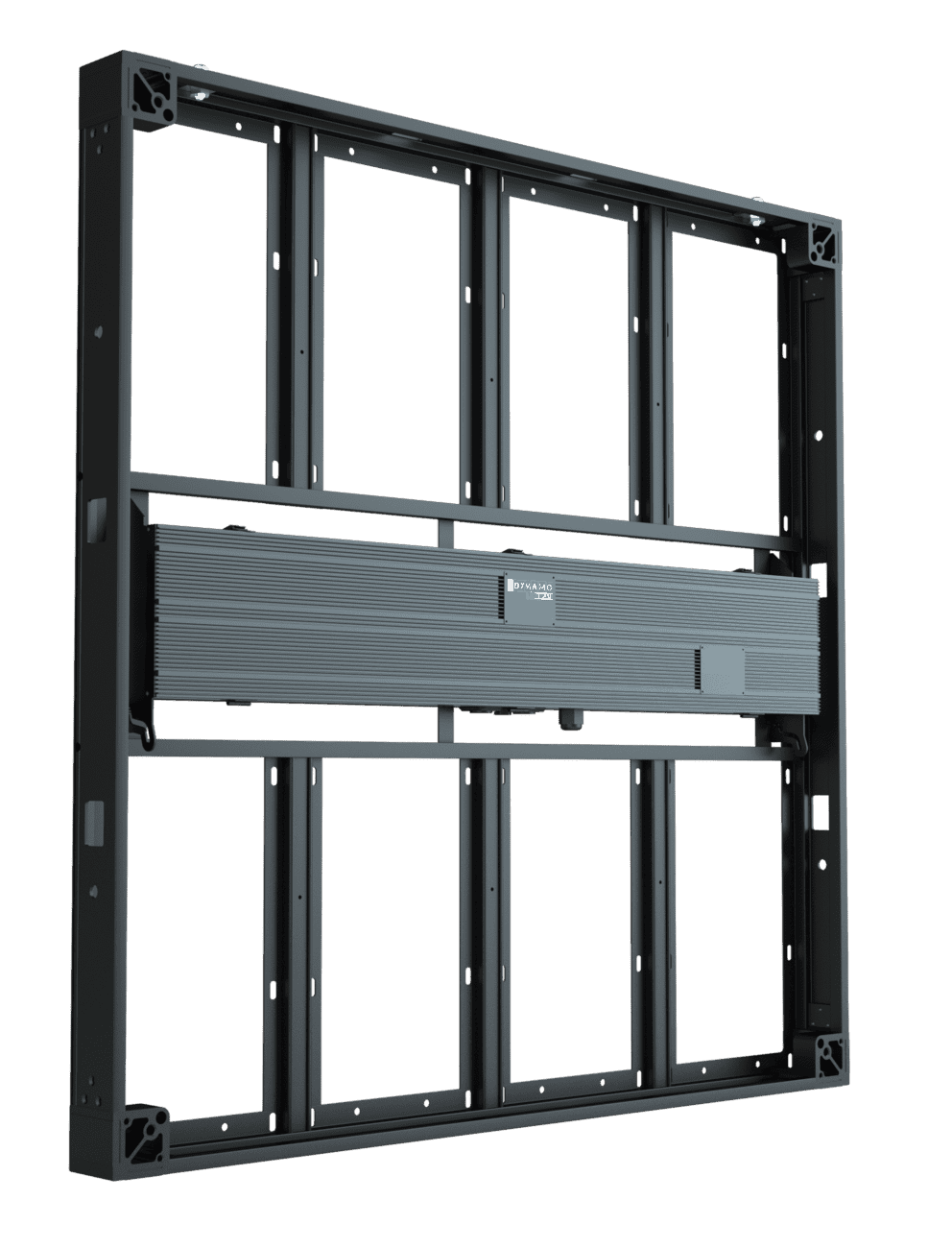
An outdoor LED IP rating, defined by IEC 60529, states two things: protection against solid ingress (first digit) and water ingress (second digit). For UK outdoor LED displays, IP65 is the practical minimum at the front face, IP66 suits exposed elevations, and IP67 is specified for ground-level or washdown sites. The rear of the cabinet is usually rated lower, by design.
When a brief lands on our desk asking for an outdoor LED IP rating “of IP65 or better”, the specifier has usually copied the line from a previous tender. It is the right instinct, but the rating itself is one of the most misunderstood lines on an LED spec sheet. A panel can be IP65 on paper and still fail in its first winter. Another can be IP54 at the back, IP65 at the front, and outlast a “fully IP67” cabinet next to it. This guide explains what the rating actually measures, where the marketing gets loose, and which figures matter for a UK install.
Key takeaways
- IP ratings come from IEC 60529 and measure two things only: solid ingress (first digit, 0–6) and water ingress (second digit, 0–9).
- IP65 is the practical minimum for a permanent outdoor LED display in the UK. IP66 is safer on exposed elevations; IP67 is worth the cost for ground-level or washdown sites.
- Front-of-screen and rear-of-cabinet ratings are usually different. A spec quoting one figure without naming the face is incomplete.
- IP does not cover UV degradation, salt-spray corrosion, thermal cycling, condensation, wind loading or structural safety, most of which kill more outdoor screens than rainfall does.
- Water usually gets in through cable glands, connectors, service doors and blocked drainage paths, not through the LED face.
- Pressure-washing exceeds IP66 test conditions and will defeat an IP65 seal. Match the rating to the cleaning method, not just the weather.
- An IP rating is a factory measurement. Gaskets shrink with thermal cycling, so the year-five rating is rarely the year-zero rating.
At-a-glance IP specification facts
| Specification factor | What to check | Decision point |
|---|---|---|
| Minimum front-face rating (UK outdoor) | IP65 | IP66 for exposed elevations and coastal sites |
| IP65 water test | 12.5 litres/min from a 6.3 mm nozzle, any angle | Baseline for vertical rain |
| IP66 water test | 100 litres/min from a 12.5 mm nozzle | Exposed elevations, coastal, washdown nearby |
| IP67 water test | Temporary immersion to 1 m for 30 minutes | Ground-level, pedestrian zones, flood-risk sites |
| IP68 water test | Manufacturer-defined immersion beyond 1 m or 30 min | Marine, submerged, fountain installations |
| Rear-face rating stated separately | Yes/No on the spec sheet | A single headline IP figure is a red flag |
| Gasket material and application | Silicone vs rubber; machine-applied vs hand-laid | Predicts year-five rating more than the badge |
| Gore vents (pressure-equalising) | Quantity and placement per cabinet | Manages condensation and pressure cycling |
What does an outdoor LED IP rating actually measure?

An outdoor LED IP rating is the two-digit Ingress Protection score from IEC 60529 and its identical British Standard BS EN 60529. The first digit ranks protection against solid objects from 0 to 6, fingers up to fine dust. The second digit ranks protection against water from 0 to 9, vertical drips up to high-pressure jets and immersion. The two tests are independent, not a combined score.
For outdoor LED, the first digit will almost always be 6, fully dust-tight. Anything less and the cabinet is not really an outdoor product. The variable that matters in practice is the second digit, which is where IP65, IP66 and IP67 diverge.
People assume IP67 beats IP65 everywhere. It doesn’t. The IP67 immersion test runs at standstill, in still water, at 15–35°C. IP66 tests sustained high-pressure jets from any angle. A cabinet can pass IP67 and still leak under driving sideways rain because the standstill-immersion test never asked the gaskets to hold pressure from a horizontal axis. That is why coastal-exposed installations often specify IP66 alongside IP65, not IP67.
IP rating vs NEMA rating
NEMA is the US equivalent, published by the National Electrical Manufacturers Association. Rough cross-references: NEMA 3R approximates IP14, NEMA 4 approximates IP66, NEMA 4X approximates IP66 with corrosion resistance, and NEMA 6 approximates IP67. The standards test for different things (NEMA includes corrosion, icing and gasket ageing; IP does not), so the equivalence is approximate, not interchangeable. For UK projects, specify in IP and ask US-sourced cabinets to state both.
IP65 vs IP66 vs IP67: what changes between them?
The jump between IP65, IP66 and IP67 is a jump in test severity, not a linear “better” scale. IP65 covers low-pressure jets from any angle. IP66 covers high-pressure jets. IP67 covers temporary immersion in still water. Pick the test that matches the real failure mode for the site, jet exposure or immersion, rather than assuming the higher number is automatically safer.
IP65 is the working baseline for permanent outdoor LED in the UK. The test pours water at 12.5 litres per minute from a 6.3 mm nozzle from any angle. For a façade screen mounted three metres up under a parapet, this is the realistic worst case.
IP66 raises the flow to 100 litres per minute through a 12.5 mm nozzle. It is the figure to look for on exposed elevations, roadside totems, and anywhere the cabinet will be cleaned with a pressure washer. We default to IP66 on coastal projects and on retail-park totems where window-cleaning crews routinely hose down adjacent fascias.
IP67 is an immersion test, not a spray test. The cabinet is submerged in 1 m of water for 30 minutes. This matters for low-mounted screens, ground-recessed pixel tiles, flood-prone sites, and installations near boating or splash environments. The P2.5mm outdoor LED display range we use for pedestrian-level retail and transport installs is specified to IP67 at the front face for exactly this reason. People stand close enough to spill drinks on them.
IP68 is manufacturer-defined immersion deeper than 1 metre or longer than 30 minutes. For outdoor LED displays it is rarely justified outside marine, submerged, or fountain installations. The build cost rarely returns value on a pavement-level retail screen.
The step from IP65 to IP66 costs little in cabinet engineering. The step up to IP67 is significant. It usually requires fully potted electronics, GOB (glue-on-board) LED encapsulation rather than open SMD, and sealed connectors throughout. Specify IP67 only when you need it, because that build cost lands in the project budget.
Front rating vs rear rating: why outdoor LED cabinets carry two numbers
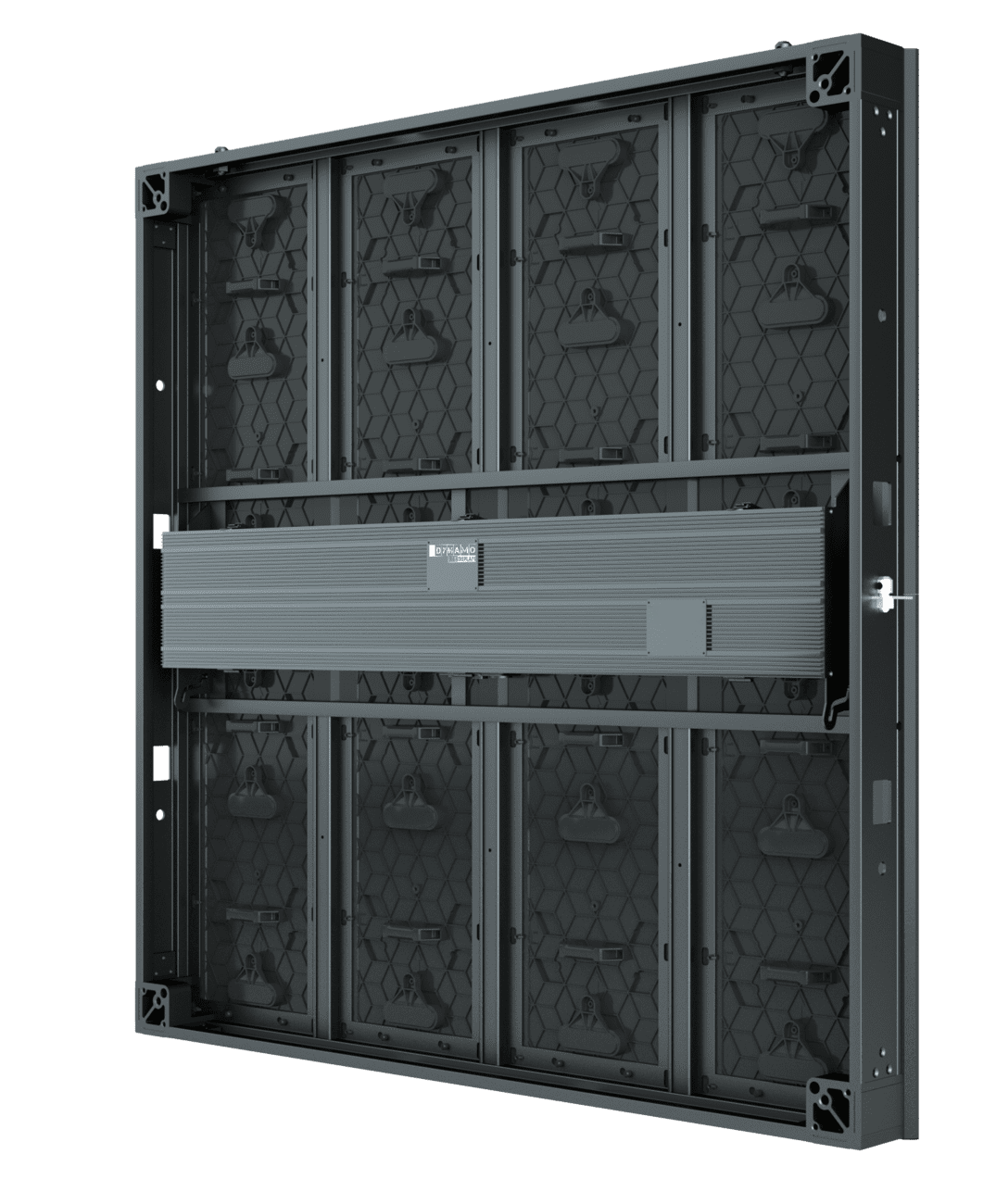
Outdoor LED cabinets carry split IP ratings (typically IP65 front and IP54 rear, or IP66 front and IP65 rear) because sealing the rear to the same level as the LED face traps heat and condensation, which damage electronics faster than rainwater. A spec sheet quoting only one figure without naming the face is incomplete. Ask for both.
The rear of the cabinet houses power supplies, receiving cards and ventilation. The trade-off is real and accepted across the industry: the back of an outdoor cabinet is meant to breathe.
What you want to see on a spec sheet is both numbers, both faces, plainly stated. A spec that quotes only “IP65” without saying front or rear is usually quoting the higher figure and hoping you do not ask. On our DVO outdoor LED range, fixed-install cabinets rated IP65 front / IP54 rear as standard, we publish front and rear figures side by side because the rear figure is what your maintenance contract has to live with.
The rear rating matters most in two scenarios: rear-access installations where the service door faces the weather, and totem or freestanding LED billboard installs where the cabinet is exposed on all four sides. In those cases push the rear figure up to IP65 minimum, even if it means a more expensive cabinet.
Sizing an outdoor screen and want IP rating worked into the build spec? The outdoor LED display systems walks through pitch, brightness, cabinet depth and IP rating in one pass, then generates a buildable spec we can quote against. Twelve minutes, no sales call required.
Where outdoor LED cabinets actually leak (it’s not the LED face)
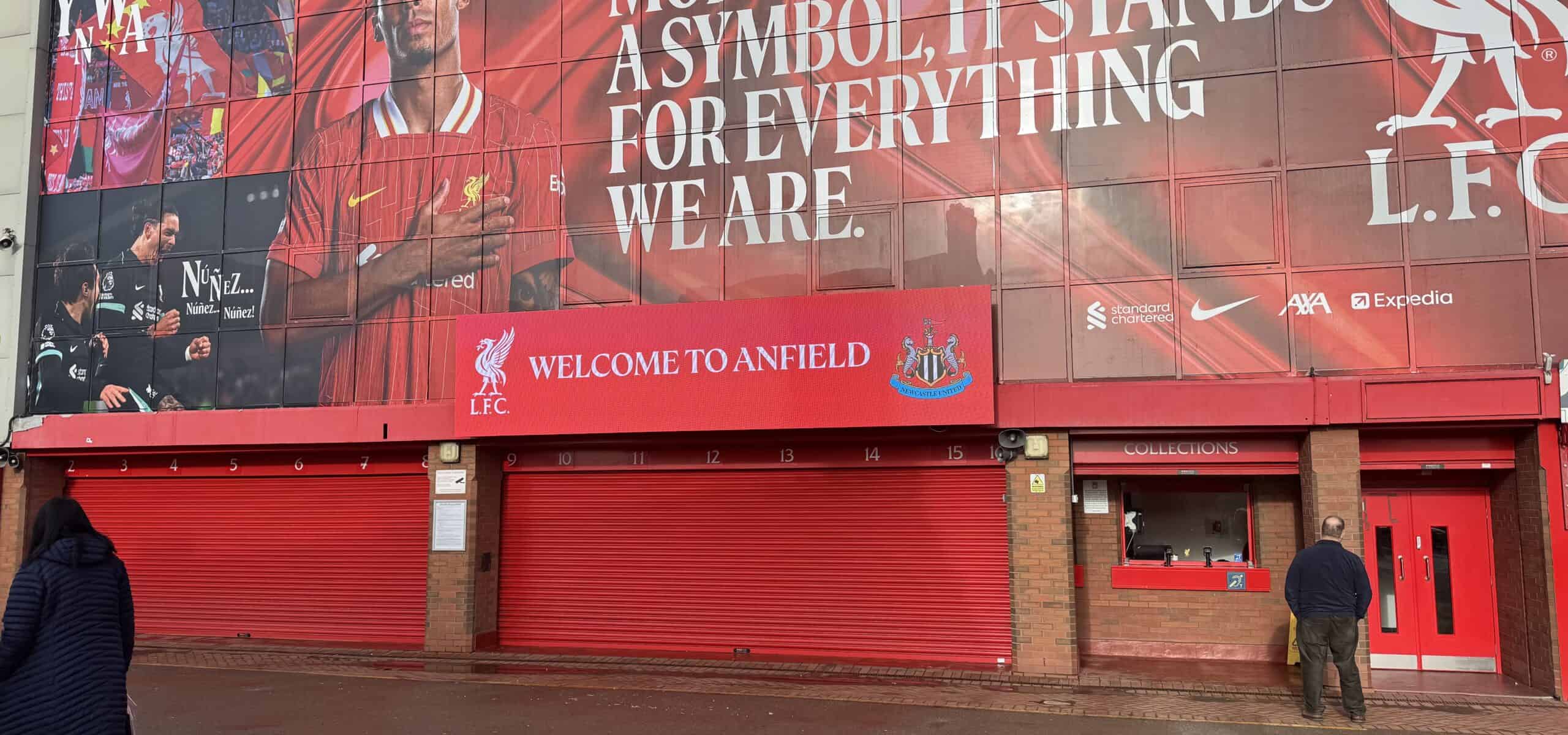
On a properly built outdoor cabinet, water rarely gets in through the LED face. It finds the route it is given. The common weak points are more ordinary than the rating badge suggests: cable glands, connectors, service doors, drainage paths, and the cable runs between them. A clean IP65 build with proper drainage and good connectors will outlast a higher-rated cabinet with weak installation details.
Typical leak paths we find on site:
- rear service doors that are not shut evenly
- compressed or damaged door seals
- cable glands fitted at the wrong angle
- connectors not fully seated
- drip loops missing from incoming cables
- water tracking along data or power lines
- blocked drainage paths
- dissimilar metals causing corrosion around fixings
- fans or vents placed where wind-driven rain can enter
This is why we ask early questions that sound basic but prevent expensive faults later. Where does the cable enter? Can water run down it? Is the rear of the screen open to weather? Can the engineer close the service door properly from the access position? Where does the intake air come from?
A drawing that only shows screen size and pixel pitch is not enough. For outdoor work we need the water path, the heat path and the service path stated together.
What an outdoor LED IP rating doesn’t cover
An outdoor LED IP rating only measures dust and water ingress under controlled lab conditions. It does not measure condensation, thermal cycling, UV degradation, salt corrosion, wind loading or pressure-washer abuse, all of which kill more outdoor LED screens than rainfall does. The IP figure is a starting point, not a service-life guarantee.
Condensation. A cabinet that heats up by day and cools fast at night will pull moist air through any unsealed path, then condense it on cold internal surfaces. IP67 cabinets are not exempt. The air gets in through service cycles, and the rating that kept water out also stops moisture getting back out. Gore vents (pressure-equalising membranes, typically Gore PolyVent or equivalent) matter more than another IP digit. Ask your supplier where the vents are and how many per cabinet.
Thermal cycling. Gaskets shrink and harden with repeated heat-cool cycles. A cabinet rated IP65 on the factory bench at year zero is not guaranteed to be IP65 at year five. The sealing material (silicone versus cheaper rubber, machine-applied versus hand-laid) predicts longevity better than the badge does.
UV degradation. The LED face, the polycarbonate front, the cable insulation on the rear all break down under UK sunlight over a five- to ten-year service life. None of this is measured by IP.
Salt corrosion. Coastal installs need either marine-grade aluminium cabinets or stainless-steel fixings, regardless of IP rating. We have replaced weatherproof LED display cabinets within three years of install on coastal sites where the badge was IP66 but the fixings were carbon steel.
Wind loading and structural safety. A 20 square metre LED face behaves like a sail if the steelwork is wrong. IP says nothing about it. Rooftop and roadside installs need site-specific structural calculations.
Pressure-washer abuse. Domestic and commercial pressure washers exceed the IP66 test conditions and will defeat IP65 outright. If a waterproof outdoor LED screen will be cleaned with pressurised water, specify IP66 minimum on the front face and brief the cleaning crew on stand-off distance.
Impact resistance (IK rating). IP says nothing about how the cabinet survives a thrown object or a service-trolley knock. That is the IK rating from IEC 62262, a separate 0–10 scale measured in joules of impact energy. For ground-level totems, transport-hub screens or anywhere within reach of footfall, ask for IK08 minimum on the front face alongside the IP figure. Coastal cabinets that already carry stainless fixings usually meet IK09; ground-recessed tiles should be IK10.
Specifying IP for UK installs: coast vs city vs roadside
The right IP rating depends on how exposed the install is, how high it is mounted, and how often it will be cleaned with water. For the wider build picture — pitch, brightness, cabinet depth and structure alongside IP — see our outdoor LED displays complete guide.
For a typical city-centre façade install mounted above ground-floor height, under some parapet shelter, IP65 front and IP54 rear is acceptable. The screen will see driving rain occasionally; it will not see immersion or pressure washing.
For a roadside totem or freestanding outdoor LED billboard cabinet, the cabinet is exposed on every face and gets full weather load. IP66 front and IP65 rear is the safer spec. Add Gore-vented cabinets and stainless fixings.
For coastal sites within 1 km of saltwater, specify IP66 minimum on both faces, marine-grade aluminium, and accept that gaskets will likely need replacement at year seven regardless. Salt eats sealing material faster than the standard tests assume. The DVO outdoor cabinet range we ship into coastal work uses Gore-style pressure-equalisation vents behind sealed connectors and regulated PSUs.
For ground-level or pedestrian-zone screens (concourse displays, transport hubs, retail thoroughfares) IP67 front is worth the cost. People stand close, spill things, and cleaning crews use water at floor level. The P2.5mm outdoor LED builds we deliver into transport and retail typically run IP67 front for exactly this reason.
Not sure which of these your site falls under? The weather-rated outdoor LED displays lets you set exposure and mounting height and returns the IP spec for that brief.
From the field
I have pulled apart enough failed outdoor cabinets to know that the IP number on the spec sheet is a starting point, not a guarantee. The cabinet that taught me this was a roadside totem with an IP65 stamp on the rear panel, factory-fresh paperwork, and still failing inside eighteen months because the gaskets were hand-cut and the rear service door was the windward face. The water did not get in through the LED face. It got in through a 2 mm gap behind an M4 fixing that someone had not tightened to spec.
I also get wary when a spec says “IP67 outdoor” but does not show the rear detail. The front face might be fine, but if the cable entry is above the service door with no drip loop, water will eventually find it. I would rather see a clean IP65 build with proper drainage, good connectors and sensible service access than a higher headline rating with weak installation details. The badge is easy. The build is the work.
If you want that build detail checked before you sign a PO, the outdoor LED display specification returns a spec we will quote against, or call the team.
— Daniel
Outdoor LED IP Rating: Frequently Asked Questions
What IP rating do I need for an outdoor LED display in the UK?
For most UK outdoor installs, IP65 at the front face is the practical minimum and IP66 is safer on exposed elevations. Coastal and roadside sites should push to IP66 on both front and rear faces. IP67 is worth specifying for ground-level or pedestrian-zone screens where people stand close enough to spill drinks or cleaning crews use water at low level. The outdoor LED displays returns an IP spec for the brief.
Is IP67 always better than IP65 for outdoor LED?
Not in every condition. IP67 is an immersion test in still water; IP66 tests sustained high-pressure jets from any angle. A cabinet rated IP67 can still leak under driving sideways rain if its gaskets were never tested under pressure from a horizontal axis. Match the rating to the failure mode, immersion risk or jet exposure, rather than assuming the higher number is automatically safer.
Why do outdoor LED cabinets have different front and rear IP ratings?
Sealing the rear of a cabinet to the same standard as the LED face traps heat and condensation, both of which damage electronics faster than rainwater. A split rating such as IP65 front and IP54 rear is standard practice and allows controlled airflow through the service area. Look for both figures stated plainly on the spec sheet rather than a single headline number.
Does an IP rating cover salt air, UV and condensation?
No. IEC 60529 measures dust and water ingress only. Salt-spray corrosion, UV breakdown of the LED face and cable insulation, and internal condensation from thermal cycling are not part of any IP test. Specify marine-grade cabinets and stainless fixings for coastal sites, and ask about Gore vents and gasket material for any UK install.
How long does an IP rating last on an outdoor LED screen?
The rating is measured at factory dispatch. Gaskets shrink and harden under repeated thermal cycling, so a cabinet rated IP65 at year zero is not guaranteed to be IP65 at year five. Build quality of the sealing material, machine-applied silicone versus hand-laid rubber, predicts real-world longevity better than the badge.
Can I pressure-wash an IP65 outdoor LED screen?
Not safely. Domestic and commercial pressure washers exceed the IP66 test conditions and will defeat IP65 sealing. If the screen will be cleaned with pressurised water, specify IP66 minimum on the front face and brief the cleaning crew on stand-off distance and nozzle angle. For frequent washdown, IP67 front is the safer build.
What should I ask a supplier beyond the IP figure?
Three things. First, front rating and rear rating stated separately. Second, gasket material and whether sealing is machine-applied or hand-laid. Third, drainage path and Gore-vent placement. A supplier who will name all three is selling you a cabinet that will hold its rating in service.
Specifying the rating, not just buying it
An outdoor LED IP rating is a useful baseline, but it is one line in a much longer conversation about how the cabinet is built, where it is mounted and how it is maintained. Get the front-face figure right for the environment, get the rear-face figure right for the service contract, and ask the supplier the three questions above before you sign off. The badge is easy. The build is the work. And if you are still choosing an LED display for the site, our guide to choosing an LED display covers the decisions beyond the IP figure.
For complex outdoor LED sites (coastal, ground-level, listed-building façades) where the IP rating decision needs walking through in detail before a PO lands, call the team on +44 (0)203 489 9878 or get in touch and we will price the build against the right outdoor LED IP rating for the site.