Do LED screens need planning permission in the UK? Outdoor LED displays need advertising consent under the Town and Country Planning (Control of Advertisements) (England) Regulations 2007, not standard planning permission, though new steelwork or a changed elevation can need both. Most applications stall on thin documentation, not the display itself. This guide covers what councils look for.
Updated September 2026: direct answer, a first-hand permanent outdoor installation added, metadata refreshed. Guidance unchanged.
Key Takeaways
- Outdoor LED displays in the UK need advertising consent under the Town and Country Planning (Control of Advertisements) (England) Regulations 2007, not standard planning permission
- Planning officers assess two things: amenity (does it fit the area?) and public safety (does it cause glare or driver distraction?)
- A luminance schedule with dimming profile is the single most important technical document in your submission — without one, expect a refusal or a long delay
- Conservation areas are not automatic refusals, but you need a clear statement on how the display preserves or enhances character
- Permanent installations require hardware specified for fixed outdoor use — rental-grade products lack the dimming controls, IP ratings and service access that planning officers expect to see documented
- Preparing a planning support statement from an LED specialist gives officers the technical confidence to approve
At a Glance: Outdoor LED Planning Consent in the UK
| Item | Detail |
|---|---|
| Application type | Advertising consent (not full planning permission) |
| Governing legislation | Town and Country Planning (Control of Advertisements) (England) Regulations 2007 |
| Assessment criteria | Amenity and public safety (Regulation 3) |
| Key lighting standard | ILP Professional Lighting Guide 05 (PLG05) |
| Industry code | Outsmart Large Format Digital Roadside Code |
| Typical determination period | 8 weeks (non-major application) |
| Consent duration | 5 years (standard condition) |
| Conservation area requirement | Display must preserve or enhance character and appearance |
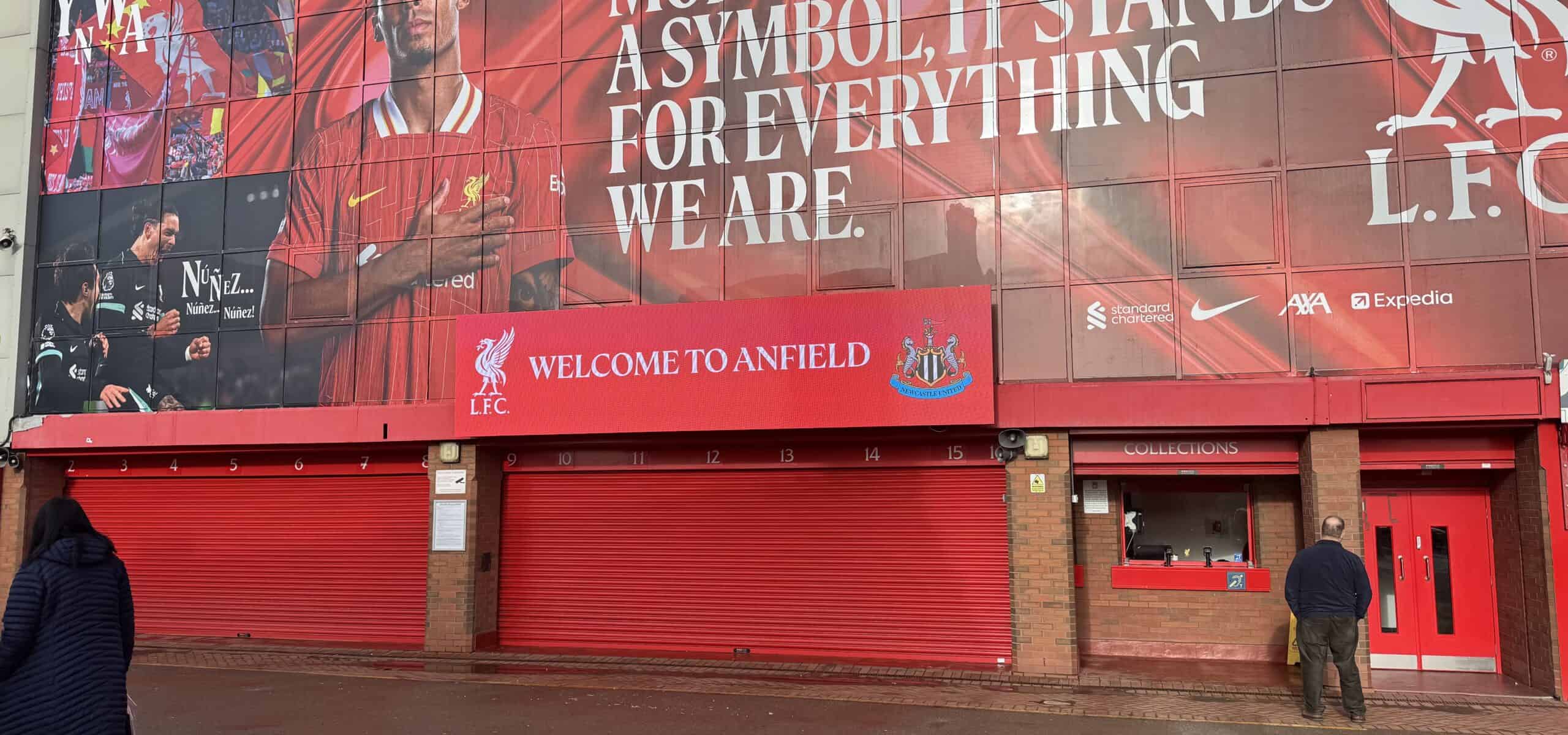
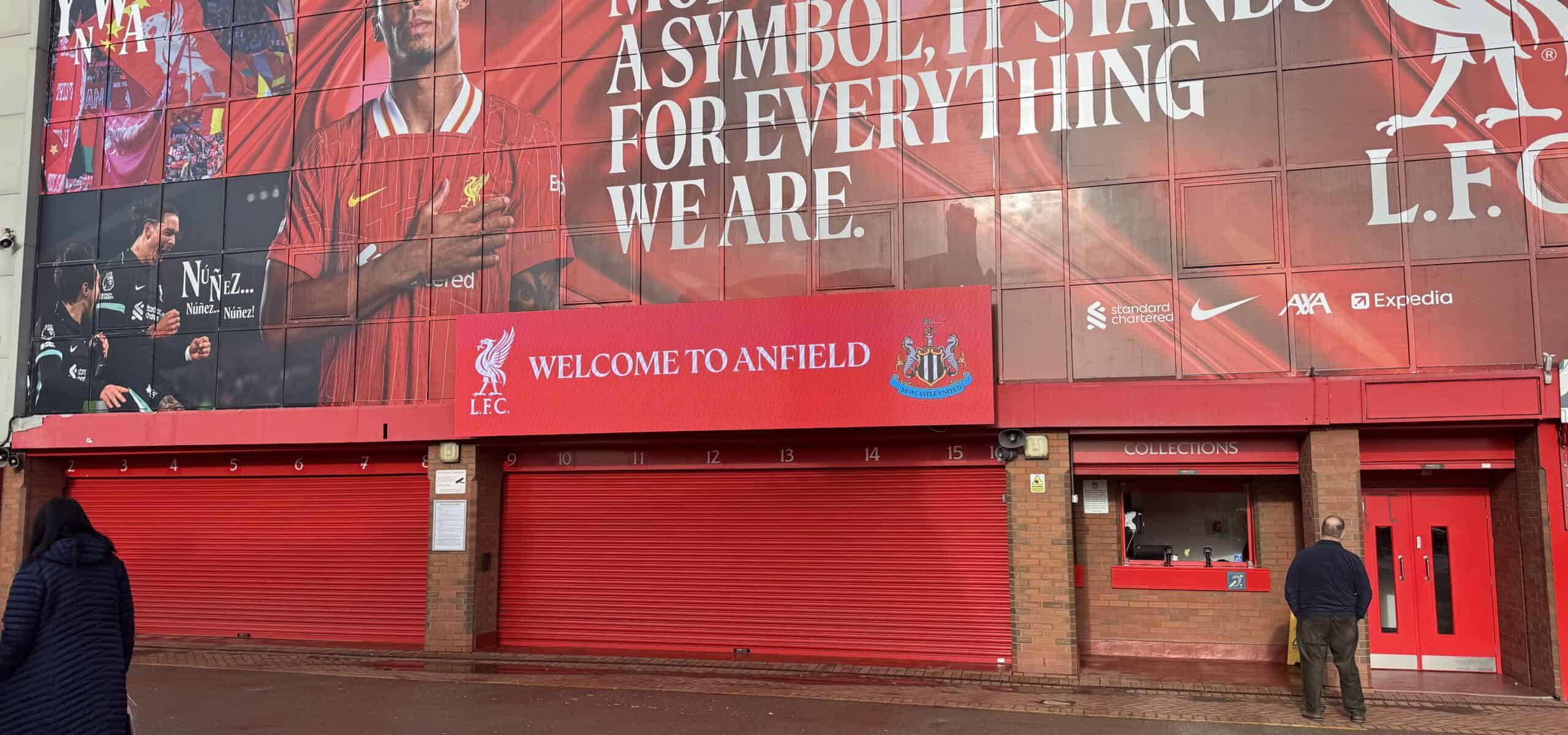
The display pictured is one of ours: the Liverpool FC outdoor LED display on the ticket-office fascia at Anfield, a 3.9 mm high-brightness screen fitted to an existing steel frame in about a day and a half, driven by a processor with ambient-light dimming. That combination of a fixed structure, a photocell-controlled brightness schedule and a permanent position facing the public is exactly what an advertising consent application has to describe.
Advertising Consent, Not Planning Permission
This is where most applicants trip up before they start. An outdoor LED display is classified as an advertisement under UK planning law, which means it falls under the advertising consent regime — a separate process from standard planning permission.
The Town and Country Planning (Control of Advertisements) (England) Regulations 2007 set the framework. Under Regulation 3, the local planning authority can only consider two factors:
- Amenity — does the display respect the visual character of the area? Will it cause light pollution or visual clutter?
- Public safety — could it distract drivers, obscure sightlines, or create a glare hazard?
That is the full scope. Officers cannot refuse on grounds of content preference, commercial competition, or general dislike of outdoor LED displays. If your submission demonstrates that the display is acceptable on both counts — with proper technical evidence — the authority has limited grounds to refuse.
However, some proposals also need planning permission alongside advertising consent. If the display is fixed to new steelwork, projects from a building, or changes the external appearance of a site, planning permission may be required separately. Planning permission looks wider — it can cover design, massing, materials, structure and the relationship with local planning policies.
Before committing to a cabinet layout, we normally want a few questions answered: Is the display on private land or highway land? Is the site in a conservation area or near a listed building? Will it display the occupier’s own content, third-party advertising, or a mix? Is it visible from a classified road, traffic signal or pedestrian crossing? Are there residential windows with a direct view? If the answer to any of the last three is yes, the application needs more than a product datasheet.
The Documents That Make or Break an Application
A strong outdoor LED advertising consent application needs three layers of technical documentation beyond the standard drawings and forms.
Luminance Schedule and Dimming Profile
This is the document planning officers turn to first. It should set out maximum brightness values for each period of the day — peak daylight, overcast conditions, the transition period around sunset, evening operation, and overnight curfew.
PLG05, published by the Institution of Lighting Professionals, sets post-sunset luminance limits based on display area (see our LED display brightness guide for a full breakdown). Displays over 10 m² are capped at 300 cd/m² after sunset. The Outsmart Code, published by Outsmart (the UK trade body for the out-of-home advertising industry), permits up to 5,000 cd/m² in peak daylight conditions for roadside digital displays. Your schedule should reference both and explain how the display’s control system enforces these limits automatically.
A credible dimming profile typically describes three layers of control:
- Ambient light sensor (photocell) — adjusts brightness in real time based on measured light at the display location
- Time-of-day schedule — hard-coded brightness ceilings for each operating period, programmed into the display controller
- Curfew lockout — a hard cut (not a dim target) that switches the display fully off overnight
The key detail councils want is what happens when something fails. If the photocell breaks, does the display default to maximum brightness or drop to the lowest setting? A well-specified system fails safe — meaning it defaults to minimum brightness, not maximum.
Avoid treating the manufacturer’s maximum luminance as the proposed operating level. That number describes capability, not day-to-day use. Councils want the controlled level for the site.
Content and Animation Policy
Write the content policy before the council writes it for you. Councils can impose conditions covering brightness, hours, dwell time, flashing, animation and maintenance. If you submit no content policy, you risk receiving a condition that is tighter than the business actually needs.
A content policy should cover:
- Whether third-party advertising is permitted (this applies equally to LED video walls and single-panel displays)
- Minimum static dwell time per frame (the Outsmart Code specifies a minimum of 5 seconds; 8–12 seconds is typical for sensitive locations)
- Permitted transitions (instant cuts or gentle fades — not video, flashing, or strobing)
- Explicit prohibition on content that could resemble traffic signals, warning lights or road signs
- Confirmation that brightness will respond to ambient light
If the display is for a specific venue, retail unit, or corporate building, stating that content is limited to the occupier’s own messaging removes the precedent concern councils have about generic advertising platforms.
Compliance Analysis and Planning Support Statement
Your submission should map the proposal against every relevant standard — not just mention them. A compliance analysis walks through PLG05, GN01 (the ILP’s guidance on reducing obtrusive light), the Outsmart Code, the Advertisements Regulations, and any relevant local plan policies, then explains how the proposal meets each one.
This is where having an LED manufacturer involved makes a practical difference. When we prepare a planning support statement, every specification — luminance values, dimming profiles, IP ratings, viewing angles — comes from the actual hardware we would supply, not from a generic datasheet. The specification values in your planning support statement should come from real hardware — you can generate these using the outdoor LED display planning support.
Conservation Areas and Sensitive Sites
A conservation area designation does not automatically rule out an outdoor LED display. What it does is raise the bar — the display must demonstrably preserve or enhance the character and appearance of the area.
We have supported applications for outdoor LED displays within London conservation areas (see our case studies for examples), including a hospitality client’s installation in a Westminster conservation area where the officer approved after reviewing our luminance schedule against the local conservation area audit. The approach that gets through:
-
Acknowledge the designation explicitly. Reference the relevant conservation area management guidelines by name and explain how the proposal responds to them.
-
Integrate the display with the wider signage scheme. A standalone outdoor LED display bolted to a listed building reads as an afterthought. A display that sits within a coordinated signage strategy — matching materials, proportionate scale, logical positioning — reads as considered design.
-
Address precedent. If the content policy restricts the display to the occupier’s own messaging and prohibits third-party advertising, state that clearly. Officers worry about setting a precedent for commercial digital advertising in sensitive areas. Removing that possibility from the proposal removes the objection.
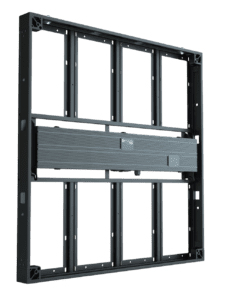
The hardware matters here too. A slim-profile outdoor cabinet like the DVO series is 100 mm deep with a black shell finish. That sits very differently against a period building than a bulky legacy cabinet. Cabinet depth, weight and frame finish are all part of the amenity assessment, and lighter, thinner hardware gives you more options for sympathetic integration. You can spec outdoor permanent cabinets using the outdoor LED display specification to confirm dimensions and weight for your structural engineer.

Common Reasons Applications Get Refused
No luminance data at all. The application includes a product datasheet showing peak brightness but nothing about how the display will be controlled on site. The officer has no basis for assessing light impact.
Generic compliance statements. Phrases like “the display will comply with all relevant standards” without specifying which standards, what the limits are, or how compliance is achieved. Officers read these as filler.
Missing curfew commitment. For residential areas and conservation zones, a clear overnight curfew with a hard power-off is expected. Dimming to a low level is not the same as switching off.
The content proposal looks like video advertising near traffic. Full-motion video facing a junction is a difficult sell. Even if technically permissible in principle, it gives highways consultees a clear reason to object. Static content with controlled dwell time is easier to defend.
Ignoring nearby homes. If residential windows are visible from the site, address them directly. Explain distance, orientation, operating hours and night-time controls. Silence invites objections.
The display is too dominant for the elevation. If the outdoor LED display covers a large proportion of the facade, sits above the natural sign zone or projects heavily from the building, officers may see it as harmful to the streetscene. A display that aligns with existing architectural lines — fascia depth, bay width, shopfront proportions — is easier to justify than one that cuts across the facade rhythm.
Ignoring the local plan. Each local planning authority has its own policies on signage and illuminated advertisements. Referencing national standards but ignoring the specific local plan policies that will be used to assess your application is a missed opportunity.
From the Field
A missing luminance schedule is the single most common cause of outdoor LED planning delays in the UK — adding weeks or months to determination. I have sat across the table from a planning officer at a South East district council reviewing a forecourt LED totem who opened the submission, looked for the luminance schedule, did not find one, and put the whole application in the “request further information” pile before reading anything else. That single missing document added two months to the timeline.
I would rather make the planning case slightly boring and get it approved than send in an exciting visual with no controls behind it. When the statement says exactly how the display behaves — how bright it will be at 9pm, what the content will do, how close the nearest bedroom window is — the conversation with the council is much cleaner. The councils that handle the most outdoor LED applications have officers who know exactly what PLG05 says and will check your numbers against it. The smaller district councils may be less familiar with the technical standards, which means your documentation needs to do the explaining for them. Either way, the answer is the same: provide the technical detail upfront, reference the right standards, and make it easy for the officer to say yes.
— Daniel, Dynamo LED Displays
Outdoor LED Planning Permission UK: Frequently Asked Questions
Do I need planning permission to install an outdoor LED display in the UK?
Most illuminated outdoor LED displays in the UK require express advertisement consent under the Advertisements Regulations 2007. Some also require separate planning permission for the supporting structure. Advertisement consent covers the display of advertising, while planning permission may be needed for structural alterations or changes to the host elevation. Some small, non-illuminated signs qualify for deemed consent, but illuminated outdoor LED displays almost always require an express application.
Is advertisement consent the same as planning permission?
No. Advertisement consent focuses on amenity and public safety under the Advertisements Regulations. Planning permission covers wider issues such as design, structure, building appearance, access and local planning policy. A permanent outdoor LED display can need both, especially if it is fixed to new steelwork, projects from a building or changes the character of the elevation.
What brightness limits apply to outdoor LED displays?
PLG05 is the primary reference. Post-sunset limits depend on display area: displays over 10 m² are capped at 300 cd/m², while smaller displays have higher permitted levels. Daytime brightness up to 5,000 cd/m² is generally acceptable under the Outsmart Code for roadside digital displays. Note that individual councils can set lower local limits through planning conditions, so check the relevant local plan policies for your site.
Can I install an outdoor LED display in a conservation area?
Yes, but the display must preserve or enhance the character and appearance of the area. Your submission needs to reference the relevant conservation area management guidelines, explain how the display integrates with the building and its surroundings, and include a content policy that addresses precedent concerns. A slim-profile outdoor permanent cabinet like the DVO range helps with sympathetic integration on older buildings.
How long does the advertising consent process take?
The standard determination period is 8 weeks for a non-major application. In practice, incomplete submissions trigger requests for further information, which can add months. Submitting a complete application with a luminance schedule, content policy, and compliance analysis from the outset reduces the risk of delays.
How much does outdoor LED advertising consent cost in the UK?
The application fee for advertising consent in England is £462 per site. There is no separate fee per display if multiple signs are proposed on the same site. This covers the local authority’s processing costs only — it does not include the cost of preparing supporting documents such as luminance assessments or planning support statements.
Can an outdoor LED display show moving video?
It depends on the site. Moving video is harder to justify where the display faces traffic, junctions, crossings or residential windows. Councils often prefer static content, controlled dwell times and simple transitions. If video is central to the brief, the planning case needs to explain why it will not create driver distraction or amenity harm.
What happens if the photocell or dimming system fails?
A properly specified outdoor LED display defaults to its lowest brightness setting in the event of a sensor or controller fault. The curfew schedule should be enforced as a hard power-off, independent of the photocell. Officers look for this fail-safe detail in the luminance schedule — if it is not there, expect questions.
Getting Your Outdoor LED Display Through Planning
Outdoor LED planning permission in the UK comes down to documentation. The display hardware, the site, and the design all matter — but the submission is where applications succeed or fail. A complete application with a proper luminance schedule, content policy, and compliance analysis gives the planning officer what they need to approve.
The earlier those points are built into the technical design, the fewer compromises are needed later. Pixel pitch, cabinet depth, mounting method, operating hours and content rules all affect the planning case. Treat them as one design problem, not separate workstreams.
If you are specifying an outdoor LED display and need planning-ready documentation, start with our UK outdoor LED display projects to define your display, then talk to us about a planning support pack to support your advertising consent application.
If you need help with outdoor LED planning permission in the UK, call us on 020 3489 9878 or get in touch here to discuss your project.