What is a transparent LED display?
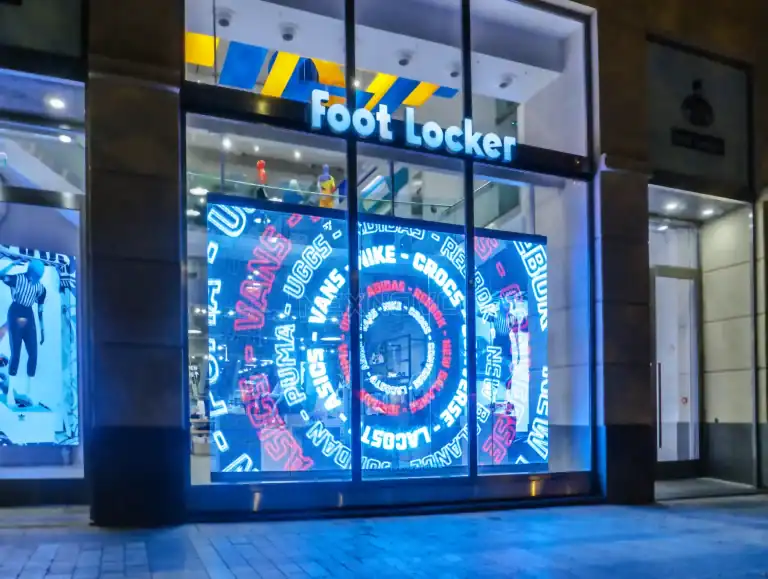
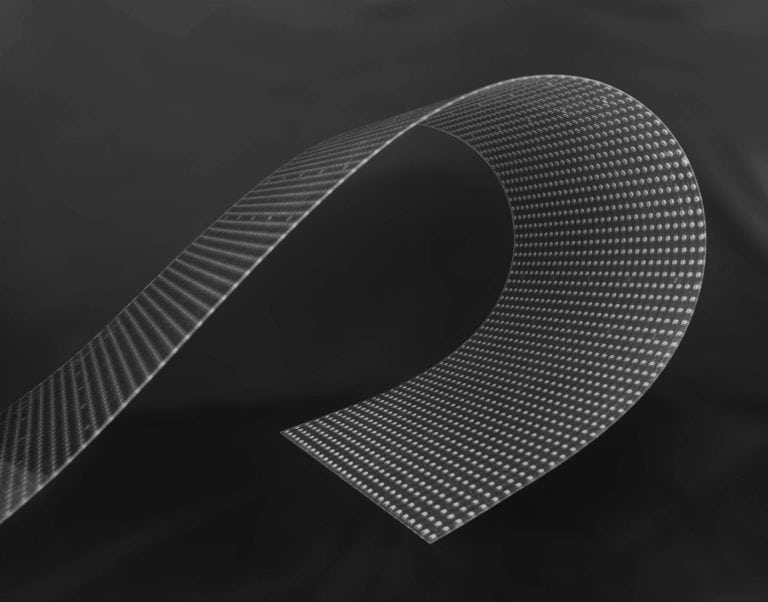
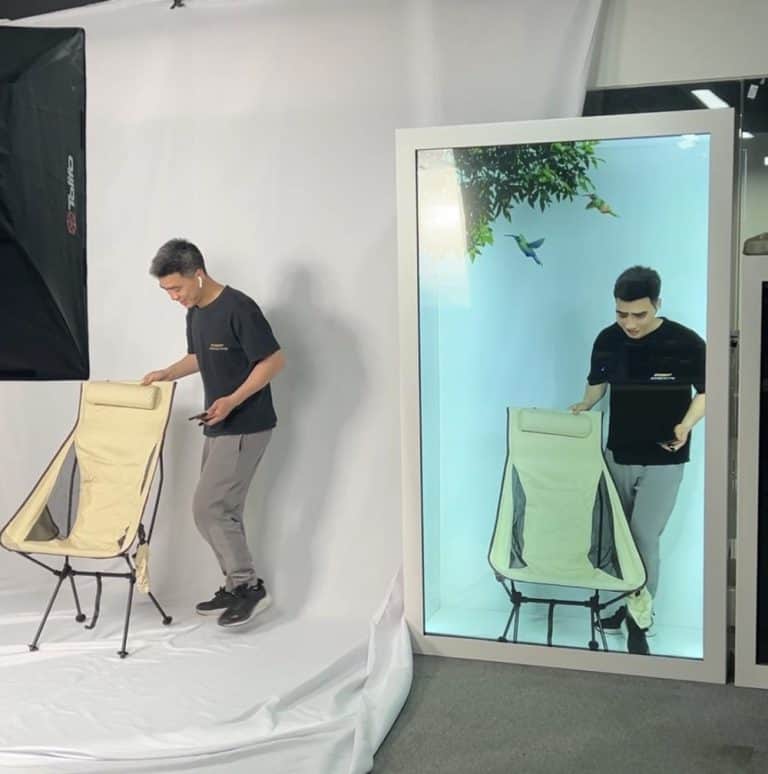
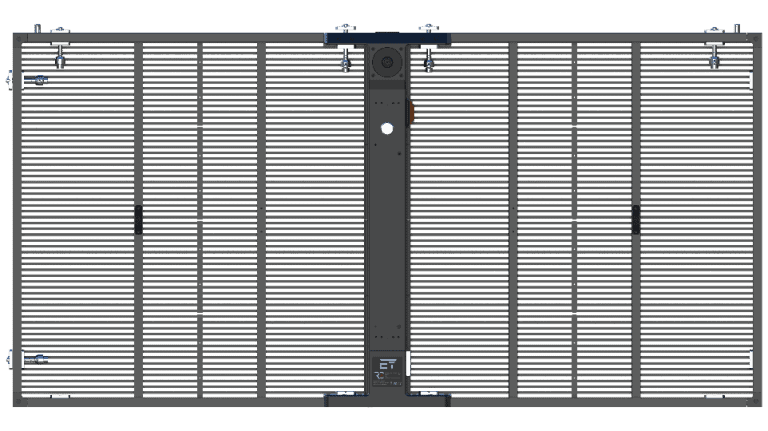
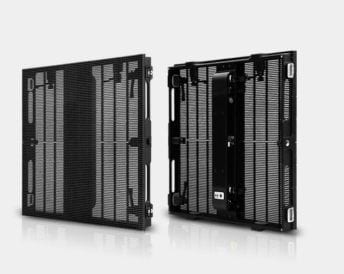
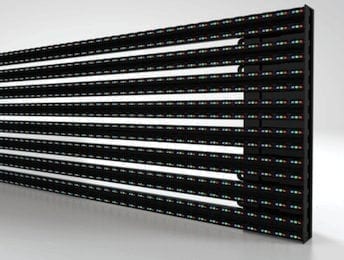
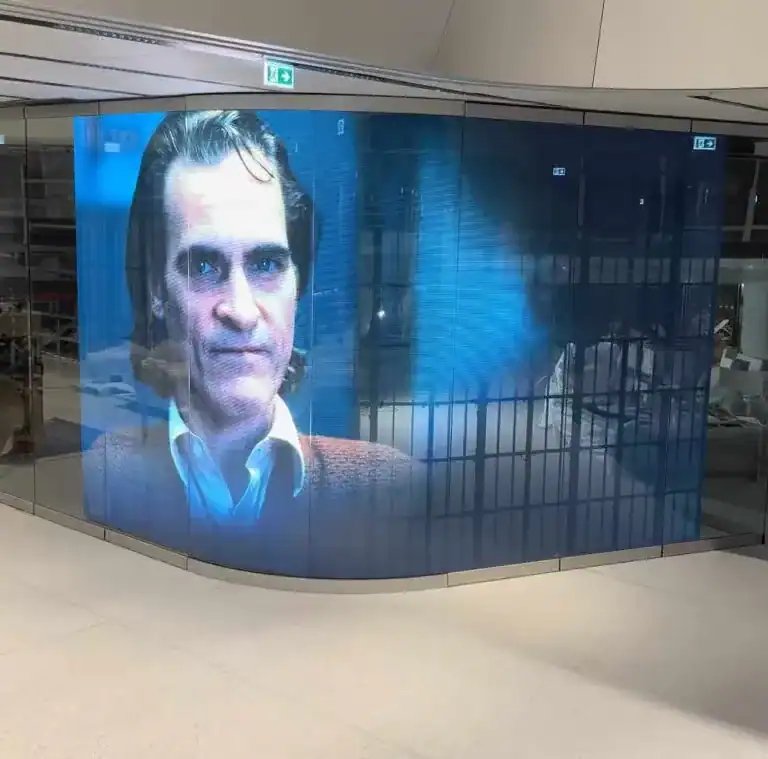
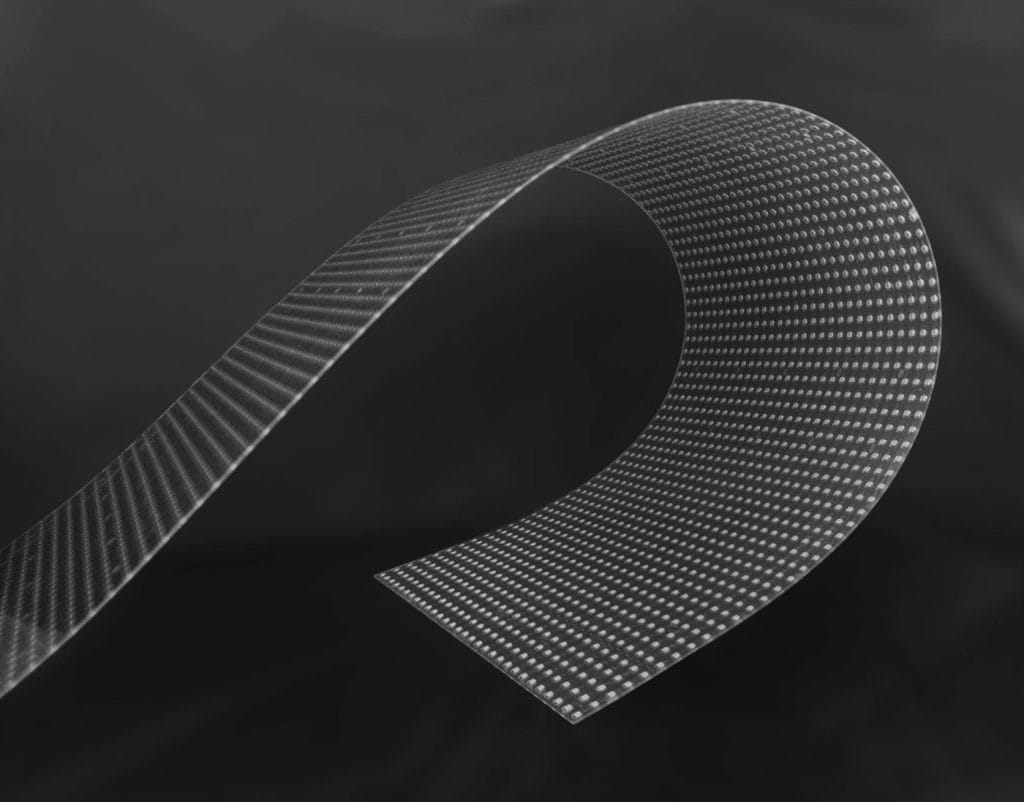
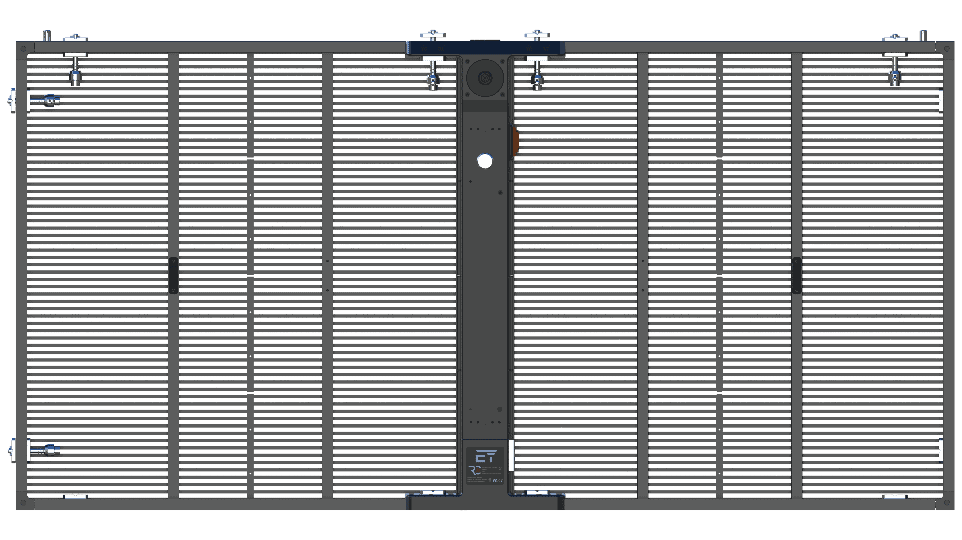
A transparent LED display is a digital screen designed to show moving image, graphics or messaging while still allowing light and visibility through the display surface. Instead of using a solid LED cabinet with a dense front face, transparent LED technology arranges the LEDs in a strip, bar, mesh or grid structure. The gaps between the LED elements allow daylight, views and architectural sightlines to pass through.
The result is not the same as clear glass, and it is not intended to be invisible. It is better understood as a spectrum. At one end, finer-pitch transparent LED products give sharper image detail but reduce openness. At the other end, larger-pitch mesh and bar systems allow higher transparency and work well at scale, but are intended to be viewed from further away. Choosing the right product is therefore a balance between resolution, brightness, transparency, weight, fixing method and viewing distance.
Transparent LED has become popular in retail, commercial architecture, hospitality, exhibitions and branded environments because it solves a problem that traditional LED walls and printed window graphics cannot always address. A conventional LED wall blocks daylight and sightlines. Window vinyl is static and often reduces natural light. Transparent LED gives specifiers a way to add dynamic digital content to glass, facades and openings without fully closing them off.
Typical uses include flagship retail windows, atriums, corporate receptions, showroom glazing, large-format facades, exhibition stands and temporary event backdrops. The key is to treat transparent LED as part of the architecture rather than simply as a screen placed in front of it. For pure gallery and museum work — where the brief is a piece of art rather than a brand surface — Dynamo's LED art display for galleries service handles the design considerations specific to that context.
Transparent LED screen prices
Transparent LED film starts from £2,400 per square metre, and transparent LED glass starts from £3,760 for each panel. All figures are in GBP and exclude VAT.
| Product |
Guide price |
Basis |
| Transparent LED film |
From £2,400/m² |
Supply-only, applied to suitable existing glass |
| Transparent LED glass panels |
From £3,760 per panel |
Supply-only, glass-integrated LED panels for new glazing |
Prices cover the LED hardware on a supply-only basis. Installation, mounting structure, processing and control equipment, and content are additional and quoted per project. Final pricing depends on pixel pitch, display area, glass condition and access.
For a project-specific figure, use our LED screen configurator or send us your drawings and dimensions for a written quotation.
Comparison of transparent LED variants
| Variant name |
Typical pitch range |
Typical transparency |
Best for |
Limitation |
| Transparent LED Film (Dynamo WindowPRO) |
P2.5, P3.9, P6, P8, P10, P16, P20, P30 |
Varies by pitch — wider pitch admits more daylight, finer pitch resolves more image detail |
Existing glass, retail windows, internal glazing, shopfronts and retrofit projects |
Dependent on glass condition, access, cabling routes and suitability of the existing substrate |
| Transparent LED Glass (DGN Series) |
Project-dependent glass-integrated LED specification |
Varies by glass build-up and LED layout |
New-build retail, commercial glazing, permanent architectural integration and facade specifications |
Requires glass replacement or integration at design stage, so it is less suited to quick retrofit projects |
| Transparent LED Mesh / Transmesh |
Generally larger pitch for long-distance viewing |
Typically high transparency compared with denser LED formats |
Large facades, stadiums, media skins, building wraps and external architectural displays |
Not intended for close-up fine-detail viewing |
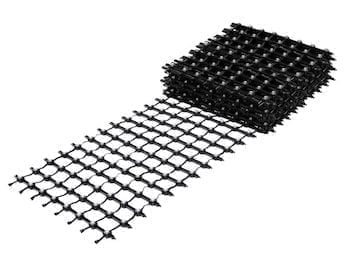
| Flexible LED Mesh Curtain |
Generally larger pitch, selected by viewing distance and rigging requirements |
Typically high openness due to curtain structure |
Events, exhibitions, touring environments, stages and temporary brand installations |
Designed for rigging and removability rather than permanent glazed integration |
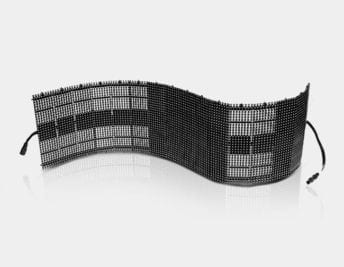
| Flex-Curve / Transbar (P10/P16/P20) |
P10, P16 and P20 |
Varies by pitch and panel configuration |
Outdoor facade-grade transparent panels, curved applications and larger architectural display areas |
Best viewed from further away than finer-pitch film or glass-integrated options |
For an existing high-street window, transparent LED film is often the first product to consider. It can be applied directly to suitable glass, avoids replacing the glazing, and gives retailers a way to turn the shopfront into an active digital surface while retaining some visibility into the store. It is most useful where the display needs to feel integrated into the window rather than mounted as a separate screen.
Transparent LED glass is a different decision. Because the LED elements are laminated into the glass build-up, it belongs in the architectural specification rather than as an afterthought. It is best suited to new-build projects, refurbishments with new glazing, permanent display glazing, and schemes where the glass itself must form part of the digital system.
Mesh, Transmesh and Transbar-style products are better suited to scale. They make sense when the display is mounted to a facade, spans a large elevation, or will be viewed from across a street, plaza or concourse. The larger pitch is not a weakness in these contexts; it is part of the design logic. For events and exhibitions, a flexible LED mesh curtain is usually the more practical route because it can be rigged, moved, packed down and reused.
Choosing the right variant by use case
High-street retail flagship windows
The typical buyer is a retail designer, brand team, VM manager or shopfitting contractor working with an existing glazed shopfront. The aim is usually to add campaign content, product launches, seasonal creative or brand messaging without blacking out the window or blocking the store interior from view.
Transparent LED film is usually the strongest starting point because it can be applied to suitable existing glass and offers a relatively clean visual result from the public side. It is particularly relevant where the shopfront needs to remain recognisably open, with passers-by still able to see people, lighting and products behind the content. The main checks are glass suitability, cable routing, access for installation, brightness, and whether the chosen pitch is appropriate for the pavement viewing distance. For the full retail-face treatment — header bands, window creative, entrance graphics and integrated CMS — Dynamo's LED shopfront and window display service is the broader project scope.
New-build retail or commercial glazing
For new-build retail, mixed-use developments, corporate reception areas and commercial atriums, the buyer may be an architect, facade consultant, main contractor or client-side project team. The objective is not simply to add a screen, but to make digital display capability part of the building fabric.
Transparent LED glass is the more natural route when the glazing package is still being specified. Because the LED elements are laminated into the glass, the display can be coordinated with the wider facade, mullion layout, structural requirements and interior design. This approach needs earlier decision-making than film, but it can produce a more permanent and integrated result. It is less appropriate when the glass has already been installed and the project programme does not allow for replacement.
Large architectural facade
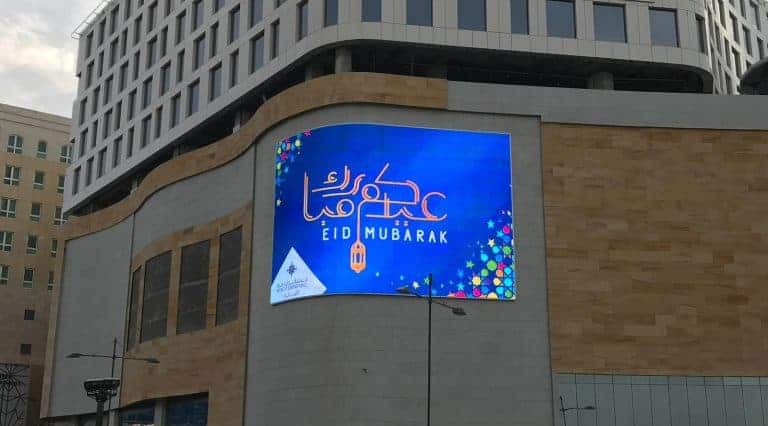
For an existing building facade, stadium frontage, transport environment or large commercial elevation, the buyer is often a property owner, architect, media operator, AV consultant or specialist facade contractor. The objective is visibility at distance, brand presence and large-format motion content while avoiding a fully opaque media wall.
Transparent LED mesh, Transmesh or facade-grade Transbar-style panels are usually the relevant options. These systems are designed around larger surface areas and longer viewing distances, where high pixel density is less important than scale, brightness, transparency, weight and fixing strategy. The display needs to be considered alongside wind loading, access, maintenance routes, control equipment, planning requirements and the building’s existing structure.
Event, exhibition or temporary install
For events and exhibitions, the buyer is commonly an exhibition stand builder, production company, event agency or brand experience team. The goal is to create a digital backdrop, semi-transparent stage layer, product reveal surface or stand feature that can be installed for a short period and removed afterwards.
A flexible LED mesh curtain is generally the most practical choice. It is designed to hang, rig and pack down, making it more suitable for temporary environments than laminated glass or permanent facade systems. It also gives designers more freedom to layer digital content with lighting, scenic elements and physical products. The key specification points are rigging method, weight, viewing distance, control system, venue power, transport cases and the amount of time available for build and strike.
Specification considerations
Pixel pitch should be chosen around the real viewing distance, not simply the desire for the sharpest possible image. A useful rule of thumb is that the pitch in millimetres roughly maps to a comfortable viewing distance in metres. For example, a P10 display is generally more comfortable at around 10 metres and beyond than it is at close range. Finer pitch can improve detail, but it may also reduce transparency and increase cost, power demand and system complexity.
Brightness is critical, especially for window and facade applications. Transparent LED displays are often specified in the 4,500-6,500 nit range, with 7,500 nits or more considered where the display must compete with direct sun. The correct figure depends on orientation, daylight exposure, content style, local regulations and how the display will be dimmed during darker hours.
Transparency and resolution should be treated as a trade-off. More LEDs per square metre usually means more image detail, but less open area for light and views. For retail windows, this affects how much the interior can still be seen. For offices and atriums, it affects daylight and occupant comfort. For facades, it affects how the building reads when the display is switched off.
Power and weight vary by product type. Many projects use single-phase power, with typical power demand often around 250-400 W/m², but the final electrical design should be based on the selected product, display area and content assumptions. Weight can range widely, from lightweight film and mesh formats through to heavier glass-integrated or panelised systems, typically around 8-40 kg/m² depending on variant.
Existing glass needs careful review before any retrofit installation. Specifiers should consider mullions, cable exits, access for installation, cleaning requirements, heat build-up, maintenance, landlord restrictions and whether the display sits inside or outside the weather line. Indoor and outdoor ratings also matter: an indoor IP41 product should not be treated as a substitute for an outdoor IP65-rated system.
Control and content delivery should be agreed early. Many transparent LED projects use Novastar, VNNOX or a third-party CMS, depending on how content is scheduled, who manages updates and whether the screen is part of a wider digital signage network. Lead time, survey requirements, sample approval, access equipment, RAMS, out-of-hours working and installation sequencing should all be factored into the programme before ordering.
FAQs
- What's the difference between transparent LED film and transparent LED glass?
- Transparent LED film is applied to suitable existing glass, making it useful for retrofit projects. Transparent LED glass has LED elements laminated into the glass itself, so it is usually specified as part of new glazing or a planned glass replacement.
- How transparent can a transparent LED display really be?
- Transparency depends on pitch, product type and construction. Larger-pitch mesh and bar systems usually allow more openness, while finer-pitch displays provide more image detail but reduce the amount of clear area between LEDs.
- Can transparent LED be installed on existing windows or does it need new glass?
- Both are possible. Transparent LED film is commonly considered for existing windows, subject to survey and suitability. Transparent LED glass requires the glass unit itself to be replaced or specified as part of the original glazing package.
- Will the display affect daylight in the room behind it?
- Yes, to some degree. Transparent LED allows light through the gaps in the display structure, but it still introduces LEDs, conductors, bars or mesh across the surface. The effect depends on transparency, display size, orientation and interior lighting.
- Indoor vs outdoor: how do I know which I need?
- The decision depends on where the product sits in relation to weather, moisture, temperature change and public exposure. Indoor products are typically lower IP-rated, such as IP41. Outdoor products should be specified for external conditions, often around IP65.
- What size displays are achievable?
- Transparent LED can be used for anything from smaller window sections to large facade displays. The practical size depends on product type, structure, power, access, control system, content resolution and the viewing distance.
- Can transparent LED be removed without damaging the glass?
- Some film and temporary systems can be removed, but this depends on the product, adhesive, glass type, installation method and how long it has been in place. This should be confirmed during specification rather than assumed.
- What's the typical lead time and what does the buying process look like?
- The process usually starts with a brief, drawings or site photos, followed by product selection, survey, quotation, technical design, manufacture, installation planning and commissioning. Lead time depends on the chosen product, project scale, customisation, access requirements and approvals.