Technical Specifications
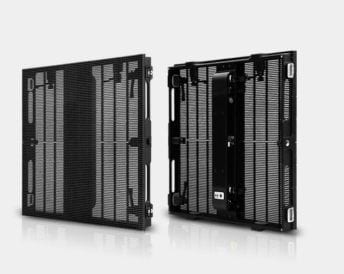
The Hologram OLED Box Display is specified as an indoor transparent display cabinet, using transparent LCD or transparent OLED technology depending on the chosen size and configuration. The figures below are indicative specification ranges for planning purposes. Final values should be confirmed against the exact panel, cabinet and media-player variant before procurement, particularly where the unit is being built into joinery, exhibition architecture or a high-value retail fixture.
| Size |
Display technology |
Resolution |
Brightness |
Transparency |
Viewing angle |
Power |
Approx. weight |
| 11.6" |
Transparent LCD / OLED depending on variant |
1920×1080 typical |
500-800 cd/m² typical |
30-45% |
≥160° H / ≥140° V |
100W typical |
10-12 kg |
| 21.5" |
Transparent LCD / OLED depending on variant |
1920×1080 typical |
500-1,000 cd/m² typical |
30-45% |
≥160° H / ≥140° V |
120-160W typical |
Approx. 15 kg |
| 32" |
Transparent LCD / OLED depending on variant |
1920×1080 typical |
500-1,000 cd/m² typical |
30-50% |
≥160° H / ≥140° V |
150-200W typical |
25-35 kg |
| 43" |
Transparent LCD / OLED depending on variant |
1920×1080 or 4K depending on variant |
700-1,200 cd/m² typical |
30-50% |
≥160° H / ≥140° V |
180-250W typical |
35-45 kg |
| 49" |
Transparent LCD / OLED depending on variant |
1920×1080 or 4K depending on variant |
700-1,200 cd/m² typical |
30-50% |
≥160° H / ≥140° V |
200-280W typical |
40-55 kg |
| 55" |
Transparent OLED / LCD depending on variant |
1920×1080 or 4K depending on variant |
700-1,500 cd/m² typical |
35-50% |
≥160° H / ≥140° V |
220-300W typical |
45-60 kg |
| 65" |
Transparent OLED / LCD depending on variant |
4K typical |
700-1,500 cd/m² typical |
35-50% |
≥160° H / ≥140° V |
250-340W typical |
55-70 kg |
| 75" |
Transparent OLED / LCD depending on variant |
4K typical |
700-1,500 cd/m² typical |
35-50% |
≥160° H / ≥140° V |
300-380W typical |
65-75 kg |
| 86" |
Transparent OLED / LCD depending on variant |
4K typical |
700-1,500 cd/m² typical |
35-50% |
≥160° H / ≥140° V |
350-400W typical |
Approx. 80 kg |
Typical inputs include HDMI 2.0, with DisplayPort available on some variants. Networked versions may support ethernet content management, while simpler units can be operated with local USB playback. Cabinet construction is usually an aluminium frame with a glass front, supplied in matte black as standard or with a custom finish where required. These displays are generally IP30 indoor products, with an operating temperature range of approximately 0°C to 40°C.
For specification, the three main decisions are physical scale, venue brightness and content workflow. The display should be sized around the object being shown, rather than selected only by screen diagonal. A small product in a large cabinet can look lost unless the content provides context; a large product in a small box can restrict the depth effect. Brightness matters because transparent panels do not behave like solid digital signage screens. In high ambient light, contrast falls quickly. Content compatibility should also be agreed early: native resolution, codec, media-player control and update method all affect the finished result.
Industry Use Cases
Luxury Retail
For watch, jewellery, leather goods and premium accessory retail, the usual buyer is a retail design manager, visual merchandising team or brand experience agency. The problem is often how to add motion, product education and campaign content without replacing the physical object with a flat screen. Counter-mounted and freestanding plinth formats work well because the product remains present, while the transparent display adds controlled visual layers around it. For jewellery and watches, 21.5" to 32" cabinets are often appropriate. For handbags, footwear and leather goods, 43" to 65" units usually provide better physical presence. The cabinet should still look considered when powered off, so finish, glass quality, cable routing and plinth detailing matter.
Museum and Gallery Interpretation
Museums and galleries can use hologram box displays to add interpretation around an artefact without relying only on wall text or a separate touchscreen. The buyer may be a curator, exhibition designer or interpretation consultant. The display can show a reconstruction, exploded detail, handling view, map, material explanation or short contextual sequence while the original object remains visible inside the cabinet. Medium and large units are often preferred because dwell time is longer and visitors may approach in groups. Content should be paced more slowly than retail content, with accessible typography, clear contrast and a logical sequence that rewards close viewing.
Exhibition Stands and Product Launches
For exhibition stand builders and launch-event teams, the hologram box is usually specified as a hero feature to stop passing visitors and provide a quick product story. Medium sizes are often the most practical because they balance visibility, transport, rigging and cost. The content style can be more energetic than a museum installation, but it still needs to respect the limitations of the transparent panel. A short loop showing the product, key features and one or two campaign messages normally works better than a dense sales presentation. For temporary use, portability, flight cases, install time, cable management and easy content replacement are important parts of the brief.
Automotive Showrooms
Automotive showroom and dealership applications usually need a larger visual scale. A 65" to 86" unit can support feature highlights, optional specification visualisation, material finishes, charging or performance messaging, and campaign-led vehicle storytelling. The display is not a replacement for the car; it works best as a companion piece next to a vehicle, reception point or configurator area. Content can combine rendered components, trim details and animated call-outs, but the illusion is strongest when the visual material is simplified and centred. Space planning is important because larger cabinets need viewing distance, controlled lighting and clear pedestrian circulation.
Hospitality
Hotel lobbies, luxury restaurants and members' clubs tend to use hologram displays for atmosphere, brand narrative and seasonal storytelling. The buyer may be an interior designer, operator, marketing team or AV consultant. Medium to large sizes are usually suitable, depending on whether the display sits at reception, within a lounge, beside a bar or in a private dining area. Content might cycle through brand assets, event promotions, product partnerships or seasonal visuals. The tone should be restrained: slower movement, careful colour control and a cabinet finish that sits comfortably with the interior scheme.
Comparison With Other Hologram Technologies
Hologram Box Display
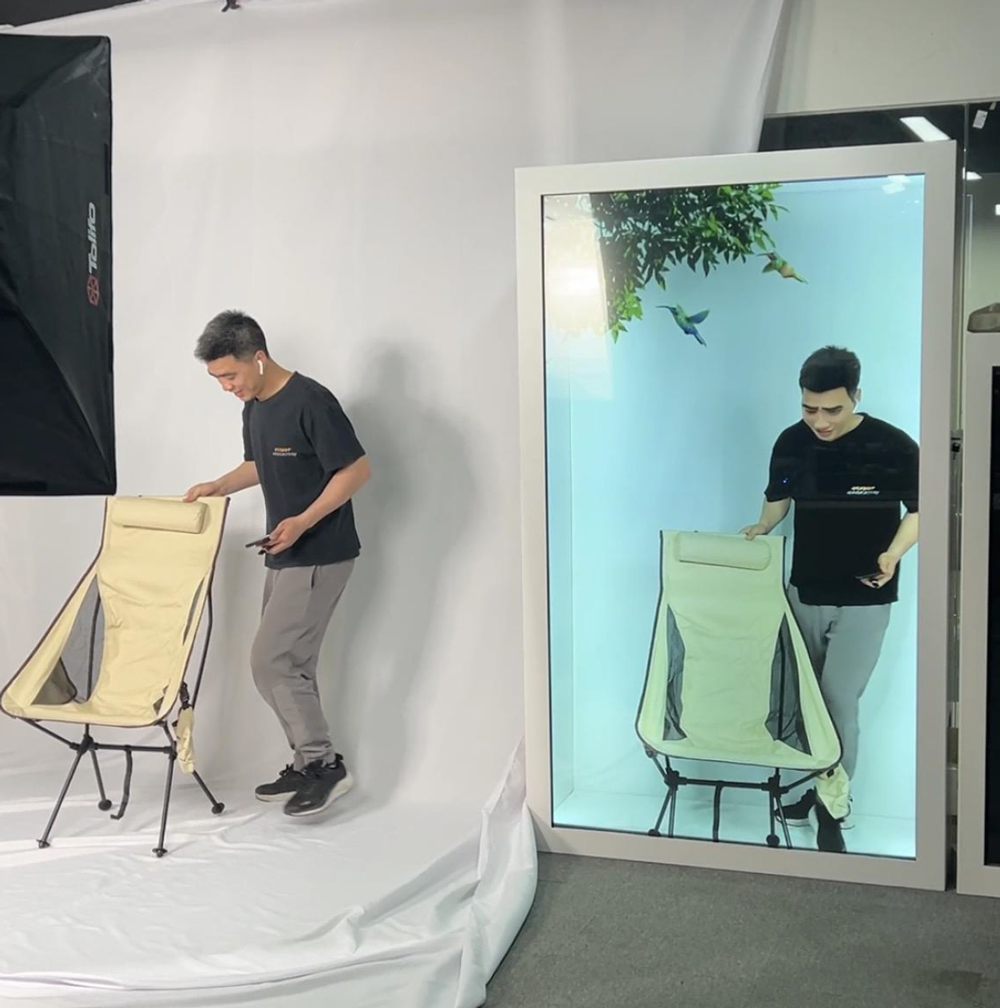
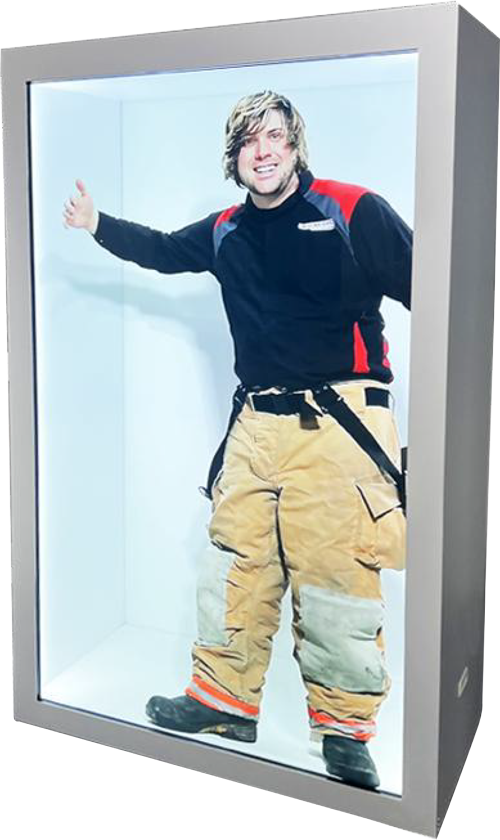
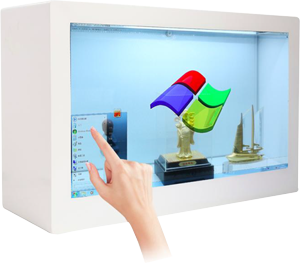
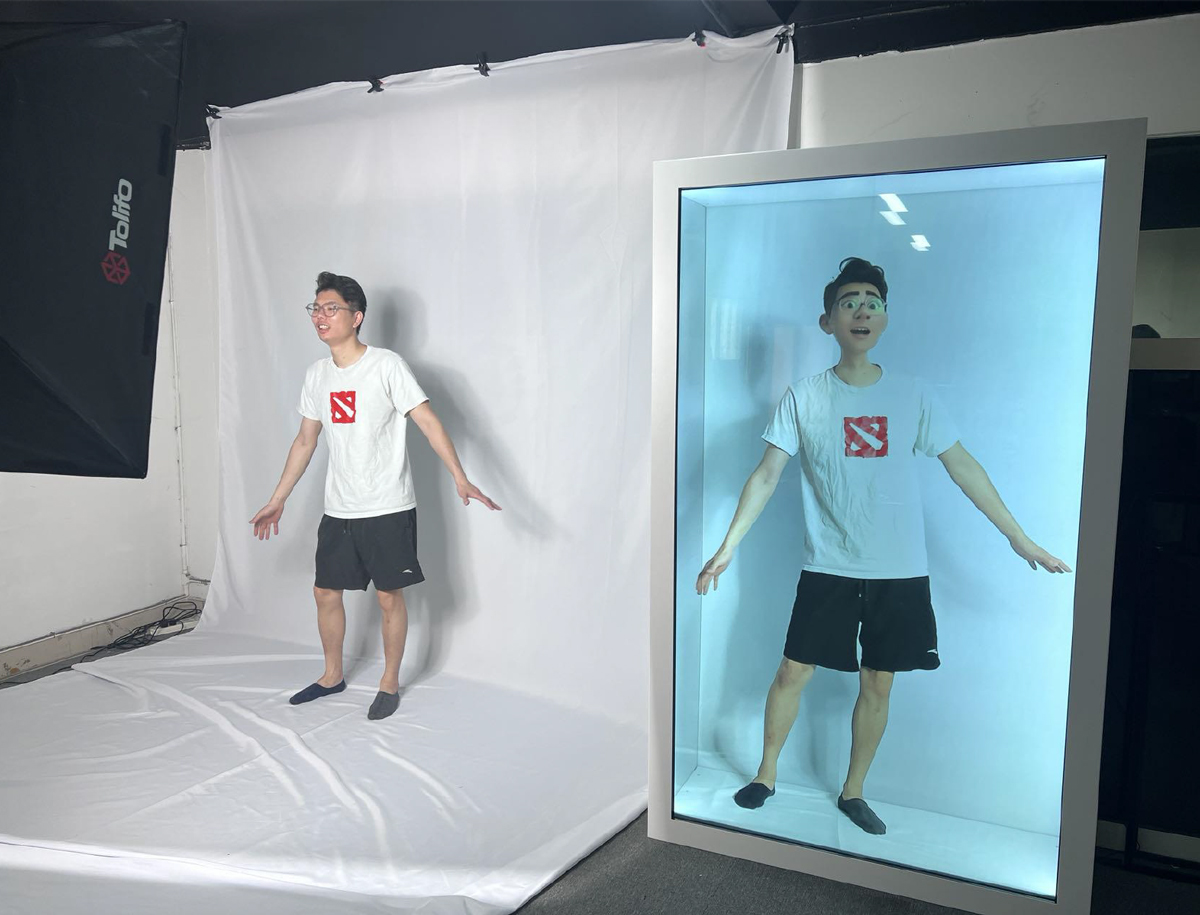
The Hologram OLED Box Display is a transparent display cabinet. It creates the perception of a floating object by combining a transparent LCD or OLED panel, a controlled dark cabinet background and content prepared specifically for transparency. It is well suited to product display, retail storytelling, museum interpretation and permanent branded installations. The main advantages are predictable image quality, integration with a physical object and suitability for indoor commercial environments. The limits are also clear: the size range is finite, usually capped around 86", and the effect depends on controlled lighting and good content.
Pepper's Ghost and Hologram Pyramids
Pepper's Ghost effects use angled glass or acrylic to reflect an image from a hidden display or projector. Small pyramid versions are common at events and in low-cost display units. This approach can be inexpensive and visually effective from the correct angle, but the image is a reflection rather than content shown through a transparent panel. Viewer position is more restricted, and the installation can be harder to make robust for permanent retail use. It can be the right choice for theatrical reveals, short campaigns or budget-led event work where precise viewing control is possible.
Transparent OLED Panels Without Cabinet
A bare transparent OLED panel can be mounted into architecture, glazing, partitions or bespoke furniture. This gives more freedom to designers, especially where the display must be part of a wider interior scheme. However, without the box, controlled backdrop and object chamber, the floating-product illusion is weaker. It is better for architectural media, digital glazing, wayfinding overlays or ambient brand content than for a self-contained product showcase.
Projection-Based and LED Fan Displays
Projection-based hologram effects and spinning LED fan displays create visible images in space, often with a strong attention-grabbing quality. They can work well for events, nightlife, promotional areas and installations where movement matters more than fine detail. The trade-off is image control. Resolution, viewing comfort, safety guarding, refresh artefacts and ambient lighting can all affect the outcome. They are generally less appropriate where a premium physical product needs to be seen clearly and accurately.
True Holography
Laser-based volumetric holography is the category many people imagine when they hear the word hologram. In commercial retail, museum and showroom environments, it remains expensive, specialist and not generally available at practical display scale. It may become more relevant over time, but for most current projects the realistic choice is between transparent display cabinets, reflected-image systems, transparent panels and LED-based visual effects. The right technology depends on whether the priority is object display, theatrical impact, architectural integration or experimental research.
Content Design For Hologram Displays
Content is not an afterthought for a hologram box. The display hardware creates the conditions for the effect, but the creative determines whether the object appears to sit convincingly in space. Most units play video content such as MP4 files encoded in H.264 or H.265 at the native panel resolution. Some media-player configurations may also accept image sequences or scheduled playlists. Before production starts, confirm resolution, frame rate, codec, colour handling and whether the content will be updated by USB, network software or a managed content platform.
A true black background is critical. On a transparent display, black is the absence of visible image, while any non-black pixel becomes a visible glow. Content should therefore be authored with pure black backgrounds, not dark grey. Product renders, photography and typography need clean edges, because compression artefacts around a cut-out can reveal the trick and make the image look untidy. If the content includes filmed products, they should be shot or keyed carefully against black, with enough separation to avoid halos.
Animation should support the depth illusion rather than compete with it. Slow rotation, subtle parallax, light sweeps, floating particles and carefully timed reveals usually work better than sharp cuts or fast camera pans. The strongest sequences often use layered rendering: a foreground object, a mid-depth detail layer and a background information layer moving at slightly different speeds. This gives the viewer a sense of Z-depth even though the panel itself is flat.
Loop length should match dwell time. In retail, 15 to 30 seconds is often enough for a passer-by to understand the product and campaign message. In museums, galleries and hospitality environments, 30 to 45 seconds may be more appropriate because viewers are likely to spend longer with the installation. The loop should still return cleanly to the start without an obvious jump.
Brightness mapping is also important. Transparent displays reward high-contrast content: bright highlights, clean product edges and controlled colour accents. Mid-tones can look weak in bright environments, especially if overhead lighting or daylight reaches the cabinet. Logos, product names and feature call-outs should normally sit near the centre of the panel, where the illusion is strongest and the viewer's attention naturally falls.
Installation, Power And Operation
Most individual hologram box displays draw approximately 100W to 400W depending on screen size, brightness setting and media-player configuration. A standard 13A socket is usually sufficient for a single unit, but multiple displays on the same floor, stand or retail area may require dedicated circuits or load planning. Power access should be designed into the furniture or stand structure so that visible cabling does not undermine the finish.
Content management varies by model. Some operators prefer offline USB loading because it is simple and controlled. Others specify ethernet networking so content can be updated remotely, scheduled by campaign or maintained by a central team. This should be agreed before order, as the operational model affects the media player, software, IT approval and handover training.
Mounting can be free-standing, counter-mounted, plinth-integrated or wall-mounted with suitable specialist brackets. Larger 75" and 86" units require more careful planning because of cabinet weight, access, lift routes and structural support. Where a unit is built into joinery or exhibition architecture, allow for ventilation, service access and panel replacement.
The effect works best in controlled indoor lighting, typically below around 500 lux. Direct sunlight, bright shopfront windows and strong overhead fittings can reduce contrast and make the transparent content appear washed out. Cleaning is straightforward but needs care: the glass front should be kept streak-free, and transparent panels are more sensitive to fingerprints and handling marks than conventional solid displays.
Service life is typically in the region of 30,000 to 50,000 hours for LED or OLED display operation, depending on panel type, brightness level and usage pattern. At 12 hours per day, that equates to roughly 5 to 7 years of operation. For high-value locations, physical security and insurance valuation should be considered. Transparent display cabinets are more fragile than standard screens and are often used with valuable products, so theft prevention, fixing method and access control should be part of the project brief.
FAQs
- What size hologram box is right for our product?
- Start with the physical object, not the screen size. Jewellery and watches often suit 21.5" to 32" units, while handbags, footwear and larger artefacts usually need 43" to 65". Automotive and large-format showroom work may justify 65" to 86".
- Can the cabinet be custom-finished?
- Yes, depending on the model and production route. Matte black is common because it supports the illusion, but wood finishes, brand colours, metal laminates and other treatments can usually be discussed. The finish should not introduce glare inside the cabinet.
- How is the floating illusion achieved technically?
- The effect comes from a transparent display panel, a controlled dark interior and content created on a pure black background. The physical product remains visible while bright digital elements appear to sit in front of or around it.
- What is the typical lead time from order to install?
- Lead time depends on size, cabinet finish, stock availability, content production and site requirements. Standard units are usually faster than bespoke cabinet builds. For retail launches or exhibitions, allow time for content testing as well as hardware delivery.
- Can we use our own content or does Dynamo supply creative?
- Both routes are possible. Existing creative teams can supply content if they follow the technical requirements for transparent display playback. Where needed, Dynamo can support the creative specification or production workflow so the content is suitable for the hardware.
- Is this suitable for direct sunlight or a window display?
- It is generally not the right choice for direct sunlight. Transparent displays rely on contrast, and strong daylight can wash out the effect. Controlled indoor lighting gives a much better result.
- What happens if the panel fails? Is it repairable on site?
- Minor media-player or connection issues may be resolved on site. Panel failure normally requires specialist diagnosis and may require replacement parts or workshop repair, depending on the cabinet design and warranty terms.