Prevent LED Display Downtime Using Remote Monitoring (& Save Your Budget)
Contents
hide
What is LED Display Downtime? (And Why It’s So Expensive)
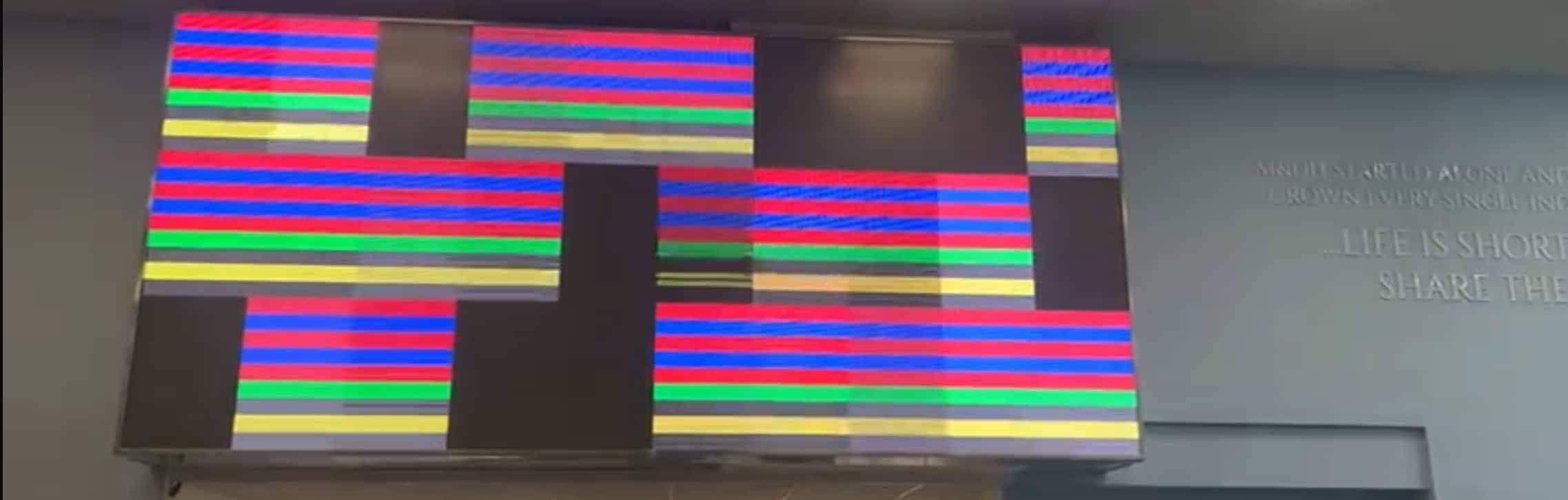
LED display downtime refers to any period when your screen is not performing its intended function. This could mean a completely blank screen, distorted images, flickering pixels, or incorrect content. Common culprits behind LED display failures include:- Hardware Malfunctions: Issues with individual LED pixels, modules, power supply units, receiving or sending cards, or internal cabling.
- LED Display Content Issues: Incorrect content resolutions or content that is created with the wrong codecs for the LED processor can cause errors with playback.
- Software Glitches: Problems with the content management system (CMS), control software, or firmware.
- Connectivity Issues: Loss of internet connection or network problems preventing content updates or remote access.
- Environmental Factors: Overheating, excessive humidity, dust ingress, or power surges, particularly for outdoor displays not adequately protected.
- Power Supply Problems: Unstable power or sudden outages can damage components. Frequent power interruptions, for example, can risk data corruption in control systems.
- Lost Advertising Revenue: For digital out-of-home (DOOH) billboards or in-store promotional screens, every minute of downtime is lost revenue.
- Missed Sales Opportunities: If displays highlighting products or offers are down, potential sales can be lost.
- Emergency Repair Fees: Urgent call-outs for technicians invariably cost more than scheduled maintenance. These costs can be substantial, especially for complex or hard-to-reach installations.
- Damage to Brand Reputation: A malfunctioning display can project an image of unreliability or neglect, negatively impacting customer perception.
- Poor Customer Experience: Whether it’s missing information at a transport hub or a failed display at a concert, downtime frustrates audiences.
- Lost Productivity: If displays are used for internal communications in corporate or manufacturing settings, their failure can disrupt operations.
Remote Monitoring for LED Displays: Your 24/7 Watchtower
Remote monitoring for LED displays is a system that allows you to oversee, diagnose, and often manage your displays from a distance, without needing to be physically present. Think of it as a constant, vigilant digital watchtower for your entire LED network. How Does It Work? Typically, remote monitoring systems involve:- Sensors and Data Collection: Specialised hardware and software within or connected to the LED display continuously gather data on various operational parameters. This can include temperature of critical components, voltage levels, individual pixel status, module health, fan speed, humidity, and connectivity status.
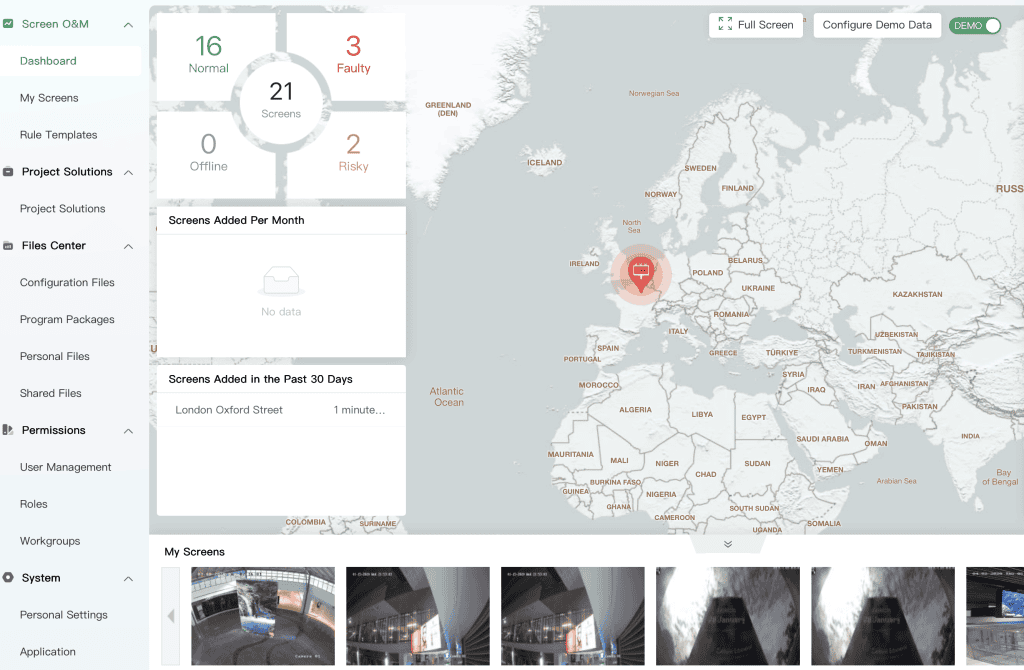
- Centralised Dashboard: Data is transmitted to a central platform, often cloud-based, where it’s presented on an intuitive dashboard. This gives operators a real-time overview of the health and status of all connected displays.
- Automated Alerts and Notifications: If any parameter deviates from pre-set thresholds (e.g., a module overheats, a significant number of pixels fail, or connectivity is lost), the system automatically triggers alerts. These notifications can be sent via email, SMS, or app notifications to designated personnel.
- Diagnostic Capabilities: Advanced systems can provide detailed diagnostic information, helping technicians understand the nature of the fault before they even arrive on-site, or even allowing for remote fixes. Systems like Novastar’s VNNOX Care can offer monitoring down to a single pixel when used in conjunction with their monitoring cards open and short circuit detection. The monitoring cards also offer ribbon cable fault detection, cabinet humidity detection, temperature monitoring, fan speed monitoring, power supply voltage monitoring and even cabinet door open detection.
The Core Benefits: How Remote Monitoring Directly Prevents Costs & Downtime
Implementing remote monitoring for your LED displays isn’t just an added feature; it’s a strategic move that directly translates into cost savings and operational continuity. 1. Proactive Fault Detection = Fewer Surprises- How it Prevents Costs: Remote monitoring systems identify minor issues – like a slightly elevated temperature in a power supply, a few dead pixels, or intermittent connectivity drops – before they escalate into complete screen failures. This early warning allows for timely intervention, often preventing more extensive and expensive damage. For example, addressing a cooling issue early can save an entire module from burning out.
- Benefit: Avoids catastrophic failures that could necessitate costly, extensive repairs or even full component replacements.
- How it Prevents Costs: Instant alerts mean that problems are flagged the moment they occur, enabling a rapid response. Many minor issues can sometimes be resolved remotely (e.g., rebooting a player, adjusting settings). Even if an on-site visit is needed, the issue is already diagnosed, significantly shortening the repair time. This minimises the period your display is non-operational, safeguarding your revenue streams and communication channels.
- Benefit: Maximises uptime, ensuring your messages are always seen and your advertising slots are always active.
- How it Prevents Costs: Remote monitoring significantly reduces the need for routine, often unnecessary, manual inspections. Technicians are dispatched only when there’s a confirmed issue, and they arrive pre-informed about the problem, equipped with the right tools and parts. This targeted approach saves on labour costs, travel expenses, and the overall time spent on maintenance. Predictive maintenance, facilitated by remote monitoring, can lower overall maintenance costs by as much as 30%, according to McKinsey research.
- Benefit: Streamlines your maintenance processes, making them more efficient and cost-effective.
- How it Prevents Costs: By ensuring your LED displays operate within optimal conditions (e.g., correct temperature, stable power) and by addressing minor wear-and-tear issues promptly, remote monitoring helps to prolong the life of the hardware. The average lifespan of digital displays can be 50,000 to 100,000 hours, but proactive maintenance is key to achieving and even exceeding this.
- Benefit: Delays the significant capital expenditure required for replacing displays, maximising the return on your initial investment.
- How it Prevents Costs: Beyond just being ‘on’, remote monitoring can help ensure your content is displayed correctly, at the right brightness, and without visual anomalies. This protects your brand image and ensures that your advertising campaigns or informational content run as intended, delivering their full impact.
- Benefit: Provides confidence that your displays are consistently performing at their best, reinforcing your brand and messaging.
Putting It Into Practice: What to Consider for Your LED Displays
When exploring remote monitoring solutions, consider:- Your Network Size and Complexity: The needs of a business with a single flagship display will differ from one managing a large network across multiple locations.
- Criticality of Displays: How vital is 100% uptime for each display? Tier your needs accordingly.
- Key Features: Look for real-time status updates, customisable alerts, detailed diagnostics, reporting capabilities, and user-friendliness. Consider solutions like Novastar’s VNNOX Care, which offer comprehensive monitoring.
- Integration: Can the monitoring system integrate with your existing Content Management System (CMS) or other operational tools?
- Scalability: Will the solution grow with your business as you add more displays?
- Support: What level of technical support and training is offered by the provider?
The Future is Proactive: AI and Predictive Maintenance in LED Monitoring
The evolution of remote monitoring is heading towards even greater intelligence. Artificial Intelligence (AI) and Machine Learning (ML) algorithms are beginning to be integrated into monitoring platforms. These technologies can analyse vast amounts of historical and real-time data to identify subtle patterns that may predict potential failures with even greater accuracy, allowing for pre-emptive maintenance before any issue becomes apparent.Conclusion: Invest in Uptime, Save on Downtime
A blank or malfunctioning LED display is more than an inconvenience; it’s a direct hit to your operational efficiency, brand image, and bottom line. Remote monitoring transforms your approach to LED display management from reactive fire-fighting to proactive, preventative care. By detecting issues early, minimising offline periods, optimising maintenance resources, and extending the lifespan of your valuable assets, remote monitoring is a smart investment that pays for itself many times over by preventing far more costly downtime. As a company dedicated to delivering high-quality, innovative LED display solutions, Dynamo LED Displays understands the critical importance of uninterrupted performance. Considering a remote monitoring strategy today is a crucial step towards ensuring your visual communications always shine.
Frequently Asked Questions (FAQs)
Q1: What types of LED display issues can remote monitoring detect? Remote monitoring can detect a wide range of issues, including:- Pixel and module failures
- Power supply irregularities (voltage, current)
- Overheating of components
- Fan malfunctions
- Connectivity loss (network, internet)
- CMS or player software errors
- Incorrect content display (camera view)
- Humidity and cabinet integrity issues (for some systems)