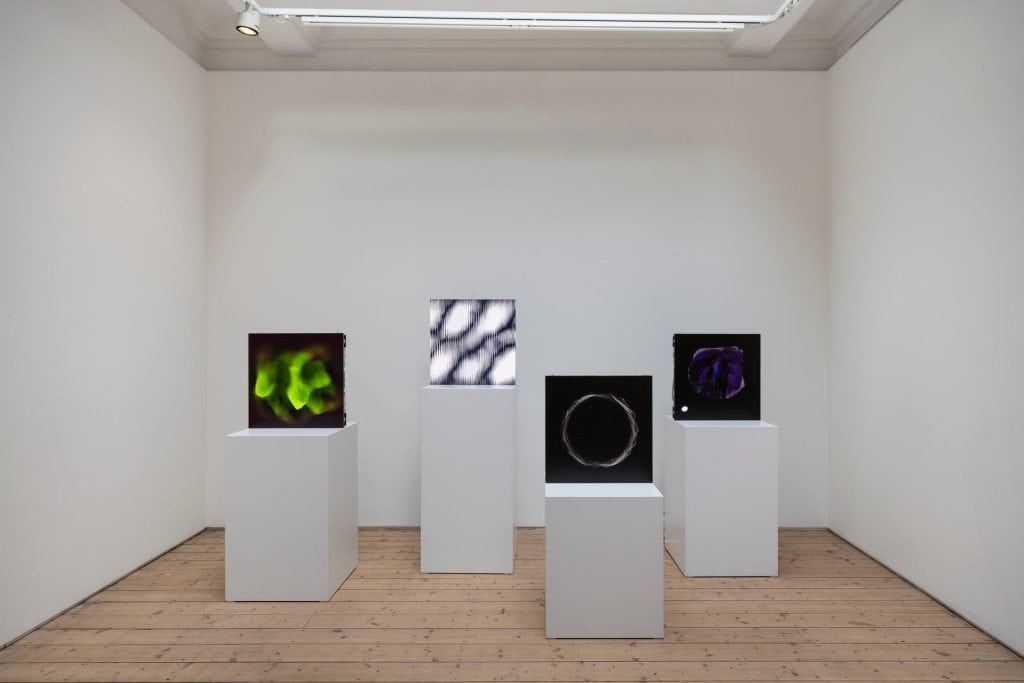
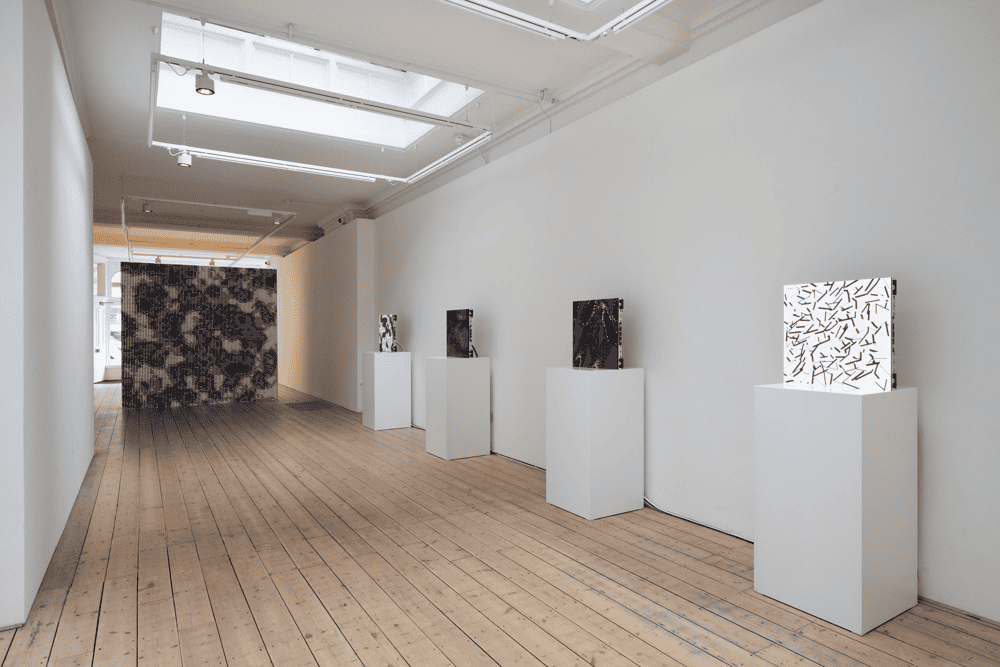
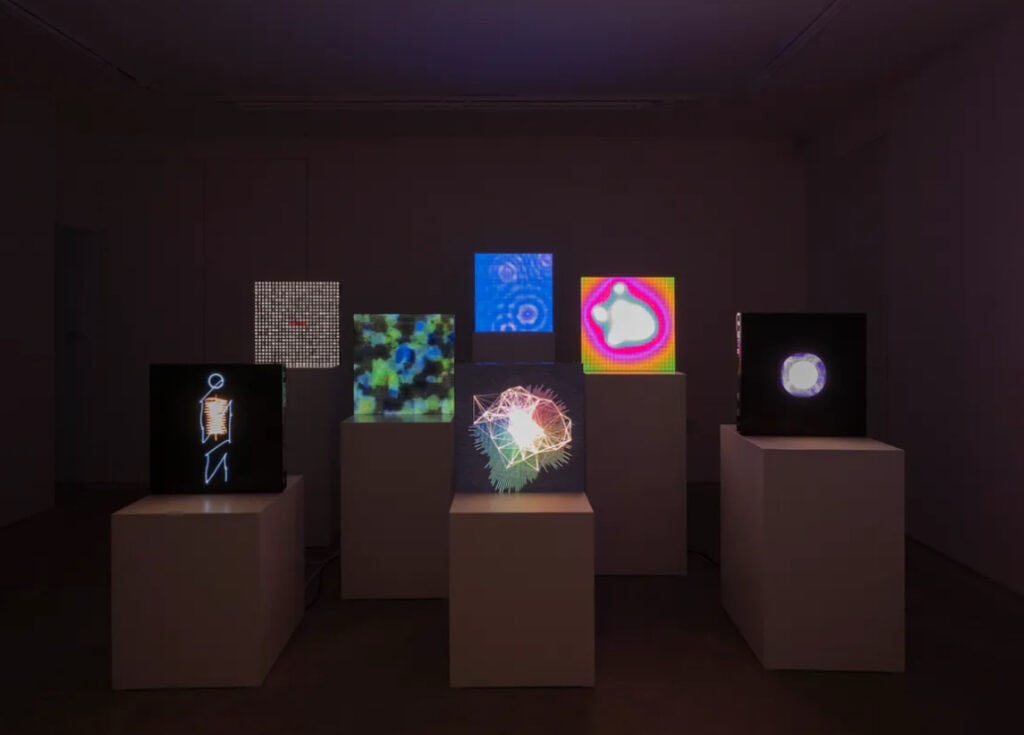
Dynamo LED Displays supplied and installed 24 fine-pitch LED screens for Botto’s Algorithmic Evolution NFT art exhibition at Verse, London, in February 2025: 22 plinth-mounted 1.29 mm DRE panels, one per algorithm, plus two 2.48 m DEX 2.06 mm walls mounted back-to-back in the centre of the gallery. Every screen was calibrated so the 22 artworks read as one set.
Updated September 2026.
Key takeaways
- 22 algorithms, 22 screens: each 496 mm × 496 mm DRE cabinet at 1.29 mm pitch shows one artwork at 384 × 384 pixels.
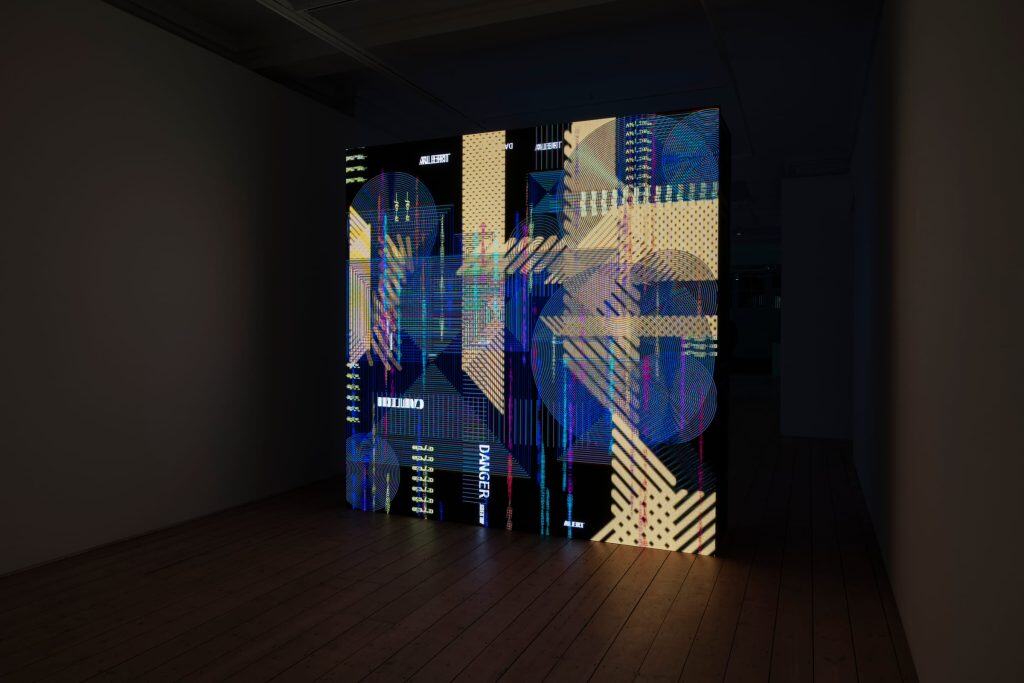
- Two double-sided 2.48 m × 2.48 m DEX 2.06 mm walls, 1,200 × 1,200 pixels each, anchored the middle of the room.
- A 1.29 mm pitch is specified for viewing from roughly 1.3 m, which is how close visitors stand to a plinth.
- Four-day show, 19–22 February 2025, at 34 Mortimer Street, London, with more than 400 people on opening night.
- Dynamo had already equipped Verse’s Zach Lieberman show overnight, so the gallery knew the supplier before the brief landed.
About Dynamo LED Displays
Dynamo LED Displays designs, supplies and installs LED screens from bases in the UK and Dubai, and has been doing so for 13+ years. A good share of that work is with artists and galleries rather than retailers: the company has built LED pieces with Turner Prize winner Mark Leckey, delivered George Harvey’s six-screen ENTITIES installation, and equipped Verse’s earlier Zach Lieberman NFT exhibition overnight.
That track record is why Verse asked Dynamo to supply the screens for Botto’s Algorithmic Evolution. Art installs need a different mindset from a shop window: the hardware has to disappear, the colour has to match across every panel, and the schedule is fixed by an opening night that cannot move.
Who is Botto?
Botto is a decentralised autonomous artist: an AI art system conceived by artist Mario Klingemann and governed by a community DAO. Botto generates work, the community votes on what it shows and sells, and the feedback shapes what Botto makes next. Its earlier work was text-to-image; Algorithmic Evolution was its first collection of code-based generative art.
What was shown
In early 2024 Botto began a 19-week experiment to move beyond text-to-image generation into code. Working in p5.js, a JavaScript creative-coding library, it evolved thousands of visual algorithms, refining them through community feedback and its own automated critique. The result was 22 final algorithms distilled from more than 6,500 generated pieces. Each of the 22 algorithms was committed to the blockchain as an NFT, so every work on the plinths also existed as a collectible digital asset.
Where and when
Curated and presented by Verse through its SOLOS programme, the exhibition ran from 19 to 22 February 2025 at 34 Mortimer Street, London. The opening night drew more than 400 people, and a panel discussion brought together Botto’s team with curators from the V&A and The Art Newspaper. For four days the gallery had to run 24 screens from open to close without a fault, which is a hire job with no margin for a dead panel.
Technical details of the LED screen installation
The brief was to show 22 individual algorithms at close range and to give the room a centrepiece that could be seen from every angle. Dynamo answered that with two different screen types rather than one big wall.
| Screen | Quantity | Pixel pitch | Size | Resolution | Role |
|---|---|---|---|---|---|
| DRE Series panel | 22 | 1.29 mm | 496 mm × 496 mm cabinet | 384 × 384 pixels | One artwork per plinth |
| DEX Series wall | 2 | 2.06 mm | 2.48 m × 2.48 m | 1,200 × 1,200 pixels | Back-to-back centrepiece |
22 × 1.29 mm DRE plinth screens
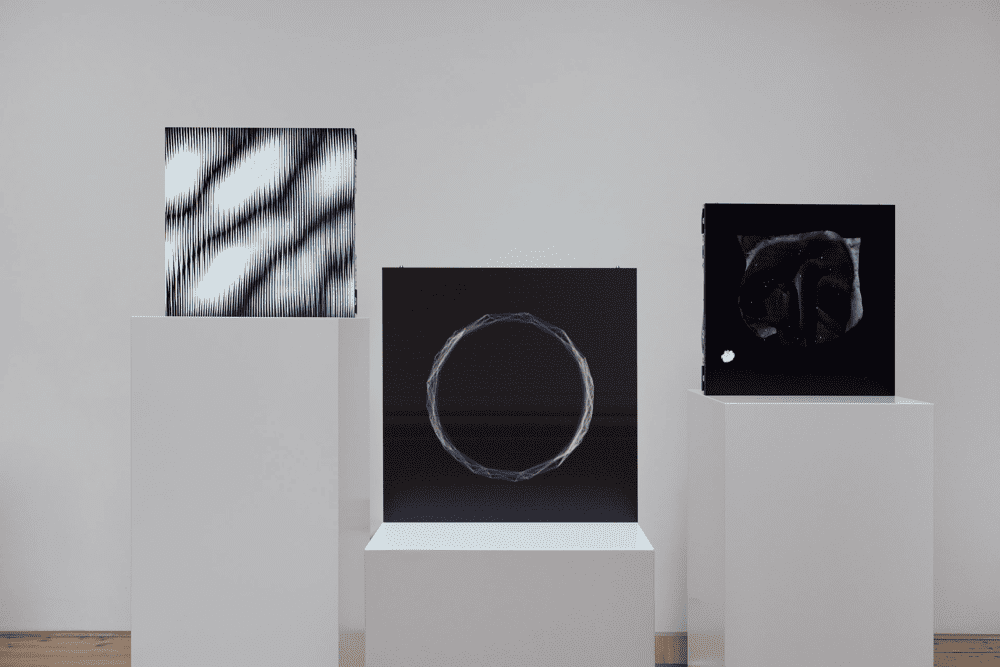
Each of the 22 algorithms had its own 496 mm × 496 mm DRE Series cabinet at 1.29 mm pixel pitch. A cabinet is four 248 mm modules of 192 × 192 pixels, so each artwork rendered at 384 × 384 pixels. The panels sat on individual white plinths at eye level, one work per plinth, so the exhibition read like a row of framed canvases rather than a bank of monitors. Dynamo runs these panels as part of its fine-pitch rental fleet, which is what made a four-day hire practical.
2 × 2.06 mm DEX back-to-back walls
Two DEX Series walls, each 2.48 m × 2.48 m at 1,200 × 1,200 pixels, were built back-to-back on a free-standing frame in the centre of the gallery. Visitors could walk round them and see evolving work on both faces, which doubled the visible content without taking any wall space from the plinth pieces. The 2.06 mm pitch suits the couple of metres of viewing distance people naturally leave around a free-standing object.
Why fine pitch matters at arm’s length
Pixel pitch is the distance between the centres of two neighbouring LEDs. The smaller the pitch, the closer a viewer can stand before individual pixels show. The datasheet for the 1.29 mm MicroX cabinet gives a minimum viewing distance of just over 1.29 m, which is roughly where someone stands to look at a work on a plinth. A gallery visitor leaning in to a 2.5 mm panel would see the dots; at 1.29 mm they see the artwork. Our viewing distance and pixel pitch guide covers the rule of thumb in more depth.
Mounting, calibration and content
Dynamo’s team handled the whole install: plinth mounting for the 22 panels, the structural frame for the two DEX walls, cabling, and the processing that fed every screen. Brightness and colour were then calibrated across every panel so a monochrome algorithm on one plinth matched the next. The DRE cabinets run at up to 3,840 Hz refresh and 160° viewing angles, so the pieces looked the same on camera as they did in person, and from the side as from the front. The aim was for the screens to vanish and the art to carry the room.
Past collaborations with Verse
Algorithmic Evolution was not the first time Dynamo had worked with Verse. For the gallery’s earlier Zach Lieberman NFT exhibition in London, Dynamo was asked the night before opening to supply two 2 m × 2 m LED walls. The screens were delivered, built and calibrated in time, and the feedback from visitors was that the LED walls were the star of the show.
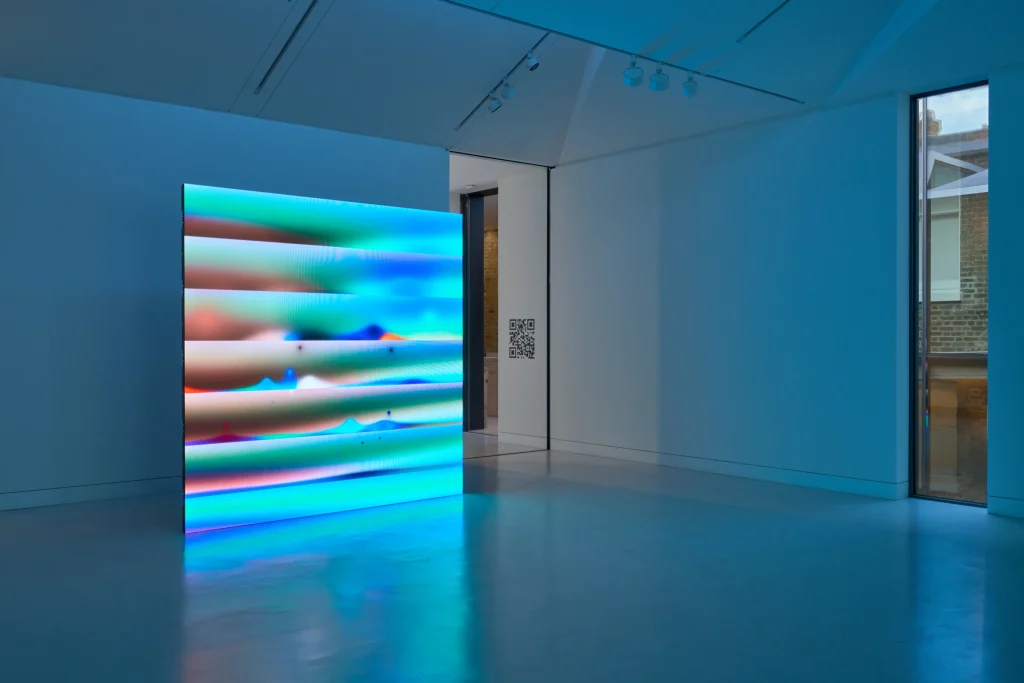
That overnight turnaround is the reason Verse came back. A gallery does not need a supplier who can talk about fine pitch; it needs one who will turn up with working screens on the date. The relationship now covers two NFT exhibitions and a shared understanding of how digital work should be lit, mounted and calibrated.
What LED screens bring to a digital art exhibition
Generative and NFT art is made to move and to be seen at scale. Prints freeze it and monitors shrink it. LED gives it a physical presence in a room, and four properties do most of the work.
Brightness and contrast
The indoor DRE cabinets are rated at over 800 nits with a 6,000:1 contrast ratio, so work holds up under gallery lighting and blacks stay black when the lights go down. Botto’s monochrome pieces relied on that: a grey background would have flattened them.
Scale without a bezel
Because the panels are modular, a 496 mm plinth piece and a 2.48 m wall use the same technology. There is no bezel between cabinets, so the two DEX walls read as single surfaces and the plinth pieces read as objects rather than screens.
Motion
Botto’s algorithms evolve in real time. A refresh rate of up to 3,840 Hz keeps that motion smooth for visitors and for anyone filming the show for social media, where flicker on a lower-refresh screen would have been obvious.
Interactivity
For this show the algorithms were the performers, but the same processing chain can take live inputs such as sensors or data feeds. That opens the door to work that responds to the people in the room.
Client feedback
Holly Wrench of Verse, who curated the show, wrote to Dynamo after the opening:
“Thank you for our wonderful exhibition, we’re getting a ton of people enquiring about the screens!”
That last part matters. When visitors to an art show ask about the screens, the hardware has done its job well enough to be noticed for the right reasons. Social media posts from the opening picked out how the work “came alive” on LED. Galleries and museums are adding LED to their programmes for exactly this reason, and Dynamo specifies plinth panels, free-standing walls and short-term LED screen hire for art shows as a regular part of its work.
Botto LED exhibition: frequently asked questions
What is Botto?
Botto is a decentralised autonomous artist, an AI art system conceived by Mario Klingemann and governed by a community DAO. Botto generates work, the community votes on which pieces are shown and sold, and that feedback shapes its next output. Algorithmic Evolution was its first collection of code-based generative art, written in p5.js and released as 22 NFTs.
Which LED screens were used for the Botto exhibition?
Dynamo supplied 22 DRE Series panels at 1.29 mm pixel pitch, each a 496 mm × 496 mm cabinet at 384 × 384 pixels mounted on its own plinth, plus two DEX Series walls at 2.06 mm, each 2.48 m × 2.48 m at 1,200 × 1,200 pixels, built back-to-back in the centre of the gallery. All 24 screens were calibrated together for matching brightness and colour.
What pixel pitch do you need for LED art viewed up close?
As a rule of thumb, the minimum comfortable viewing distance in metres is about the same as the pixel pitch in millimetres. The datasheet for the 1.29 mm cabinet gives just over 1.29 m, which suits a plinth piece. For a free-standing wall that people view from two or three metres, a 2 mm to 2.6 mm pitch is usually enough and costs less per square metre.
Can NFT and generative art be shown on LED rather than monitors?
Yes, and it is often the better choice. Generative work is rendered live, so any resolution can be output to match the panel: 384 × 384 for a plinth piece or 1,200 × 1,200 for a wall. LED has no bezel, higher brightness and better contrast than a consumer display, and a cabinet can be mounted on a plinth, a wall or a free-standing frame.
Can LED screens be hired for a short gallery exhibition?
Yes. The Botto show ran for four days, and the DRE panels came from Dynamo’s rental fleet. Hire covers delivery, build, calibration, support during the show and de-rig afterwards. Dynamo has equipped a gallery overnight before, but a few weeks’ notice makes it easier to match screen sizes and plinth heights to the work.
Are LED screens bright enough for a lit gallery?
The indoor DRE cabinets are rated at over 800 nits, which is several times brighter than a typical monitor, with a 6,000:1 contrast ratio and 160° viewing angles. That is enough to hold colour under gallery track lighting during the day and can be turned down for an evening opening so blacks stay deep.
Planning an LED art exhibition?
Whether it is one plinth piece or a room of them, the questions are the same: how many works, how close will people stand, how long is the show and what does the space allow. Send those over and Dynamo will come back with a screen spec, pitch recommendation and price.
Get a quote for LED screens for an art exhibition. Contact Dynamo LED Displays or call 020 3489 9878.