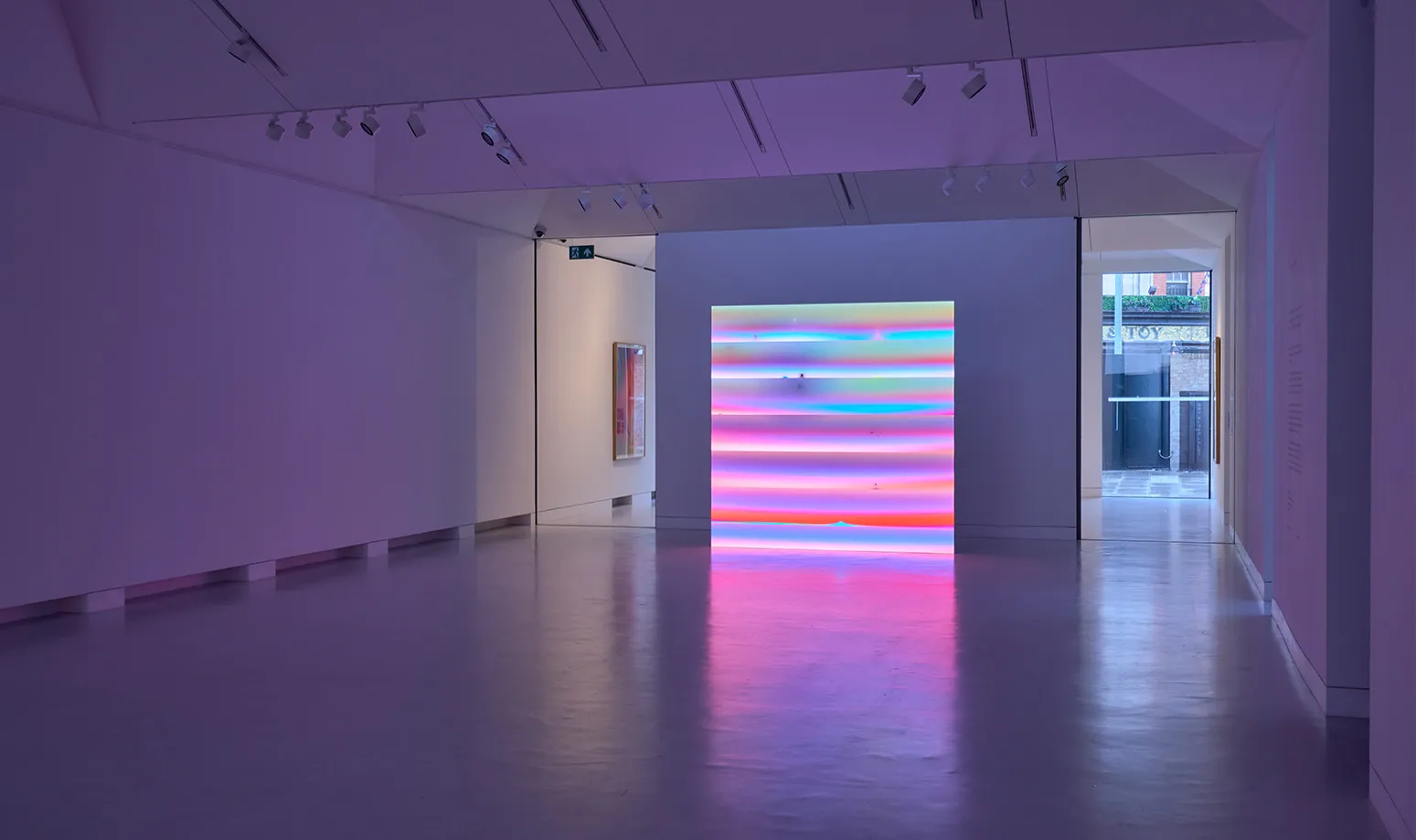
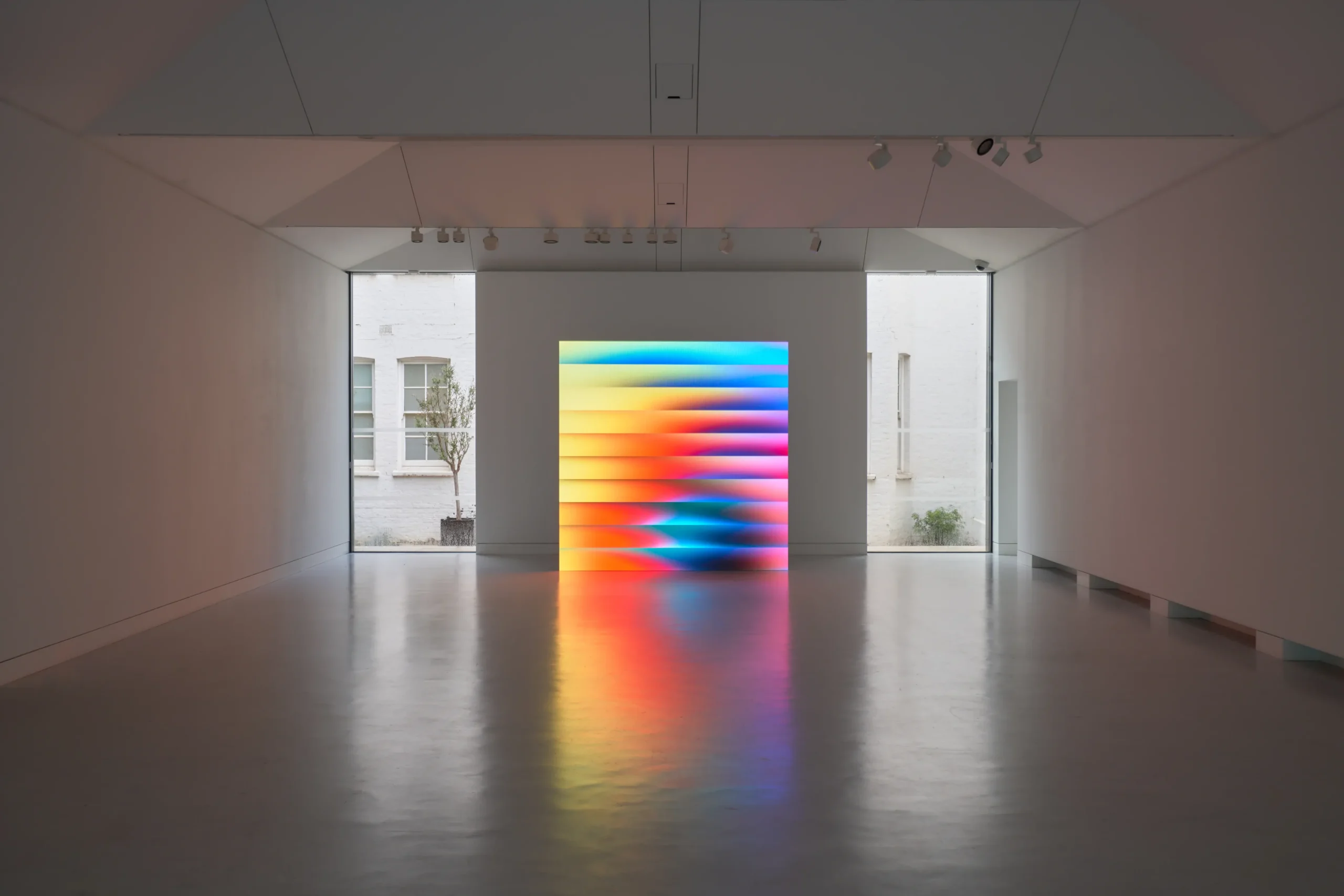
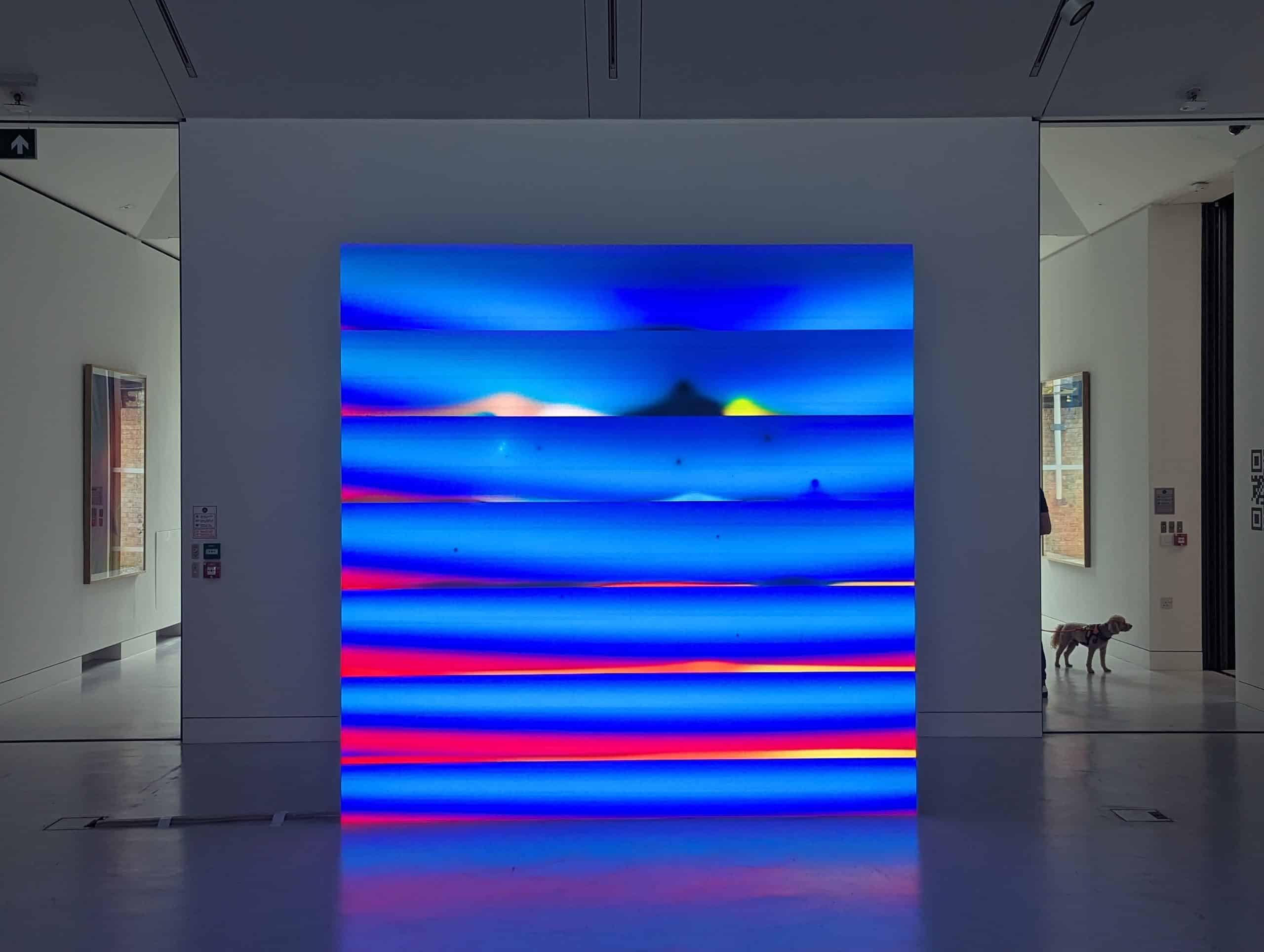
In August 2023 Dynamo LED Displays supplied two free-standing 2 m × 2 m LED screens, at 2.06 mm pixel pitch, for Zach Lieberman’s solo exhibition at Verse gallery in London, with the call coming the night before opening. Each screen showed one generative artwork edge to edge, with no bezel and no projector wash-out.
Updated September 2026. Case study first published August 2023.
This is a short case study, because it was a short job: one phone call, two screens, one white-cube gallery. It is still the project we point to when a curator asks what LED screens for museums and galleries look like in a real space, and why fine-pitch LED displays suit digital art better than a projector or a consumer TV.
Project summary
| Item | Detail |
|---|---|
| Client and venue | Verse, a London gallery for digital art, showing at Cromwell Place, South Kensington |
| Artist | Zach Lieberman, generative and computational artist |
| Exhibition | Solo show of Lieberman’s digital artworks, August 2023 |
| Screens supplied | Two LED screens, each 2 m × 2 m |
| Pixel pitch | 2.06 mm |
| Mounting | Free-standing on the gallery floor, one screen per room |
| Lead time | Booked the night before opening, delivered and set up in time for the show |
| Follow-on work | 24 screens for Botto’s Algorithmic Evolution at Verse, February 2025 |
What Dynamo installed at Verse
Two 2 m × 2 m LED screens at 2.06 mm pitch
Each artwork got its own screen, roughly two metres square, built from fine-pitch LED cabinets from our rental stock. At 2.06 mm pitch the pixel structure disappears at the distance a visitor naturally stands from a gallery wall, so the work reads as a single glowing surface rather than a grid. Our DEX Series covers this pitch for indoor work.
Booked the night before
Verse called the evening before the opening. Because the panels came from our fine-pitch LED rental fleet rather than a factory order, we could pull two matched screens, load them and have them standing in the gallery for the first visitors. That is the practical advantage of LED screen hire for exhibitions: the hardware already exists, so the lead time is transport and set-up, not manufacturing.
Free-standing in a white-cube gallery
Neither screen was fixed to the building. Both stood on the floor on their own frames, slim enough from the side to read as an object in the room rather than a piece of AV kit. The gallery could keep its walls clean and change the layout between shows without making good. For a longer-term gallery installation we would normally recess or flush-mount the cabinets instead.
Why fine-pitch LED suits digital art in a gallery
Pixel pitch and viewing distance
Pixel pitch is the distance between the centres of two neighbouring LEDs. The smaller the pitch, the closer a viewer can stand before the individual pixels show. Gallery visitors stop a couple of metres from a work and then step in closer, so the screen has to survive a near view. Our viewing distance and pixel pitch guide sets out the rule of thumb we use to size a screen for a room.
Contrast against white walls
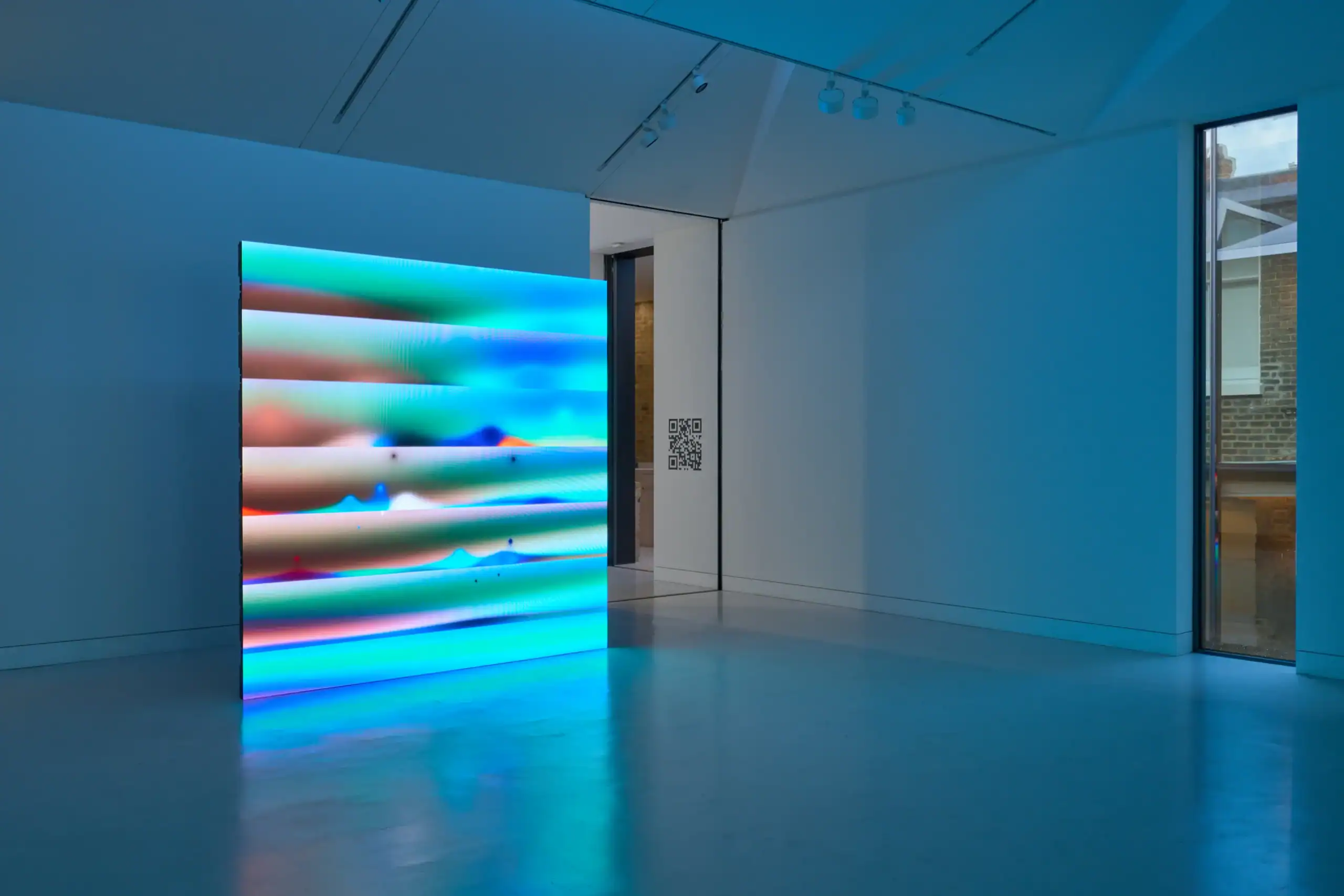
Lieberman’s pieces run deep blues and blacks next to saturated bands of colour. A projector washes those blacks out as soon as the gallery lights come up. LED is emissive, so black stays black and the bright bands stay bright, in a room with daylight from the windows and the house lighting on. That is why Verse asked for high-contrast LED rather than projection.
No bezels and no tiling seams
Both screens were built from LED cabinets that butt together with no visible join, so each artwork ran edge to edge across the full two metres. A tiled wall of consumer displays would have cut the piece into panels with black lines between them, which matters a great deal when the work is a single continuous field of colour.
What visitors said
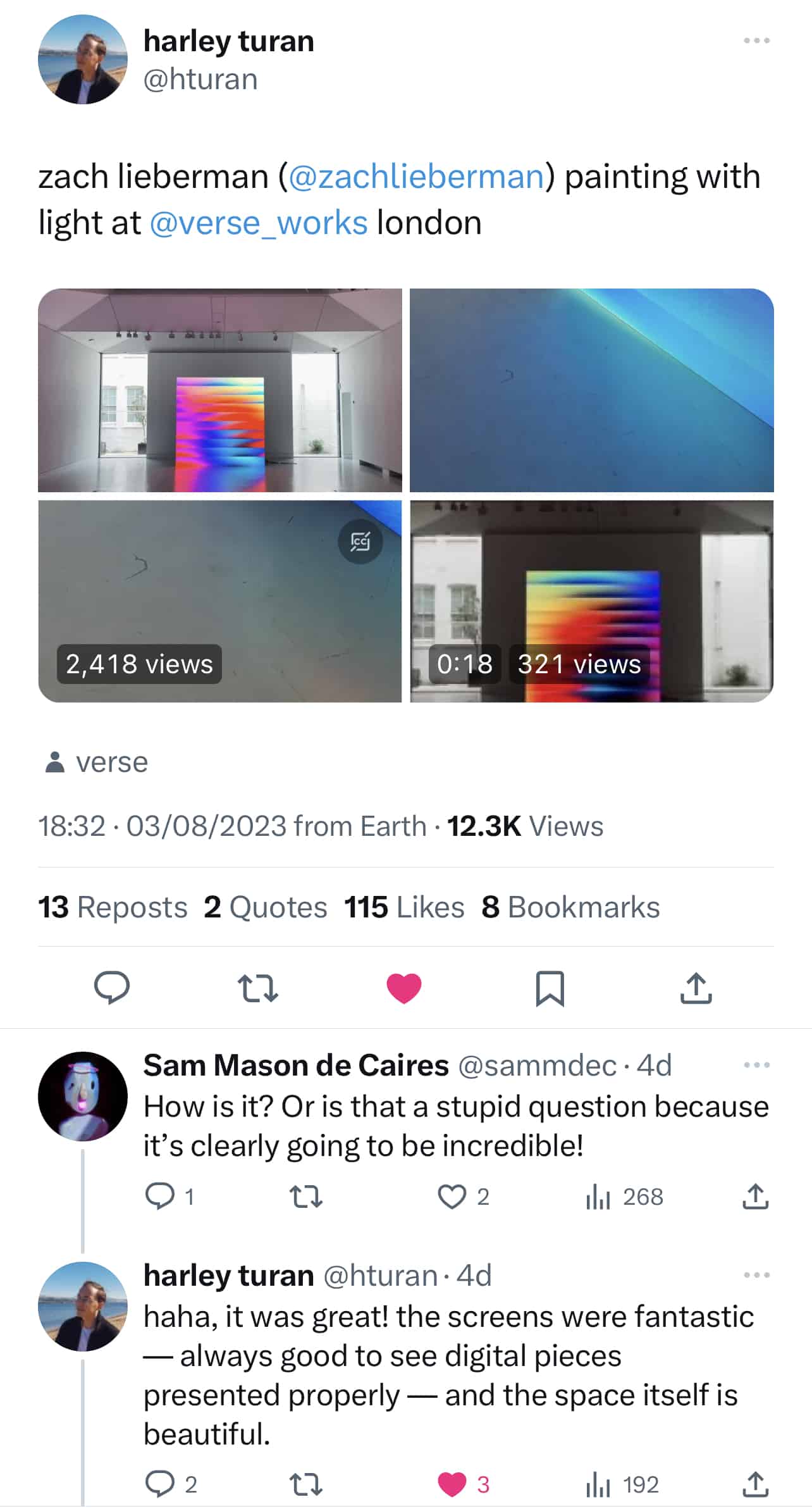
The show did well on social media, and the comment we kept was from a visitor who wrote that “the screens were fantastic, always good to see digital pieces presented properly, and the space itself is beautiful.” Presenting digital pieces properly is the whole job for a gallery LED screen, so we will take that.
Other digital art LED installations from Dynamo
The Lieberman show was the start of a working relationship with Verse and one of several digital art projects we have delivered in London.
- Botto’s Algorithmic Evolution at Verse: 24 fine-pitch screens for a four-day exhibition in February 2025, including 22 plinth-mounted panels and two back-to-back 2.06 mm walls.
- George Harvey’s ENTITIES installation: a six-screen large-scale digital art build with a British artist.
- The Pixel Artworks Lighthouse: an immersive LED room and interactive displays in Farringdon.
- Sotheby’s, London: LED installations for a luxury auction-house setting.
What a gallery needs to provide
- A mains supply near each screen position. Free-standing screens need power at the plinth, not across the floor.
- Floor space and a standing zone. Allow for the frame depth behind the screen and a clear area in front where visitors will gather.
- The artwork files, or a live feed. Tell us the native resolution and frame rate of each piece so we can map it to the screen without scaling artefacts.
- Access times. Overnight or out-of-hours installs are normal for galleries; we just need to know when the doors are open to us.
Art gallery LED screens: frequently asked questions
What LED screen do galleries use for digital art?
Galleries usually specify fine-pitch indoor LED, typically around 1.2 mm to 2.6 mm, because visitors stand close to the work. At Verse we used 2.06 mm panels at 2 m × 2 m, which kept the pixel structure invisible from normal viewing distance. The screen is built from cabinets, so the size and aspect ratio follow the artwork rather than a fixed TV format.
Can you hire LED screens for an art exhibition at short notice?
Yes, subject to stock. The Lieberman show was booked the night before it opened and both screens were in place for the first visitors. Hire panels already exist in our fleet, so the lead time is transport and set-up rather than manufacturing. Tell us the sizes and dates as early as you can and we will confirm availability in writing.
What pixel pitch does an art gallery LED display need?
Pick the pitch from the closest distance a visitor will stand, not the room size. A couple of metres of viewing distance suits a pitch around 2 mm; if people will lean in to inspect detail, go finer. Our viewing distance guide gives the rule of thumb, and we will always check it against the actual floor plan and the artwork’s resolution.
Are LED screens better than projectors for NFT and digital art?
For a lit gallery, yes. A projector needs a darkened room to hold its blacks, and any ambient light flattens the image. LED is emissive, so contrast and colour survive daylight and house lighting, and the piece runs edge to edge with no bezel or seam. Projection still has a place for very large surfaces where the room can be kept dark.
How big were the LED screens at the Zach Lieberman exhibition?
Each of the two screens measured about 2 m × 2 m, built at 2.06 mm pixel pitch and standing free on the gallery floor, one per room. The square format matched Lieberman’s pieces, which are rendered as continuous fields of colour rather than widescreen video, so no part of the artwork was cropped or letterboxed.
Planning LED screens for an exhibition?
Send us the artwork resolution, the screen sizes you have in mind, the venue and the dates. We will come back with a written specification, a pixel-pitch recommendation for the room and a price for hire or purchase.
Get a quote for art gallery LED screens. Contact Dynamo LED Displays or call 020 3489 9878.