
Dynamo supplied two concave flexible LED screens and one double-sided LED wall, all at 2.6 mm pixel pitch, for the rotating podium at Galeries Lafayette Paris Haussmann during the Ralph Lauren autumn 2026 pop-up. This case study is for scenic designers, experiential agencies and visual merchandising teams planning a retail activation with curved LED screens inside a scenic build. It covers the decisions that mattered: flat cabinets or flexible modules, pitch for a 2.5 m viewing distance, one processor across four faces, and a pre-build at the scenic workshop.
Key takeaways
- Three 2.6 mm LED screens, each 1,500 mm by 2,000 mm, were built into a rotating scenic podium on the ground floor of Galeries Lafayette Paris Haussmann for the Ralph Lauren autumn 2026 pop-up.
- The central screen is a double-sided LED wall of 32 die-cast cabinets fixed straight through the scenic wall with no external frame, just under 100 mm thick back to back.
- The two curved LED screens are concave flexible LED screens on a 1,670.5 mm radius, built from 250 mm magnetic modules on a curved steel carcass and shipped pre-formed.
- One LED processor drives all four faces as a single 2,304 by 768 pixel canvas from one HDMI feed, and the design studio synced the video to the platform rotation.
- The screens were pre-installed and pre-wired on the scenic frames at the workshop a week before, so the store install and programming fitted into one overnight window and the screens were live at 09:15 the next morning.
- After two and a half weeks of trading, the LED screens came out first in a single evening de-rig window.
Project facts
| Item | Detail |
|---|---|
| Client | London design studio (scenic design and production) |
| End brand | Ralph Lauren (Polo by Ralph Lauren podium) |
| Venue | Galeries Lafayette Paris Haussmann, ground floor, Coupole building |
| Dates | Pop-up 26 August to 21 September 2026; ground-floor podium live 27 August to 13 September |
| Screens | 1 double-sided LED wall (two faces) and 2 concave flexible LED screens |
| Screen size | 1,500 mm by 2,000 mm per face (curved screens 1,500 mm along the arc, about 1,447 mm chord) |
| Pixel pitch | 2.6 mm on all three screens |
| Resolution | 576 by 768 pixels per face; 2,304 by 768 pixels across the four faces |
| Curve | Concave, display-surface radius 1,670.5 mm |
| Build | Flat faces: die-cast aluminium cabinets 750 mm by 250 mm, 16 per face; curved screens: flexible modules 250 mm by 250 mm on a curved steel carcass |
| Brightness (specified) | 800 nits flat faces; 650 to 700 nits curved screens; 3,840 Hz refresh |
| Power | One 16 A 230 V supply per screen position; 2,100 W maximum for the double-sided wall, 1,440 W maximum per curved screen |
| Control | One LED processor, one HDMI feed from the design studio’s media server |
| Pre-build | Scenic workshop, Noisy-le-Grand, 18 to 19 August 2026 |
| Install | Overnight 26 to 27 August 2026, live at 09:15 |
| De-rig | Evening of Sunday 13 September 2026 |
| Dynamo scope | Screen design and supply, LED data cabling, pre-build and pre-commissioning, install and programming, de-rig |
Three physical screen positions, four independently mapped LED faces: that distinction runs through every decision below.
The brief: three LED screens on a rotating podium
The brief from the design studio was for three LED screen positions on a 3 m rotating platform at the centre of a circular podium, each screen sitting inside a timber-framed green scenic wall with no visible LED frame. The podium stood on the ground floor of Galeries Lafayette Paris Haussmann for the Ralph Lauren autumn 2026 pop-up, under a deep green ring soffit carrying Polo by Ralph Lauren lettering, with mannequins and a planted island on the platform. The pop-ups ran from 26 August to 21 September 2026, with the ground-floor space trading to 13 September.
What the design studio needed from the LED
The studio owned the scenic design, the platform, its rotation drive and the slip-ring power and data feed up to the platform. Dynamo’s job was everything from the LED face back to the data cable: screen design, cabinets and modules, the processor, the data cabling, pre-build, install, programming and de-rig. Because the screens had to live inside a scenic wall and turn on a platform, the build depth, the rear cable entries and the fixing method mattered as much as the pixel pitch. A retail activation like this sits between a straight LED screen hire and a fixed installation: installed as fast as a hire, finished like a permanent job. The question in Dynamo’s post on shopfront versus window LED applied here too: decide what the LED is for before deciding how big it is.
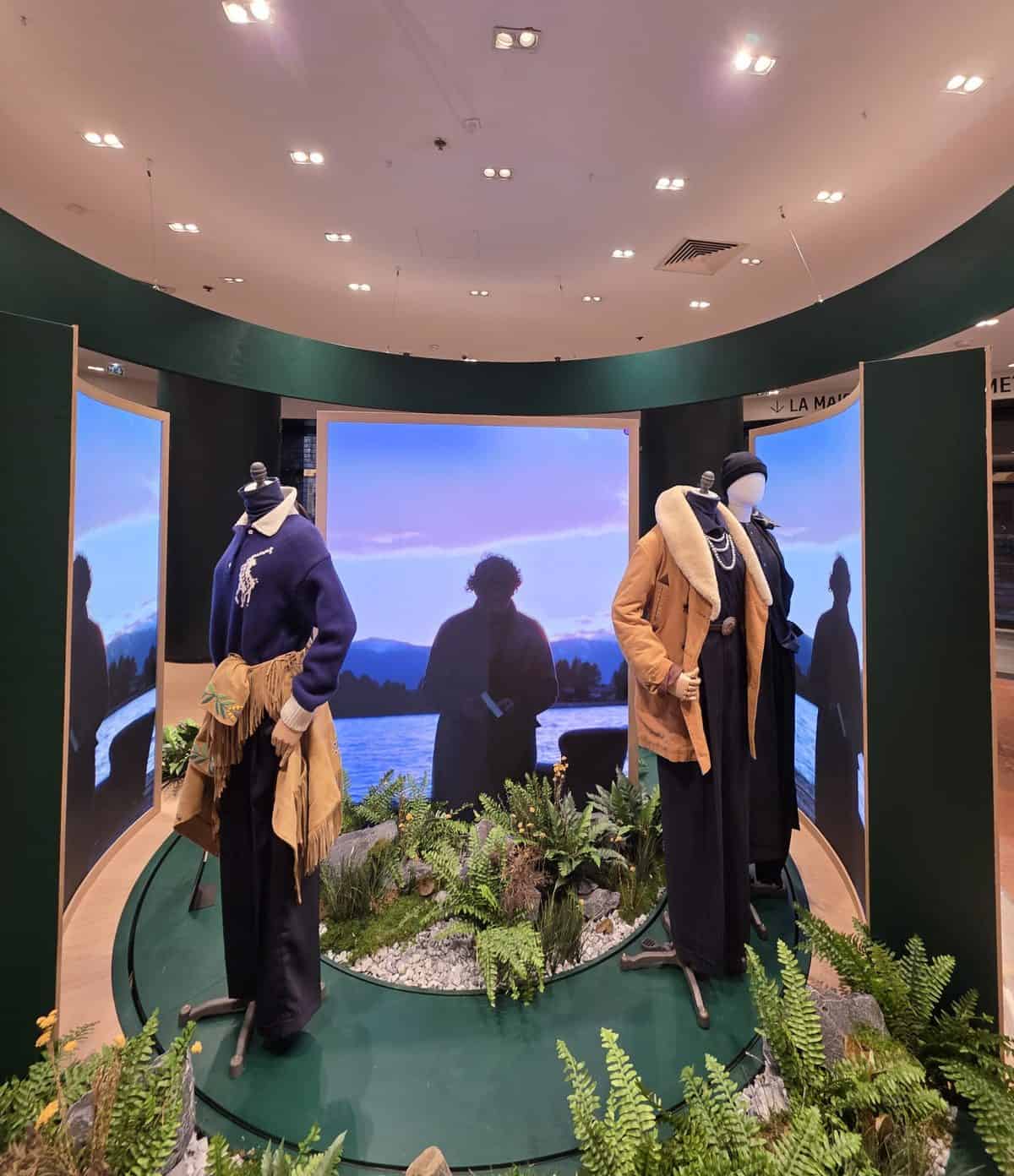
In plain terms: the studio built the podium, Dynamo built the screens to sit inside it.
Pitch and brightness for a 2.5 m viewing distance
Shoppers walk right up to a podium like this, so the design viewing distance was about 2.5 m, and 2.6 mm was the pitch that followed from it. The rule of thumb Dynamo uses is that pixel pitch in millimetres roughly equals the comfortable minimum viewing distance in metres, so 2.6 mm gives a clean image at arm’s length plus a step.
Why 2.6 mm
Each 1,500 mm by 2,000 mm face resolves to 576 by 768 pixels, which is enough for full-screen film with faces and landscape detail rather than graphics alone. Dynamo’s indoor fine-pitch range runs from about 1.9 mm to 2.6 mm; going finer than 2.6 mm here would have added weight to a rotating platform without a visible gain at 2.5 m.
Brightness on a shop floor
Department store lighting is bright and even, a point covered in Dynamo’s post on rental LED in luxury retail, so the flat faces were specified at 800 nits and the curved screens at 650 to 700 nits, both with a 3,840 Hz refresh so that phone video of the podium does not flicker. These are specifications rather than measurements on site.
In plain terms: 2.6 mm for where people stand, 650 to 800 nits for the light they stand in.
Flat cabinets or flexible modules: choosing the build for each screen
A curved LED screen is built either from rigid cabinets angled against each other in facets or, for a true curve, from thin flexible LED modules fixed to a shaped carcass. The double-sided LED wall in the centre was built from rigid die-cast cabinets and the two curved LED screens from flexible modules, because a 1,670.5 mm radius cannot be made convincingly from faceted cabinets at 2.6 mm pitch. The two builds share the same pitch, resolution per face and processor.
The double-sided LED wall
Each face of the double-sided LED wall is two cabinets wide by eight high: 16 die-cast aluminium cabinets of 750 mm by 250 mm, 288 by 96 pixels each, about 5.6 kg and 33 mm deep. Two faces back to back make 32 cabinets in a wall just under 100 mm thick. Draw the cabinet depth and the assembly depth as separate dimensions; the same goes for the 4.5 mm flexible module and the carcass behind it. The cabinets are front-serviceable, so access is from the display side without opening the scenic wall. This is the same cabinet class Dynamo uses for fine-pitch LED video walls in fixed installations, chosen here for its thin section.
The concave flexible LED screens
The two curved LED screens use flexible LED modules of 250 mm by 250 mm, 4.5 mm thick and about 450 g each, mounted magnetically to a curved steel carcass that was rolled to the display-surface radius before the modules went on. Each screen is six modules along the 1,500 mm arc and eight high, matching the resolution of a flat face. The carcasses were shipped pre-formed, so the radius was fixed at the factory rather than set on site, and the modules lift off the magnets one at a time. On the drawings, keep three numbers apart: the 1,500 mm active width measured along the arc, the roughly 1,447 mm chord that sets the straight-line opening in the scenic wall, and the radius measured at the display surface rather than at the carcass.
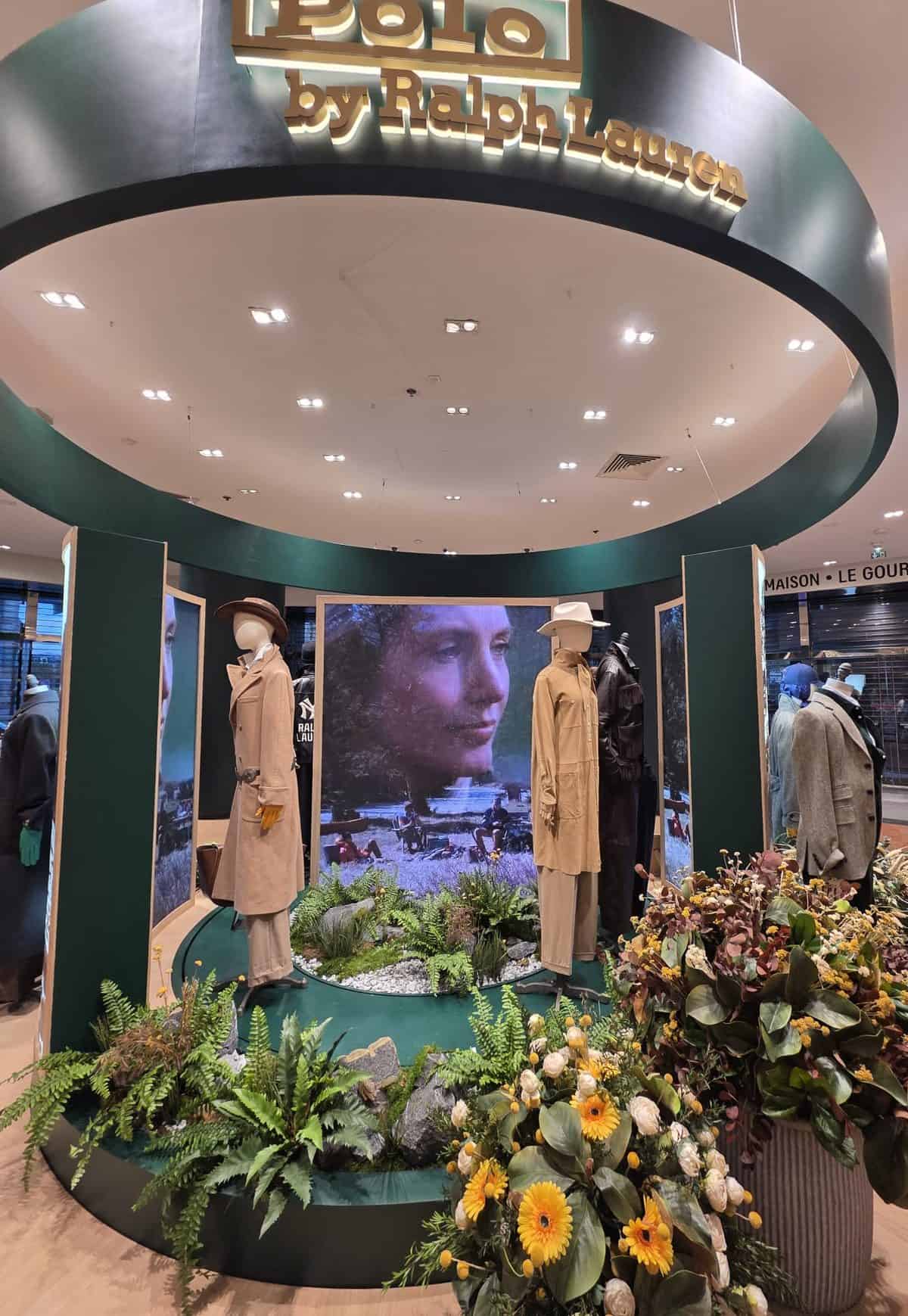
In plain terms: the flat screen is a stack of thin aluminium boxes; the curved screens are a bent steel skin with magnetic tiles on it.
Fixing into a scenic wall without a frame
The cabinets of the double-sided LED wall were fixed directly through the flat faces of the scenic wall, with no external aluminium frame or bezel, and the curved screens sit inside their scenic walls with the same flush timber reveal. Cable entries are through the rear of the cabinets, and the scenic team routed those cables within the wall and down to the platform. Dynamo supplied and terminated all of the LED data cabling. Getting the fixing centres, cut-outs and cable routes agreed on the drawings before the scenic walls were built is what made the rest of the job predictable.
One processor, four faces, one canvas
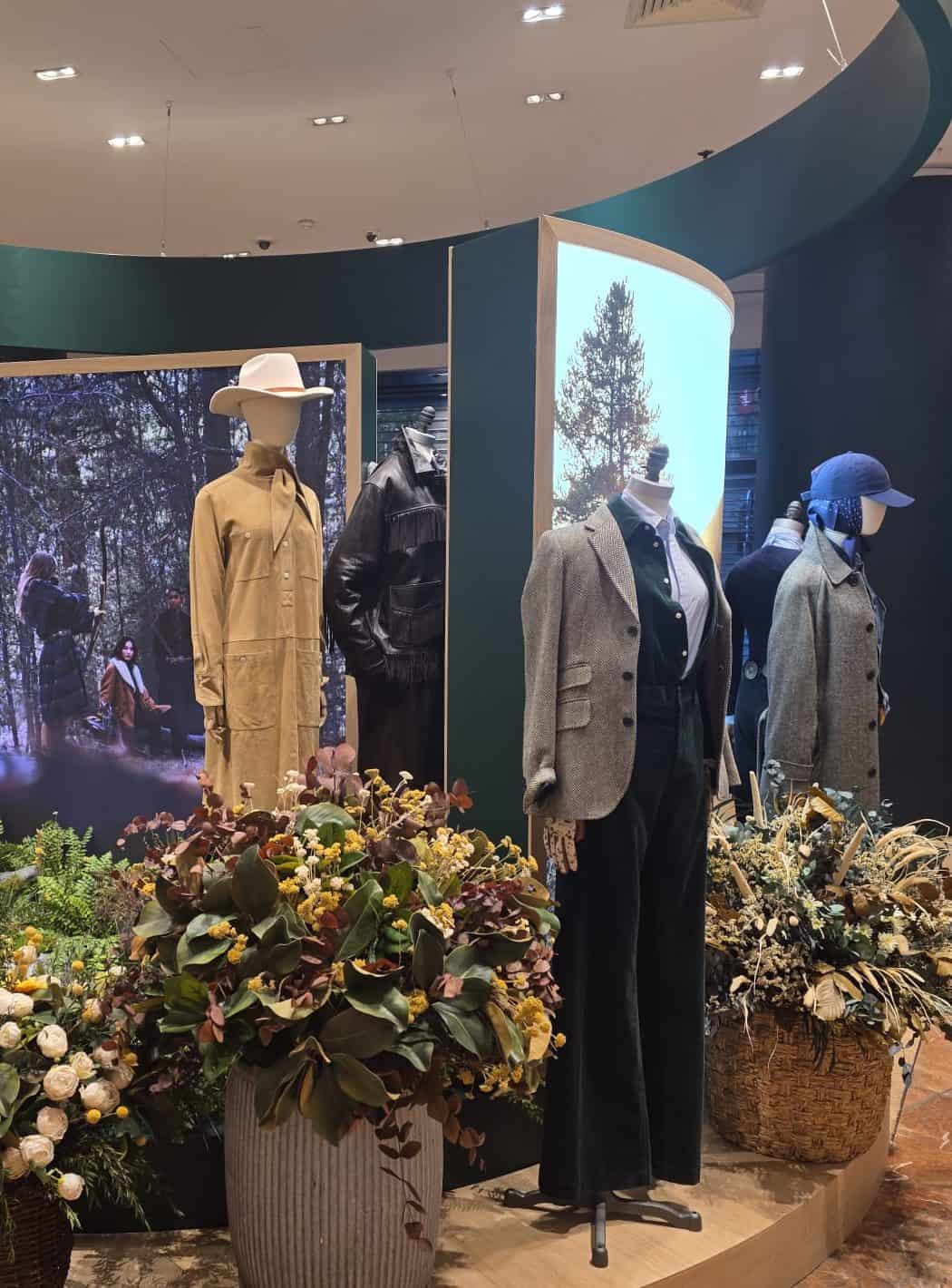
A single LED processor drives all four LED faces as one 2,304 by 768 pixel canvas, fed over one HDMI cable from the design studio’s media server. The four faces are mapped side by side in the processor, so a clip can be authored as a single wide frame or as four discrete panels, and the content team can move material between faces without touching the hardware. The canvas dimensions alone do not say where each region appears on the podium: two of the four regions are the opposite faces of the double-sided LED wall and the other two are the curved LED screens, so the region map matters as much as the pixel count.
Syncing content to the rotation
Because the platform turns, the design studio fitted a sensor to track the rotation and triggered the video from it, so a given clip lands on the front-facing screen as a particular mannequin passes the front of the podium. The processor shows whatever the media server sends, and the mapping means the timing logic lives in the studio’s playback software.
Power and the nightly shutdown
Each screen position has its own 16 A 230 V supply through the slip ring, three in total. The double-sided LED wall draws up to 2,100 W and typically 600 to 1,200 W; each curved LED screen draws up to 1,440 W and typically about 420 W. The store cuts power to the floor every night, so the processor and screens were configured to restart on their own when the supply returns in the morning.
In plain terms: three plugs, one HDMI, and the whole thing wakes itself up each morning.
Pre-build, overnight install and de-rig
The screens were pre-installed and pre-wired on the scenic frames at the scenic workshop in Noisy-le-Grand, east of Paris, on 18 and 19 August 2026. That pre-build is why the Galeries Lafayette install fitted into one overnight window. Dynamo had the screens shipped direct from the factory to the workshop rather than via the UK, and a Dynamo engineer spent those two days with the scenic team fitting cabinets and carcasses to the walls, running the data cabling and pre-commissioning the three screens.
What was proved before the venue
By the end of the pre-commissioning the three screens had been fitted, wired, powered and tested on the scenic walls themselves, so the fixings and cable routes had been proven on the real frames. The walls then travelled to the store as finished scenic elements with the LED already inside them. The uncertain work happens where there is time and daylight, and only the certain work is left for the venue. For other short-run Dynamo builds, see the LED sphere hire for a UEFA showcase and the hanging LED banner for an exhibition stand.
The overnight install
Galeries Lafayette gave the podium two overnight windows, 21:00 to 09:15, on the nights of 25 to 26 and 26 to 27 August. Dynamo’s install and programming ran on the second of the two nights, and the screens were live when the store opened at 09:15 on 27 August. A retail night window with a hard opening time is where the planning behind Dynamo’s LED installation services earns its keep.
The de-rig
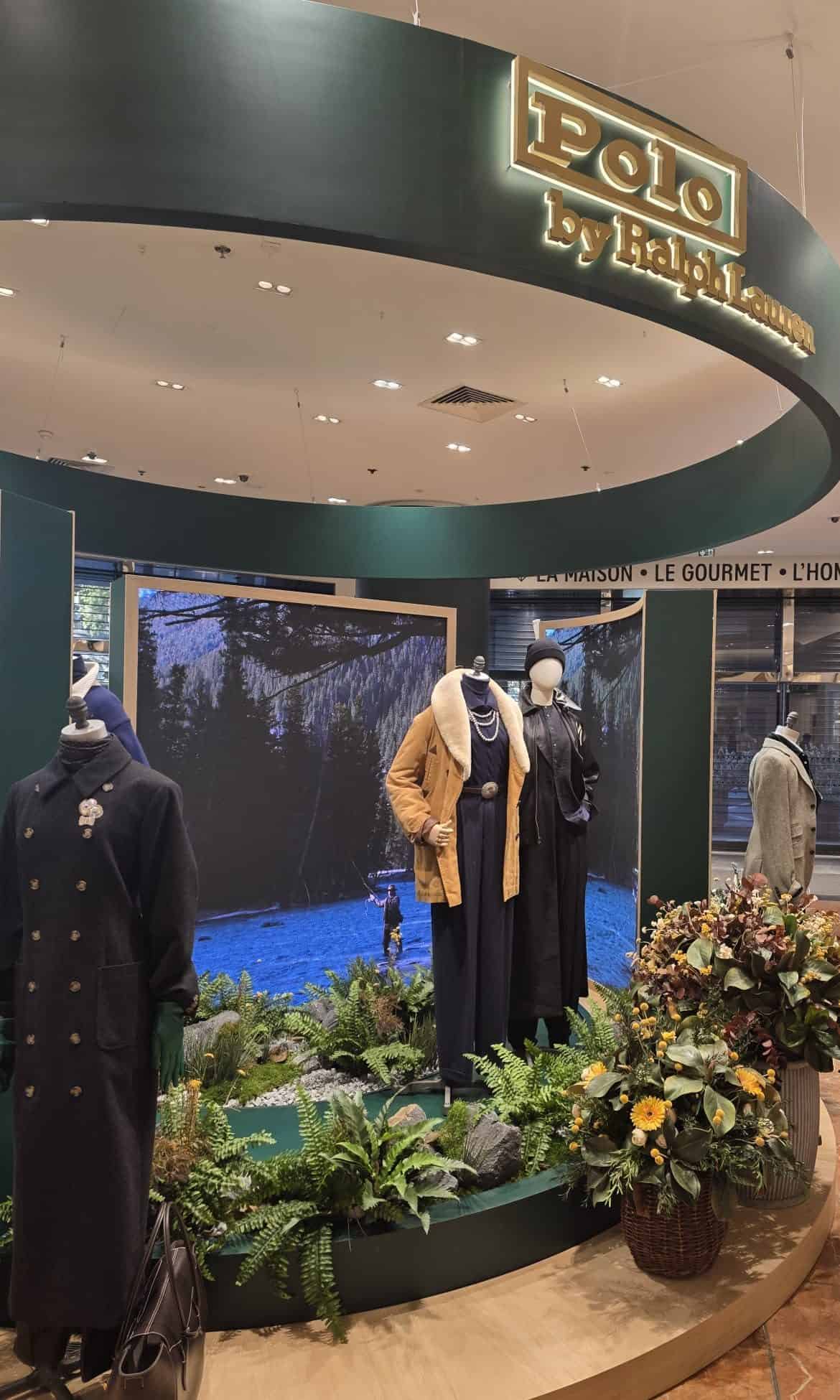
The ground-floor space traded until 13 September. The de-rig ran that Sunday evening in a window closing at 23:30, with the three LED screens first out so the scenic team could strike the podium behind them, and a Dynamo engineer travelled from the UK for the day to do it. The screens were specified from the start to be redeployed by the design studio afterwards, which is one reason the magnetic flexible modules and front-serviceable cabinets were the right choice.
What a design studio should send Dynamo for LED inside a scenic build
To quote for LED inside a scenic build, Dynamo needs the drawing set with screen apertures, viewing distance, curve radii, available depth, power and data route, and the venue’s install windows. From that Dynamo can confirm cabinet or module counts, resolution per face, the processor and canvas size, the cable schedule and the pre-build plan. Say what happens to the screens afterwards, too: this was a supply-and-install project with screens specified for redeployment, even though the store run was two and a half weeks, and hire is the better answer for a shorter run with no second life. Other Dynamo projects, from this podium to a trading floor LED ticker at 25 Baker Street, are mapped on Dynamo’s project map.
From the field
A lot of my LED work for brands comes through a studio or an agency rather than the brand itself, and this project is a good example of why that works. The studio owned the idea, the scenic build and the content, and what they needed from me was a screen package that would disappear into their walls, turn on a platform and behave. The decisions I cared about were the radius, the build depth, the fixing method and the cable route, and we settled all of them on the drawings before anything was cut.
The two days at the workshop outside Paris were the real install. By the time the walls went to the store the screens had already been fitted, wired and tested in them, so the night at Galeries Lafayette was about connecting and checking, not finding out. I would always rather spend a day pre-building than a night hoping, and for a UK supplier delivering into a Paris department store on a fixed opening time, that is the only sensible way to do it.
Curved LED Screens for a Retail Activation: Frequently Asked Questions
What pixel pitch do curved LED screens need for a retail activation?
For a podium or window display that shoppers approach to within about 2.5 m, 2.6 mm is the working pitch: close enough that film content with faces reads cleanly, without stepping up to the weight of 1.9 mm. The guide figure is that pitch in millimetres roughly equals the comfortable minimum viewing distance in metres, so measure where people will actually stand before choosing.
Can a curved LED screen be made from ordinary flat cabinets?
Only as a faceted approximation. Rigid cabinets can be angled a few degrees against each other, which works for a gentle sweep across a wide wall, but at a 1,670.5 mm radius on a 1,500 mm wide screen the facets would be visible at 2.5 m. For a true concave or convex curve at this scale the right build is flexible LED modules on a carcass rolled to the radius.
How thick is a double-sided LED wall in a retail scenic build?
Thinner than most people expect. Each face here is built from die-cast cabinets about 33 mm deep, so two faces back to back come to just under 100 mm, plus whatever structure holds them. That is why the central screen could be fixed straight through the scenic wall rather than needing a separate steel frame, and why the whole assembly could turn on a 3 m platform without a visible bulk behind the mannequins.
Can one LED processor drive several screens as one canvas?
Yes. The processor maps each face to a region of a single large canvas, here 2,304 by 768 pixels across four faces, and takes one HDMI feed from a media server. Content can then be authored as one wide frame or as four separate panels, and moved between faces in the playback software without any change to the hardware. The region map still has to be issued, because the pixel count alone does not show which region faces which way.
How long does an LED install in a department store take?
With a proper pre-build, one overnight window. On this project the screens were fitted, wired and pre-commissioned on the scenic walls at the workshop a week earlier, so the store night was used for Dynamo’s install and programming before a 09:15 opening. The pre-build is what made one night enough, with margin left for the unexpected.
What happens to LED screens in a retail activation when the store cuts power overnight?
Many stores cut power to the shop floor overnight, so the LED processor and screens should be set to restart on their own when the supply returns. On this podium each screen position had its own 16 A supply through the platform’s slip ring, and the system was configured so that the screens came back up with the studio’s content each morning without anyone having to switch them on.
Curved LED screens built as part of the scenic design
The podium worked because the LED was treated as part of the scenic build: the right construction for each surface, one canvas for the content team, a pre-build at the workshop, and a de-rig that left the screens ready for their next life. For a short-run retail activation, that sequence matters more than any single specification.
If you are planning a retail activation with curved LED screens, a double-sided LED wall or LED inside a scenic build, send the drawings, screen sizes, radii and install window to the Dynamo contact page or phone +44 (0)203 489 9878 and Dynamo will come back with a build and a programme.
Written by: Daniel Reynolds, Managing Director, Dynamo LED Displays