A 4K LED video wall has 3,840 × 2,160 physical LEDs — 8.29 million pixels. Unlike a 4K TV, a direct-view LED (DVLED) wall only reaches that count when its pixel pitch and physical size multiply out to that grid. Understanding 4K LED wall resolution means looking at pitch, size, processor and source together — not the number on the brief.
Clients ask for a “4K LED video wall” every week. On a DVLED canvas, that phrase covers four different things, and only one of them is actually 8.29 million pixels. This guide breaks down what 4K means on a direct-view LED display, when it is worth chasing, and how to size a wall so the figure on the spec sheet matches what the room actually sees.
For a wider view of LED wall formats and content use cases, see our LED video walls hub.
Key takeaways
- 4K UHD is 3,840 × 2,160 pixels — 8.29 million in total. On a DVLED wall you only reach that count when the wall is physically large enough at the pitch chosen.
- A 1.5mm pitch LED video wall needs roughly 5.76m × 3.24m for native 4K. A 2.5mm pitch needs 9.6m × 5.4m. A 0.9mm pitch fits 4K into 3.46m × 1.94m.
- Pixel pitch sets the resolution ceiling. The processor and source decide whether you ever reach it.
- Eyes resolve pitch, not pixels. A viewer 4m back from a 1.5mm wall will not see individual LEDs regardless of source resolution.
- “4K-capable” on a brochure usually means the processor accepts a 4K input. It does not mean the wall has 8.29 million LEDs.
- A 4K source feeding a 1,920 × 1,080 LED canvas displays at HD — the processor downscales; the LEDs do not multiply.
Quick reference
| Spec | Value |
|---|---|
| UHD 4K pixel count | 3,840 × 2,160 (8.29 million) |
| 4K60 pixel rate | 497.66 million pixels per second |
| Width formula at native 4K | 3,840 × pitch in mm ÷ 1,000 |
| Wall size at 1.5mm pitch | ~5.76m × 3.24m |
| Wall size at 0.9mm pitch | ~3.46m × 1.94m |
| Wall size at 2.5mm pitch | ~9.60m × 5.40m |
| Dynamo product lines for 4K fixed installs | DFC (premium fine-pitch flip-chip COB: DFC 1.5 at 1.58 mm and DFC 1.9 at 1.9 mm); DX (mid-range fixed, P1.9–P5.9) |
| Source feed for 4K60 | 3,840 × 2,160 at 50/60Hz — HDMI 2.0 for 8-bit, HDMI 2.1 / DisplayPort 1.4 / 12G-SDI for 10-bit |
| Processors that accept native 4K input | Brompton Tessera SX40; Novastar MX40 |
What 4K actually means on a direct-view LED wall
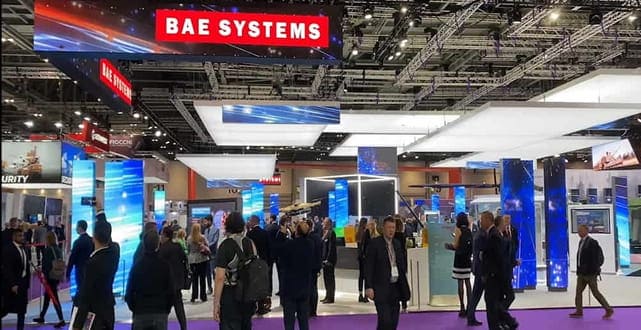
4K is a pixel count, not a panel size. UHD 4K is 3,840 pixels wide by 2,160 pixels tall — roughly 8.29 million pixels in total. On a domestic TV or LCD video wall, 4K arrives baked into the panel: a 65-inch 4K screen always has 3,840 × 2,160, no matter how close you stand.
A direct-view LED video wall works differently. The pixels are physical LED packages mounted to cabinets, and you build resolution by adding more cabinets. A 500mm × 500mm cabinet at 1.5mm pitch contains 333 × 333 pixels. Lay six cabinets wide and four high and you have 1,998 × 1,332 — less than full HD. You need roughly twelve cabinets wide and seven high at that pitch to cross the 4K line.
When clients ask for “4K,” they are usually asking for one of four different things:
- A wall that accepts a 4K input signal.
- A wall that displays UHD at native 3,840 × 2,160.
- A wall that looks as sharp as a 4K LCD at the intended viewing distance.
- A large LED canvas for 4K video playback, even if the wall itself is not native 4K.
If you are spec’ing now, decide which of these four you actually need before briefing a vendor — pitch and budget fall out of that answer, not the other way round. A processor can accept a 4K signal and scale it to a non-4K wall. That does not make the LED canvas native 4K. Equally, a native 4K LED video wall can be built at several physical sizes depending on pitch.
Why pixel pitch decides whether you can hit native 4K
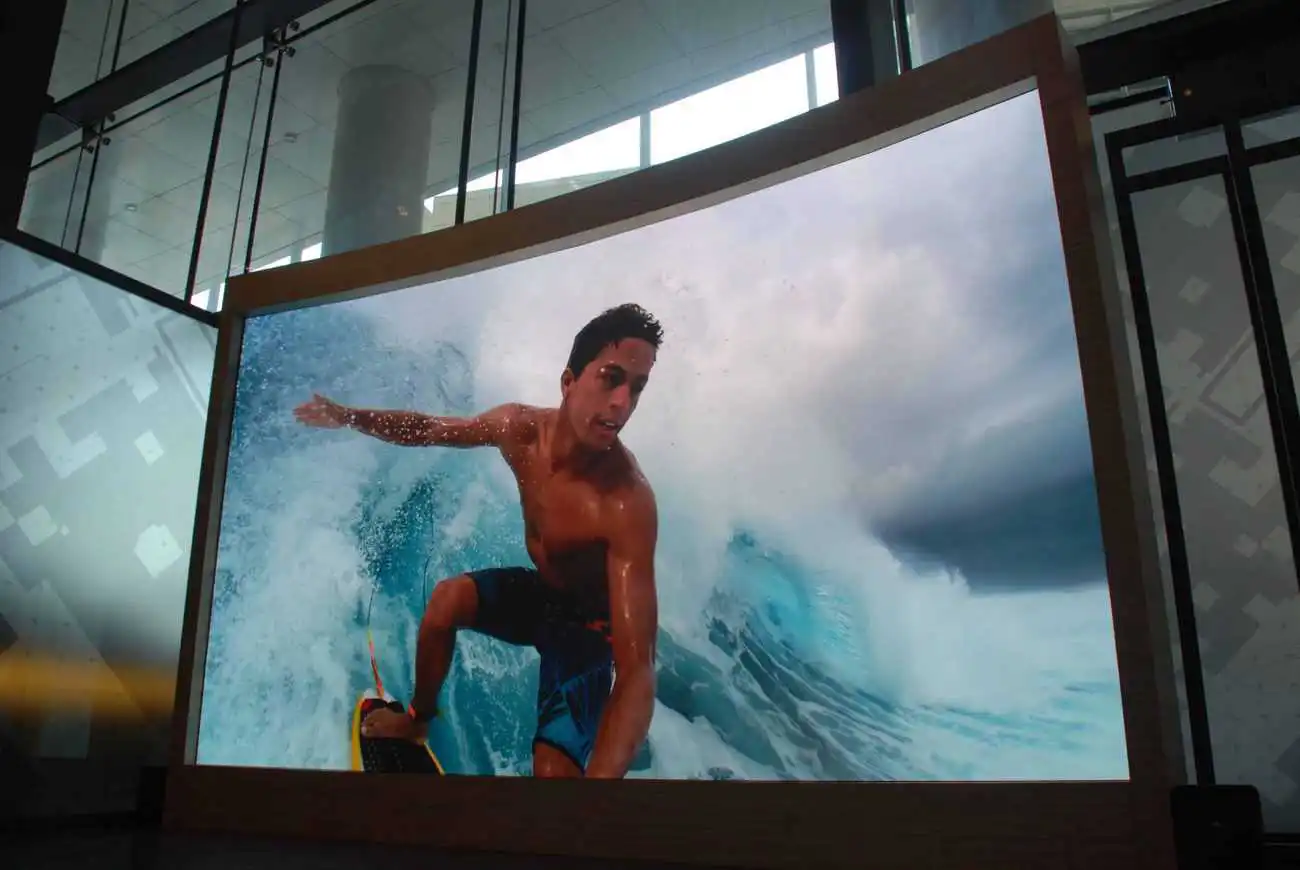
Pixel pitch is the centre-to-centre distance between adjacent LEDs. It sets the resolution density of the screen. Tighter pitch packs more LEDs into the same area, which means a smaller wall can hold 4K’s worth of pixels. For native 3,840 × 2,160:
| Pixel pitch | 4K width | 4K height | Approx. diagonal |
|---|---|---|---|
| 0.7mm | 2.69m | 1.51m | 3.08m / 121in |
| 0.9mm | 3.46m | 1.94m | 3.96m / 156in |
| 1.2mm | 4.61m | 2.59m | 5.29m / 208in |
| 1.5mm | 5.76m | 3.24m | 6.61m / 260in |
| 1.8mm | 6.91m | 3.89m | 7.93m / 312in |
| 2.5mm | 9.60m | 5.40m | 11.01m / 433in |
| 3.9mm | 14.98m | 8.42m | 17.18m / 676in |
A boardroom wall built at 2.5mm pitch and sized 4m × 2.25m holds 1,600 × 900 pixels — well short of HD, let alone 4K. The room may need that size for sightlines, but it will not be a 4K wall. The choice becomes: tighten the pitch, enlarge the wall, or accept that the screen will downscale 4K source content. There is a fuller breakdown of the trade-offs in our DVLED pixel pitch guide.
Tighter pitch also costs more per square metre, draws more power per pixel and requires more cabinets to maintain. The question is rarely “what is the smallest pitch we can afford.” It is “what is the closest viewer going to see, and what does the content actually demand?” Work the geometry in our 4K LED video wall options before you commit to a pitch.
What a 4K signal chain needs: source, processor, cabling
A wall with 8.29 million LEDs is only a 4K LED video wall if it receives a 4K signal. Three pieces have to line up.
The source. A 4K media player, broadcast feed or graphics workstation has to deliver 3,840 × 2,160 at the framerate the project needs. For corporate boardrooms and broadcast sets, that is usually 50p or 60p. A 1080p source upscaled to a 4K wall is not 4K. It is HD content stretched across more LEDs.
The processor. A Brompton or Novastar processor takes the source signal and maps it pixel-perfect onto the LED canvas. Lower-tier processors cap out at HD, or accept 4K only by merging inputs across multiple ports. For a true 4K pipeline, the processor has to accept a single 4K feed at the target framerate without internal scaling. The Brompton Tessera SX40 and Novastar MX40 are the controllers we typically reach for on a 4K-native Dynamo install.
The cabling and signal chain. 4K at 60Hz pushes a lot of data: 3,840 × 2,160 × 60 works out at 497,664,000 pixels per second, which is roughly 11.94Gbps at 8-bit RGB and 14.93Gbps at 10-bit before transport overheads. HDMI 2.0 carries 4K60 at 8-bit comfortably but cannot carry 10-bit 4:4:4 uncompressed — for that you need HDMI 2.1, DisplayPort 1.4 or 12G-SDI. A loose DisplayPort handshake or a daisy-chained HDMI splitter will quietly drop the wall back to 1080p without flagging it. For wide-gamut HDR work where the chain must hit the ITU-R BT.2020 colour space, the 10-bit path is mandatory; the 8-bit shortcut is not an option. Cabling has to be specified for the full bandwidth from source through to the processor’s input card. Our Novastar LED processor guide walks through which controller fits which 4K canvas size.
If any of those three steps under-delivers, the wall renders at the lowest common resolution in the chain. We see this most often where a client has paid for fine-pitch cabinets and a 4K processor, but the building’s signal infrastructure is still running 1080p out of an older AV rack.
Viewing distance and what the eye actually resolves
Resolution on paper does not always translate to what the room sees. The human eye resolves pitch — the physical gap between LEDs — long before it resolves the abstract pixel count.
A rough rule: the minimum comfortable viewing distance in metres is roughly the pixel pitch in millimetres. A 1.5mm wall reads as a continuous image from about 1.5m back. A 2.5mm wall needs 2.5m. A 4mm wall, 4m. Closer than that and individual LEDs become visible. We unpack this in more detail in our LED video wall viewing distance guide, which pairs pitch, audience distance and likely content type.
| Environment | First viewer distance | Likely pitch range | 4K implication |
|---|---|---|---|
| Executive boardroom | 1.5m to 3m | 0.7mm to 1.2mm | Native 4K fits a boardroom-scale wall |
| Auditorium front rows | 3m to 6m | 1.2mm to 1.8mm | Native 4K becomes a 4.6m to 6.9m wide wall |
| Reception or atrium | 4m to 10m | 1.8mm to 2.5mm | Native 4K may be physically large |
| Large venue backdrop | 8m to 25m | 2.5mm to 4.8mm+ | Native 4K usually unnecessary |
For a control room or boardroom where the nearest seat is 3m away, a 1.5mm or 1.9mm pitch is enough. The eye cannot see the pixels even if it tried. Pushing to 0.9mm in that environment buys headroom for closer inspection but no perceptible difference at normal seating. For a retail centrepiece where customers pass the screen at arm’s length, the maths changes. Sub-1.2mm starts earning its place.
Need to work out what pitch and wall size your space actually needs? Run the numbers in our size-and-pitch calculator — pitch, size, viewing distance and resolution in one view.
How cabinet size affects native 4K pixel mapping
LED video walls are built from cabinets and modules, and that is often where a clean 4K drawing meets the limits of real hardware. A native 3,840 × 2,160 wall needs a cabinet and module layout that lands exactly on those pixel counts.
A 600mm × 337.5mm cabinet at 1.25mm pitch contains 480 × 270 pixels. An 8 × 8 array gives 3,840 × 2,160 over a 4.8m × 2.7m physical size — a clean native 4K UHD wall. Not every pitch and cabinet format works that neatly. Some cabinet sizes produce fractional planning headaches, non-16:9 canvases or awkward final pixel dimensions. None of that is fatal, but it needs to be known before the steelwork, content templates and processor specification are fixed.
For fixed installations, we usually spec the DFC series for premium fine-pitch fixed installs (boardrooms, control rooms, broadcast) or DX for mid-range fixed installs (reception, atrium, auditorium backdrops). DRE rental cabinets are not the default choice for a permanent boardroom or auditorium wall. The 1.5mm direct-view LED display product page covers the cabinet maths we normally pair with a 4K boardroom or control-room canvas.
From the field
We get the “we want 4K” brief at least once a fortnight, and nearly every time the room will not actually take a 4K screen at the pitch the client is picturing. Last quarter a Central London law firm came in asking for a 4K boardroom wall at 1.5mm pitch in a 4m wide alcove. The geometry does not work — 4m wide at 1.5mm is 2,666 horizontal pixels, comfortably above HD but well short of 4K. I sat down with them and worked out what they actually wanted, which was “sharp enough that the executive sitting 2m away cannot see pixels.” That is a pitch-and-viewing-distance question, not a 4K question. We landed on a 4m × 2.25m DFC 1.5 wall (1.58 mm pitch). They are not running 4K source content into it and they do not need to.
The other one I see is the opposite. A Midlands auditorium project this year specified 0.9mm pitch on a stage wall where the front row sits 8m back. At that distance the eye cannot tell 0.9mm apart from 1.5mm, and the budget difference ran into tens of thousands. I pushed back hard. My job is to spend the client’s money where it actually shows up on screen.
— Daniel, Dynamo
4K LED Wall Resolution: Frequently Asked Questions
Is every LED video wall a 4K wall?
No. A DVLED wall’s pixel count is the sum of the pixels in its cabinets, not a fixed property of the panel. A 3m × 1.7m wall at 2.5mm pitch holds 1,200 × 680 pixels, well below HD. To display native 3,840 × 2,160 the wall has to be physically large enough at the chosen pitch.
What pixel pitch do I need for a 4K LED wall?
It depends on how large the wall can be. At 1.5mm pitch, native 4K requires roughly 5.76m × 3.24m. At 0.9mm pitch the same resolution fits into 3.46m × 1.94m. At 2.5mm pitch you are looking at 9.6m × 5.4m. Viewing distance sets the pitch; size follows to hit the resolution target.
Can a 4K processor make any LED wall 4K?
No. A 4K processor accepts a 4K input signal, then maps it onto whatever pixel grid the wall actually has. If the wall contains only 1,920 × 1,080 LEDs, the processor downscales 4K content to fit. True resolution is fixed by the wall’s physical pixel count, not the processor.
Does 4K matter if viewers sit more than 3m away?
For most content, no. At 3m or more, the eye cannot resolve detail finer than about a 1.5mm pitch wall delivers. A 4K input feeding a sub-4K wall at that distance usually looks the same as native 4K. Detail matters more for close-viewing applications like retail centrepieces or studio backdrops. Our 4K LED screen backdrop for the DEFY promo video is a worked example of a 16:9 wall built for camera.
What is the difference between 4K input and 4K resolution on an LED wall?
4K input means the processor accepts a 3,840 × 2,160 source feed. 4K resolution means the wall itself contains that many physical pixels. A wall can have 4K input but lower native resolution; content is downscaled. A wall can have 4K-worth of pixels but be fed HD; content is upscaled. Both halves have to match.
Does a 4K LED wall have to be 16:9?
No. A wall can accept 4K content without being 16:9, and many architectural LED video walls are wider, taller or shaped to fit the space. If you need native UHD pixel mapping, 3,840 × 2,160 is a 16:9 canvas. If the wall is another shape, build content for the actual pixel dimensions rather than a generic UHD template.
Is 8K worth specifying on an LED video wall yet?
For most commercial briefs in 2026, no. 8K source content is rare outside specialist broadcast and high-end visualisation, and hitting 8K on DVLED requires either very large walls or very tight pitches. Both routes are costly. 4K is the practical ceiling for the majority of corporate, retail and broadcast installations.
Conclusion
4K on a direct-view LED wall is a geometry question before it is an electronics one. Pixel count comes from the wall’s physical dimensions multiplied by its pitch. The processor and source then have to feed that grid at full resolution to make it count. Get pitch, size and signal lined up and the wall delivers what the brief asks for. Get one wrong and the 4K label describes nothing the room actually sees.
The starting point is the closest viewer’s seat and what they are looking at, not the number on the spec sheet. From there, the maths decides whether 4K is the right target, or whether the budget is better spent on pitch density, processing headroom or signal infrastructure.
The fastest way to test pitch, size and viewing distance against your room — and to confirm the resolution the wall can actually carry — is the LED video wall systems; it returns the geometry in seconds. If you would rather walk through the brief with a person, call us on +44 (0)203 489 9878 or speak to a Dynamo engineer about your 4K LED wall resolution target.