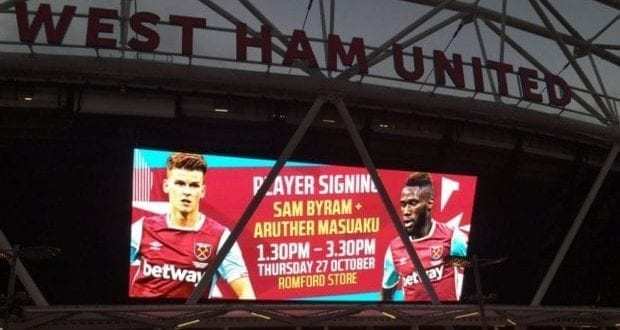
A pitch-side screen is an outdoor LED display mounted at ground level along the edge of the playing surface, showing advertising, scores and replays to spectators and broadcast cameras. Stadium LED displays also include big screens, concourse and hospitality screens and fan-store video walls. Dynamo LED Displays has delivered LED at Arsenal, Liverpool and Manchester City.
Updated September 2026: rewritten as a buyer’s guide to pitch-side and stadium LED, with a screen-type table, specification notes, cost drivers, our Premier League installations and an FAQ.
What is a pitch-side screen?
Pitch-side screens, also called perimeter LED boards, run in a continuous strip around the edge of the pitch. They replaced the static hoardings that used to carry sponsor names, and they do the same job with far more flexibility: several sponsors share the same board in rotation, the club can switch to score and event messaging, and the content can be changed for each fixture from the control room.
Because players and ball boys collide with them, perimeter boards are built as outdoor-rated LED cabinets with padded top edges and impact-resistant fronts, mounted on tilting frames so the face angles up towards the stands and the cameras. The Sports Grounds Safety Authority guidance on pitch perimeters and sightlines shapes where and how they can be installed. Our outdoor LED displays range covers the cabinet types used for this work.
Types of stadium screens
| Screen type | Where it sits | Typical pixel pitch | What it does |
|---|---|---|---|
| Pitch-side (perimeter) screen | Ground level around the pitch edge | 6 to 10 mm | Rotating sponsor advertising, scores, event messaging for spectators and TV |
| Big screen or video scoreboard | Corner or end of the bowl, 30 m or more from most seats | 10 mm and above | Replays, live feed, scores, sponsor spots |
| Concourse and entrance screens | Under the stands, turnstiles, food outlets | 4 to 6 mm | Wayfinding, menus, advertising, safety messages |
| Hospitality and directors’ box screens | Lounges, boxes, executive areas viewed from 3 to 8 m | 2 to 3.9 mm | Live match feed, sponsor branding, custom-shaped features |
| Fan store and retail video walls | Club shop windows and interiors | 2 to 3.9 mm | Match content, product promotion, gaming and events |
| Broadcast and studio LED | Presentation studios, filming sets | 1.5 to 2.5 mm | Camera-facing backdrops and virtual sets |
Specifying a pitch-side screen: what matters
Brightness and viewing angle
A perimeter board faces the sun for part of the match and floodlights for the rest. Outdoor LED for this position needs high brightness, typically 5,000 cd/m² or more, with automatic dimming so it does not glare under lights or on a dull evening. Wide horizontal viewing angles matter because spectators see the same board from the far corner as from directly opposite.
Pixel pitch
Pitch-side screens are read from at least 20 to 30 metres, so a coarse pitch of 6 to 10 mm is normal and anything finer adds cost without adding visible detail. Pixel pitch is one of the parameters explained in our guide to LED display parameters.
Refresh rate for broadcast
Television cameras expose the frame far faster than the human eye, so a low-refresh LED board shows dark bands and flicker on screen. Boards in camera view should run at 3,840 Hz or higher so sponsors get clean coverage on every replay.
Weatherproofing and impact protection
A pitch-side cabinet needs an IP65 front as a minimum, with exposed positions going higher. The IP code is defined by IEC 60529; the IP code reference sets out what the two digits mean. Add UV-stable masks, sealed cable glanding and a front face that survives a football hit at speed.
Installation phasing between fixtures
Stadiums do not close for an LED install. Work is phased between home fixtures, often overnight, with power and data routes agreed with the ground’s safety team in advance. Cabinets are pre-assembled off site so the on-site window is spent on mounting, cabling and commissioning rather than building.
Pitch-side screen price: what drives the cost
There is no single pitch-side screen price because the board is specified per stadium. The cost is driven by the total length and height of LED, the pixel pitch, the cabinet build (outdoor rating, padding, tilt frames), the control system and any broadcast requirements, plus installation and the service arrangement afterwards. Our LED display cost guide explains how these factors combine per square metre.
Clubs can purchase a pitch-side screen outright or hire one for a season, a tournament or a single event. Purchase suits a permanent home ground where the board earns sponsorship every match; hire suits temporary venues and one-off events, and is covered on our LED screen hire page.
Premier League stadium LED: our featured installations
Stadium LED is demanding: matchday reliability, broadcast-camera quality, weatherproofing for outdoor positions and installation phasing that fits between fixtures. These are the stadium and broadcast projects we have delivered:
- Arsenal Football Club, Emirates Stadium: six external-facing 2 m × 2.5 m portrait LED window screens at 3.9 mm pitch and 4,500 cd/m² for The Armoury store, with internal 2.5 mm screens and a custom LED ticker.
- Liverpool FC outdoor LED display: a 3.9 mm pitch outdoor screen with remote monitoring and scheduling.
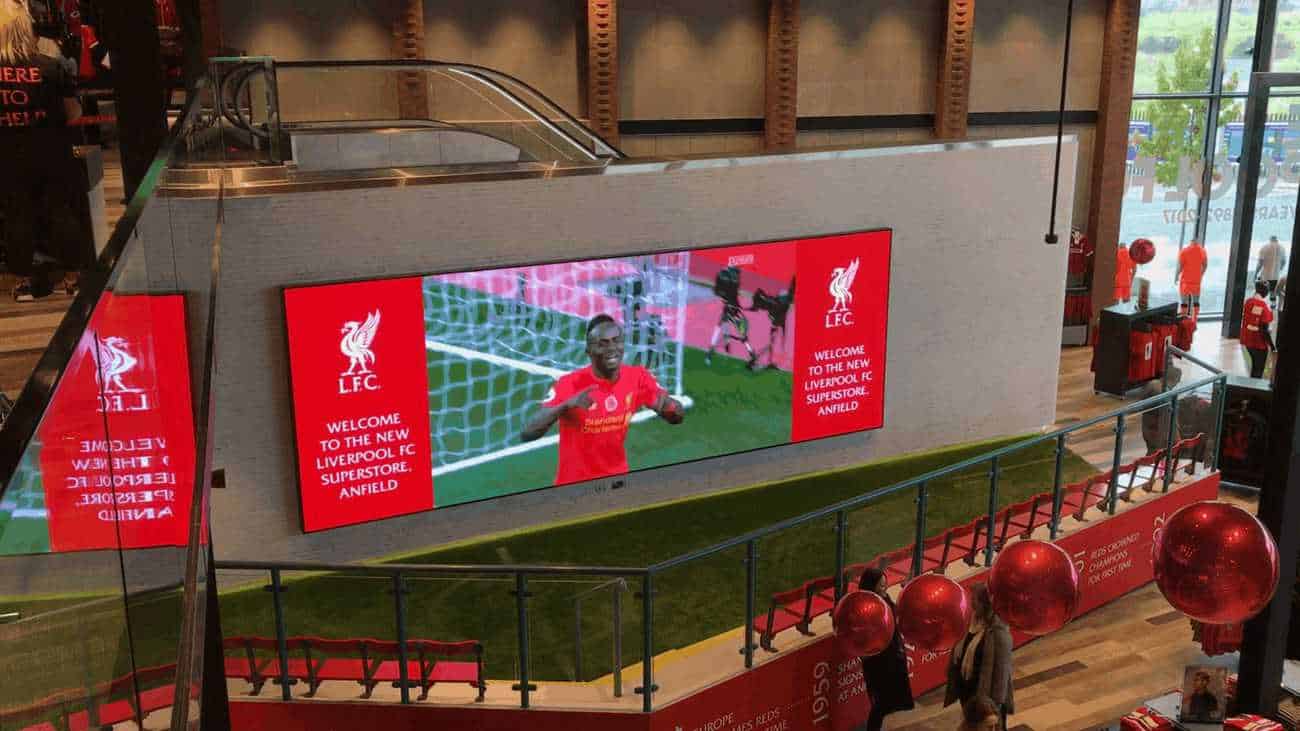
- Liverpool FC LCD and LED video walls: a 20 m², 3 mm pitch LED video wall as the centrepiece of the club store, alongside LCD video walls.
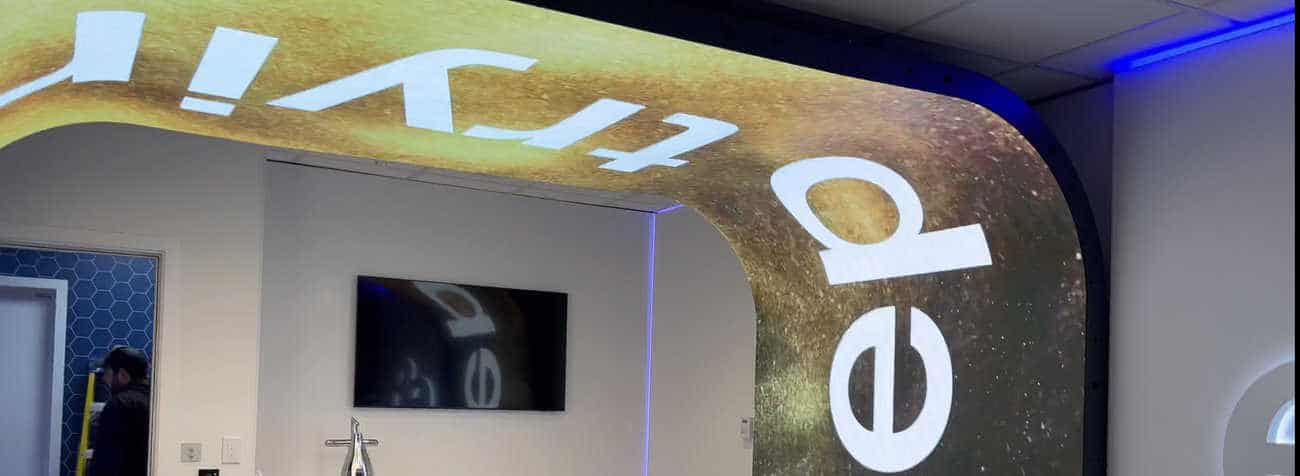
- Manchester City directors’ box LED arch: a custom 2 mm pixel pitch LED arch at the Etihad Stadium showing live match feeds.
- BT Sport three-sided LED wall: 22.5 m² of 2 mm LED in a 3 m × 2.5 m × 3-sides formation for a Champions League advert shoot.
Pitch-Side Screens: Frequently Asked Questions
Can I purchase a pitch-side screen outright?
Yes. Clubs and venues buy pitch-side LED boards as permanent assets, usually paid back through sponsorship sold on the board itself. We supply, install and commission the LED, the control system and the tilt-frame mounting, and set up a service arrangement for the season. Where a board is needed for a tournament or a single event, hire is the alternative.
What pixel pitch suits stadium LED?
Match the pitch to the viewing distance. Pitch-side boards seen from 20 to 30 metres or more work at 6 to 10 mm; big screens across the bowl use 10 mm and above; concourse and entrance screens at 5 to 15 metres suit 4 to 6 mm; hospitality and fan-store screens viewed from 3 to 8 metres suit 2 to 3.9 mm. Camera-facing positions also need a high refresh rate.
How is stadium LED weatherproofed?
Outdoor stadium LED needs an IP65 rating as a minimum, with weather-facing positions specified higher. Cabinets are sealed, cable entries are glanded, and ventilation is designed for UK conditions: driving rain, UV exposure and freeze-thaw cycles. Pitch-side boards add impact-resistant fronts and padded top edges so the screen survives the ball and protects the players.
Do pitch-side screens work for broadcast cameras?
They do when the refresh rate is high enough. Boards in camera view should run at 3,840 Hz or more to avoid the banding and flicker that low-refresh LED shows on television. Brightness also needs to sit within the range the cameras are exposed for, which is why perimeter boards run with automatic dimming rather than at full output under floodlights.
How much does a pitch-side screen cost?
It depends on the length and height of LED, the pixel pitch, the outdoor cabinet build, the control and broadcast requirements, and installation. A perimeter run around a full pitch is a very different budget from a single hospitality screen, so we price each project from a specification. Our cost guide explains the per-square-metre drivers, and a quote from us is free.
Who supplies stadium LED screens in the UK?
Dynamo LED Displays designs, supplies and installs stadium LED across the UK, with work delivered at Arsenal’s Emirates Stadium, Liverpool FC and Manchester City’s Etihad Stadium, plus broadcast LED for BT Sport. We handle the specification, the outdoor cabinet build, the control system, phased installation between fixtures and ongoing service.
Get a quote for a pitch-side screen or stadium LED display. Tell us the venue, the positions and the viewing distances through our contact page or call 020 3489 9878, and we will come back with a specification and a price.