Choosing an LED screen for a major exhibition or conference isn’t just about getting a big, bright display. For event agencies and production managers, it’s a high-stakes decision that directly impacts client satisfaction, brand reputation, and the seamless flow of the entire event. For a permanent venue rather than an event, see our guide to LED screens for churches. A flickering screen during a CEO’s keynote or a panel that doesn’t integrate with the custom-built stand can turn a flagship event into a nightmare. The market is crowded with options, but most suppliers offer surface-level advice. This guide is different. It’s a professional’s framework for evaluating LED screen hire, focusing on the technical nuances that separate a passable display from a truly flawless visual centrepiece. We’ll move beyond generic specifications and into the critical details that ensure your event is remembered for all the right reasons.
The Evaluation Framework: Distinguishing Exhibition and Conference Needs
Your first step is to define the primary role of the screen. While there’s often overlap, the core objectives for exhibitions and conferences demand different technical priorities.
- For Exhibitions: The screen is a magnet for attention. The goal is to stop attendees in their tracks, convey a powerful brand message instantly, and create an immersive environment. Here, your priorities are visual impact, creative shapes, and seamless integration with complex stand designs, such as those built with modular systems like Aluvision and beMatrix.
- For Conferences: The screen is a conduit for information. Clarity is paramount. It needs to deliver crisp, legible presentations, handle live camera feeds without fault, and ensure every person in the room, both in-person and watching a live stream, has a perfect view. The focus shifts to pixel-perfect detail, camera compatibility, and absolute reliability.
With Europe’s corporate conference and trade show market growing at a projected 8.5% CAGR, the pressure to deliver these flawless visual experiences has never been higher. Understanding your primary goal helps validate every technical choice that follows.
Critical Technical Factors Your Event Can’t Afford to Overlook
This is where most evaluation processes fall short. Moving past basic size and resolution questions reveals the factors that truly determine a screen’s performance in a professional setting. These are the details a trusted technical partner will always discuss with you.
Crystal-Clear Visuals: For the Audience and the Camera
What looks good to the naked eye can look terrible on camera. In today’s hybrid-event world, you have to satisfy both audiences.
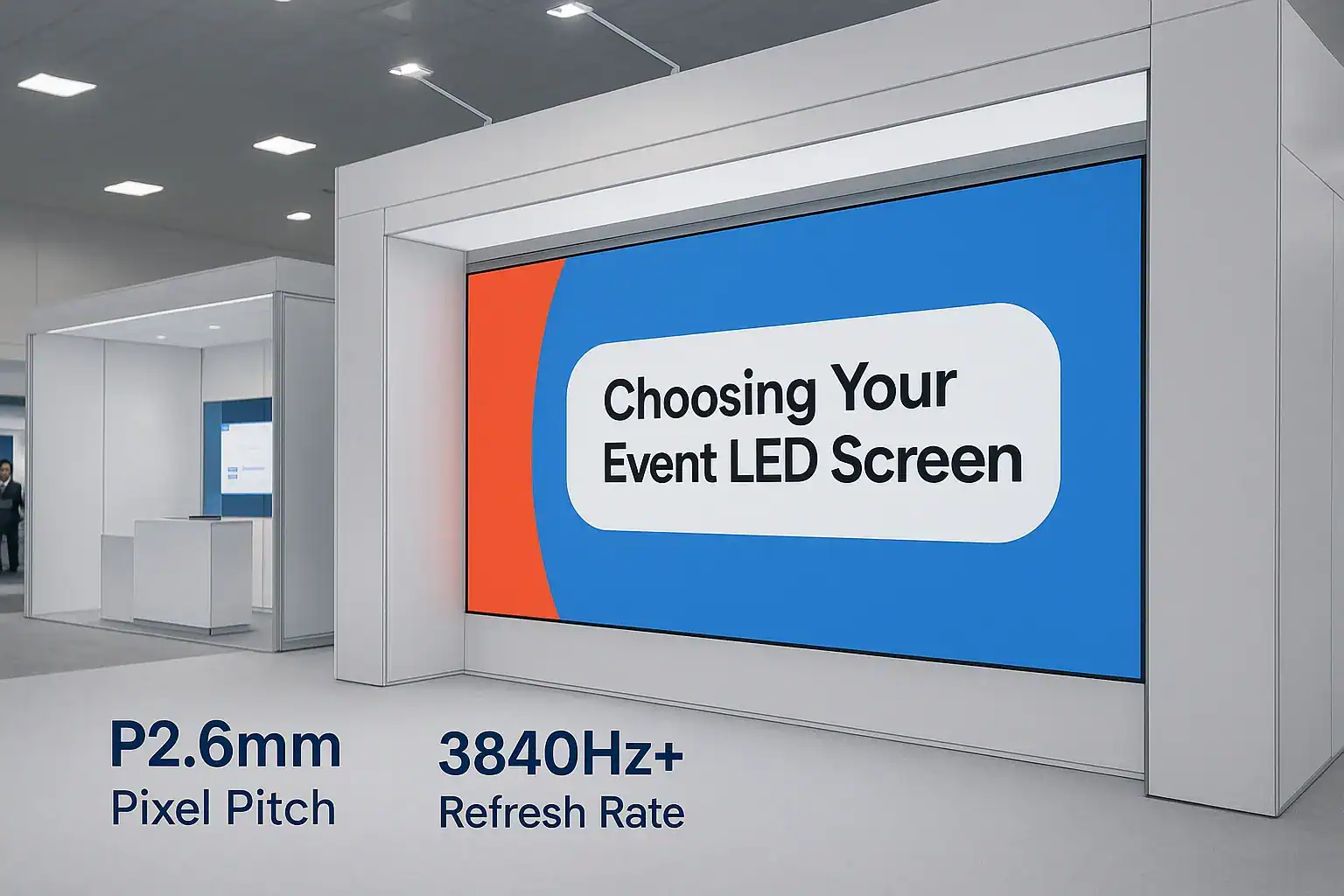
- Pixel Pitch vs. Viewing Distance: The distance between the centre of each LED is the pixel pitch. A smaller number means a higher resolution. For exhibitions and conferences where attendees are close to the screen, a fine pixel pitch is non-negotiable. As a rule of thumb, indoor exhibition spaces typically require a pitch between 1.5mm and 2.5mm to ensure a smooth, premium image without visible pixels. Our camera-critical P1.2mm, 1.5mm, 1.9mm and 2.5mm DRE LED panels are specifically designed for these demanding environments.
- Refresh Rate & Flicker-Free Recording: This is the single most overlooked specification by non-specialists—and the most critical for any event being filmed. A low refresh rate causes visible banding and flicker on camera, instantly making your production look unprofessional. For broadcast-quality results, insist on a refresh rate of at least 3,840Hz. For ultimate peace of mind, high-performance screens can achieve rates of 7,860Hz, guaranteeing perfectly smooth, flicker-free footage for live streams and recordings.
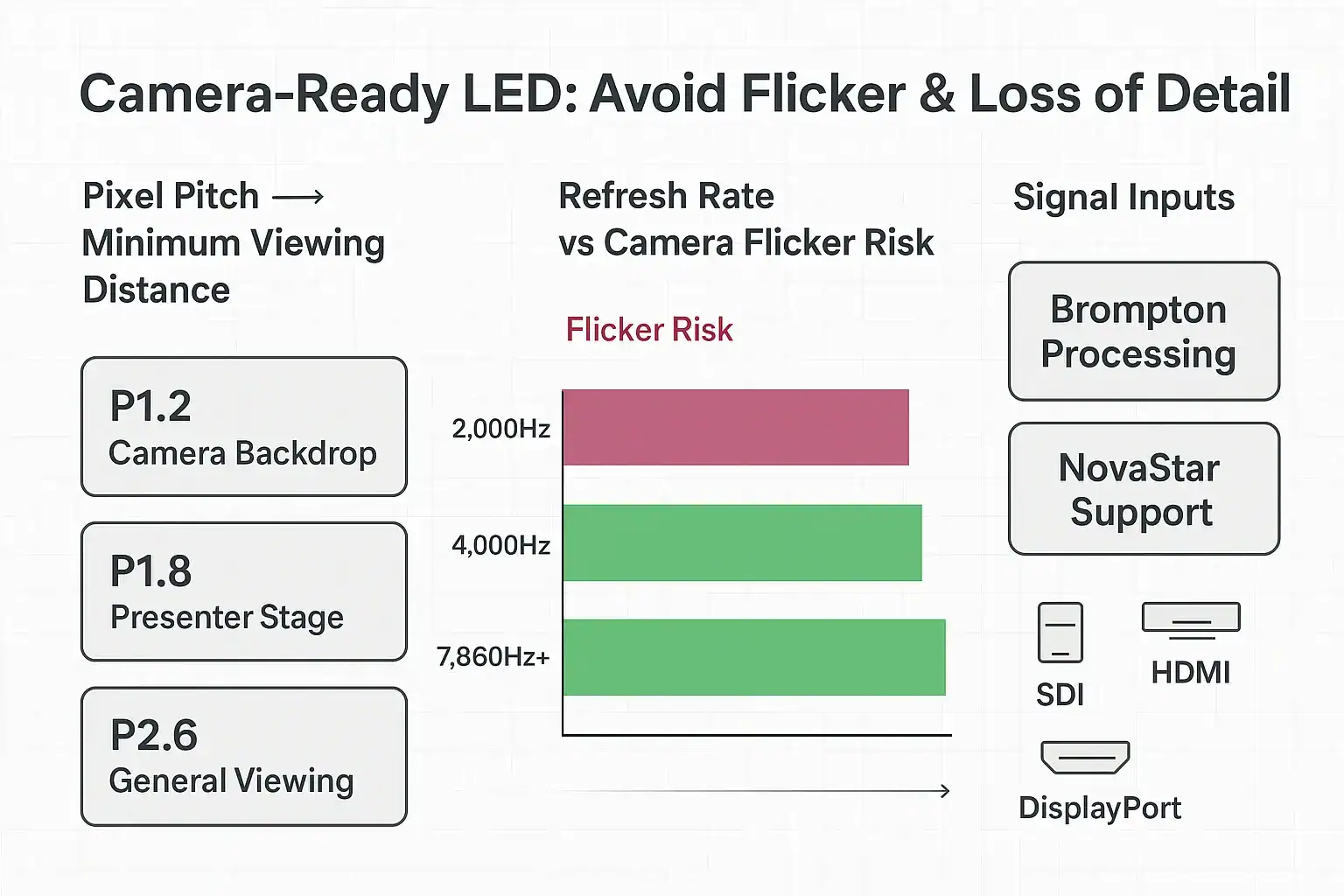
- Advanced Processing Power: The screen itself is only half the story. The processor is the brain behind the image. Industry-leading processors from Brompton and NovaStar provide superior colour accuracy, greyscale performance, and the ability to handle multiple high-resolution inputs (like live camera feeds and presentation laptops) without lag or signal loss. This level of control is essential for dynamic, multi-source conference environments.
Seamless Integration with Exhibition Stand Systems
An LED wall should look like an integral part of your stand, not an afterthought. This requires hardware designed for compatibility with the modular frameworks used by top exhibition designers. We specialise in providing lightweight LED video walls that integrate flawlessly with systems like Aluvision and beMatrix. This ensures precise alignment, minimal infrastructure, and a clean, architectural finish that enhances the overall stand design. See the Coveya exhibition LED screens case study for five frame-built stands in the UK and Germany.
On-Site Logistics: The Difference Between Smooth and Stressful
The best technology in the world is useless if it’s a nightmare to install and maintain on a tight event schedule.
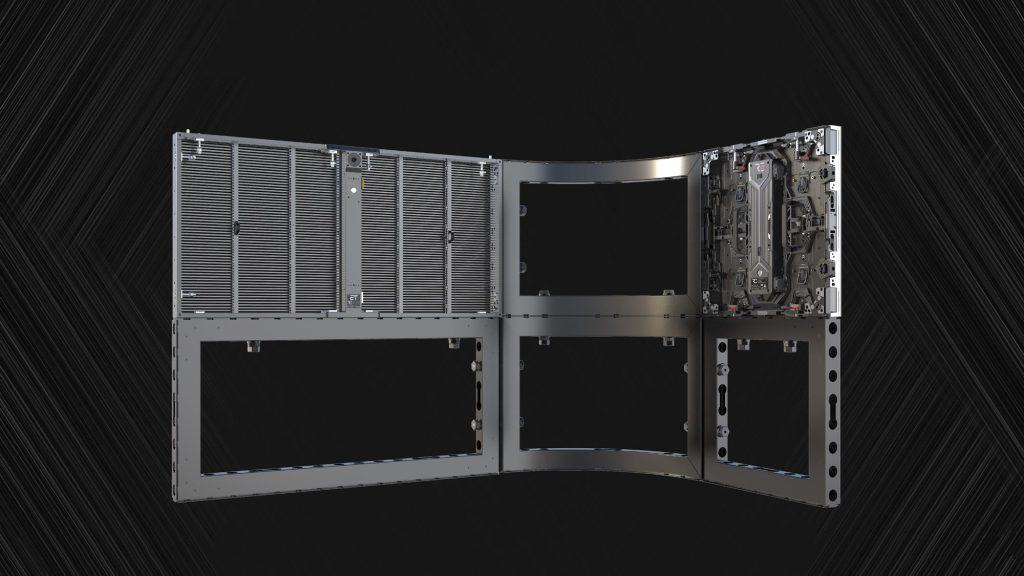
- Front-Serviceability: In a live event environment, you need the ability to fix any issue instantly and discreetly. Front-serviceable panels allow technicians to replace a module from the front of the screen in minutes, without having to dismantle any part of the wall or stand. This is a critical risk-mitigation feature for multi-day exhibitions.
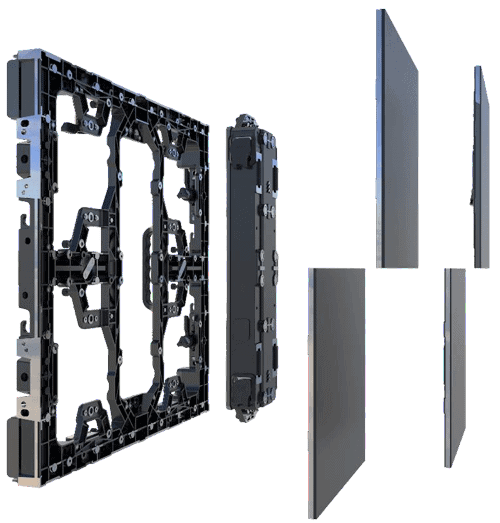
- Silent, Cool Operation: Conference rooms and recording studios need to be quiet. Many lower-quality LED panels use internal cooling fans that create a constant, distracting hum. Look for fanless, passively cooled designs that ensure silent operation, a crucial detail for maintaining a professional atmosphere during speaking sessions.
Beyond the Technology: Choosing a Partner, Not Just a Supplier
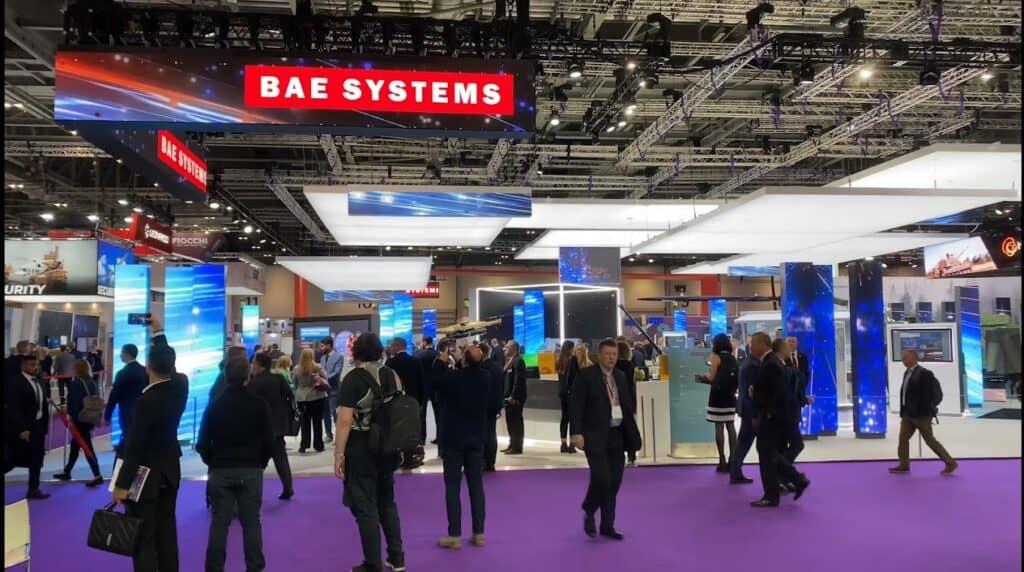
When you hire an LED screen, you’re also hiring the team behind it. Their experience, or lack thereof, can make or break your event. A true partner doesn’t just drop off equipment; they provide end-to-end project management, from initial technical consultation to on-site support and derigging. Proven experience with large-scale, complex installations is the ultimate test. For example, our work with BAE Systems involved designing, delivering, and managing a colossal 270m² LED display for their exhibition stand—a project demanding meticulous planning and flawless execution. This is the level of expertise you should expect.
Your Quick-Reference Evaluation Checklist
Use this checklist when speaking with potential suppliers to validate their capabilities:
- Camera Readiness: What is the screen’s maximum refresh rate? Is it guaranteed to be over 3,840Hz?
- Processing: What brand of video processor do you use (e.g., Brompton, NovaStar)?
- Integration: Do you have proven experience integrating with modular stand systems like Aluvision or beMatrix?
- Serviceability: Are the panels front-serviceable for quick on-site maintenance?
- Operation: Are the panels fanless for silent operation during conferences?
- Support: What level of on-site technical support is included during the event?
- Track Record: Can you provide a case study of a complex installation of a similar scale?
Validate Your Choice with a Partner Who Understands Your World
Making the right LED screen hire decision is about mitigating risk and ensuring your client’s vision is executed perfectly. It requires a partner who understands the specific pressures and technical demands of the UK’s top exhibitions and conferences. If you’re planning an event and need to ensure your visual display is nothing short of flawless, our team is here to act as your technical validation partner. We can help you specify the right technology for your unique requirements and ensure a seamless experience from start to finish. Request a No-Obligation Consultation Today
Frequently Asked Questions
### How much does it cost to hire an LED screen for an exhibition?
The cost varies significantly based on screen size, pixel pitch, and hire duration. A fine-pitch (e.g., P2.6mm) screen will have a higher hire cost per square metre than a standard-pitch screen (e.g., P3.9mm) due to its higher resolution and component density. A typical hire for a 3-day exhibition can range from a few thousand pounds for a small display to well over £50,000 for a large, complex video wall. We provide transparent, all-inclusive quotes covering delivery, installation, and on-site support.
### What is the minimum viewing distance for our LED screen?
A simple guideline is the “one metre per millimetre” rule. For a screen with a 2.6mm pixel pitch (P2.6), the optimal minimum viewing distance is approximately 2.6 metres. Anyone viewing from this distance or further will see a smooth, solid image. This is a crucial calculation for designing exhibition stands where attendees may be very close to the display.
### How do you handle technical issues during a live event?
This is where choosing an experienced partner is critical. Our service includes dedicated on-site technicians for the duration of your event. Because we use front-serviceable, modular panels, our technicians can diagnose and swap any problematic component from the front in minutes, ensuring minimal disruption. We also conduct rigorous pre-event testing of all content and hardware to prevent issues before they happen.
### Can you display content from multiple sources, like a live camera and a PowerPoint presentation?
Absolutely. This is a standard requirement for conferences. We use advanced LED video processors that can seamlessly switch between multiple inputs, create picture-in-picture layouts, and manage complex content schedules. We’ll work with your production team before the event to map out all content sources and ensure smooth transitions on the day.