
There are three ways to get an LED video wall on a wall: an LED manufacturer supplies, installs and warrants it directly under one contract; an AV integrator wraps it into a wider AV programme (audio, conferencing, control) and adds coordination and a margin layer; a specialist LED installer fits panels you have bought elsewhere as a labour-only scope. Buy direct when the wall is the project, use an integrator when it is one discipline among many, and hire an installer alone when you already own the panels.
Last reviewed: 11 September 2026.
That is the LED manufacturer vs AV integrator decision in four sentences, but it usually surfaces at an awkward moment: the first quotes arrive and the numbers don’t match. One route puts you directly in contact with the people who build, configure and install the screen. The other bundles it into a wider AV contract. Both are legitimate; they solve different problems. Here’s who does what at each stage, and where the margin sits.
Key takeaways
- An AV integrator manages multi-discipline projects; a direct LED manufacturer goes deeper on one discipline. Match the route to the scope of the project.
- Buying direct typically removes at least one reseller margin on the hardware and puts you one step from the people who answer technical questions.
- Integrators earn their fee where LED is one line among many: audio, conferencing, control systems and room booking across a whole building.
- Fixed installations should be quoted on fixed-install product lines, never rental cabinets rebadged for a permanent wall.
- Warranty and spares matter more than the day-one price. Ask both routes who holds spare modules, and where repairs physically happen.
- Processing choice (Brompton or Novastar) and pixel pitch selection are where inexperience costs money. Whoever specifies them needs recent, relevant install experience.
- The two routes commonly combine: the integrator holds the main contract while an LED specialist delivers the screen scope.
LED manufacturer vs AV integrator at a glance
| Stage | Direct LED manufacturer | AV integrator | Specialist installer (labour only) |
|---|---|---|---|
| Product selection | Chooses from its own tested range, pitch-matched to viewing distance | Selects from distribution partners; depth varies by firm | Not involved; you have already chosen the panels |
| Pricing | Direct pricing, no reseller layer on the screen | Hardware plus margin, bundled into project cost | Day-rate or per-m² labour; no hardware margin |
| Site survey & structure | Carried out by the install team who will fit the screen | Often subcontracted to a specialist rigging firm | Survey, structure and structural sign-off are the core of the scope |
| Processing & commissioning | Configured in-house (Brompton or Novastar) | In-house or subcontracted, depending on LED experience | Commissions whatever processor came with the panels; specification stays with you |
| Other AV disciplines | Not covered; LED only | Core strength: audio, conferencing, control, networks | Not covered; installation only |
| Warranty & spares | Direct line to the company holding stock | Claims routed through the integrator to their supplier | Warranty on the panels stays with whoever sold them; installer warrants the workmanship |
| Aftercare | Same team that installed the video wall | Service desk covering the full AV estate | Return visits on request; no product support |
What an AV integrator does
An AV integrator is a project business. Their value is coordination: designing, procuring and commissioning every audiovisual system in a building so the client signs one contract instead of nine. On a corporate headquarters fit-out that might mean meeting-room conferencing, ceiling audio, digital signage players, room booking panels, a control system tying it together, and somewhere in the middle, an LED video wall for the reception.
For that kind of scope, an integrator earns their fee. Someone has to own the programme, chase the subcontractors, coordinate with the main contractor and make sure the network team has provisioned the right VLANs before commissioning week. Industry bodies such as AVIXA exist largely to train and certify people for exactly this coordination role.
The catch is that LED is a specialism within that generalism. Direct-view LED behaves differently from every other display technology an integrator handles: it arrives as cabinets rather than finished screens, it needs structural support calculated for its real loads, it is driven by dedicated processing rather than a media player plugged into an input, and its failure modes are module-level rather than unit-level. Some integrators have genuine in-house LED experience. Many quote the wall, win the job, then look for a specialist to deliver it. If your integrator is in the second group, you are paying a management margin on work that will be subcontracted anyway, and the warranty chain gets longer with every link.
What buying direct from an LED manufacturer gets you
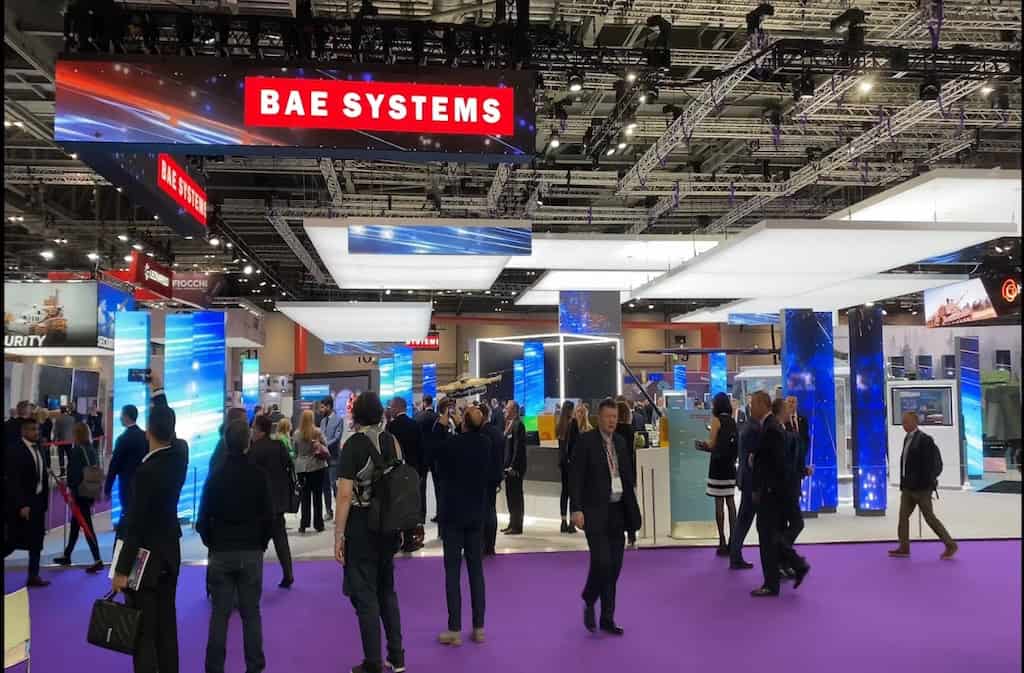
Buying direct means the LED manufacturer or specialist supplier is your contract partner: one company specifying the video wall, supplying it, installing it and standing behind the warranty. You can read how our direct-supply model works, but these structural advantages apply to any competent manufacturer, not just us.
Specification depth. Pixel pitch is a cost decision, not just a quality one. Halving the pitch roughly quadruples the LED count, and a useful rule of thumb is that a wall reads sharp from a distance in metres roughly equal to its pitch in millimetres — a 2.5mm wall from about 2.5 metres. If your nearest viewer stands six metres back, paying for sub-2mm resolution buys detail nobody can see. A specialist who installs LED every week will pitch-match from a full fixed, outdoor and rental range: our fine-pitch DFC Series for close-viewed boardroom and reception walls, the mid-range DX Series for retail and showroom fixed installs, and the DVO Series for outdoor permanent work where brightness and ingress protection drive the spec. That depth is what delivered the halo ticker, ribbon and plinth displays at Auto Trader’s Manchester headquarters — an AV Awards 2026 Corporate Project finalist, running creative from long-time creative partner Pixel Artworks.
Processing configured by people who use it daily. The processor determines colour handling, redundancy and how the wall behaves on day two. We work with Brompton and Novastar processing depending on the application, and commissioning is done by the same engineers who hung the cabinets, so there is no gap between “installed” and “working”.
A shorter warranty chain. Our standard cover is a 3-year return-to-base warranty, and a claim is a conversation with the company that supplied the screen. Through an integrator, the same claim travels from you to the integrator to their distributor to the factory, and back again. Each link adds days.
Install accountability. Structure, power, data, rigging and alignment are handled by our own team as a single scope; the detail is on our LED screen installation services page. When the survey, the supply and the install are one contract, “that’s the other contractor’s problem” is not a sentence anyone can say.
If you’re at the budget stage and want to see how pitch, size and product line interact before speaking to anyone, our LED screen configurator will give you a working starting point.
What a specialist LED installer does (and when you only need one)
A specialist LED installer sells labour, not screens. You arrive with panels bought direct or through a distributor, and the installer’s job is to get them on the wall safely and switched on. Done properly, that scope is broader than it sounds: a site survey to confirm the wall or floor can take the load; the structure, whether a bespoke steel frame, a rated wall bracket or a ground-supported rig; the power and data runs to each cabinet; cabinet alignment to a flat, gap-free surface; and commissioning of the processor that came with the panels so the wall shows a picture before the crew leaves.
What a labour-only installer does not do matters just as much. Content is yours. Processor specification is yours, and if the processor supplied with the panels lacks outputs or redundancy for the job, the installer can only tell you so on the day. The warranty on third-party panels stays with whoever sold them, so a failed module in year two is a claim against the seller, not the installer; the installer warrants the workmanship, the fixings and the structure. Structural sign-off still has to happen, and a good installer will refuse to hang cabinets on a wall nobody has calculated.
Dynamo works on this basis where a client already holds the panels or a fit-out contractor holds the main contract: installation is priced at £150 per m² with a £1,000 minimum, de-rig is included, and delivery is £150 (the basis is published on our company fact page). The full scope, survey to commissioning, is set out on the LED screen installation services page, and who installs LED video walls in the UK covers how to check an installer’s LED-specific track record before you book a crew. You only need an installer, and nothing more, when the panels, processor and content are already settled and the missing piece is a competent crew with the right structure.
Why is buying an LED video wall direct cheaper?
Because the hardware carries one margin instead of three. Direct, the screen carries the manufacturer’s margin only. Through an integrator, the same cabinets typically carry the distributor’s margin, then the integrator’s project margin, and if the install is subcontracted, the subcontractor’s overhead on top. Same wall, more layers.
Strip any LED project back and the cost stack looks the same whoever sells it: cabinets and modules, processing, structure and rigging, installation labour, commissioning, and margin. The integrator’s margin funds real work — programme management, design coordination, a service desk. The question is whether your project needs that work.
A useful test: count the disciplines. If the project is a screen, a wall to put it on and content to feed it, you are paying a coordination fee to coordinate one trade with itself. When Barton Peveril College needed a live market-data display for its finance hub, the screen was the project — that is direct-route territory. If instead the project is a screen plus audio plus conferencing plus control across forty rooms, the coordination fee is the cheapest insurance on the job.
The second place money hides is the specification itself. An over-pitched wall, oversized processing, or a rental-grade product quoted for a fixed install all inflate cost without inflating outcome. This cuts both ways: we’ve seen direct quotes from box-shifters that were cheap because the structure and commissioning simply weren’t in them. Compare quotes line by line, not total by total.
If you want a direct number for that comparison, request a written LED quotation or call +44 (0)203 489 9878 — we’ll specify against your actual viewing distances, not a price table.
Where projects go wrong: the unowned interface
Most LED disputes are not caused by defective cabinets. They start at a boundary nobody owns. The manufacturer issues loads and fixing positions, another contractor fabricates the steel, the architect controls the finished opening, and unless one named party checks the combined dimensions, the cabinets arrive to an aperture that is out of square or missing service clearance. The same applies to power, which should be designed from the selected product’s rated demand rather than a generic watts-per-square-metre allowance, and to data, where “redundant system” can mean a spare processor, a duplicated input or a backup data path — and those are not the same protection.
Neither buying route removes these duties. On construction projects in Great Britain they may also fall under the CDM Regulations. Whichever route you choose, ask for a responsibility matrix before manufacture: drawings, structure, power, data, processing, installation, testing and support, with one accountable party per line.
When each route makes sense
Buy direct when: the LED video wall is the project, or the dominant part of it; you want the specifier, installer and warranty-holder to be the same company; budget efficiency on the hardware matters; or you have in-house facilities and IT teams who will handle the surrounding infrastructure anyway.
Use an integrator when: LED is one line in a multi-room, multi-discipline AV programme; your organisation wants a single contract and a single service desk for the whole estate; or the project sits inside a construction programme where the integrator is already coordinating with the main contractor.
Use a specialist installer alone when: you already own the panels, whether bought direct, inherited from another site or purchased second-hand; a fit-out contractor holds the main contract and needs the LED scope delivered as labour and structure under it; or a rental house needs a local crew to rig and commission touring stock at a venue it does not cover.
Use both when: the integrator runs the programme and an LED specialist delivers the screen scope. This is common and it works well. The integrator keeps the single point of contact the client wants; the manufacturer brings product depth, direct pricing on the screen itself and an install team that does nothing else. If you’re an integrator reading this: we regularly supply, install and commission LED video walls under integrators’ main contracts, and we’re happy working as your LED arm under your contract.
From the field
The pattern I see most often is a specifier coming to us after getting an integrator’s quote, because the LED line is the one bit nobody at the integrator can answer questions about. They can tell you everything about the conferencing system, but ask why the wall is quoted at 1.9mm rather than 2.5mm and the answer is a shrug. The integrators I rate handle that differently — they know what they don’t know, and they bring a specialist in early rather than after the order is placed.
My advice is simple: whoever you buy from, make the person who chose the pixel pitch defend it in plain English against your actual viewing distances, and get the LED specialist, integrator, electrical contractor and structural team on the same drawing review before manufacture. I’d rather resolve a cable route on a call than discover it behind a completed wall.
LED Manufacturer vs AV Integrator: Frequently Asked Questions
Is it cheaper to buy an LED screen direct from the manufacturer?
Usually, yes, on the hardware, because you remove at least one reseller margin. But compare full scopes, not totals. A direct quote should still include structure, installation, processing and commissioning. A cheap screen with those items missing costs more by completion than an honest bundled price would have.
Do AV integrators install LED screens themselves?
Some do, many subcontract. LED installation involves structural loading, cabinet alignment and processor commissioning that differ from general AV work. Ask directly: who physically installs the wall, and how many LED installs has that team completed in the last year? A confident integrator answers immediately; a vague answer tells you the work is being farmed out.
Who should specify pixel pitch?
The display manufacturer, consultant and client should agree pitch together, against viewing distance, content detail, physical dimensions and target resolution. The integrator’s job is to confirm the source and switching system can feed the resulting canvas. Pitch should never come off a price table alone: dropping from 2.5mm to 1.25mm means four times the LEDs, and the cost follows.
Who handles the warranty if I buy through an integrator?
Contractually, the integrator does, and a good one manages claims properly. Practically, your claim travels through them to their distributor and sometimes on to the factory, which adds time. Buying direct shortens that chain to one call. Either way, confirm in writing who holds spare modules and where repair work physically happens.
When is an AV integrator the better choice for an LED project?
When the LED video wall is one part of a wider programme: conferencing, audio, control and signage across a building, inside a construction schedule. The integrator’s coordination fee buys real value there. If the screen is essentially the whole project, that same fee buys very little.
Can a direct LED manufacturer work under my integrator’s contract?
Yes, and it’s common. We supply, install and commission LED video walls as a subcontract scope under integrators’ main contracts, with the integrator keeping the client relationship and single point of contact. The client gets specialist delivery on the screen without giving up the one-contract structure the wider project needs.
What should I check before choosing either route?
Three things. First, recent LED-specific references, ideally at a similar pixel pitch and setting to yours. Second, exactly who performs the installation and commissioning — a named team, not “our partners”. Third, the warranty terms in writing: duration, what’s covered, spares holding and turnaround. Those three answers separate specialists from resellers quickly.
Can a specialist installer fit LED panels I bought direct?
Yes. A labour-only installer surveys the site, designs or supplies the structure, runs power and data, hangs and aligns the cabinets and commissions the processor that came with the panels. The panel warranty stays with the seller; the installer warrants the workmanship and structure. Dynamo installs client-supplied panels at £150 per m² (minimum £1,000, de-rig included), as set out on our LED screen installation services page.
LED manufacturer vs AV integrator: the short version
The LED manufacturer vs AV integrator decision comes down to scope, and the specialist installer is the third route for panels you already own. A multi-discipline fit-out justifies an integrator’s coordination; a project where the video wall is the point rewards going direct to the manufacturer who builds, installs and warrants it as one contract; a labour-only installer makes sense when the hardware is settled and only the crew is missing. If you’re weighing up an LED display purchase and want a specified, written quotation to compare against an integrator’s line item, send the details through our contact page or call +44 (0)203 489 9878. We’ll respond with a pitch-matched specification, a fixed price and the install scope in writing, so you can judge both routes on the same evidence.