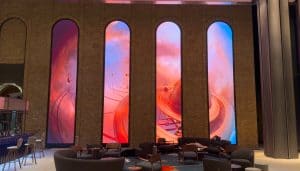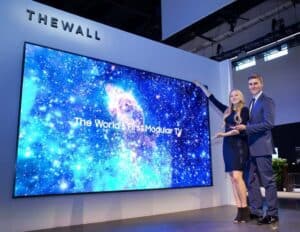

If you are specifying a bespoke LED display for a permanent installation, the two questions that surface first are always the same: how long will it take, and what will it cost? The honest answer is that bespoke LED lead time depends on decisions made weeks before a single cabinet is manufactured. Pixel pitch, structural integration, curved or flat geometry, processor selection and sign-off discipline all feed into the programme, and each one can either compress or stretch your timeline.
Key Takeaways
- A typical bespoke LED display project runs 8–14 weeks from confirmed order to site handover, though complex builds can stretch to 20 weeks.
- Design and engineering sign-off is the phase most often underestimated — allow 2–4 weeks before manufacturing begins.
- Fine pixel pitches (below 1.5 mm) and curved geometries add time at the factory and in pre-assembly QC.
- Structural requirements (steelwork, power, data) must be resolved before the LED timeline starts — they sit on the critical path.
- Budget is driven as much by structure, control, service access and installation hours as by pixel pitch alone.
- A 30-minute call at concept stage can save three weeks of back-and-forth at tender stage.
At-a-Glance: Bespoke LED Project Facts
| Phase | Typical Duration | Key Dependencies |
|---|---|---|
| Initial consultation and site survey | 1–2 weeks | Access, architectural drawings, stakeholder availability |
| Design, engineering and sign-off | 2–4 weeks | Pixel pitch decision, structural loading, content resolution |
| Manufacturing and QC | 4–6 weeks | Pitch, cabinet format, quantity, factory scheduling |
| Shipping and logistics | 1–2 weeks | Origin, customs, site readiness |
| Installation and commissioning | 2 days–3 weeks | Structural prep complete, power and data live, display size |
| Total (typical range) | 8–14 weeks | Complex builds (curves, outdoor, approvals) can reach 20 weeks |
A straightforward flat wall at 2.5 mm pitch sits at the shorter end. A concave curved Dynamo DFC Series display at 0.9 mm pitch with bespoke mounting frames and restricted site access pushes toward the longer end or beyond.
Why Bespoke LED Projects Take Longer Than Standard Configurations
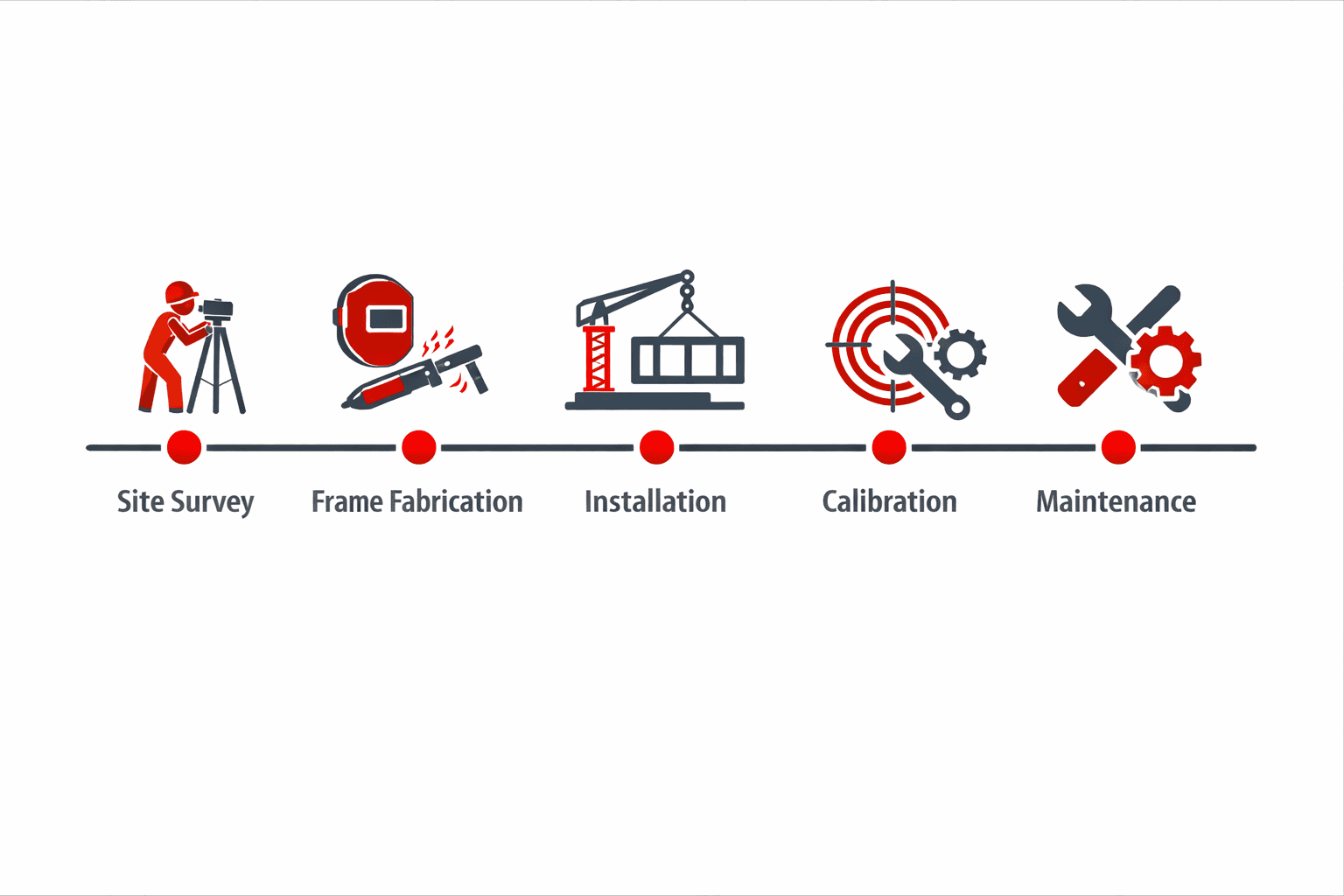
Bespoke LED displays take longer than standard configurations because every non-standard element — curved geometry, fine pixel pitch, custom mounting frames — requires engineering sign-off before the factory receives a confirmed production order. A standard flat video wall skips this phase entirely, using stock cabinet dimensions and well-documented mounting systems. A bespoke LED display does not have that luxury.
Geometry is the primary driver. Curved, angled, or wraparound installations require custom frame design and, in many cases, bespoke cabinet modifications — corner cuts, tapered edges, or modified rear structures to accommodate the mounting geometry. This design work happens before manufacturing and requires structural sign-off from both the LED supplier and the installing contractor.
Pixel pitch affects manufacturing and delivery time directly. Finer pitches mean more LEDs per square metre, longer die-bonding runs, and more rigorous QC. A P0.9 panel takes materially longer to produce and test than a P2.5 panel of the same physical size — typically adding 1–2 weeks to the manufacturing phase. If your content demands a specific viewing distance — and it usually does — the pitch is non-negotiable, so the programme must accommodate it. Our buying guide covers how to match pitch to viewing distance in detail.
The product range also affects turnaround. Permanent outdoor installations using the Dynamo DVO Series (IP65 front, 5,500+ nits) carry a wider design envelope than an indoor Dynamo DFC Series or Dynamo DX Series fixed install — the structural prep for wind loading, cooling, drainage and maintenance access runs alongside the LED manufacturing programme and often extends the overall timeline. Outdoor LED displays routinely add 2–4 weeks compared to an equivalent indoor build. Flexible LED treatments using the Dynamo LVW Series involve different engineering again — lightweight curtain modules suit curved stage architecture, but the bespoke rigging design needs its own sign-off cycle.
Integration with the building adds a parallel workstream that sits on the critical path. Steelwork, electrical supply, data infrastructure, and HVAC all need to be in place before the LED installation can begin. If these trades are running late, your custom LED display lead time is irrelevant — the display cannot go up until the structure is ready. The UK Health and Safety Executive’s guidance on Construction Design and Management Regulations is worth keeping in mind where a project involves construction work, multiple contractors, or ongoing maintenance access.
Processor selection also matters. A Brompton SX40 driving a high-resolution curved wall handles colour management and mapping differently from a Novastar system on a straightforward flat layout. Choosing a processor after the cabinets are built can force re-engineering of the data distribution. Specifying the processor platform at the design stage — or letting your supplier recommend one based on the application — avoids this. Brompton publish their Tessera processor range and specifications for reference.
Budget Realities: Where the Money Goes
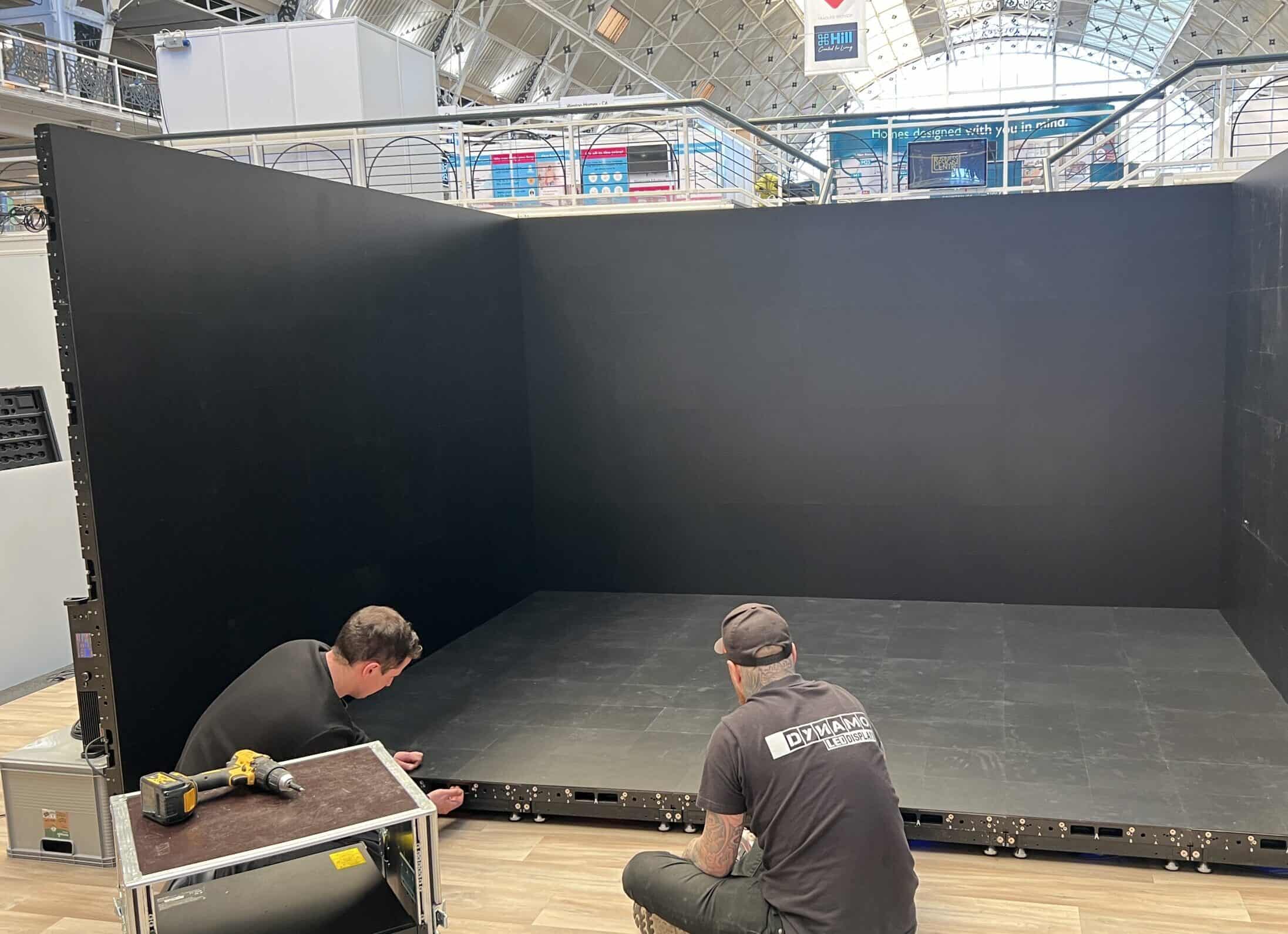
Specifiers sometimes treat budget and lead time as separate variables. They’re not — they’re the same problem, and ignoring that is where most projects come unstuck.
Rushed programmes cost more. If a bespoke build needs to be compressed from 12 weeks to 8, the options are limited: factory overtime, air freight instead of sea freight, or parallel workstreams that would normally run sequentially. Air freight on a 12 m² LED video wall typically adds £4,000–£8,000 versus sea shipping — a cost that disappears entirely with proper programme planning.
Underspecifying upfront causes rework. A brief that says “we want a big LED display in the lobby” without confirming pixel pitch, aspect ratio, brightness requirements, or content resolution will go through multiple design iterations. Each iteration takes time and uses engineering resource that gets priced into the project.
A budget for a bespoke LED display is not just a price per square metre. That figure is useful for early comparison, but it hides the real cost drivers. The main budget lines on a typical project are:
- LED cabinets or modules
- Bespoke steelwork or substructure
- Trim and architectural finishing
- Processors and control hardware (Brompton or Novastar)
- Power distribution and data infrastructure
- Survey, design and engineering
- Installation labour and access equipment
- Commissioning and calibration
- Content preparation
- Spares and warranty support
Pixel pitch still matters to cost. A DFC Series display at 1.5 mm pitch costs more than a DX Series at 2.6 mm of the same physical size, and it needs more careful handling and content preparation. But pitch is only one line in the budget. If the audience stands 6 metres away, paying for a very fine pitch may not improve the result enough to justify the spend. If the audience stands 1.2 metres away, a coarse pitch makes the pixel structure obvious.
For the full cost picture, our LED display cost guide sets out the main pricing factors.
How to Protect Your Programme
1. Engage your LED supplier at concept stage, not tender stage. A short conversation about pixel pitch, approximate size, and mounting method at week one can save three weeks of back-and-forth at week six. We run initial consultations for exactly this reason — book a bespoke LED consultation and we will give you honest guidance on what is achievable within your programme.
2. Confirm the structural design before ordering the LED. The display manufacturer cannot finalise cabinet layouts until they know the exact mounting geometry, load paths, and tolerances. Waiting for structural sign-off is the single most common cause of programme slip on bespoke projects.
3. Fix the pixel pitch and content resolution together. These two decisions are inseparable. A 4K content feed on a P2.5 wall requires a different physical size than the same feed on a P1.2 wall. If the content team and the AV integrator are not talking, you will get a mismatch that forces late changes.
4. Build contingency into the programme, not the specification. Adding two weeks of float to the installation programme is far cheaper than over-specifying the display “just in case.”
5. Freeze the design before procurement. A bespoke LED display can absorb some changes, but not all. Changing content resolution is easy compared with changing the radius of a curved display after cabinets are in production. Late design changes after sign-off affect both cost and delivery time.
Explore our project portfolio to see how other specifiers have handled complex bespoke builds, or compare formats and engineering approaches through our engineered-to-fit LED solutions hub. For early-stage scoping, the LED screen configurator can help frame size, format, and budget before the specification becomes formal.
From the Field
Daniel Loveridge, Managing Director at Dynamo LED Displays:
I have seen projects lose more time through unclear sign-off than through manufacturing. My first question is usually not “what pitch do you want?” — it is “who can approve the final size, structure, content canvas and spend?” If that group is not clear, the programme is already soft. On a recent curved DFC Series P0.9 install for a corporate lobby, unclear sign-off between the architect, the AV consultant and the end client cost us three weeks before a single cabinet was ordered.
I also push clients to be honest about the viewing distance. If people are going to stand one metre from the display, I will say so in the pitch conversation, and it changes everything. If the real viewing distance is eight metres, I would rather save the budget for structure, access, processing and content than overspecify the LED face. The projects that run smoothly are the ones where the specifier picked up the phone early — not after the architect has signed off on a render with a display shape we cannot actually build.
Bespoke LED Lead Time: Frequently Asked Questions
What is the minimum lead time for a bespoke LED display?
For a moderately complex bespoke project — a flat wall with non-standard dimensions at P1.5 or P2.5 using a DFC or DX Series — allow a minimum of 8 weeks from confirmed order to site delivery. This assumes the design is signed off promptly and structural preparation is already underway. Curved displays, fine pitches, outdoor installations using the DVO Series, or unusual mounting will extend the turnaround.
What information do you need to price a bespoke LED display?
We need the display size, viewing distance, site location, indoor or outdoor use, content type, access conditions, installation height, preferred handover date, and any drawings you already have. A budget range is also useful — without it, we can suggest routes, but we cannot judge whether the proposal is commercially realistic. Start through our configurator for an initial steer.
Does a smaller bespoke LED display always cost less?
Usually, but not proportionally. Smaller displays still need design, control hardware, power, installation labour, commissioning, and project management. A compact curved or recessed display can cost more per square metre than a larger flat wall because the bespoke engineering takes similar effort regardless of display area. We have delivered DFC Series displays under 3 m² that required more design time than flat walls three times the size.
What causes the biggest delays on custom LED display projects?
The biggest delays come from late sign-off, missing structural information, unclear content requirements, access restrictions, and changes after the cabinet layout has been approved. Manufacturing is only one part of the lead time. A well-run survey and design stage often saves more time than trying to rush production — we typically find that resolving these upfront saves 2–4 weeks of avoidable programme slip.
Is outdoor bespoke LED more expensive than indoor?
Outdoor permanent LED is usually more expensive once the full project is costed. The hardware needs higher brightness and weather protection — our DVO Series is rated IP65 front, IP54 rear with 5,500+ nits — and the project typically needs steelwork, access equipment, planning input, electrical works, and a long-term maintenance strategy. The structural and civils cost on a permanent outdoor installation often matches or exceeds the LED hardware itself.
Conclusion
Planning a bespoke LED display means planning for time as much as money. The specifiers who get both right are the ones who understand that bespoke LED lead time is shaped by decisions made in the first two weeks of a project — pixel pitch, structural integration, processor platform, content resolution, and approval routes. Get those locked early, engage your supplier before the design is frozen, and build realistic float into the programme. The result is a display that fits the space, meets the brief, and arrives when you need it.
To discuss your bespoke LED project or get an early-stage budget estimate, call us on +44 (0)203 489 9878 or get in touch through our contact page. We will give you an honest steer on lead time and cost before you commit to anything.