LED screen financing in the UK typically takes one of three forms: hire purchase (you own the screen after the final payment), leasing (you pay rentals and the finance company owns it) and spend-to-save, where the screen’s advertising revenue or displaced costs cover the repayments. Terms of two to five years are typical, against a service life of seven to ten years for a well-specified LED screen.
Each route treats ownership, tax and cash flow differently, and the right one depends on how long you’ll keep the screen and what it’s there to do. The agreements we arrange are set out on our LED screen finance options page; this guide walks through all three routes with the numbers that actually matter to the finance director signing it off.
Key takeaways
- Hire purchase gives you ownership at the end of the term and may allow capital allowances from day one, subject to the Annual Investment Allowance rules.
- Leasing preserves working capital and matches expenditure to the period the screen is generating value, but you don’t own it at the end unless the agreement says so.
- Spend-to-save works when the screen removes a measurable cost or generates measurable revenue: advertising income, displaced hire invoices or retired print spend.
- Installation, structure and processing typically add 20–40% to hardware cost, so the finance amount should cover the installed total, not the panel price.
- Running costs belong in the comparison too: a cheaper panel financed over five years is not cheaper if its energy use eats the difference.
- A well-specified LED screen is typically a 7–10 year asset, so a 3–5 year finance term still leaves years of debt-free service life.
Hire purchase vs leasing for LED screens: which is better?
| Hire purchase | Finance lease | Spend-to-save | |
|---|---|---|---|
| Who owns the screen | You, after the final payment | The finance company during the term | Follows the underlying agreement (usually HP or lease) |
| Typical term | 2–5 years | 3–5 years | Matched to payback period, usually 3–5 years |
| Upfront cost | Deposit (often 10–20%) plus VAT | Usually first rental only | As per the underlying agreement |
| Tax treatment | Capital allowances on the asset | Rentals usually deductible as a business expense | Follows the agreement type |
| Best suited to | Screens you’ll keep long-term | Preserving cash flow and credit lines | Revenue-generating screens (advertising, venues) |
| End of term | Screen is yours | Return, extend, or sale proceeds share | Screen has paid for itself |
Tax treatment varies with your circumstances and the agreement’s exact structure. Confirm the position with your accountant before signing anything.
Hire purchase: own the screen, spread the cost
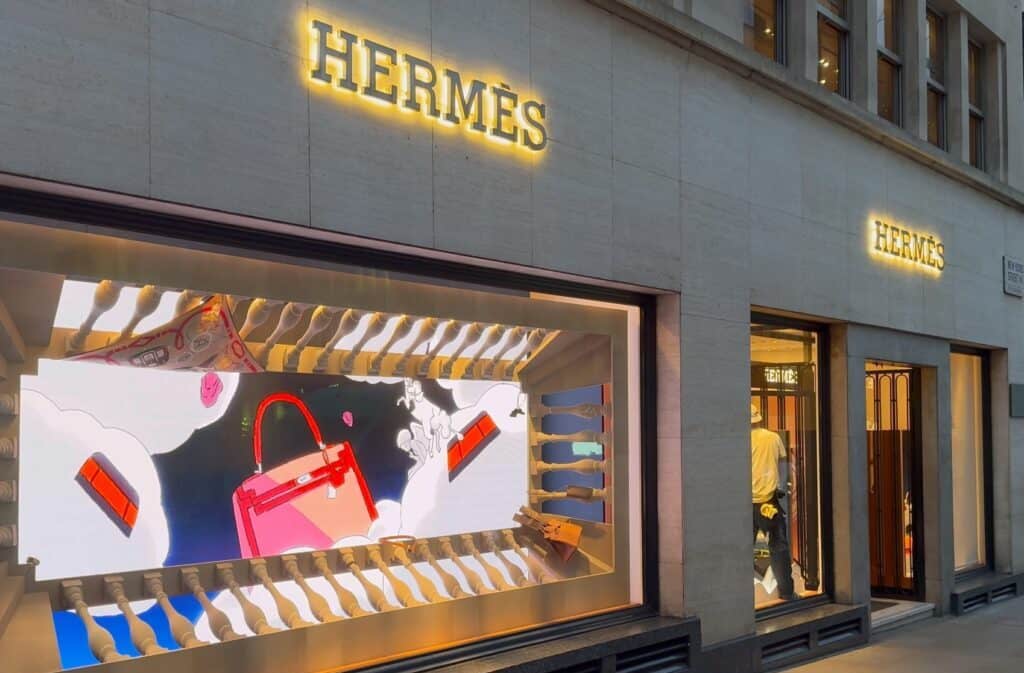
Hire purchase for an LED screen means paying a deposit of typically 10–20%, then fixed monthly payments over two to five years, after which the screen is yours outright. It suits permanent installations, because an LED screen’s 7–10 year service life comfortably outlasts the finance term.
The mechanics are straightforward. You pay the deposit, the finance company pays us, and once the final payment (and typically a small option-to-purchase fee) clears, ownership transfers to you.
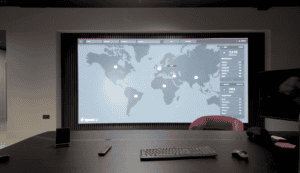
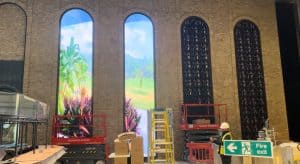
The case for HP is strongest when the screen is a long-term fixture. A fixed indoor installation, whether a reception video wall on our DX Series or a fine-pitch boardroom screen on DFC Series panels, will comfortably outlast a five-year agreement. Financing over four years on an asset with a service life of seven to ten means several years of ownership with no repayments at all. You can compare the fixed-install ranges on our LED display products page, and where the project calls for a non-standard shape or footprint, custom LED displays can be financed on exactly the same basis.
A worked illustration shows why the whole schedule matters, not just the monthly figure. On a £100,000 installed project with a 10% deposit, financing the remaining £90,000 over 60 months at a nominal 8% would cost roughly £1,825 per month, or about £119,500 in total before fees. That is not a quotation; it shows that a lower monthly payment achieved by extending the term can produce a higher total payable. Always compare the deposit, rate, term, fees and final payment together.
Two more things to watch. VAT on an HP agreement is usually payable upfront on the full purchase price, which affects the first quarter’s cash flow even though the capital cost is spread. And the asset sits on your balance sheet from the start, which is exactly what some businesses want and exactly what others are trying to avoid.
Leasing: preserve cash, keep options open
Leasing an LED screen means the finance company buys it and you pay fixed rentals for the term, usually three to five years, with no ownership at the end unless the agreement provides for it. Rentals are usually deductible as a business expense, and the upfront commitment is often just the first rental rather than a deposit plus full VAT, which is why leasing is the default route for businesses protecting working capital.
At the end of a finance lease you typically have three options: hand the equipment back, extend into a secondary rental period (often at a nominal “peppercorn” rate) or sell the equipment on the lessor’s behalf and keep an agreed share of the proceeds. Before signing, check the details the sales conversation tends to skip: payment timing, documentation fees, maintenance responsibility, insurance requirements, early-termination calculations and return-condition obligations.
Leasing suits businesses that refresh technology on a cycle. If you expect to want a tighter pixel pitch in five years, say moving a retail window LED screen from P2.5 to something finer as prices fall, a lease with a defined end point is cleaner than owning hardware you’ll want to replace. Our pixel pitch guide covers how pitch choice affects both the spec and the ticket price the finance sits on.
The UK asset finance market is well established for AV and display equipment. The Finance & Leasing Association represents the lenders who write most of these agreements, and its member directory is a reasonable starting point if you want to source finance independently rather than through a supplier introduction.
Spend-to-save: when the LED screen pays for itself
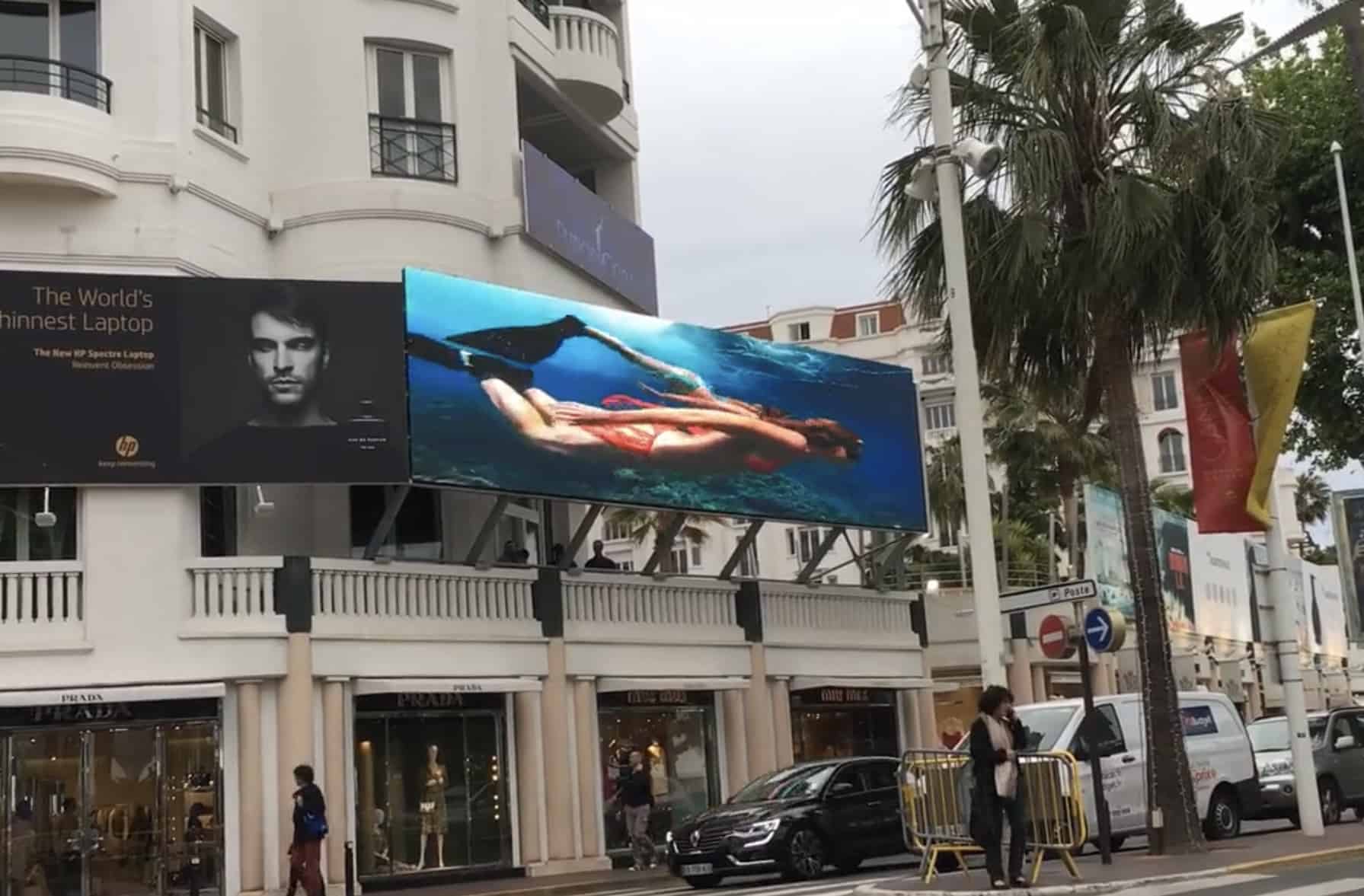
Spend-to-save is a financing approach where the LED screen’s advertising revenue, displaced hire costs or operational savings cover the monthly finance payments. It isn’t a separate legal structure; the underlying agreement is usually hire purchase or a lease, and spend-to-save is the business case built around it. It usually takes one of three forms.
Advertising revenue. An outdoor LED screen in a location with footfall or traffic, such as a DVO Series screen on a retail park gable end, can sell advertising slots to local businesses. If the screen generates more in monthly ad revenue than the monthly finance payment, the asset is self-funding from month one. Use gross contribution, not turnover: if £40,000 of annual advertising sales carries £12,000 of commission and administration, the relevant number is £28,000.
Rental displacement. If you’re hiring screens repeatedly, such as a venue booking rental walls for events several times a year, the hire invoices you’re already paying can be redirected into finance payments on a permanent installation. Tally up twelve months of hire costs before your next event season; the comparison is often uncomfortable.
Operational savings. Replacing printed signage, lightboxes or banner rotations with a single LED screen removes recurring print, labour and disposal costs. Suppose a venue spends £32,000 a year on printed graphics and temporary screens, and a permanent LED screen costing £110,000 installed adds £7,000 a year in energy, content and maintenance. The simple annual saving is £25,000 and the simple payback is 4.4 years, before finance costs, which extend it. Slower than advertising revenue, but real, and easy to evidence from existing invoices.
The discipline that makes spend-to-save work is honest forecasting. Base ad-revenue projections on signed interest, not hope. Base displacement figures on actual invoices. Then re-run the model with revenue 20% below forecast and costs 20% above. If the project only works in the optimistic case, the finance route is not the real problem.
What lenders actually look at
Whichever route you choose, the credit decision follows a familiar pattern. A few things smooth the process.
Finance the whole project, not just the panels. Steelwork, rigging, electrical supply, the processor and commissioning can add 20–40% to the hardware cost depending on the site. Lenders would rather write one clean agreement for the full amount than discover mid-project that the mounting structure wasn’t included. Our proposals itemise everything, so whether the application goes through our finance partners or your own lender, the finance amount is right first time.
Asset life supports the term. LED screens are a strong asset class for lenders because the hardware demonstrably lasts. Quality panels driven by a proper processing chain, with Novastar or Brompton processing specified depending on the application, run for years at high brightness with predictable degradation. A 3-year return-to-base warranty, standard on our products, gives the lender comfort on early-term risk.
Running costs belong in the comparison. A 120 W/m² difference in average power between two 25 m² screen options, running 12 hours daily, is 13,140 kWh a year. At an illustrative £0.25 per kWh that’s roughly £3,285 per year, enough to offset an £8,000 higher purchase price within three years. Model energy on realistic average load, not the datasheet maximum, and fold it into the five-year comparison.
Trading history matters more than the asset. New businesses and special-purpose vehicles will find finance harder to obtain regardless of how good the screen is. Where the applicant is a newer entity, lenders often ask for director guarantees. That’s normal, not a red flag.
Documentation speeds everything up. Accounts, bank statements and a clear description of what the screen is for. If the case is spend-to-save, bring the evidence: hire invoices you’re displacing, or letters of intent from advertisers.
Want the numbers for your project? The fastest way to get a finance-ready figure is a proper specification, with screen size, pixel pitch, structure and installation costed as one project. Start with our LED screen configurator for an indicative spec, review our LED screen finance options, or talk to us about a costed finance proposal.
From the field
The one that sticks with me is a client who’d hired video walls from us four times in eighteen months. When I added up what they’d spent on hire against the monthly payment on owning a permanent wall outright, the numbers were embarrassing. They’d effectively paid a deposit and a year of finance without owning a single panel. We specified a fixed install, they took it on a four-year agreement, and their monthly cost barely moved.
My honest advice on financing is: decide what the screen is for before you decide how to pay for it. A revenue-generating outdoor screen and a corporate reception wall are different financial animals, and forcing them through the same finance structure is how people end up on the wrong agreement. Get the spec and the purpose nailed down first; the right finance route usually becomes obvious.
LED Screen Financing UK: Frequently Asked Questions
Can any business get LED screen finance in the UK?
Yes, most established limited companies, partnerships and sole traders can access asset finance for LED screens. Newer businesses can still qualify but should expect director guarantees or larger deposits. Trading history and reasonable credit are the main gates, not the asset itself, which lenders generally regard as sound.
What’s the difference between hire purchase and leasing for an LED screen?
Hire purchase means you own the screen after the final payment; leasing means the finance company owns it and you pay rentals. HP puts the asset on your balance sheet with capital allowances potentially available, while lease rentals are usually deductible as a business expense. HP suits long-term fixtures; leasing suits cash-flow protection and planned refresh.
What is spend-to-save LED screen financing?
Spend-to-save is a financing approach where the LED screen’s own output covers the repayments, through advertising revenue, displaced hire costs or operational savings such as retired print spend. It isn’t a separate legal structure; the agreement underneath is usually hire purchase or a lease, with the term matched to the payback period.
How long can I finance an LED screen for?
Two to five years is typical for LED screen finance in the UK. Because a quality installation has a service life of seven to ten years, even a five-year term leaves substantial debt-free working life. Lenders are generally comfortable with longer terms on this asset class precisely because the hardware outlasts the agreement.
Does the finance cover installation and structure, or just the screen?
It should cover everything. Steelwork, rigging, electrical works, the processor, commissioning and an initial spares package are all legitimately part of the financed asset, and lenders prefer a single agreement covering the full project cost. We itemise every element in our proposals so the finance application reflects the real number, not just the panel price.
Can an LED screen qualify for capital allowances?
Purchased equipment may qualify, but eligibility and timing depend on the asset, the agreement structure and your tax position; a leased asset may be treated differently from equipment bought outright or on hire purchase. Review current HMRC guidance on capital allowances before building tax relief into the approval calculation.
Can advertising revenue really cover the finance payments?
On the right site, yes. An outdoor LED screen in a high-footfall or high-traffic location can sell slots to local advertisers, and where monthly ad income exceeds the monthly payment, the screen is self-funding. Build the case on signed advertiser interest rather than projections, and stress-test it against slow months.
What deposit do I need for LED screen finance?
Hire purchase agreements typically ask for a 10–20% deposit plus the VAT on the purchase price upfront. Leases are lighter at the outset, often just the first rental payment. Stronger covenants and established trading history push deposits down; newer businesses push them up. Ask for the deposit, VAT timing, monthly payment, fees and total payable in one written schedule.
Conclusion
Hire purchase, leasing and spend-to-save each solve a different problem. HP suits LED screens you’ll keep for the long haul, leasing protects cash flow and keeps refresh options open, and spend-to-save turns a revenue-generating screen into an asset that funds itself. What every good decision has in common is a properly costed project: hardware, structure, installation and processing as one number, matched to a finance term shorter than the screen’s working life.
If you’re weighing up LED screen financing UK options for your project, we’ll put the full picture together: specification, costed proposal and the finance routes that fit it. Call us on +44 (0)203 489 9878 or contact us and we’ll start with what the screen needs to do, then work back to the right way to pay for it.