Glue on Board LED Screens Explained: What Is GOB LED?
GOB LED stands for glue on board: a clear resin is applied over the LEDs on each module, so the diodes sit under a smooth, sealed surface instead of standing exposed. The resin protects against knocks, dust and moisture and lets the module be wiped clean, which is why Dynamo specifies it across its DRE, DRA and DRX ranges.
Updated September 2026.
If you are comparing LED screen types for a venue, a shop, a studio or an event, GOB comes up quickly because it changes how the screen survives real use. This guide explains what glue on board actually is, what it does and does not improve, the types of GOB LED screen available, how to specify pitch and size, and how to look after one.
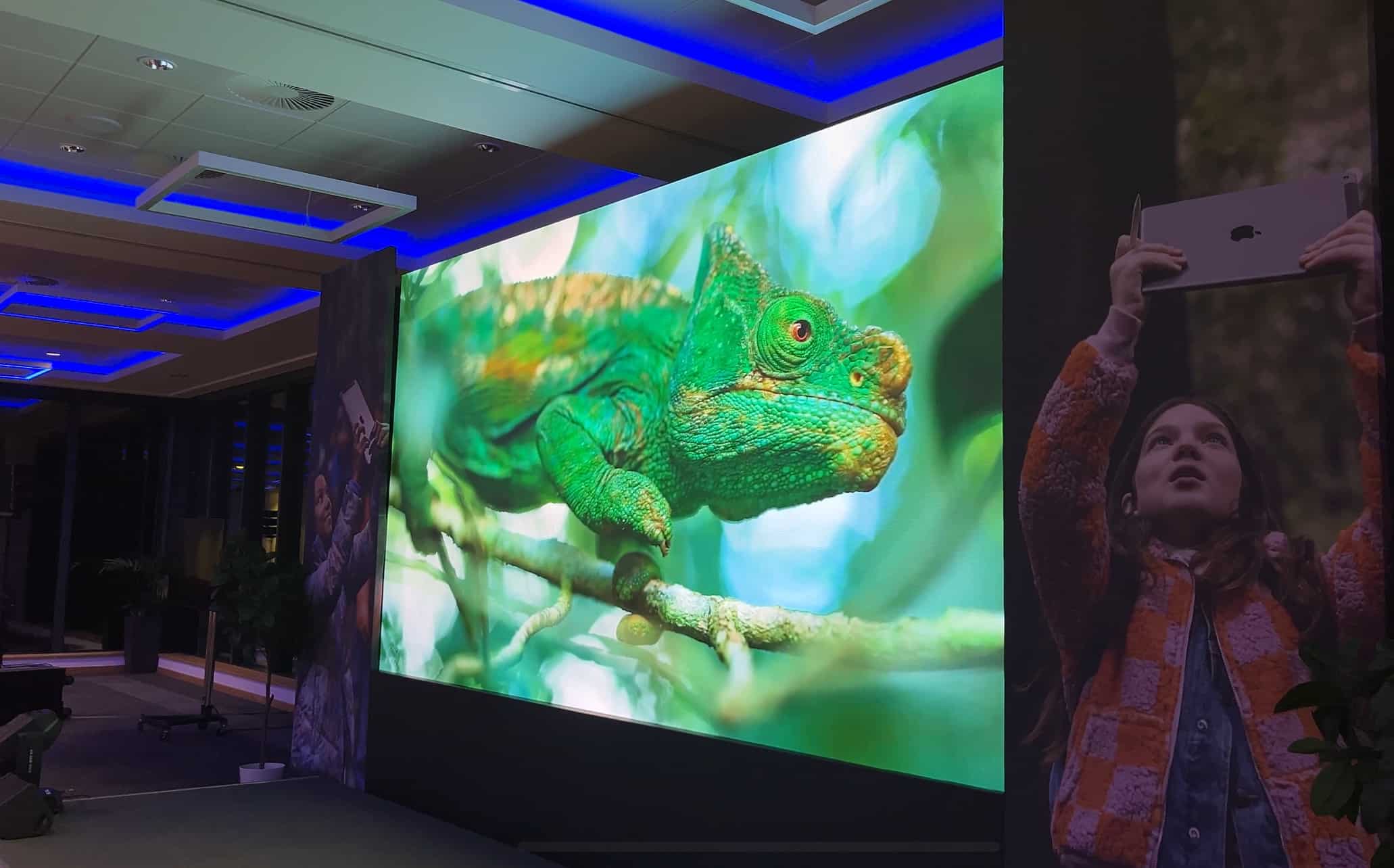
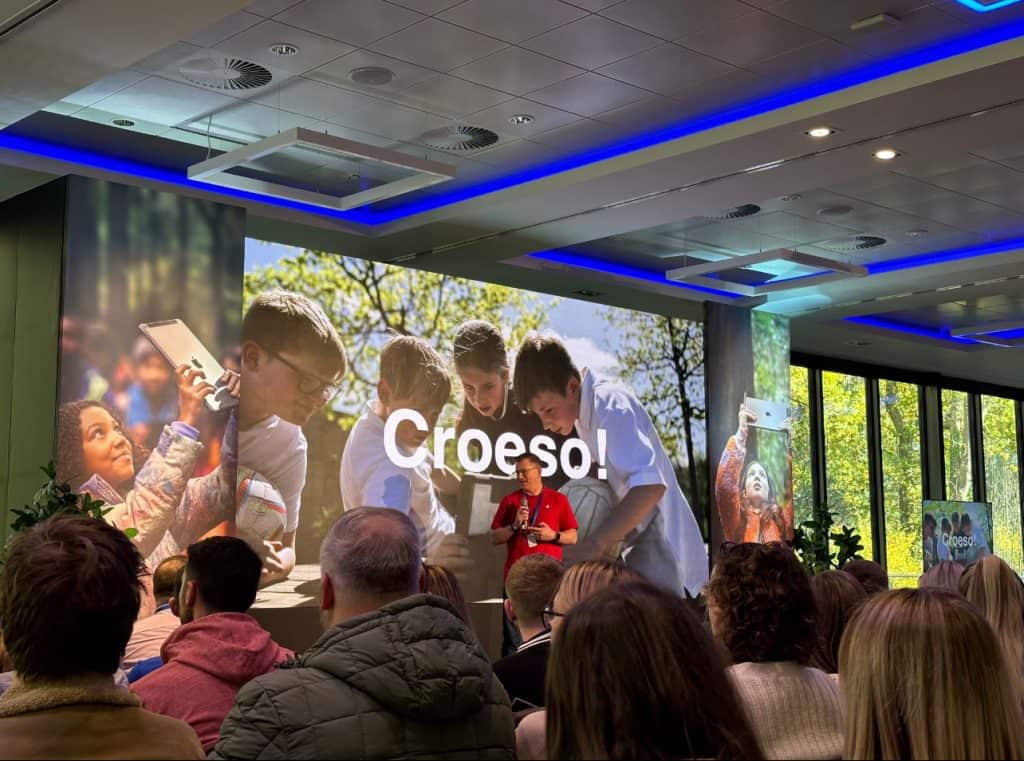
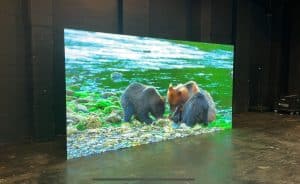
A GOB-protected LED wall as a conference stage backdrop: a public-facing placement where the sealed module face earns its keep
Glue on board (GOB) is a module-level protection process, not a different kind of LED. A standard surface-mount (SMD) module has thousands of small LED packages soldered to the board with nothing in front of them. In a GOB module a clear, hard-setting resin is applied over those packages, filling the gaps between them and leaving a flat surface flush with the LED tops.
Because the resin covers every diode, the parts most likely to be damaged in handling, cleaning or cabinet joins are no longer exposed. The layer also scatters light slightly at the surface, which softens the visible pixel grid and evens out small brightness differences between neighbouring LEDs.
The trade-off is a modest reduction in peak brightness compared with the same bare module, which is why GOB is most common on indoor and fine-pitch products where brightness headroom is rarely the limiting factor. For the wider family of protection methods, our comparison of COB vs GOB vs SMD LED sets the three side by side, and our LED technology overview covers the basics.
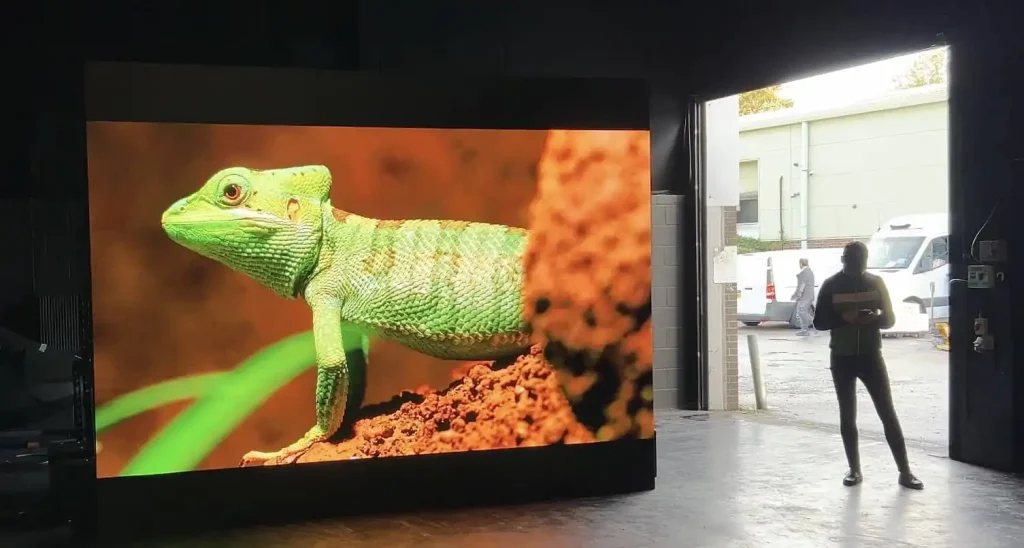
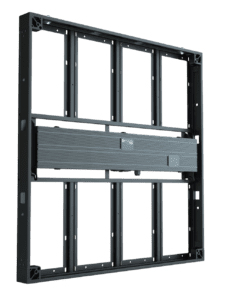
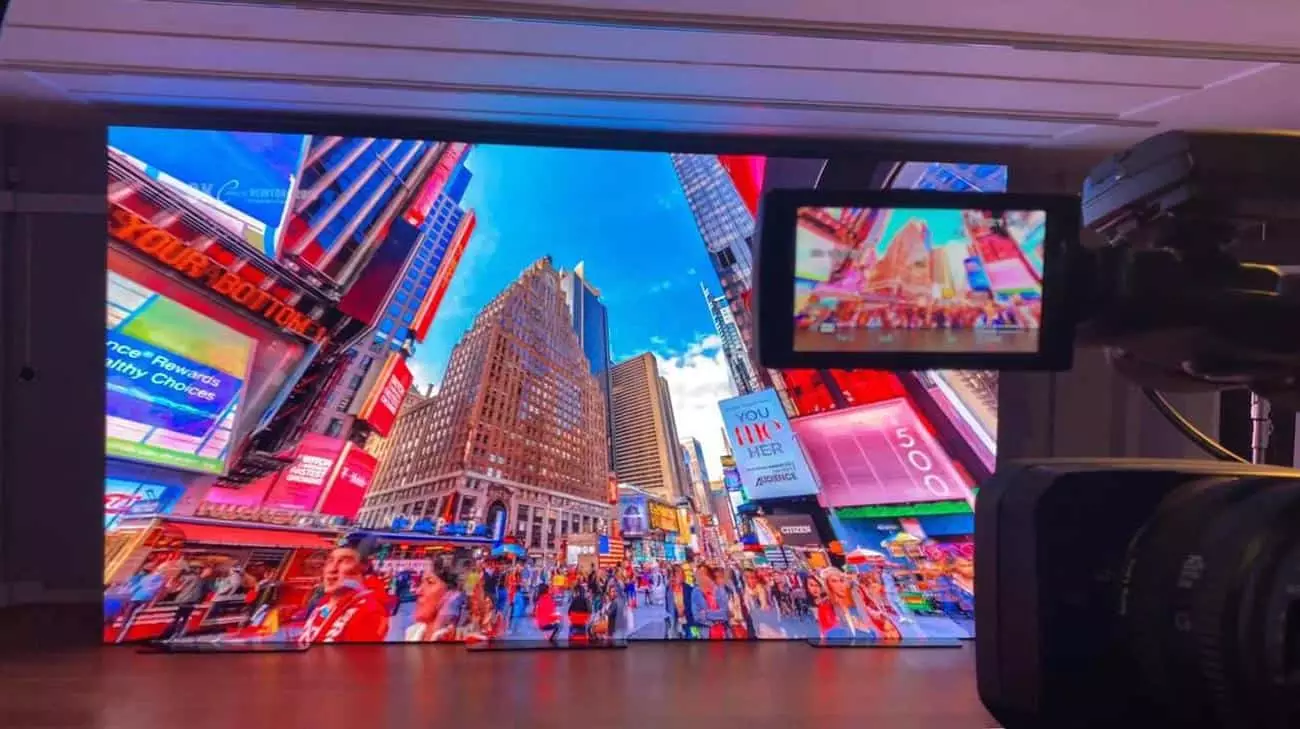
A GOB LED screen under test at Dynamo’s workshop before delivery
Benefits of a GOB LED screen
The benefits of a GOB LED screen all come from the same resin layer. Each one matters in a different environment, so it is worth looking at them separately.
Impact resistance
Bare SMD packages can be knocked off a module by a hand, a trolley or a dropped tool, and a missing LED shows as a dead pixel until the module is swapped. Under resin the packages are held in place and shielded, so a GOB screen tolerates the contact that comes with retail floors, exhibition stands and touchable surfaces. Impact resistance for enclosures is graded by the IK code; the practical point is that the diodes are no longer the weakest part of the screen.
Fewer faults and less downtime
Most field faults on an LED screen are physical: a knocked LED, a corroded contact, a module damaged during installation. Sealing the LEDs removes the majority of those failure routes, which means fewer service visits and fewer spare modules held for a given installation.
Protection from dust and moisture
Resin keeps dust, cleaning fluid and condensation away from the LED terminals and the solder joints beneath them. For indoor screens this is why GOB modules can be cleaned with a damp cloth. For outdoor products the resin works alongside the cabinet’s ingress rating, which is expressed as an IP code such as IP65 on Dynamo’s DRX outdoor cabinets.
Wide viewing angle
The flat resin surface avoids the shading that a raised louvre or mask can cause at steep angles, so colour and brightness hold up when the screen is viewed from the side. That matters for tickers, ribbons and any wall that people walk past rather than stand in front of.
Better contrast
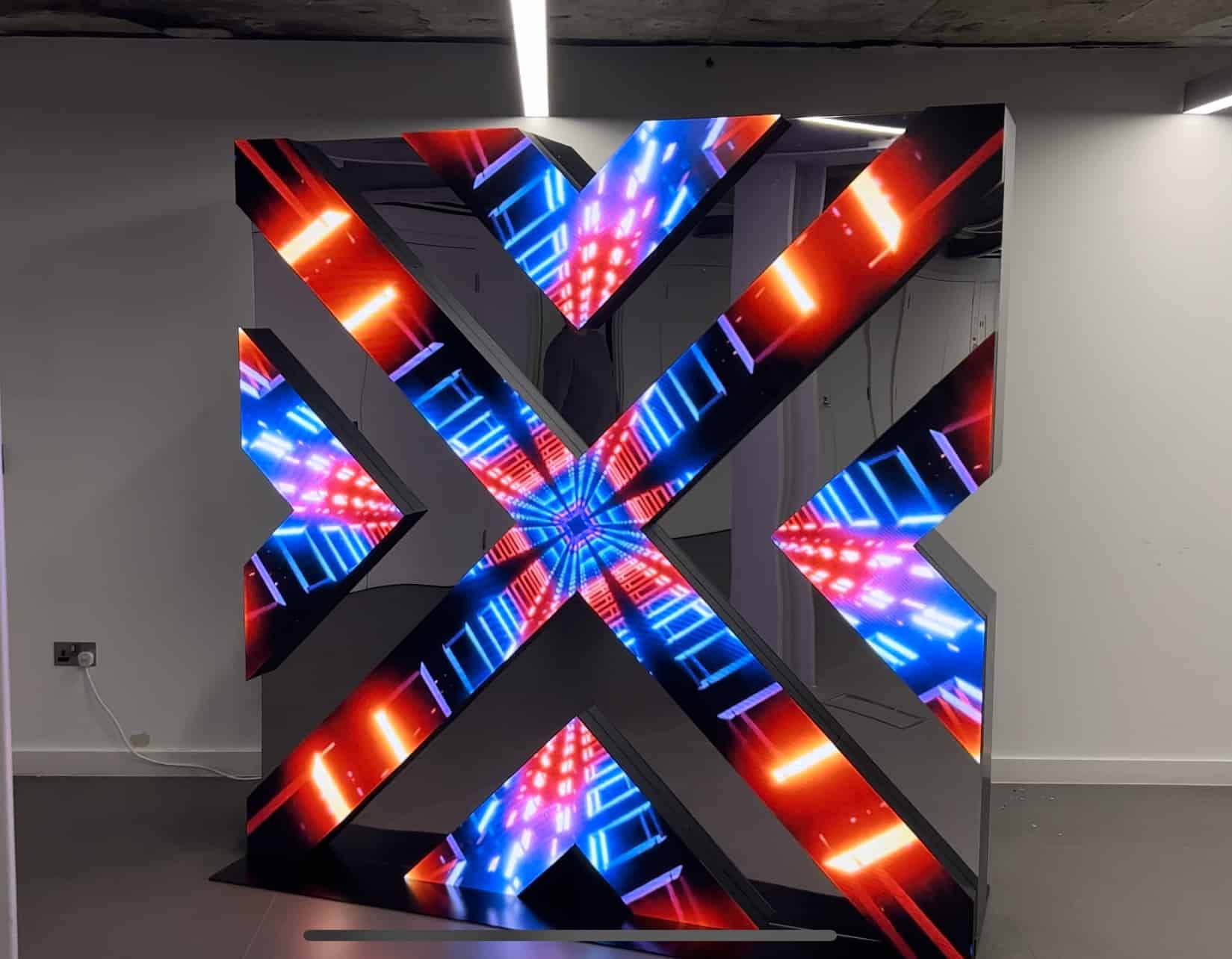
A flat resin face reflects room light differently from the raised packages and gaps of a bare module, and the pixel grid is less visible at close range. On the recessed LED arches at 40 Leadenhall the resin-covered surface was specified partly for controlled reflections and perceived contrast in the foyer lighting, and for stable greyscale gradients when content sits close to black.
Where GOB does not help
Resin protects the diodes; it does not change the driver electronics, the power supplies or the receiving cards, and it does not turn an indoor cabinet into an outdoor one. Those still need the right cabinet rating, ventilation and maintenance plan, covered in our LED display maintenance guide.
Types of GOB LED screen
GOB is applied to several types of LED screen, and the right one depends on how and where the screen will be used.
Fixed-installation GOB LED screens
Permanent indoor walls for boardrooms, reception areas, retail and auditoriums. Dynamo’s DRA Series fixed-install cabinets carry X-GOB protection across their P1.29mm to P2.58mm pitches, and the DX Series is available with GOB protection for high-traffic, touchable surfaces. The full fixed-install range is on our LED display products pages.
Rental GOB LED cabinets
Lightweight cabinets that assemble quickly for events and temporary installations. Our DRE Series rental cabinets are compatible with beMatrix and Aluvision framing and use the same X-GOB module protection, which is what lets rental stock survive repeated loading, transport and de-rig.
Flexible and curved GOB LED
Flexible LED tiles on a bendable substrate can follow curves and compound shapes. GOB protection is applied to the tile face in the same way, and it is what makes a curved ribbon in a public space practical. Our flexible LED screens guide covers the substrate, radius and framing questions.
XR studio and LED floor screens
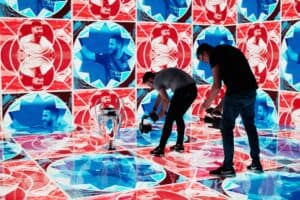
Studio walls for virtual production, such as our DVX Studio system, benefit from GOB because the surface is close to the camera and must stay uniform. LED floor screens take the idea furthest: the resin, together with a load-rated top layer, is what allows people to walk and dance on the display.
A GOB project in practice
At AutoTrader’s Manchester headquarters every zone was GOB-protected because the space is public-facing: a 21.76 m double-curved P1.86mm flexible LED ribbon, a suspended halo ticker and a contoured plinth on flexible tiles, plus two 2.5 m × 2.5 m P1.9mm GOB DX Series walls, one of them a touchable interactive AI display. The whole installation was commissioned in under two weeks on a live fit-out site.
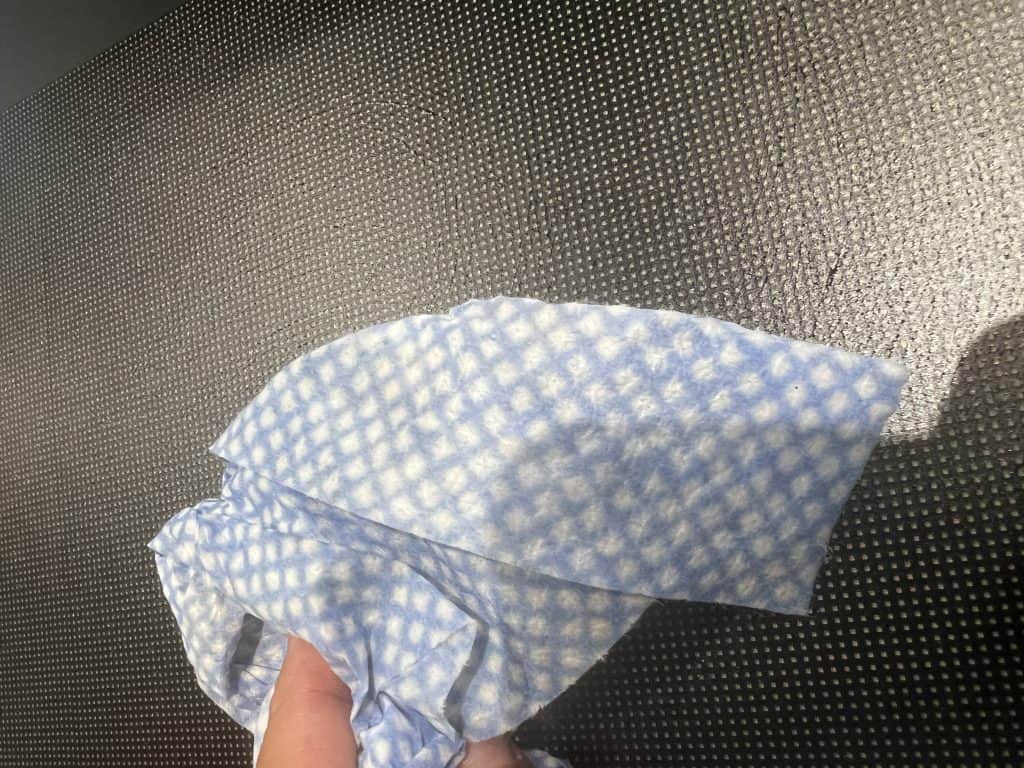
Wiping a GOB module with a damp, lint-free cloth. Bare SMD modules should never be cleaned this way
GOB screens are installed and maintained like any other LED display, with one practical difference: cleaning.
Calibrate at commissioning. Modules are factory-calibrated, but the wall should be checked as a whole once it is built and stable so that brightness and colour are uniform across every cabinet.
Keep ventilation clear. Resin protects the front of the module; the electronics behind it still need airflow, so cabinet vents and rear access must not be blocked by the wall build-up.
Set brightness for the room. Running an indoor screen at full output shortens diode life and makes the image harsh. Match brightness to ambient light and schedule it down out of hours.
Clean with a damp cloth. Unlike bare SMD modules, a GOB module face can be wiped with a lightly damp, lint-free cloth to remove dust and fingerprints. Use no solvents and no pressure on the module edges.
Following these four steps keeps the screen uniform and avoids the two most common service calls: blocked cooling and damage during cleaning.
Choosing pixel pitch and size for a GOB LED screen
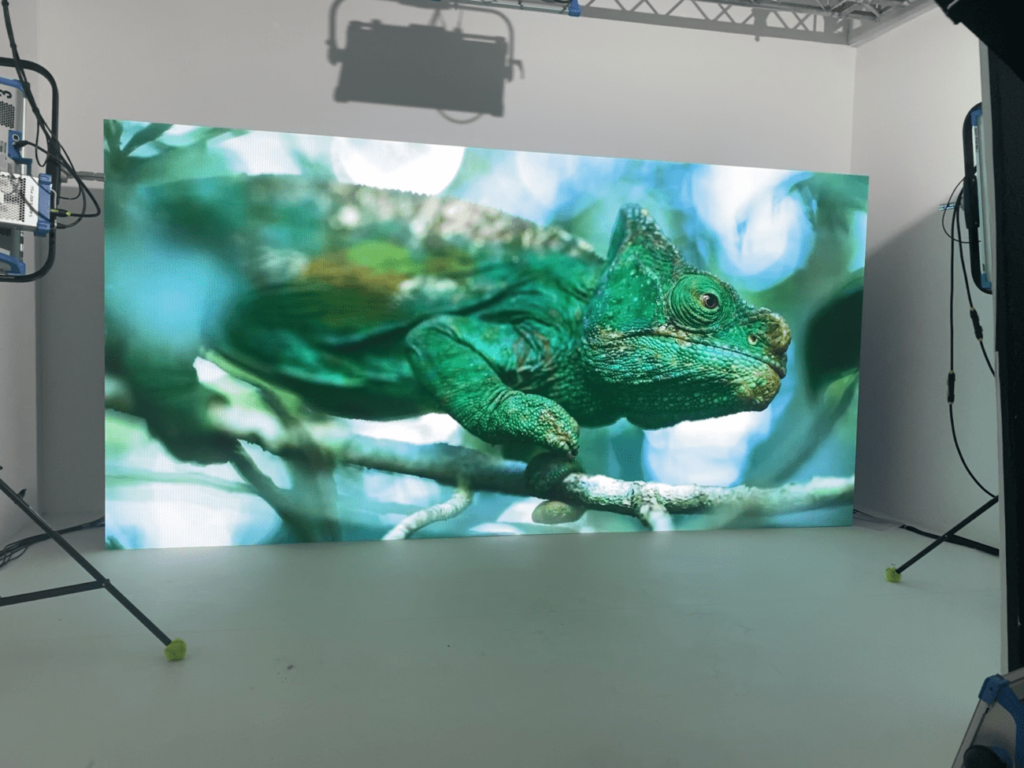
A fine-pitch studio LED backdrop: close viewing distances are where pitch choice and a softened pixel grid matter most
Pixel pitch and screen size are chosen together, from the viewing distance outwards. Pitch is the distance between LED centres in millimetres; the closer people stand, the finer the pitch needs to be so that the image reads as a picture rather than a grid of dots.
The old rule of thumb was one metre of viewing distance per millimetre of pitch, so a screen viewed from one metre needed a P1mm product. GOB changes that slightly. Because the resin surface softens the visible pixel structure, a GOB screen can be viewed a little closer than a bare module of the same pitch before the grid becomes obvious. It does not add resolution, so content detail still depends on the pixel count.
Size then follows from the content and the space: a boardroom wall that shows spreadsheets needs more pixels across its width than a lobby wall showing brand video of the same size. Our LED video wall viewing distance guide gives the distance-to-pitch figures we use when specifying.
Where GOB LED screens are used
Because the resin makes the screen tolerant of contact and easy to clean, GOB opens up placements that bare modules would not survive.
Retail and hospitality: tickers, shop-front walls and counter-height displays where customers and cleaning staff touch the surface daily.
Corporate reception and workplaces: curved ribbons, plinths and interactive walls in busy public areas, as at the AutoTrader headquarters above.
Exhibitions and events: rental cabinets that are built, struck and transported many times a year.
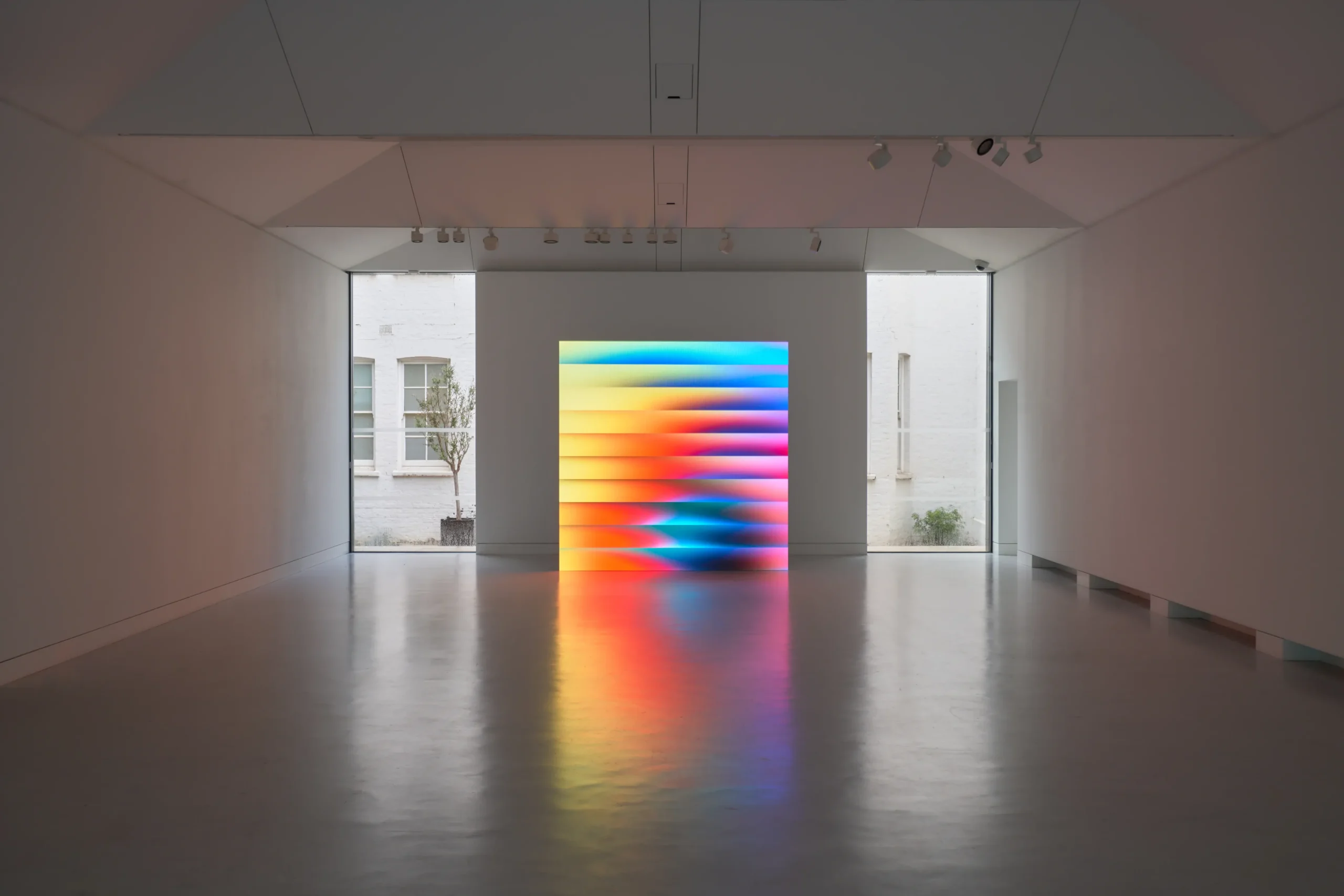
Studios and galleries: XR walls and art displays viewed at close range, where the softened pixel grid and darker blacks matter.
Floors and stages: LED flooring for entertainment venues and film shoots, where the display is walked on.
The gallery below shows some of these placements from Dynamo projects.
GOB LED gives you a screen that is harder to damage, easier to clean and slightly kinder to the eye at close range, with a small brightness penalty that rarely matters indoors. On Dynamo’s DRE, DRA and DRX ranges it is the standard module protection rather than an optional extra, and it is available on DX Series walls and flexible tiles.
GOB LED Screens: Frequently Asked Questions
What does GOB mean on an LED screen?
GOB stands for glue on board. A clear resin is applied over the LED packages on each module so the diodes sit under a smooth, sealed surface. It protects the LEDs from knocks, dust and moisture, allows the module to be wiped clean, and softens the visible pixel grid. It is a protection process applied to SMD modules, not a separate LED type.
Is a glue on board LED screen better than standard SMD?
For most indoor and rental uses, yes. GOB keeps the same LED packages and electronics as a standard SMD module but adds impact resistance, dust and moisture protection, wipe-clean maintenance and better contrast. The cost is a small reduction in peak brightness, so for very high-brightness outdoor screens a masked SMD module can still be the better choice.
Can you clean a GOB LED display?
Yes. Because the LEDs are sealed under resin, a GOB module face can be cleaned with a lightly damp, lint-free cloth to remove dust and fingerprints. Avoid solvents, abrasive cloths and pressure on module edges. Bare SMD modules should never be wiped in this way, because the exposed LED packages can be knocked off the board.
Is GOB the same as COB?
No. COB (chip on board) mounts bare LED chips directly onto the board and encapsulates them as part of manufacturing, giving a very smooth surface at the finest pitches. GOB takes a conventional SMD module and adds a resin layer afterwards. Both seal the diodes; they differ in how the LED is built. Our COB vs GOB vs SMD comparison covers the differences in detail.
Which Dynamo LED screens use GOB?
X-GOB protection is specified across Dynamo’s DRE Series rental cabinets, DRA Series fixed-install cabinets and DRX Series outdoor cabinets, and GOB-protected DX Series walls and flexible tiles were used throughout the AutoTrader Manchester headquarters installation. Product-by-product details are on our LED display products pages, and datasheets are available on request.
Does GOB reduce brightness or viewing angle?
The resin layer absorbs a small amount of light, so a GOB module is slightly less bright than the same bare module. Viewing angle is not reduced; the flat surface avoids the side-on shading that raised masks can cause. Indoors, where screens are run well below maximum output, the brightness difference is not normally noticeable.
Specifying a GOB LED screen?
Tell us where the screen will go, how close people will stand and how it will be used, and we will recommend a pitch, a product range and a protection level with a written specification.
Daniel Reynolds is Managing Director and founder of Dynamo LED Displays (est. 2013). He leads the specification and delivery of LED display solutions, with expertise in IP networking and both synchronous and asynchronous LED video systems across a range of control environments, including NovaStar and Brompton. Daniel also works as an LED consultant on international projects, supporting clients with system design, technical due diligence, and delivery planning.