
We hire LED walls out for a living, so this post is written against our own interest. LED wall hire for conferences is the right call more often than it used to be, but not every stage needs one. A fair number of the quotes that land on a planner’s desk are for a wall that will spend three days showing a logo.
LED wall hire for conferences pays off when the wall carries changing content: slides, camera feeds, sponsor reels or session branding. If it will show one static logo for the whole event, a printed backdrop or a silicone-edge graphic (SEG) lightbox delivers the same look for a fraction of the cost, and nobody in the room will notice the difference.
The decision changes when the wall carries presentations, live camera feeds or sponsor content that changes through the programme. Then you are comparing complete stage designs, including the kit each option replaces. The light in the room and what delegates can actually read matter as much as the cabinet line. What follows is how to tell the two cases apart, how to read a hire quote line by line, and what to do if the client insists on LED anyway.
Key takeaways
- A static logo does not need an LED wall. A printed backdrop or an SEG lightbox with decent lighting wins on cost and on how it photographs.
- A hire day rate is not just cabinets. It covers processing, structure, freight, an LED technician and the de-rig. Ask for those lines split out.
- Mixing LED and projection on one stage forces the wall to run dimmed so the projectors do not look grey. You pay for brightness you are not allowed to use.
- If LED is non-negotiable, drop the flanking projection screens and run presentation content picture-in-picture on the wall, provided the audience can still read it.
- Work out a wall’s resolution from cabinet pixel counts, never by dividing the width by the pixel pitch.
- “An LED specialist may be required” on a quote means the supplier has not priced the job properly.
- Check the venue’s third-party AV surcharge before you spend a week collecting outside quotes.
At a glance: 2.5 mm LED wall vs printed backdrop for a three-day conference
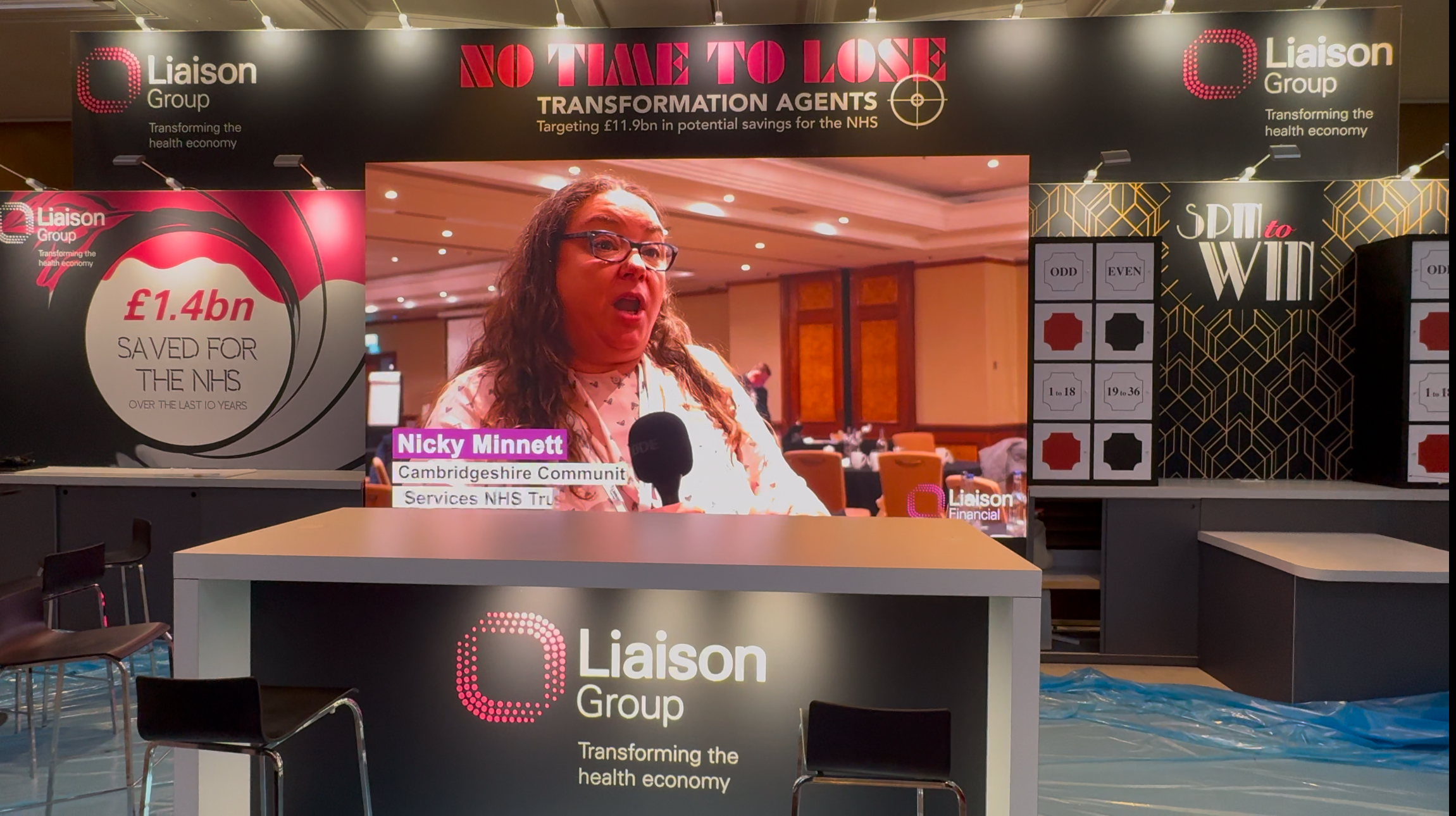
The starting point is a proposal a planner posted to an event-production forum in September 2026, backed by two pro-AV forum threads from earlier in the year. These are the reported requirements, not a Dynamo installation.
| Project detail | Reported requirement | What it means for the decision |
|---|---|---|
| Conference duration | Three show days | Separate show time from build, rehearsal and de-rig |
| Proposed wall | 16 ft × 9 ft, roughly 4.9 m × 2.7 m | Check the actual cabinet arrangement and finished size |
| Quoted pixel pitch | 2.5 mm | Pitch alone does not confirm the native pixel count |
| Planned use | Static sponsor logo for about 98% of the programme | Print or an SEG lightbox deserves the first comparison |
| Presentation displays | Two projection screens either side of the wall | The LED wall holds branding without carrying the slides |
| Quoted by | The venue’s in-house AV team | Ask for an itemised split before comparing totals |
| Room verdict | Printed backdrop or SEG lightbox | We agree. If LED stays, remove the projectors |
| Dynamo hire fleet | DRE Series P1.29 cabinet, 496 mm × 496 mm, 384 × 384 pixels | Finer than the pitch quoted, with a known pixel count per cabinet |
The static-logo trap

A static logo does not justify an LED wall. If one piece of artwork sits behind the lectern for the whole event, a printed backdrop or an SEG lightbox delivers the same look, photographs at least as well when it is lit properly, and needs no processor, technician or signal chain. Hire the wall when the content changes, not when it stays put.
The situation is a common one. A planner receives an in-house AV quote for a three-day event. Buried in it is a 16 ft × 9 ft LED wall at 2.5 mm, with freight, labour, processing and a technician rolled into one number. The wall’s job is to show the sponsor’s logo behind the lectern. Slides go to two projection screens either side. The planner asks whether the wall is worth it, and fifty-odd replies later the forum has landed on a clear answer: no.
We agree, and we would say the same about our own conference LED screen hire. An LED wall is a light source, and its value comes from what changes on it. Motion, camera feeds, live data, a sponsor reel between sessions, a speaker’s name animating in. A logo that sits still for three days uses none of that. You are paying for cabinets, a processor, a truck, a technician and a rigging crew so that a piece of artwork can stay put.
A printed backdrop does the same job with no signal chain and no operator. Give it a properly tensioned surface, artwork at the right scale and lighting that avoids shadows across the speaker. An SEG lightbox, a fabric graphic stretched over an internally lit frame, goes one better because it glows evenly and photographs cleanly, which is what sponsors actually care about. Both can be reused at the next event.
Print still needs a proper quote. Include the frame, delivery, installation, lighting and removal, plus whatever the venue requires for scenic materials. A lightbox also needs power. The saving comes from removing video equipment and operation the job does not need. Scenery still has a production cost.
The “polished look” argument gets raised in defence of a logo-only wall, and we disagree. A badly lit LED wall showing a flat logo looks worse in photos than a well-lit print, because the camera exposes for the wall and the speaker goes dark. Lighting the backdrop properly matters more than what it is made of.
Two checks before you decide. First, identify what happens in the remaining 2% of the programme. A brief opening animation can go on the existing projection screens. A live demonstration that needs a large central display is a different requirement. Second, check how often the branding changes. One identity across three days favours print. Different sponsors, session titles and evening-event graphics give a digital surface real work to do.
If 98% of your content is a logo, do not hire the LED from us or from anybody else. Spend the money on the print, the lighting and the audio.
What does LED wall hire for a conference include?
An LED wall hire day rate covers six cost lines: the cabinets and spares, an LED processor with switching and playback, a ground-support or flying structure, freight, a dedicated LED technician for build, show days and de-rig, and the de-rig itself. Power is provisioned by the venue but sized by the supplier. Ask for each line separately.
Planners struggle with these quotes because a single “LED wall” line hides all of that. When you know what sits inside a day rate you can tell whether a quote is fat or fair, and you can compare the venue’s number with an outside LED video wall hire quote on like-for-like terms.
Cabinets and spares. The cabinets themselves, counted by the square metre or by the cabinet, plus the spare-module provision. A module is the LED tile inside the cabinet, and it is the part that gets swapped when something fails. Our event rental LED display panels are the DRE Series, the hire line in our range. Cabinet cost scales with area and with pixel pitch: finer pitch means more LEDs per cabinet and a higher rate. Ask for the proposed dimensions, cabinet layout, pitch and confirmed native resolution.
Processing, switching and playback. The wall needs something to feed it. At minimum that is an LED processor, which takes a video input and drives the receiving cards in each cabinet. Brompton and Novastar are the two makers you will meet most often on hire jobs. On a conference stage there is usually a presentation switcher or a media server upstream of the processor, handling slides, camera and playback. A quote that says only “processor” does not establish that it includes presentation switching or picture-in-picture composition. Ask who supplies the presentation laptop, the backup source and the cabling, and who loads revised slides before doors.
Structure. Either a ground-support frame the wall stands on, or a flying frame with motors and truss above it. The choice affects cost, crew hours and what the venue has to sign off. We cover the trade-offs in rigging vs ground stack for LED screen hire. Flown structures fall under the Lifting Operations and Lifting Equipment Regulations 1998 (LOLER), and the Health and Safety Executive’s guidance on temporary demountable structures covers ground-supported builds. The paperwork for both is part of what you are paying a rigger for.
Freight and venue handling. Flight cases, a van or a truck, and a driver. This is distance-dependent and a real cost line, because LED cabinets are heavy and go in cases that take up floor space. Loading-bay access, vehicle restrictions, the route to the room and storage for empty cases all affect the work, especially when the venue gives different contractors different access windows.
LED technician. Someone who builds the wall, maps it, sets the colour and brightness, runs it during the show and fixes a dead module at 07:40 before doors. On a multi-day conference this is a full-day booking per show day, plus build and de-rig days. Establish whether the cover includes rehearsal and every session, or only installation and handover. This is the line we would never let a supplier leave off.
Power. This is a hidden line rather than a separate one. The venue needs to provision for the wall’s peak draw even though it runs well below that most of the time. Our guide to power requirements for LED screen hire at events explains how to size the supply, and HSE’s event electrical safety guidance covers supply planning at the venue end.
De-rig. Dismantling, packing and getting the truck out through the loading bay while the next event’s crew is arriving. Three show days do not describe the whole booking if build happens the day before and collection the day after. Ask which periods attract equipment charges and which need labour.
Our hire quotes carry a 30% booking deposit, a refundable damage deposit and a seven-day cancellation rule. A quote with none of those is either incomplete or has them buried in the day rate.
We have deliberately not put prices in this post. Rates move with pitch, area, duration, distance and the labour the job needs, and a number printed here would be wrong for your job. If you want a figure for a specific wall size, the LED screen configurator will give you a starting point and we can firm it up from there.
Can you mix an LED wall and projection on one stage?
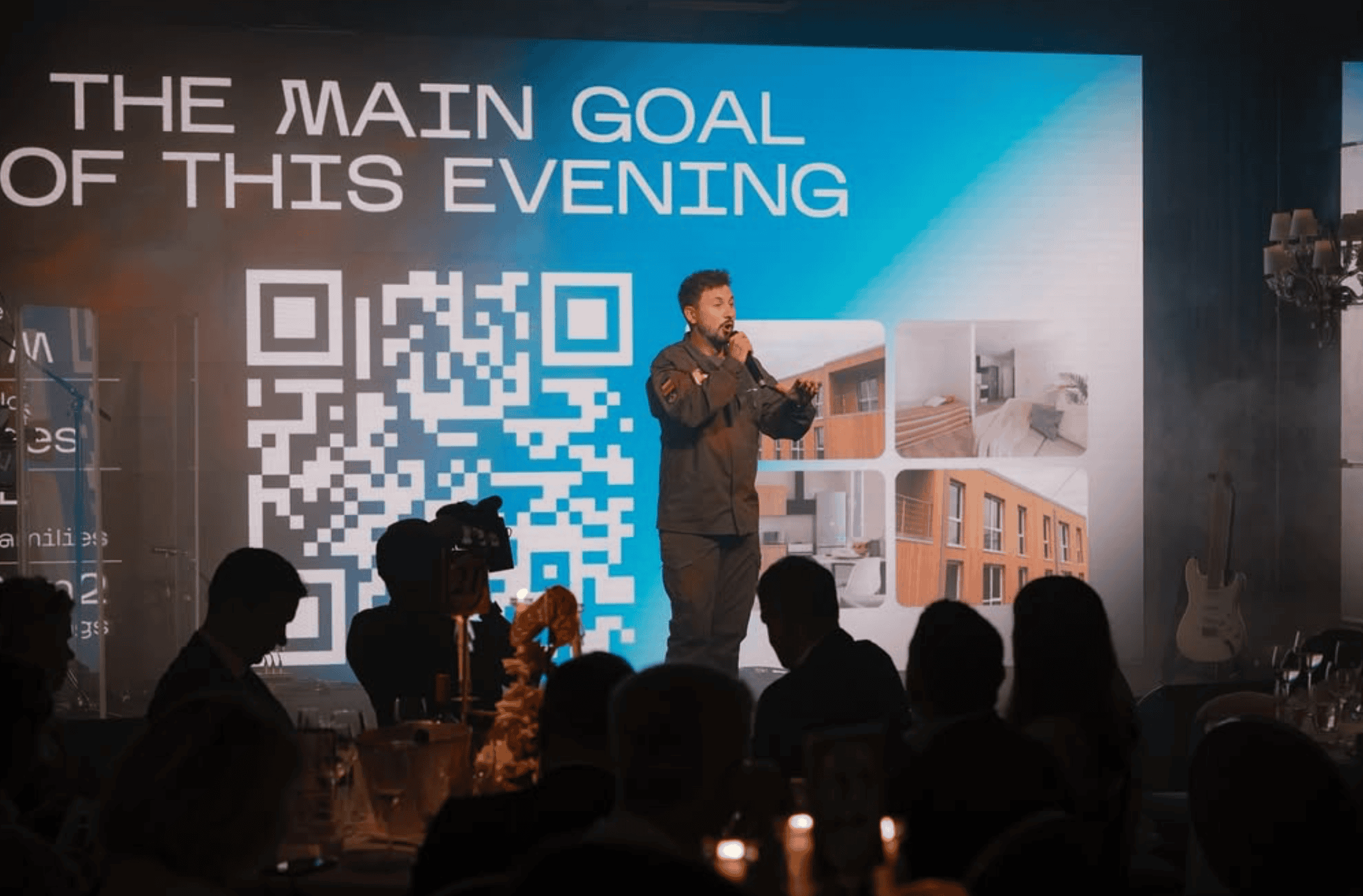
You can, but the LED wall will be run at the projector’s level rather than its own. An indoor LED wall at full output is far brighter than a projected image on a matte screen, so the wall gets dimmed until the projectors stop looking grey. You pay for brightness you are not allowed to use, and you run two signal chains to do it.
The second problem with the proposal above is not the logo. It is the two projection screens flanking the LED wall. Put the two technologies side by side on the same stage and the LED wall will lose, and then be made to lose on purpose.
Sit them next to each other and the projectors look washed out. The only fix on the day is to turn the LED wall down until the projectors look acceptable, and several of the technicians replying on that forum described doing exactly this. There is no universal percentage, because room light, projector output, screen material and content all move it. The rule is simpler than the number: an LED wall next to a projection screen runs at the projector’s level, never its own.
Brightness is only the first mismatch. LED and projection reach white and black by different means, so the same brand colour differs between the two surfaces, and the black level does too. An LED wall showing black is close to off, while a projector showing black is still throwing light at a white screen. White slides make the difference obvious. Once you dim the LED to match, its picture loses contrast and starts to look flat.
Then there is the operational cost. Two display technologies means two signal chains, two sets of scaling decisions, and either two operators or one operator doing two jobs during a live session. The switcher has to output at the right resolution for the projectors and separately for the wall, and any content that appears on both is scaled twice. Every extra piece of kit is another failure point at 09:00 on day one.
We would keep both technologies only where they serve different audience areas or where the room layout genuinely needs distributed screens. Where the flanking screens do all the presentation work and the centre wall simply glows behind the speaker, the projectors should go.
Planning a conference stage and not sure which way to go? Our LED screen hire team will tell you straight if a printed backdrop is the better answer. Send us the room plan, the running order and the show dates via our contact page or call +44 (0)203 489 9878.
If the client insists on LED, make it earn its keep
When LED is non-negotiable, remove the flanking projection screens and run the presentation content as a picture-in-picture window on the wall, with the branding as the backplate around it. One surface, one processor, one operator, and the wall runs at the brightness you hired.
Sometimes the client has decided. The sponsor wants LED, or the brand team has decided this is the year the stage looks different. That is fine. The job then is to make the wall do all the work instead of a third of it.
The logo is still there for the whole three days. The slides, the speaker camera and the sponsor reels play in the window, or take the whole surface when the moment calls for it. This is the same principle a broadcast set uses, where graphics and branding share one surface. Our guide to broadcast studio LED backdrop design covers how to lay that out so the content window sits where the camera wants it.
The projectors, screens, lenses, dress kit and second operator you are no longer hiring offset part of the wall’s cost. LED is still dearer than print for a logo, but LED on its own is cheaper than LED plus projection, and that is the comparison that matters once the client has decided. Ask the supplier to recalculate the whole scope rather than promise a saving from the cabinet line alone.
Confirm the pixel map before designing the backplate
The forum proposal did not state the cabinet pixel count, so nobody replying to it could know the true canvas, and neither can you until the supplier states it. Do not work it out by dividing the wall width in millimetres by the pitch. Get the pixel count per cabinet from the datasheet and multiply by the number of cabinets across and down.
As an example from our own fleet, the DRE Series P1.29 cabinet is 496 mm × 496 mm and 384 × 384 pixels, so a wall ten cabinets wide and five high is 3840 × 1920 pixels. That is a 4K-width canvas rather than a 1080p one, which changes what you ask the media server to output and whether the slides need re-authoring. Our post on native resolution and content scaling for LED walks through the arithmetic.
The presentation window matters as much as the wall. A 1080p feed fills a canvas close to 1920 × 1080 cleanly. Put that feed inside a smaller window and it is being scaled down, because the window has fewer pixels than the wall. Large branding borders leave the slides harder to read than they were on the projectors, which defeats the point. Keep the branding modest if the deck needs the pixels.
Test the hardest slide from the furthest seat
A large wall does not rescue small text in a small window. Review the most detailed chart, spreadsheet or diagram at the intended window size, from the back row, before you sign off the layout.
Check sightlines too. A central wall partly hidden by a lectern or a standing speaker may serve some delegates worse than two elevated side screens did. The saving from removing the projectors depends on replacing their function, not just their kit.
Questions for the in-house or venue AV supplier
Ask the venue AV team for an itemised quote, a named LED technician priced in, a named processor and operator, the build method and sign-off route, and the third-party AV surcharge. Those five answers tell you whether the number is fair and whether shopping outside is worth your time.
The forum’s other argument was about in-house AV pricing. We are not going to referee that. Venue AV teams know the building, the loading bay and the power, and that knowledge is worth something. But a quote is only useful if you can read it.
Ask for an itemised split. Cabinets, processing, structure, freight, labour and de-rig, with build, rehearsal, show cover and removal identified. If the supplier will not break the number down, that is your answer about the number. If they will, you can compare each line with an outside quote on the same terms.
Treat “an LED specialist may be required” as a red flag. A conference quote with that phrase in it has not priced the technician in. Whoever supplies the wall should be including one, not flagging it as a possibility. A wall without a dedicated tech is a wall nobody in the room can fix when a cabinet drops out mid-keynote. If the supplier does not employ one, they should be subcontracting one and showing the line.
Ask what the processor is and who operates it. A named processor from a known maker, with a named operator, tells you the supplier has done this before. “Processing included” tells you less.
Ask how the wall will be built and who signs the structure off. Ground stack or flown, what it is fixed to, and what the venue needs to see before it goes up.
Check the third-party AV surcharge before you shop around. Many venues charge a fee or a percentage when an outside supplier brings kit in, and some make certain venue services compulsory. Get those figures first. If they wipe out any saving from going outside, you have saved yourself a week of quote-chasing. If they do not, you now know how much room you have.
Ask what disappears if LED replaces projection. Ask for a revised equipment and labour schedule. Two overlapping packages make a poor comparison.
Ask what happens if the content plan changes. A wall specced for a static logo and a wall specced for camera feeds and playback are different jobs at the processing and labour lines. If you might add IMAG (image magnification, the speaker’s face on the big screen so the back rows can see them) later, say so now.
For a broader checklist on comparing suppliers, our guide on how to choose LED screen hire for UK exhibitions and conferences goes through what to look for beyond the price.
When is LED wall hire worth it for a conference?
LED wall hire is worth it for a conference when the content moves: camera feeds and IMAG, live polling, sponsor reels between sessions, and speaker names or session titles that change through the day. It also wins in bright rooms where projection washes out, on curved or non-16:9 stages, and on multi-day programmes where one wall serves every session.
Live content and camera feeds. IMAG, live polling, social walls, real-time data. Anything that moves or updates is where LED pays for itself, because that content cannot go on a print. IMAG needs a suitable camera and production chain, with delay and display behaviour checked in rehearsal.
Sponsor reels and session branding. If the wall changes with every session, showing this hour’s sponsor, this speaker’s name and this panel’s title, it is doing work that would otherwise need a print change every break. Somebody still has to prepare and check that content.
Bright rooms with windows. An integrator posting on a pro-AV forum in May 2026 was fitting out a large conferencing space with a lot of glass, where projection had already been ruled out because daylight washed it out. That is the clearest case for LED there is. A wall is a light source; a projector is fighting one. Assess the room at the intended session times and check the blinds, because direct sun on the wall still needs thought.
Curved and non-16:9 shapes. A wide, shallow banner behind a panel discussion, a curve that wraps around the lectern, a portrait column either side of the stage. Projection wants a flat rectangle; LED cabinets go where the design says, if the supplier has the cabinets and the frame for it.
Multi-day shows where the wall works every session. Three days is plenty of time for an LED wall to justify itself, if it is running content across a dozen sessions rather than sitting behind a logo. The build and de-rig cost is fixed; the more sessions it serves, the better the value. If the same wall goes out several times a year, the question shifts from hire to ownership, and the rent vs buy LED screen decision tree sets out where rental stops making sense.
Stages that need one surface for everything. If the alternative is a wall plus two projectors plus a second signal chain, LED on its own is usually the simpler and cheaper stage.
If that describes your programme, start with our LED screen hire page and send us the running order.
From the field: Daniel
I have turned down hires where the client’s content plan was a logo and a sponsor list, and I will keep doing it. It is not good for me if a planner spends a chunk of their budget on our cabinets and then stands at the back of the room thinking a printed backdrop would have looked the same. They will not book us again, and they will be right not to. The conversations I want are the ones where somebody sends me the running order and I can see camera feeds, playback and session branding, because then I know the wall is going to look good and they are going to feel it was worth it.
The one I push hardest on is the projection screens. Nearly every conference quote I see with an LED wall in it still has two projectors flanking it, and nearly every time the wall gets turned right down on the day so the projectors do not look terrible. If you are paying for a wall, let it be the wall. Put the slides in a window on it, check the hardest slide from the back row, and send the projectors back.
LED wall hire for conferences: frequently asked questions
Is an LED wall worth hiring if it only shows a logo?
No. A logo that stays still for the whole event uses nothing an LED wall offers. You would be paying for cabinets, a processor, freight and a technician so that artwork can sit still. A printed backdrop or an internally lit SEG lightbox does the same job, photographs well when lit properly, and can be reused without a crew.
What is included in an LED wall hire day rate?
Six lines: the cabinets and spares, an LED processor or media server, a ground-support or flying structure, freight to and from the venue, a dedicated LED technician for build, show days and de-rig, and the de-rig itself. Ask for those lines separately, and confirm whether switching and playback are included in the LED video wall hire price.
Can I use an LED wall and projection screens together on one stage?
Rarely well. The LED wall is far brighter than a projected image, so it has to be turned down until the projectors stop looking grey. Colour and black level also differ between the two surfaces, and you end up running two signal chains and two operators. If you are hiring a wall, run the presentation content on it and drop the projectors.
Can one LED wall replace two projection screens?
Yes, provided the central wall gives every delegate a clear view and enough readable presentation area. Test the most detailed slides at the proposed window size from the back of the room, and check sightlines around the lectern. Removing projectors, lenses, screens and dress kit offsets part of the LED hire cost.
How do I work out the resolution of a hired LED wall?
Multiply the pixel count per cabinet from the datasheet by the number of cabinets across and down. Do not divide the wall’s width by the pixel pitch, because cabinet edges and module layout make that figure unreliable. The DRE Series P1.29 cabinet is 384 × 384 pixels, so ten across by five high is 3840 × 1920 pixels.
What should I ask the venue’s in-house AV about an LED wall quote?
Ask for an itemised split of cabinets, processing, structure, freight and labour. Ask who the LED technician is and confirm they are priced in, not flagged as “may be required”. Ask what processor is being used and who operates it. Check the venue’s third-party AV surcharge before you spend time on outside quotes.
When is LED wall hire for conferences clearly the right choice?
When the content moves. Camera feeds and IMAG, live polling, sponsor reels between sessions, speaker names and session titles that change through the day. Also in bright rooms with windows where projection washes out, on curved or non-16:9 stage shapes, and on multi-day programmes where one wall serves every session.
Do I need a separate LED technician if the venue already has AV staff?
Usually, yes. Venue AV staff are generalists across audio, lighting, projection and conferencing. Building, mapping, colour-balancing and running an LED wall is a specific skill, and on a live stage you want someone whose only job is the wall. The supplier providing the wall should provide that person and price them in.
Conclusion
The wall has to earn its place. If the content plan is a logo and two projection screens, a printed backdrop or SEG lightbox will look as good, cost far less and need nobody to run it. If the plan is camera feeds, session branding, sponsor reels and a room full of daylight, LED is the right tool, and it should be the only display surface on the stage so it can run at the brightness you hired. That is the whole of our position on LED wall hire for conferences. Read the quote line by line, make sure the technician is in it, check the venue surcharge before you shop around, and derive the resolution from the cabinets rather than the tape measure. If you want a second opinion on whether your conference needs an LED wall at all, send us the running order and the room details, get in touch with our hire team or call +44 (0)203 489 9878, and we will say so if the answer is print.