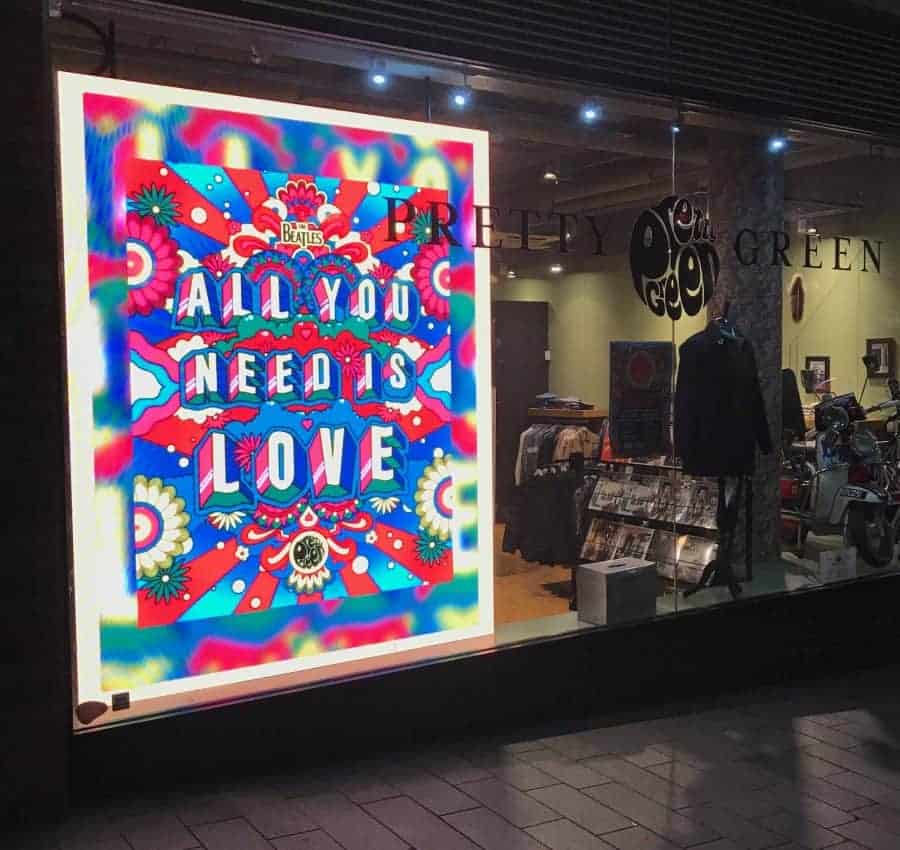
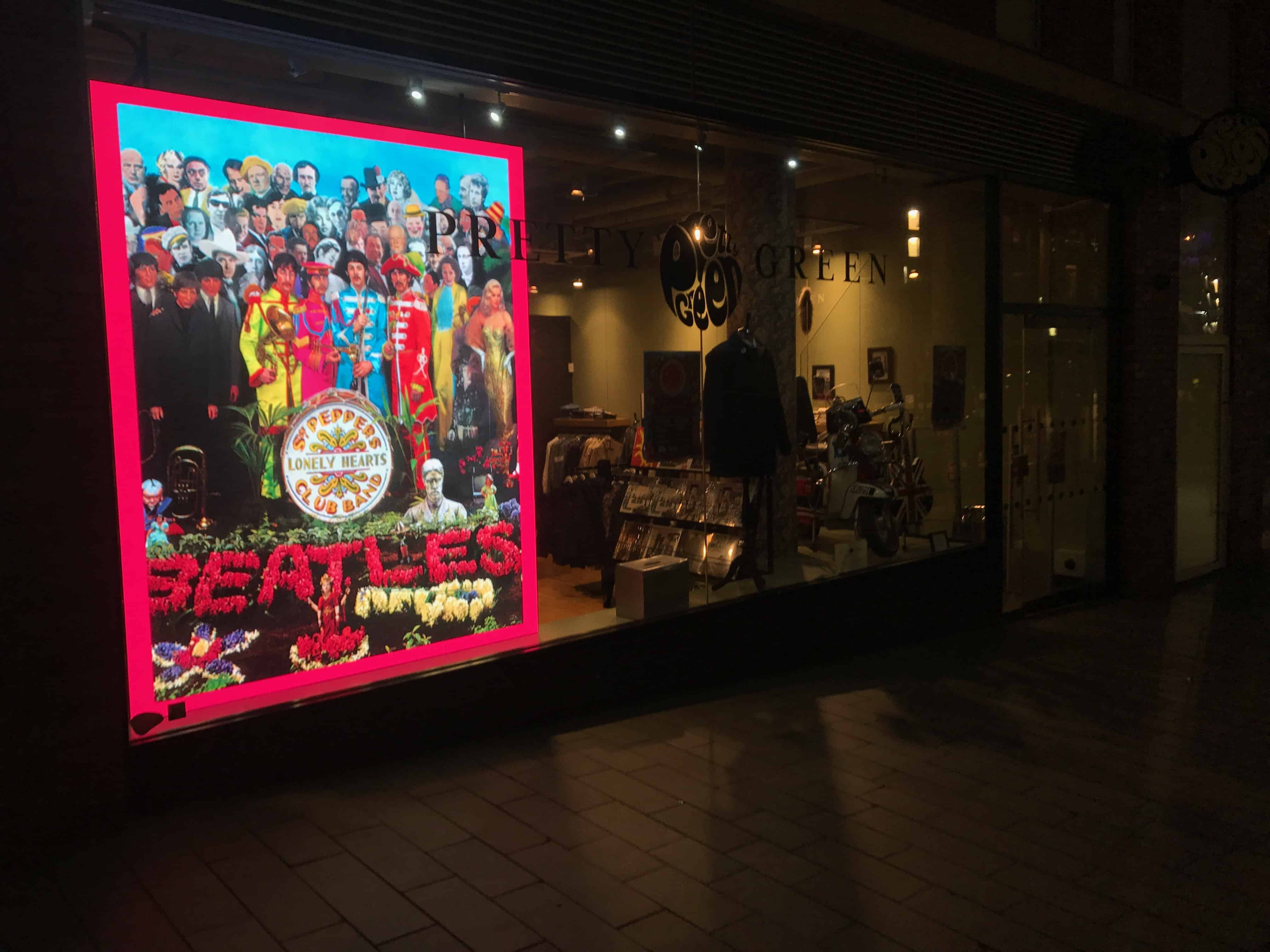
Dynamo installed two LED window screens for the Pretty Green Group: a 2.5 m tall by 1.5 m wide screen in the London flagship and a 3 m tall by 1 m wide screen in the Liverpool One store, both built from high-brightness 2.6mm LED cabinets and fed from Dynamo’s cloud content management system.
Updated September 2026. Case study first published January 2019.
The brief: two flagship windows
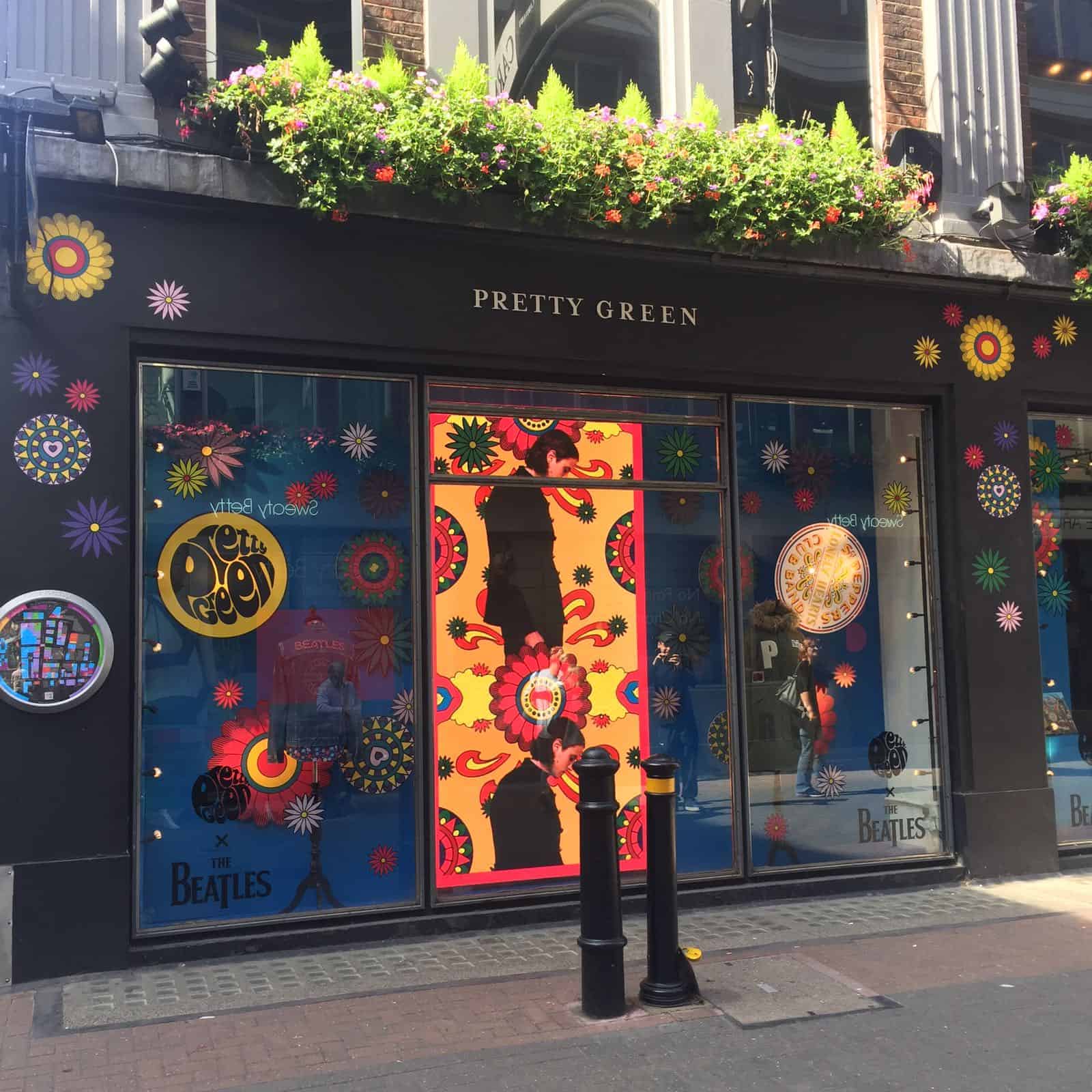
Pretty Green, the menswear label founded by Liam Gallagher, wanted moving campaign content in the windows of two flagship stores: London (Covent Garden) and Liverpool, in the Liverpool One shopping district. The brand runs collaborations, at the time with The Beatles around the fiftieth anniversary of Sgt. Pepper’s Lonely Hearts Club Band, and printed window vinyl could not keep up with the campaign calendar. A window LED screen replaces the print run with a file upload.
What Dynamo installed
Screen sizes and resolution
Both screens were built from high-brightness 2.6mm pixel pitch LED cabinets. The London screen is 2.5 m tall by 1.5 m wide and the Liverpool screen 3 m tall by 1 m wide, portrait formats that fill a window bay without hiding the whole shopfront. At 2.6mm pitch on standard 250 mm modules of 96 by 96 pixels, the London screen is 6 modules wide by 10 high, or 576 by 960 pixels, and the Liverpool screen 4 by 12 modules, or 384 by 1152 pixels. Content is supplied at those pixel sizes so nothing is scaled.
Brightness behind glass
A window screen faces the street through glass, so it competes with daylight and with reflections of the street itself. That is why window screens are specified brighter than an indoor wall of the same pitch. Our shopfront versus window LED guide goes through the brightness and viewing-distance numbers for retail.
Content from the cloud
Both screens are driven through Dynamo’s cloud-based content management system. A campaign file is uploaded once and scheduled to both stores from any smartphone or PC, so a London launch and a Liverpool launch go live together without anyone visiting either shop.
Current Dynamo window LED options
The figures below are from the DX Series datasheet, the fixed-install range Dynamo specifies for retail windows today.
| Model | Pixel pitch | Brightness | Module | Cabinet weight | Suited to |
|---|---|---|---|---|---|
| DX HB2.9 | 2.9mm | 3,000 nits or more | 250 × 250 mm, 84 × 84 px | 6.4 kg | Street-facing windows in daylight |
| DX HB3.9 | 3.9mm | 3,000 nits or more | 250 × 250 mm, 64 × 64 px | 5 kg | Larger windows viewed from across the street |
| DX2.6 | 2.6mm | 800 nits or more | 250 × 250 mm, 96 × 96 px | 6.5 kg | Inward-facing or shaded window bays |
All DX cabinets are front serviceable, so a module can be swapped from inside the window overnight without stripping the display. For a screen that shoppers can see through, see transparent LED for retail windows.
Related retail window projects
- Canada Goose LED window displays
- Hermès festive LED window displays
- LED tickers in the Harrods windows
- Custom and bespoke LED displays
LED window screens: frequently asked questions
What size LED screen fits a shop window?
Window screens are sized to the glazing bay rather than to a standard TV format. The Pretty Green screens were 2.5 m by 1.5 m and 3 m by 1 m, both portrait. Cabinets are built from 250 mm modules, so a screen can be any multiple of 250 mm in each direction, and portrait, landscape or a full-height column are all possible.
How bright does a window LED screen need to be?
Brighter than an indoor wall, because it faces daylight and street reflections through glass. Dynamo’s DX HB2.9 and HB3.9 window models are rated at 3,000 nits or more on the datasheet, against 800 nits or more for the standard indoor DX cabinets. The controller dims the screen after dark so it does not glare.
Can the window content be updated remotely?
Yes. Both Pretty Green screens run from Dynamo’s cloud content management system. A file is uploaded from a smartphone or PC, scheduled, and pushed to one store or every store at once. Campaign changes take minutes rather than the days a printed vinyl needs, and playlists can be timed to trading hours.
Does a window LED screen block the view into the store?
A solid LED screen fills the bay it sits in, which is why the Pretty Green screens were portrait columns rather than full-width panels, leaving glass either side. Where the brand wants shoppers to see through the display, Dynamo offers transparent LED, which passes most of the light and keeps the interior visible.
Can Dynamo roll out screens to several stores at once?
Yes. The Pretty Green project covered London and Liverpool with matching specifications, one content system and one point of contact. Dynamo has since delivered multi-store window and shopfront projects for other retailers, and the same cloud scheduling lets a campaign go live across every site at the same moment.
Get a quote for an LED window screen
Send us the window dimensions, a photo of the shopfront and the number of stores, and we will come back with a pixel pitch, a screen size per window and a written quote. Get a quote or call 020 3489 9878.