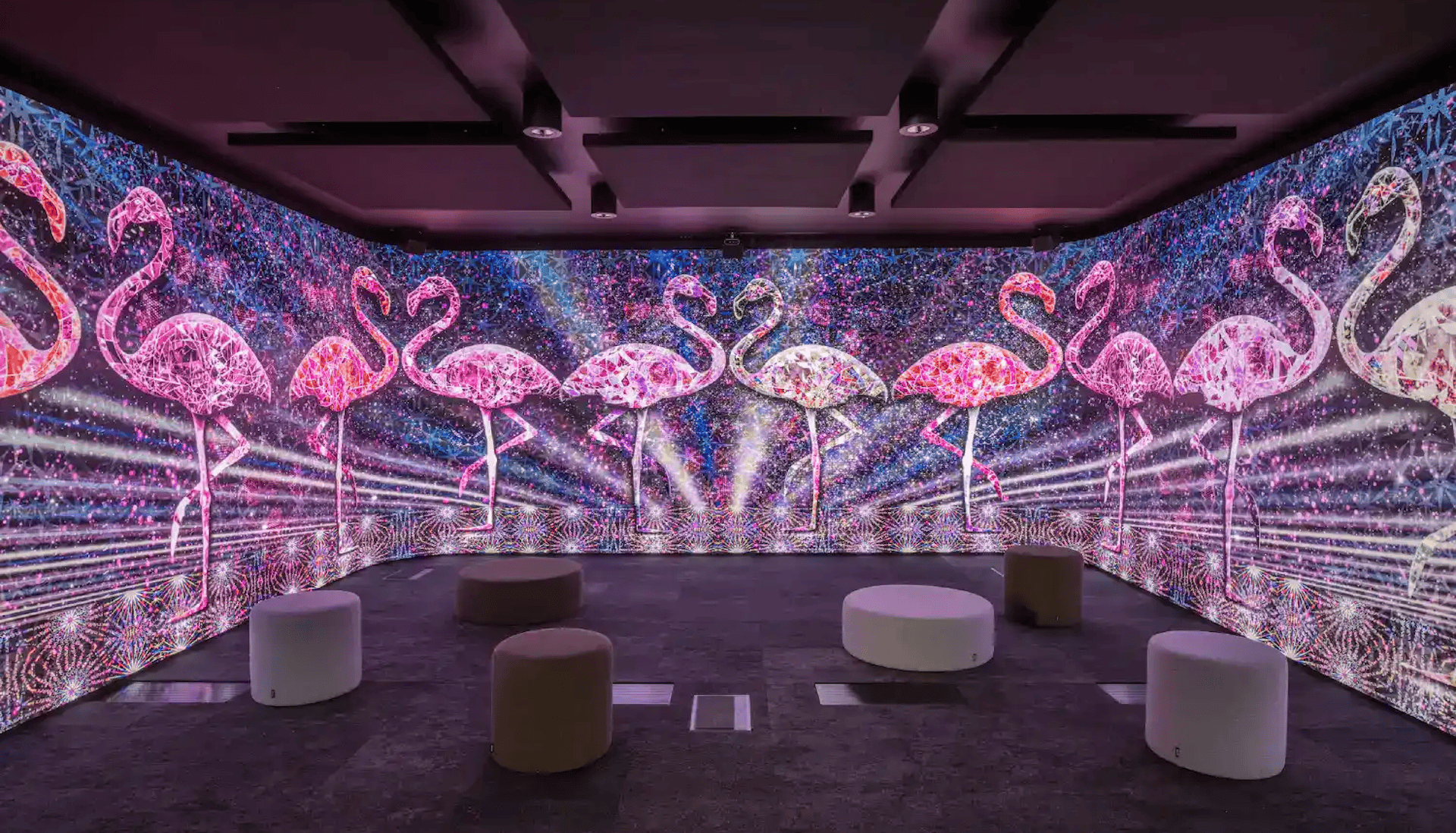
Specifying a university lecture theatre LED screen usually starts with the same question: can we finally stop apologising for the projector? Estates teams know the pattern well. The lamp dims over a term, the image washes out the moment someone opens the blinds, and students at the back photograph slides they cannot read. A direct-view LED screen (also called an LED video wall) removes those problems at source, because the display is the light source rather than a surface reflecting one.
This guide covers what actually matters when you specify an LED screen for a higher education lecture theatre or teaching space: pixel pitch against real viewing distances and real teaching content, screen size and sightlines, installation in a building that never fully empties, and what the running costs look like against the projector it replaces.
Key takeaways
- Direct-view LED holds full brightness and contrast in daylit lecture theatres, where projectors need blackout to compete.
- Pixel pitch should be chosen from the front-row viewing distance and the smallest text the room will display, not the room size. P2.5mm indoor LED suits most tiered theatres; finer pitches suit seminar rooms and camera-facing spaces.
- Resolution comes from the module count, not the wall dimensions. A P2.5 wall built from 500mm cabinets delivers 200 pixels per cabinet in each direction — a native Full HD canvas at 2.5mm pitch measures about 4.8 metres wide.
- For fixed teaching installations, our DX Series covers most tiered theatres at P2.5mm and our DFC Series covers fine-pitch, camera-facing rooms down to 1.5mm.
- Education installs run around teaching timetables. Survey, rigging, power and commissioning all need planning against term dates.
- Whole-life cost, not purchase price, makes the budget case: no lamps or filters to replace, maintenance reduced to module-level swaps, and a 3-year return-to-base warranty as standard.
Why universities are replacing projectors with LED
Universities are replacing projectors because a direct-view LED screen holds full brightness and contrast in daylit rooms, reads cleanly on lecture capture cameras, and has no lamp to fade — the three failure points of projection in modern teaching spaces. The screen is also modular, so it is sized to the room rather than to a throw path.
The projector survived in lecture theatres for decades because rooms were designed around it: dimmed lighting, a screen at the front, and tolerance for a soft image. Teaching has moved on. Lecture capture needs a display that reads properly on video, hybrid teaching puts remote participants on screen next to slides, and modern teaching rooms are designed with natural light — which is exactly what a projected image cannot survive.
Emissive pixels mean the image is unaffected by ambient light, so blinds stay open and the room stays usable for note-taking. Brightness is uniform across the surface, with no hot-spotting or edge fall-off, so a student in the back corner sees the same image as one front and centre. There is no lamp to fade, no filter to clog, and no shadow when the lecturer crosses the front of the stage.
Projection still has a place where light can be controlled and the throw path is clear, and tiled LCD can deliver fine pixel density — but LCD bezels stay visible across diagrams and text, and fixed panel sizes constrain the final canvas. An LED video wall is built from cabinets, so the display is a continuous surface sized to the room rather than the other way round. In a 300-seat theatre that means text sized for the back row, not the front three.
For institutions weighing the change, the honest comparison is not purchase price against purchase price. It is total cost across the display’s life: lamps, filters, downtime and the AV callouts a projector accumulates, against a solid-state screen with no consumables to budget for.
Getting the pixel pitch right for a lecture theatre LED screen
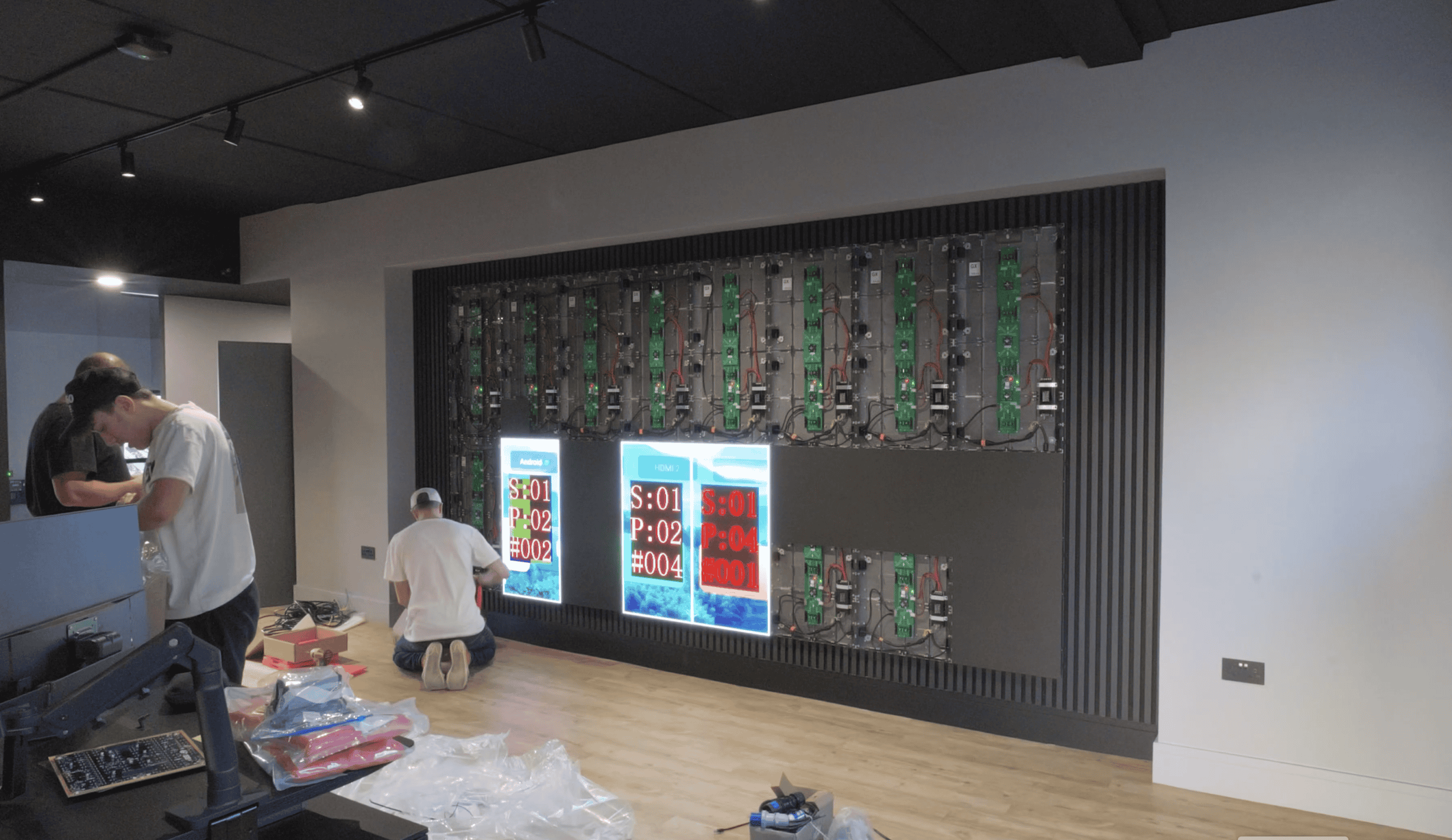
Pixel pitch — the distance between LED pixel centres — is the single biggest specification decision, because it drives both image quality and cost. The working rule is simple: the closest viewer sets the pitch. AVIXA, the audiovisual industry association, publishes a formal display-sizing standard (DISCAS, ANSI/AVIXA V202.01:2016) that formalises the relationship between viewing distance, content type and image size.
The second test is the content itself. University screens regularly carry small text, equations, code, spreadsheets and application interfaces — sources that expose insufficient pixel density far faster than promotional video does. A demonstration using the worst real teaching material tells you more than any showreel.
Resolution is derived from the modules, not the wall dimensions. A P2.5 cabinet measuring 500mm × 500mm carries 200 × 200 pixels. Build a wall 4 metres wide by 2.5 metres high — eight cabinets across, five up — and you get 1,600 × 1,000 pixels. A native 1,920-pixel Full HD width at 2.5mm pitch needs 4.8 metres of active screen; native 4K at 1.5mm needs 5.76 metres. Not every theatre needs a native 4K canvas; a 4K source can scale down to a lower physical resolution. The question is whether that scaling preserves the content students must read.
For most tiered lecture theatres, a 2.5mm pitch indoor display is the sensible centre of the range, and our DX Series fixed-install line covers this territory well: at 2.5mm pitch the image is fully resolved from around 2.5 metres, which matches the front row of most tiered rooms. Where the front row sits closer, or the screen doubles as a camera-facing surface for lecture capture and broadcast work, a finer pitch earns its cost. Our DFC Series premium fixed-install range goes down to 1.5mm, which holds up under close inspection and on camera — seminar rooms, moot courts, simulation suites and media teaching spaces are the usual candidates.
If you want to work through the trade-offs in more depth, our pixel pitch guide covers viewing distance calculations and content considerations for every pitch band we supply.
LED screen size and sightlines in the teaching layout
In a lecture theatre or auditorium, screen height is often constrained before width. Ceiling services, loudspeakers, fire detection, lighting bars and structural beams all limit the available area, and at the bottom of the screen the lectern and lecturer must not block the first rows’ view. A 16:9 canvas remains the straightforward choice because most presentation sources fit it without cropping; wider canvases suit rooms where lecturers regularly show two sources side by side, but they need a defined content workflow or users simply centre a 16:9 image and leave dead space either side.
Designing around complete cabinet increments matters here too. A target resolution that ignores the cabinet grid produces awkward filler strips and unnecessary processing complication; the physical size, resolution and cabinet layout should be settled together. Caption position and contrast are also worth deciding at design stage — universities carry accessibility obligations under the Equality Act 2010, and a screen specified with captions in mind is easier to live with than one retrofitted.
Where education LED is heading: the Brook Sixth Form XR studio
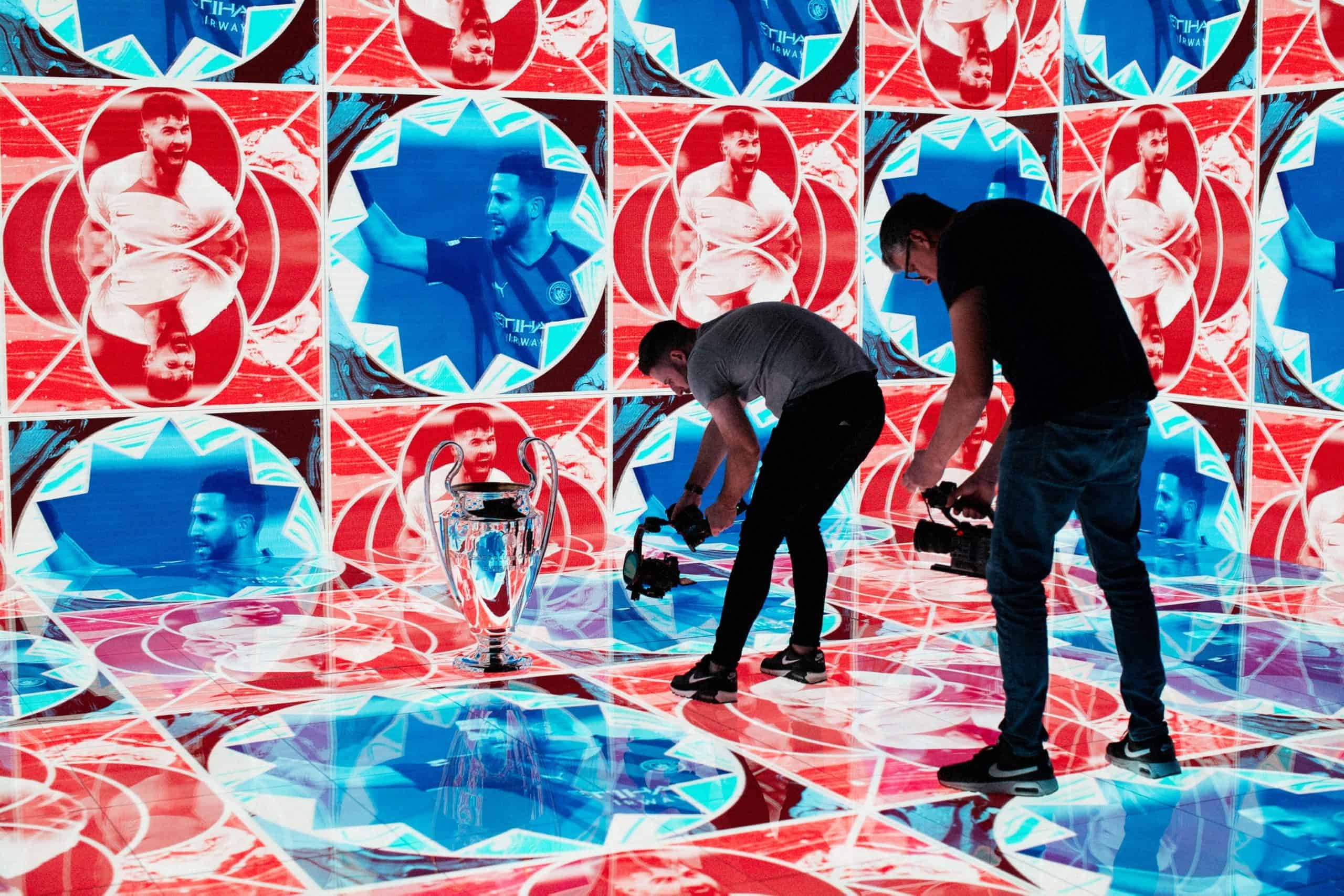
The most ambitious education project in our portfolio is the XR LED studio we installed at Brook Sixth Form Academy in East London. It is a sixth form rather than a university, and an XR stage rather than a tiered theatre — treat it as the upper bound of what teaching LED can be: a screen specified as teaching infrastructure, not signage.
| Project fact | Detail |
|---|---|
| Client | Brook Sixth Form Academy |
| Sector | Education |
| Location | East London |
| Application | XR LED studio for teaching virtual production |
| Pixel pitch | 1.9mm |
| Displays | LED floor at 2304 × 2304 pixels; left and right walls at 2304 × 1280 pixels each |
| Processing | Two Novastar COEX MX40 Pro controllers on 10G fibre outputs |
The academy wanted students working with the same virtual production techniques used in professional studios, so they teach the craft on the wall itself. Students light scenes against it, shoot against it and learn the camera skills that XR stages demand. For a university AV or estates team, the takeaway is that an LED screen specified properly becomes a facility the institution can teach with, recruit with and hire out — a different investment case from a bigger projector.
You can see more of our installation work across sectors on our project hub — it is the quickest way to judge whether we have delivered in rooms like yours. If a project is already taking shape, tell us about the room and we will talk through the specification with you.
Installing an LED screen in a working teaching building
Installing an LED screen in a live university building comes down to sequencing: survey and design during term, physical installation in a vacation window, and commissioning finished before teaching resumes. Timetables, exam periods, listed buildings and shared AV infrastructure all shape the plan, and this is what decides whether the install week runs smoothly or overruns into teaching time. Our LED screen installation service covers the full sequence: site survey, structural assessment, mounting design, first fix, cabinet hang, alignment and commissioning.
The survey stage does the heavy lifting. Lecture theatre walls are rarely as flat, plumb or load-ready as drawings suggest, and older buildings can hide services exactly where the mounting frame wants to go. We check structure, power provision and data routes before anything is ordered, so the install week holds no surprises. Work at height inside a finished theatre needs its own method planning; the Health and Safety Executive’s work-at-height guidance sets the framework, and the method statement then addresses the actual wall, stage and seating layout.
Service access should be designed before the frame is. Front-serviceable cabinets are usually the right call in a lecture theatre, because modules and internal components can be reached from the room without a rear maintenance corridor — and without dismantling seating that has just been reinstated. Agree the maintenance route, local isolation point and spares arrangement at design stage, not after handover.
Where other trades share the shutdown — seating, lighting, acoustics, decoration — responsibilities for final power circuits, containment and network connections need to be pinned down early. Either way, we plan commissioning time before teaching resumes rather than installing up to the final day.
Processing, scaling and lecture capture
A screen can only reproduce what the signal chain delivers, so the design should define the route from every source — lectern PC, laptop, visualiser, capture feed — to the LED processor. On the processing side we work with Novastar and Brompton, the two established names in LED processing. Novastar controllers cover the majority of fixed-install teaching spaces — the Brook studio runs on two Novastar COEX MX40 Pro controllers over 10G fibre — while Brompton processing is a common choice where broadcast-grade camera work is involved. The processor is also the integration point with the university’s existing AV control system, so lecturers operate the screen the same way they operated the projector: one touch panel, no new training burden.
Scaling presets deserve attention when the canvas is not native 16:9. A lecturer should never have to redesign a slide deck for the room — full-screen, picture-in-picture and dual-source layouts should be preset with the aspect ratio protected. And for hybrid teaching, remember the camera sees the screen differently from the audience: refresh behaviour, shutter settings and brightness should be tested together during commissioning, not discovered in the first recorded lecture.
Budget, running costs and lifespan
The cost model for a lecture theatre LED screen is higher capital cost and near-zero consumables: no lamp or filter budget, maintenance reduced to occasional module-level swaps at the wall, and a 3-year return-to-base warranty as standard. An LED screen costs more than a projector up front. No way round that; the case is made over the display’s working life.
A projector in daily teaching use consumes lamps, filters and engineer visits, and its image degrades between each intervention. LED modules are solid-state, typically rated for tens of thousands of hours, and hold their performance across that life. We hold spares against the product lines we supply, so a module swap is a scheduled visit rather than a procurement exercise.
The other budget lever is sizing the specification honestly. A P2.5 wall sized to the room will outperform an over-specified fine-pitch wall that consumed the budget needed for installation and processing. If you want an early feel for how size and pitch interact on cost, our LED screen configurator lets you model options before any conversation with us.
From the field
The moment I always watch for on education projects is the first time content goes up on the commissioned wall with the room lights full on. The AV team has usually spent years managing around a projector — blinds down, lights dimmed, image still grey. When they see slides holding solid colour in a daylit room, the conversation changes from image quality to what else the space can now do. My own test file is deliberately unglamorous: dense spreadsheets, small interface text, thin lines and a few awkward aspect ratios. If those hold up from the front row and the side seats, the room will work on a wet Tuesday in November, not just at the demo.
Brook stayed with me for a different reason. We were not installing a display for lessons; the wall was the lesson. Watching students light and shoot against an LED stage using the same techniques as professional virtual production crews told me more about where education AV is heading than any tender document I have read. My advice to university teams is to specify for that future, not just for slides.
University Lecture Theatre LED Screen: Frequently Asked Questions
What pixel pitch does a university lecture theatre LED screen need?
Choose the pitch from the front-row viewing distance and the content. For most tiered theatres where the closest student sits 2.5 metres or more from the screen, P2.5mm — our DX Series territory — resolves fully and is the cost-effective choice. Rooms showing code, spreadsheets or detailed diagrams, or spaces used for camera work, justify finer pitches down to 1.5mm, covered by our DFC Series.
How large should a lecture theatre LED screen be?
Large enough for the smallest essential content to remain readable from the rear seats, then balanced against wall space, resolution and budget. For reference, a native Full HD image at 2.5mm pitch measures about 4.8 metres wide, while native 4K at 1.5mm measures about 5.76 metres. Ceiling services and lectern sightlines usually constrain height before width.
Is an LED screen better than a projector for teaching spaces?
For daylit rooms, yes. LED is emissive, so the image holds full brightness and contrast with the blinds open, where a projected image washes out. LED also has no lamp to fade, delivers uniform brightness to every seat, and reads cleanly on lecture capture cameras. The trade-off is a higher purchase price, recovered across the display’s working life.
How is the resolution of a lecture theatre LED screen calculated?
From the modules, not the dimensions. Each cabinet carries a fixed pixel count set by its pitch: a 500mm P2.5 cabinet is 200 × 200 pixels. Multiply by the cabinet count to get screen resolution — eight cabinets wide by five high gives 1,600 × 1,000 pixels. Sizing this way ensures the screen matches your content sources properly.
Can an LED screen be installed during term time?
It can, though vacation windows are simpler. Where teaching continues, we phase the work: survey and design during term, then evening, weekend or holiday working for the physical install, with commissioning completed before the room returns to timetable. The site survey happens well in advance, so structural work, power and data are resolved before the install week starts.
How long does a university LED screen last?
In lecture theatre duty cycles — teaching hours rather than 24/7 — rated module lifetimes measured in tens of thousands of hours translate to many years of service. There are no lamps or filters to replace, and front-serviceable cabinets mean individual modules can be swapped at the wall. Our standard cover is a 3-year return-to-base warranty.
Does an LED screen work with lecture capture and hybrid teaching?
Yes, and this is one of the strongest arguments for it. A projected image flickers and blooms on camera; a properly processed LED screen reads cleanly, so recorded and streamed lectures show the actual content. The processor integrates with existing AV control, and where broadcast-grade camera work matters, Brompton processing manages refresh behaviour specifically for cameras.
How should universities compare LED screen proposals?
Compare active screen dimensions, physical resolution, pixel pitch, cabinet construction, service access, processing, warranty scope and spare-module provision — two proposals at the same pitch can differ considerably in resolution and maintainability. Confirm what is included for structure, electrical work, signal cabling, commissioning and training. If it helps, we will prepare a like-for-like written specification you can hold other quotes against — ask via our contact page.
Conclusion
The specification logic for a university lecture theatre LED screen is not complicated, but the order matters: front-row distance and content set the pitch, module count sets the resolution, the building sets the install plan, and whole-life cost — not purchase price — makes the budget case. Get those right and the result is a teaching space that works with the lights on, reads properly on camera, and serves the room for years without a lamp budget.
Whether you are specifying a single university lecture theatre LED screen or planning a rollout across a whole teaching estate, we survey, supply and install across the UK, from tiered theatres to XR teaching studios. Tell us about your room via our contact page or call +44 (0)203 489 9878, and we will come back with a specification and costed proposal in writing.