
Eye Catching
Branding

Easy content
management
management

Location free

Simple and effective
presentation method
presentation method

Versatility

Easy to install and maintain
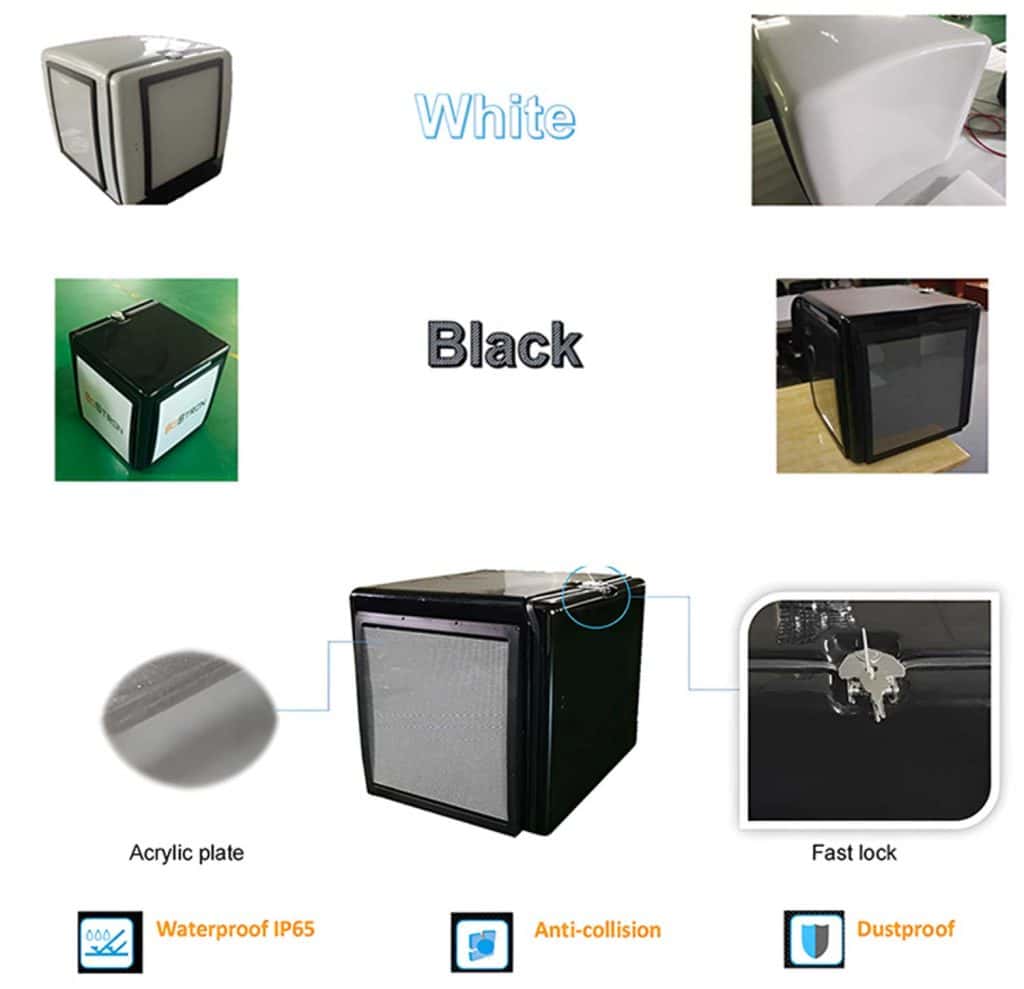

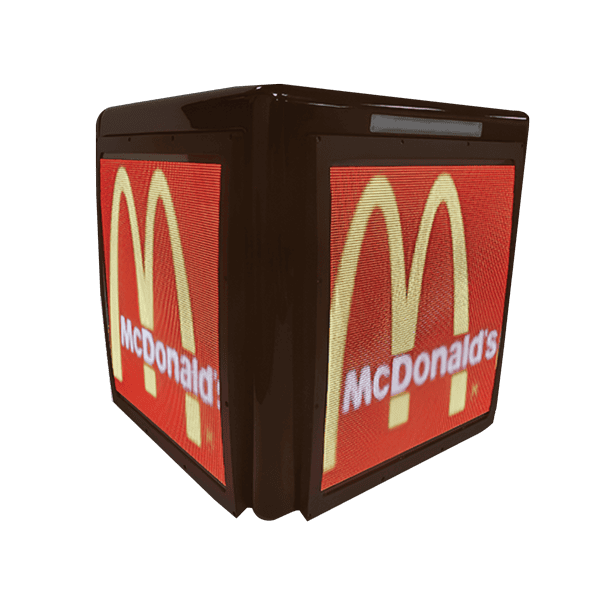

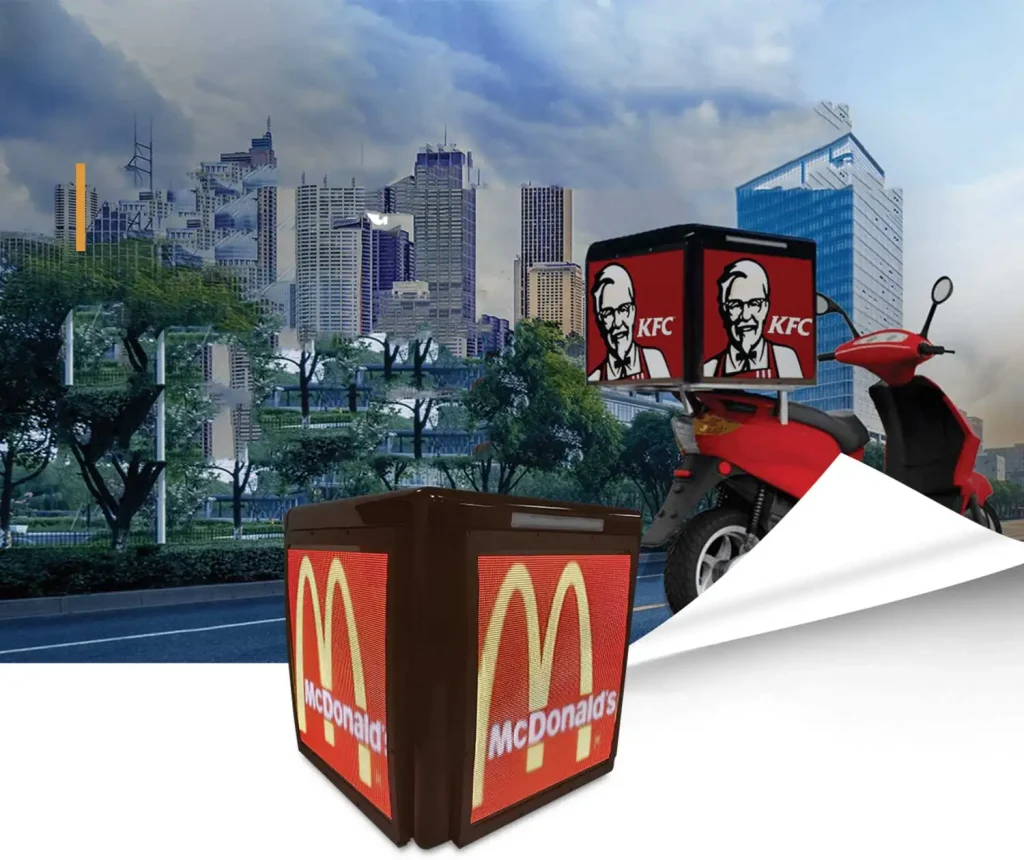
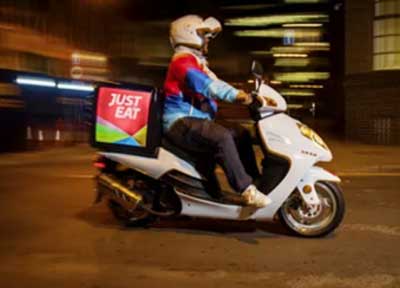
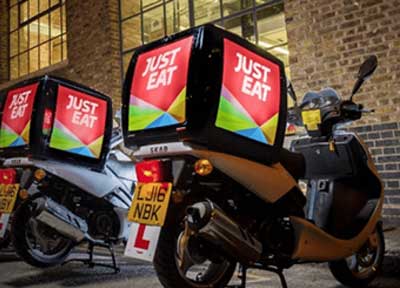
A delivery box outdoor LED display is a three-sided digital screen system mounted to the rear delivery box, topbox or cargo box of a moped, scooter or suitable e-bike. Instead of relying only on printed vinyl, magnetic signs or static panels, the display shows moving brand content while the rider is already travelling through city streets, high streets, residential areas and delivery zones.
The format is usually made up of one rear-facing LED panel and two angled side panels, giving visibility to pedestrians on pavements, drivers behind the vehicle and people approaching from either side. It can be used to show brand graphics, short promotional messages, menu callouts, campaign creative, store openings, app offers or location-relevant advertising.
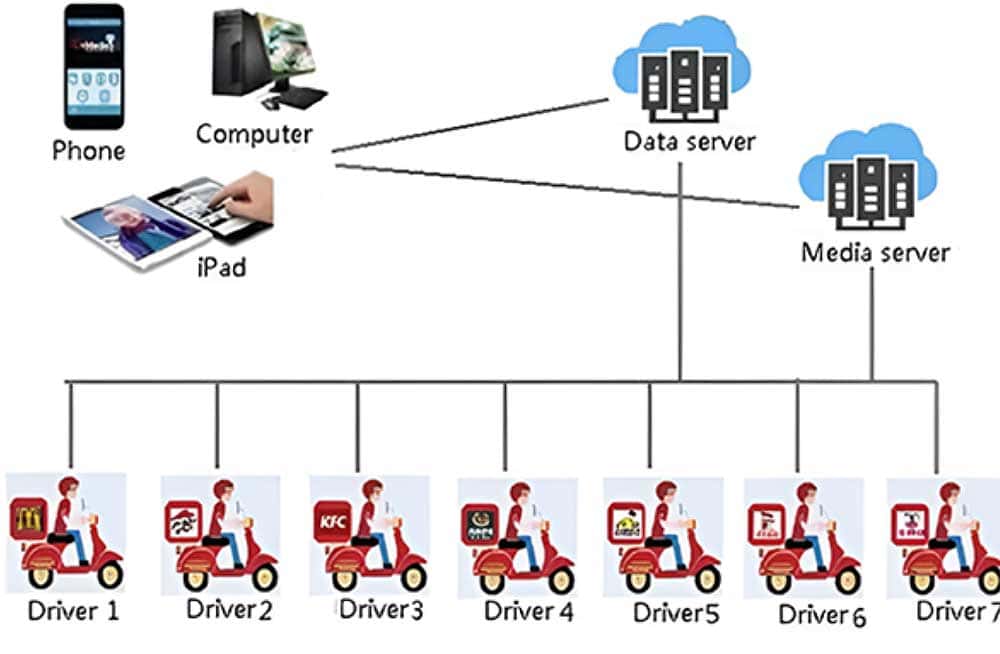
Content is uploaded and managed remotely, so fleet operators or campaign managers can change what appears on the display without bringing each vehicle back to a depot. Campaigns can be scheduled by time of day, day of week or, where supported, GPS zone. For example, a breakfast message can run in the morning, a lunch offer around office districts, and a late-night food message near entertainment areas.
The unit is powered from the vehicle battery, with a typical operating time of around eight hours depending on brightness, routing, vehicle setup and content settings. Some operators may choose an auxiliary battery for longer shifts or to reduce the load on the main motorcycle battery.
This is an emerging out-of-home advertising format rather than a direct replacement for fixed signage, shopfront displays or traditional roadside media. Its value is mobility: the display goes where riders already go. That makes it particularly relevant for food delivery operators, takeaway and quick-service restaurant groups, courier fleets, media owners and agencies planning urban advertising activity.
The display is designed for short-range outdoor visibility from moving traffic and busy pedestrian areas. The three-sided format normally includes a rear panel and two angled side panels, so the content can be seen from more than one direction without requiring the rider to stop or turn the vehicle.
Pixel pitch should be selected according to viewing distance. P4 is usually the most suitable choice where pedestrians are close to the vehicle, such as high streets, station approaches, pedestrianised edges and dense city-centre routes. P5 provides a practical balance for mixed city traffic, where viewers may be a few metres away. P6 can be suitable for larger, simpler graphics viewed at a greater distance, especially where the creative uses bold colours, large type and minimal detail.
Outdoor brightness is a key specification. A practical daylight-readable range is typically 4,500 to 6,500 nits, with brightness adjusted for the route, time of day and safety context. Higher brightness helps in direct daylight, but it also increases power consumption and may be inappropriate in darker streets if the screen becomes visually intrusive.
A refresh rate of at least 1,920 Hz helps reduce flicker when the display is filmed on phones or appears in social media footage. This matters for campaigns where riders may pass through event areas, retail districts or streets where the display is likely to be recorded.
For UK outdoor operation, the enclosure should be specified for rain, dust and road grit. IP65 is a common target for this type of product, but buyers should still consider cleaning, mounting, cable routing and inspection routines. Winter use places additional stress on batteries, fixings and seals, particularly during freezing temperatures, heavy rain and salted roads.
| Specification | Typical Detail | Operational Note |
|---|---|---|
| Display format | Three-sided LED display: rear panel plus two angled side panels | Designed for visibility from behind and from both sides of the vehicle |
| Pixel pitch | P4, P5 or P6 options | P4 for closer pedestrian viewing, P5 for mixed routes, P6 for simpler long-view creative |
| Brightness | 4,500 to 6,500 nits | Daylight readable; brightness should be managed for night routes and power use |
| Refresh rate | At least 1,920 Hz | Suitable for camera-friendly playback and phone filming |
| Weather protection | IP65 | Built for rain, dust and road grit, subject to correct installation and maintenance |
| Operating temperature | -20°C to +50°C | Covers typical UK seasonal conditions, with extra checks recommended in freezing weather |
| Power | Vehicle 12V motorcycle battery, with auxiliary battery option | Auxiliary battery may be useful for long shifts or high-brightness operation |
| Battery life | Around eight hours typical | Depends on brightness, content, battery condition, route and vehicle integration |
| Weight | Typically 4 to 8 kg | Mounting, handling and vehicle balance should be assessed before rollout |
| Content delivery | 4G or WiFi remote update | Content can be uploaded centrally and scheduled without returning every vehicle to base |
| Scheduling | Time-of-day and GPS-zone scheduling | Useful for territory campaigns, local offers and route-relevant messaging |
| Tracking | GPS tracking and optional route logging | Supports campaign reporting, fleet visibility and zone-based playback |
For takeaway groups, restaurant chains and food delivery operators, the display gives brand visibility during the same journeys already being made for delivery. The typical buyer is a fleet manager, franchise operator, brand operations team or local marketing manager looking to make delivery vehicles more visible without adding a separate media vehicle.
The problem it solves is simple: a rider may complete dozens of trips across a delivery radius, but a plain or lightly branded box does little beyond basic identification. A digital display can promote lunch menus, evening deals, new product launches or store-specific offers while the rider moves between the restaurant, customer addresses and busy local streets. The content should be short, bold and highly legible, with one message at a time rather than detailed menu boards.
For mobile out-of-home operators and advertising agencies, delivery-box LED displays can create a flexible urban media network. Instead of buying a fixed roadside location, a brand can book display time across a fleet moving through selected postcodes or city-centre zones such as London, Manchester or Birmingham.
The buyer is usually a media owner, agency planner or brand activation team. The problem is reaching people in dense urban areas where fixed inventory may be expensive, unavailable or poorly matched to a specific campaign route. Content should be designed like outdoor media, not like a social video: large type, strong contrast, few words and immediate brand recognition. GPS-aware playlists can help match creative to territories, retail districts, event areas or commuter routes.
At events, festivals, exhibitions and local activations, branded mopeds can circulate around a venue, nearby transport hubs or surrounding streets. The typical buyer is an event organiser, experiential agency, venue marketing team or sponsor activation team.
The display can point visitors towards a stand, sampling point, pop-up store, ticket office or timed activation. It works best where the vehicle movement is planned carefully and legally, with safe routes, suitable parking arrangements and content that can be understood in seconds. Creative should use clear directional language only where it will not confuse road users, and should avoid flashing effects or colours that could be mistaken for traffic signals.
Independent restaurants, dark kitchens, cafés, bottle shops, convenience stores and local hospitality brands may use one or two units on their own delivery vehicles. The buyer is often the owner, general manager or operations lead, and the goal is to reinforce local recognition on every delivery trip.
For a small operator, the display can support repeat awareness across the same streets and neighbourhoods. Content can rotate between the brand name, opening hours, a signature item, a seasonal offer or a simple reminder that delivery is available. The most effective creative is restrained: one message, large lettering, strong colour contrast and a design that remains readable when the vehicle is moving.
Battery planning should be addressed before any fleet rollout. Around eight hours is a useful planning figure, but actual run-time depends on screen brightness, content, outside temperature, battery condition and the way the display is connected to the vehicle. Riders working ten-hour or longer shifts may need an auxiliary battery, a charging routine between shifts or a more integrated vehicle power setup. High-brightness daytime operation will use more power than lower-brightness evening operation.
Theft and damage risk also need to be treated realistically. A moped-mounted LED display is visible, removable with the right tools and valuable enough to attract attention. Operators should consider anti-theft fixings, tamper-resistant mounts, secure cable routing and after-hours storage. The mount should be inspected regularly, especially where riders travel over uneven roads, speed cushions, kerbs, service yards or cobbled surfaces.
Weather protection is important, but IP65 does not remove the need for maintenance. Rain, dust and road grit are expected operating conditions, but snow, ice and freezing temperatures are more demanding. UK winter routes may involve salted roads, wet gloves, cold starts and reduced battery performance. Cleaning routines should avoid aggressive pressure washing around seals, connectors and ventilation points unless the manufacturer has confirmed the correct process.
Visibility and safety should be checked on every vehicle type. The display must not obstruct the rider, interfere with mirrors, cover the rear light, brake light, indicators or number plate, or make the vehicle harder for other road users to interpret. The installation should be assessed with the bike loaded, parked, turning and moving, because a topbox-mounted screen changes weight distribution and rear profile.
Content design is an operational issue as much as a marketing issue. A useful rule is that a viewer should understand the message in about three seconds. Pedestrians may be walking on a pavement, drivers may only see the rear panel briefly at a junction, and passengers may view it from an angle. Fine type, dense video, long URLs, small QR codes and fast edits are usually poor choices. Bold typography, simple motion, high contrast and a single callout per frame are more practical.
For larger fleets, central content management becomes essential. Operators need version control, territory schedules, approval workflows and a clear process for removing expired promotions. A national brand may want consistent creative across every vehicle, while local branches may need different offers by town or delivery radius. The system should support both without requiring riders to manage campaign files themselves.
Vehicle-mounted advertising in the UK is different from fixed external signage, which can be subject to planning consent and advertising control rules. A moving moped display is generally considered through road safety, vehicle construction and local enforcement rather than the same process used for a shopfront sign or roadside billboard.
Operators still need to consider the Highway Code and the wider duty not to create a hazard or distraction for other road users. Animated content should not be designed in a way that could be mistaken for traffic signals, emergency vehicle lighting or vehicle warning lights. Particular care is needed with red, amber and green, especially when used in flashing sequences, directional arrows or circular signal-like graphics.
The installation must not obscure the vehicle’s rear lights, brake light, indicators, reflectors or number plate. It should not reduce the rider’s visibility, alter the vehicle in a way that makes it unsafe, or create unstable loading. DVLA and vehicle construction and use requirements should be checked where there is any uncertainty about mounting, lighting or registration plate visibility.
Local council rules may also matter. Some councils restrict advertising vehicles, especially where vehicles are parked or left static in high-footfall areas for the purpose of advertising. A fleet that simply carries advertising while completing genuine deliveries may be treated differently from a vehicle parked up as a mobile billboard, but operators should check local bylaws in target cities before running campaigns.
This is not legal advice. Before launching a fleet or paid advertising network, operators should confirm the position with the relevant local highway authority, council enforcement team, insurer and, where applicable, the vehicle operator licence or compliance team.