An LED virtual production stage is a film or broadcast set built from fine-pitch LED walls, and often an LED floor, that display a computer-generated or filmed background in real time. The camera records actors and the background together, so lighting, reflections and parallax are captured in camera rather than added in post-production.
Updated September 2026: rewritten with a real Dynamo XR stage example, current pixel-pitch and processing guidance, and an FAQ. Third-party video stills replaced with Dynamo project photos.
Key takeaways
- A virtual production stage swaps the green screen for LED walls that show the environment live, so the crew sees the finished shot on set.
- Walls are built from fine-pitch LED, typically 1.5 mm to 2.6 mm, with the finest pitch reserved for shots where the camera gets close to the screen.
- Real-time engines such as Unreal Engine render the background; camera tracking moves the background in step with the lens so perspective stays correct.
- Processing, refresh rate and genlock matter as much as the panels: the wall must run in sync with the camera or you get banding and scan lines.
- Dynamo has installed a permanent XR stage in the UK and hires LED walls for one-off shoots; both routes are covered below.
How an LED virtual production stage works
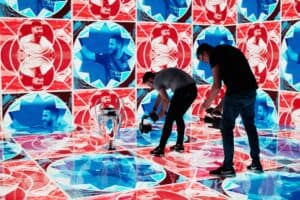
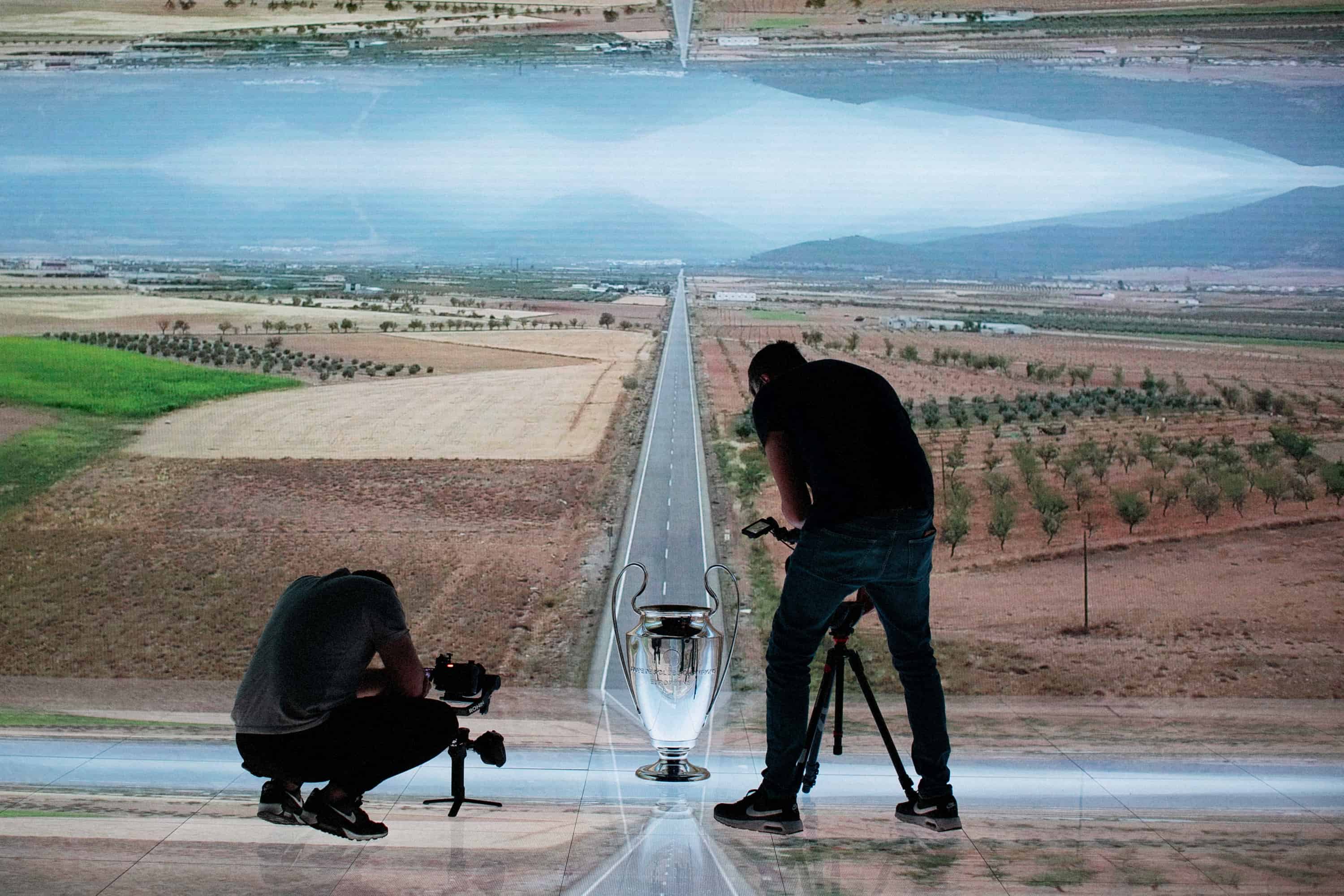
Virtual production replaces the physical location, and the green screen, with a large LED canvas. The environment is either a 3D scene rendered live from a games engine or a pre-shot plate, and it plays on the LED walls behind and around the actors. Because the light from the walls falls on the actors, cars and props in the scene, the reflections and colour spill are real, which is what makes the shot convincing without heavy compositing.
The set-up is often called an LED volume when the walls wrap round three sides and a ceiling or floor is added. Camera tracking feeds the camera position to the engine, which shifts the background perspective as the camera moves, so a dolly or crane shot keeps its depth. A short description of the technique is on Wikipedia’s virtual production page; the hardware is what we cover here.
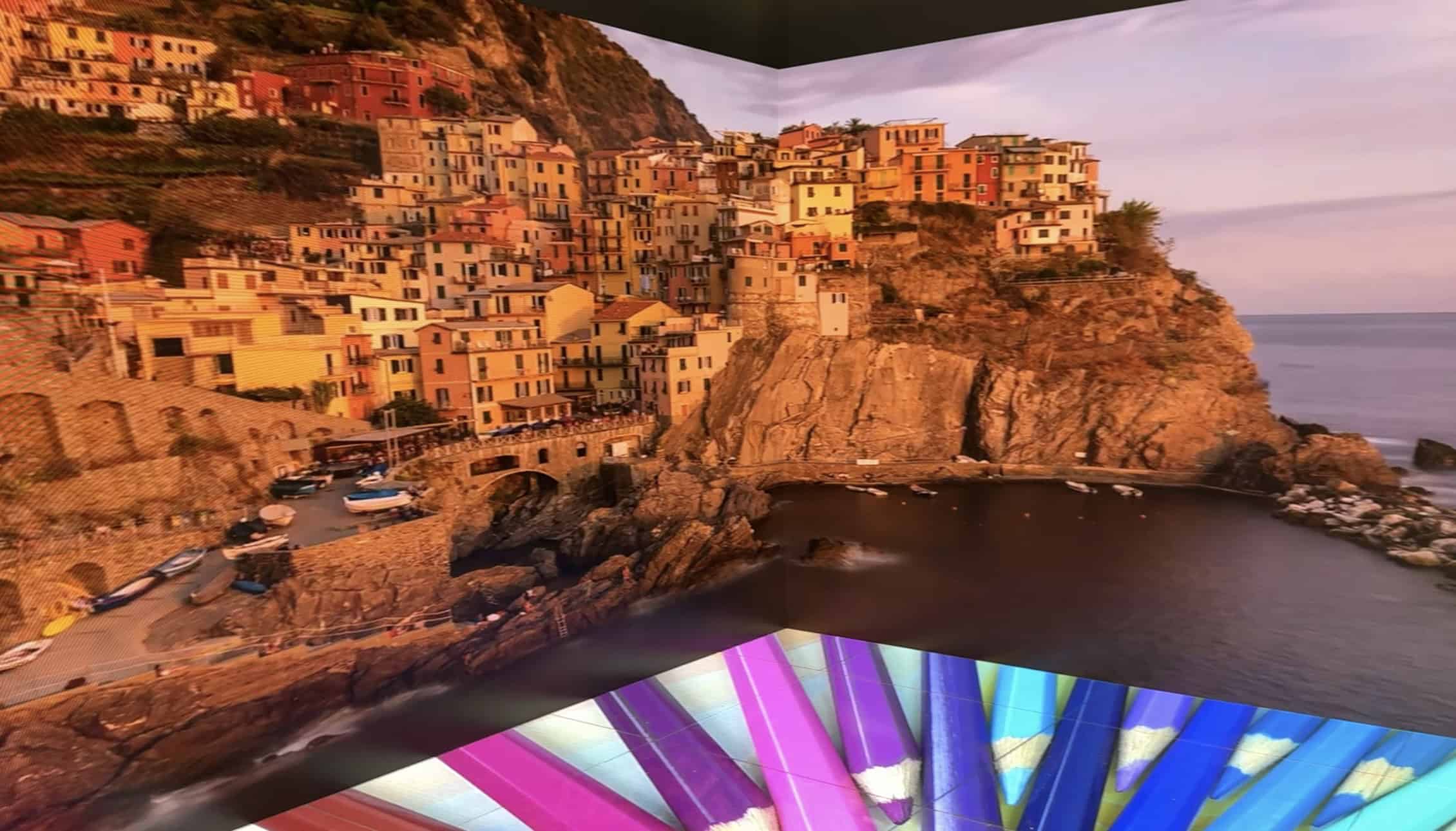
The hardware that makes up a virtual production LED stage
LED walls and floor
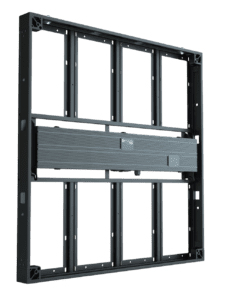
The walls are the same fine-pitch LED cabinets used in broadcast studios and corporate lobbies, chosen for close viewing and camera work. Pixel pitch is the deciding spec: UK broadcast and XR stages generally sit between 1.5 mm and 2.6 mm, with 1.5 mm or finer preferred for in-camera VFX where the lens gets close to the wall and moiré becomes a risk. Our guides to LED video wall viewing distance and fixing moiré on camera cover the trade-offs. An LED floor lets performers and vehicles stand inside the environment and gives the camera a continuous surface from floor to wall.
Curved walls are common because a gentle curve fills the camera’s field of view without a hard corner, but a straight or L-shaped wall works for many commercial shoots and is simpler to build. Our virtual production LED screens page lists the cabinets we specify for stages.
Processing, refresh rate and genlock
The wall has to run in sync with the camera. LED processors for virtual production accept a genlock reference so every frame on the wall lines up with the camera shutter; without it you see rolling bands and scan lines in the footage. High refresh rates matter for the same reason: the fine-pitch cabinets we use for stages run at 1,920 to 3,840 Hz, which keeps the image stable at the shutter speeds and frame rates used on set. Our NovaStar LED processor guide explains which controller families support broadcast timing.
Real-time rendering and camera tracking
Unreal Engine is the most common engine for rendering the background live. It draws the scene from the tracked camera’s point of view many times a second, so when the camera moves the background moves correctly behind the actors. Camera tracking, the engine workstation and the LED processing are three separate systems that have to be specified together. Leave one out and the stage becomes a large video backdrop rather than a virtual production stage, which is fine for some jobs but limits what the director can do.
A real example: the XR stage at Brook 6th Form Academy
Dynamo designed and installed a permanent XR LED stage for Brook 6th Form Academy in east London, opposite a new film studio complex. The stage has two 1.9 mm DRE Series LED walls in an L-shaped wraparound plus a 1.9 mm LED floor. The floor runs at 2,304 × 2,304 pixels and each wall at 2,304 × 1,280 pixels, driven by two NovaStar COEX MX40 Pro controllers over 10G fibre so the whole canvas stays in sync.
It is a working example of what a compact stage looks like: fine pitch for close camera work, a floor so students can stand inside the scene, and broadcast-grade processing. The case study also sets out what we would add to make it a full virtual production stage rather than an XR backdrop: camera tracking, Unreal Engine integration and RGB lighting tied to the scene. For the wider technology, see our guide to what augmented reality is and how it works.
Hiring an LED stage versus building one
Most productions do not need a permanent volume. For a commercial, a music video or a broadcast segment it is usually cheaper to hire the LED walls, floor and processing for the shoot days and have them built in a studio or on location. Our virtual production LED screen hire service covers that route, and the same DRE Series cabinets used at Brook are what we send out.
A permanent stage makes sense when the space is in use most weeks: a broadcaster, a large agency, a university or a studio complex. Build times depend on the size of the canvas, the structure and how much processing and tracking is involved, from a few days for a straight wall to several weeks for a full volume with floor and ceiling. Our broadcast studio LED backdrop design guide is the right starting point for a fixed build.
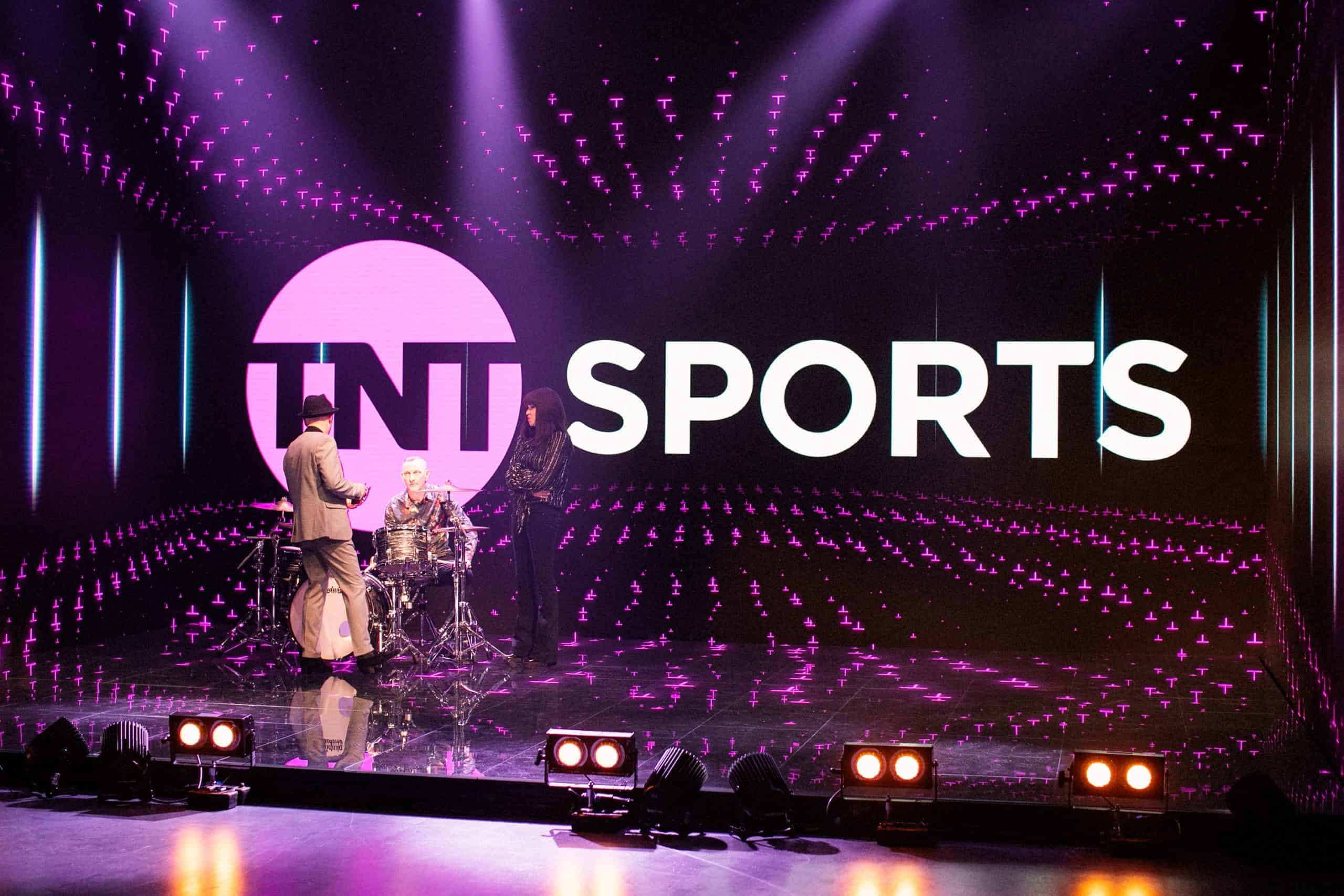
Advantages and limits of LED virtual production
The advantages are practical. The crew sees the final shot on the monitor, so decisions about framing and lighting happen on the day. Locations that are impossible or expensive to reach are rendered instead of visited. Reflections on glass, metal and skin are real. Weather and time of day are fixed for as long as the schedule needs.
The limits are just as real. The initial cost of a stage is high compared with a green screen, the pipeline needs people who understand both LED and real-time engines, and the wall has its own rules: get too close with a long lens and the pixel structure shows, run the wrong refresh rate and the footage bands. Those are specification problems, and they are solvable if the LED, processing and tracking are chosen together rather than bought separately.
LED Virtual Production Stage: Frequently Asked Questions
What is an LED virtual production stage?
It is a set built from LED walls, and often an LED floor, that display the background environment live while the camera films the actors in front of it. A real-time engine renders the scene and camera tracking keeps the perspective correct, so the finished shot is captured in camera instead of being composited later against a green screen.
What pixel pitch do you need for virtual production?
UK broadcast and XR stages usually use LED between 1.5 mm and 2.6 mm pitch. In-camera VFX with the lens close to the wall favours 1.5 mm or finer to avoid moiré; scenic walls that stay four metres or more from the camera can use 1.9 mm to 2.6 mm at a lower cost per square metre. The Brook stage uses 1.9 mm walls and floor.
Do you need Unreal Engine for an LED virtual production stage?
Not always. Unreal Engine is the usual choice for rendering a 3D environment live with camera tracking, but many commercial shoots play pre-filmed plates or motion graphics on the wall instead. If you only need a backdrop that does not react to camera movement, an LED wall with a standard media server is enough. The engine and tracking are what turn a backdrop into a virtual production stage.
Can you hire an LED virtual production stage in the UK?
Yes. Dynamo hires fine-pitch LED walls, LED floors and the processing needed for virtual production and builds them in a studio or on location for the shoot days. For a single commercial or broadcast segment this is normally more economical than a permanent stage. Camera tracking and real-time rendering can be arranged alongside the LED.
What does an LED virtual production studio cost?
Cost depends on the area of LED wall and floor, the pixel pitch, the processing and whether camera tracking and rendering are included, so there is no single figure. Fine-pitch LED is priced per square metre and the finer the pitch the higher the cost. Our guide to LED display cost sets out the price bands for the LED element.
Does Dynamo install LED virtual production stages?
Yes. Dynamo designed and installed the permanent XR LED stage at Brook 6th Form Academy in east London, with two 1.9 mm LED walls, an LED floor and NovaStar COEX MX40 Pro processing, and supplies LED walls and floors for hire on film, advertising and broadcast shoots. We handle the LED and processing and work with tracking and engine partners where the brief needs them.
Get a quote for an LED virtual production stage. Tell us the wall size, whether you need a floor, and whether it is a permanent build or a hire, and we will come back with a specification and price: contact Dynamo LED Displays or call 020 3489 9878.