
Curtain-style flexible LED mesh for stage and event use
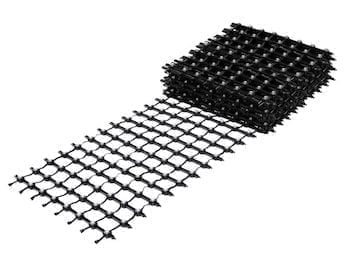
The L-V-W FlexCurtain is a lightweight, flexible LED mesh display — rolled up for transport, bent to fit curved surfaces, hung from rigging like a stage cloth, and bright enough to perform indoors or outdoors. Where a rigid cabinet wall can’t go — curved facades, scenic stage builds, event-rigged flown displays, retail window dressings — the FlexCurtain does. Dynamo specs and installs the L-V-W series anywhere in the UK.
Last reviewed: 11 September 2026.
What “flexible mesh LED curtain” actually means
Conventional LED video walls are built from rigid aluminium or steel cabinets — strong, accurate, but fundamentally flat. The FlexCurtain replaces the cabinet with a soft, mesh-like substrate carrying the same SMD LED packages on a flexible PCB. You can:
- Roll the entire display for transit — a 24 m² FlexCurtain ships in a single road case
- Bend it across curves — fit it to columns, cylindrical pillars, archways, scenic builds
- Hang it like a stage cloth — rigged from truss, used as a backdrop, dropped in seconds
- Use it indoor or outdoor — IP-rated for fixed install or rental applications
Because the mesh is sparse, the FlexCurtain is also semi-transparent — light passes through gaps in the LED grid. That makes it ideal for stage backdrops where lighting needs to come through, and for façade installations where you don’t want to block the building’s daylight or block egress.
L-V-W FlexCurtain — what it is, and what it isn’t
L-V-W FlexCurtain is its own product line — a flexible LED mesh curtain built on a soft, semi-transparent substrate that rolls, drapes and bends. It is not a rigid cabinet LED wall like our DX Series (fixed-install) or the DRE Series (rental cabinets). Those are aluminium-cabinet products built for flat permanent or rental walls; FlexCurtain is a fundamentally different form factor designed for curves, drape and ultra-light rigging where a rigid cabinet won’t fit. If you’re sizing a flat permanent wall, see the dvLED pixel pitch guide instead.
FlexCurtain vs FlexCurve vs Transparent LED — choosing within the family
Dynamo carries three product families inside the transparent / flexible category. They look similar in catalogue thumbnails; in practice they solve different problems.
| Product | Form factor | Best for |
|---|---|---|
| L-V-W FlexCurtain (this page) | Soft mesh, flexible, see-through, rolls into a road case | Stage drape, event rigging, curved facades, retail window curtains, architectural ribbons |
| L-V-W FlexCurve | Curved fixed cabinet, rigid, opaque, permanent install | Architectural columns, atrium curves, lobby pillars, permanent shaped install |
| Transparent LED Display and Transparent LED Film | Rigid transparent panel, 70–90% see-through, glass-mounted | Shop windows, glass facades, see-through retail signage, glass-house meeting rooms |
Quick rule of thumb: FlexCurtain for drape and curve and flex; FlexCurve for fixed shaped installs; Transparent LED Display for behind-glass retail signage. If unsure which one fits, send dimensions and we’ll spec the right family on the call.
Typical use cases
- Stage and broadcast scenic — concert tours, awards-show set design, broadcast studio backdrops, theatre productions where the screen has to fly in and out cleanly. Related published work: Red Bull custom LED stage backdrops
- Event rental — bespoke event branding, exhibition stands with curved surfaces, brand activations, festival back-of-stage, conference keynote cycloramas. Related published work: LED screen rental for a Russ Millions video shoot
- Retail and brand windows — moving-image content in a retail window without a heavy structural cabinet build behind the glass; semi-transparency keeps daylight inside the store
- Architectural façade — wrapping columns, curved building features, atrium ribbon displays, balcony fascias, hotel exterior moving graphics
- Hospitality and nightlife — bar fronts, club ceilings, curved feature walls where rigid cabinets won’t go, immersive moving-graphic ceilings
- Trade show and exhibition — high-impact moving-image stands where weight per square metre on the rigging budget is the binding constraint
Published flexible LED mesh work
Dynamo’s published flexible-mesh reference is the LED hot air balloons project: three balloons each carrying a 55 m × 6 m LED mesh screen, stripped back to LEDs and cable so the balloon could lift the weight, with the LED strings fixed directly to the canvas and the wiring loom fed from the ground. The video below shows the result in flight.
L-V-W FlexCurtain specification
| Spec | Value |
|---|---|
| Product type | Flexible mesh LED curtain |
| LED type | SMD, full colour 1R1G1B |
| Pitch options | P3.9, P4.8, P6.25, P10 (project-dependent) |
| Use environment | Indoor or outdoor (IP-rated variants) |
| Mounting | Rolled, hung, bent to curved surfaces, fixed install |
| Connection | Standard HDMI / DVI input via control processor |
| Transparency | Semi-transparent — light passes through mesh gaps (typical 30–60%) |
| Control system | NovaStar (industry-standard MCTRL-series) |
| Format | Custom sizing — build to project dimensions |
| Bend radius | Project-dependent — fits architectural curves down to ~500 mm radius |
| Warranty | 3-year hardware warranty |
Exact pixel pitch, panel dimensions and brightness vary by configuration — fine-pitch indoor scenic builds use a different specification to bright outdoor façade ribbons. We’ll size the right variant against your viewing distance, brightness budget and structural constraints.
Mesh density and pixel pitch — a quick primer
“Mesh density” describes the spacing of LED packages across the substrate; “pixel pitch” is the centre-to-centre distance between individual LEDs. The two are related — a denser mesh means a finer pitch and a more solid-looking image — but they’re independent specs to choose from.
- P3.9 mesh — finest practical mesh-curtain pitch. Best for indoor stage and broadcast scenic where the camera is within 5–10 m of the screen. ~30% transparency.
- P4.8 mesh — popular all-rounder for indoor scenic, retail windows, hospitality interior. Good balance of image solidity and transparency. ~40% transparency.
- P6.25 mesh — typical outdoor architectural choice. Brighter, better see-through, lower price per square metre. ~50% transparency.
- P10 mesh — long-distance outdoor signage and large-format building wraps. Most see-through (~60–70%) but coarsest image — viewer must be ≥10 m away.
The transparency figure matters more than headline pitch for façade and window applications — it determines how much natural light passes through the wall and how the structure behind reads visually. Indoor scenic projects usually prioritise pitch (image quality); outdoor architectural projects usually prioritise transparency.
Installation considerations
- Weight per m² — FlexCurtain is materially lighter than rigid cabinets (typically 8–12 kg/m² vs 25–35 kg/m² for rigid). On rigged truss or temporary structures this is the difference between a single-truss span and a double-truss reinforcement.
- Rigging certification — for hung/flown installs the rigging must be certified by an L-V-W-trained rigger. Dynamo’s install team handles this for both rental and permanent installs.
- Weatherproofing for outdoor use — outdoor FlexCurtain variants are IP-rated front and rear (typically IP65 front / IP54 rear). For exposed external use, confirm the IP rating against the building’s microclimate at survey.
- Heat dissipation — mesh form factor passively dissipates heat well; no active cooling typically required for indoor use. Outdoor or sun-exposed installs may need ventilation behind the curtain.
- Cable management — power and signal cables run through the rigging top-bar; plan cable routes during structural design, not after rigging.
- Pre-install site survey — included in every quote; survey confirms structural anchor points, viewing distances, brightness requirements and signal source location.
Why FlexCurtain over rigid LED cabinets?
Three reasons to choose flexible over rigid: geometry (curves, columns, arches that rigid cabinets can’t fit), weight (a 10 m² FlexCurtain weighs a fraction of the equivalent rigid wall, important on rigged event installs), and transport (rolled into a single road case rather than crate-loaded). The trade-off is image precision — a rigid cabinet at the same pitch will always deliver tighter pixel alignment.
For most stage, broadcast scenic, event rental and curved-architecture applications, the geometry win is decisive. For boardroom or fine-pitch retail interior builds where the wall is flat and viewers sit close, a rigid LED video wall at P2.5 or finer will be the better call.
Spec a FlexCurtain for your project
Ready to discuss your project?
Tell us your project dimensions and constraints — we’ll size the right FlexCurtain configuration and come back with pricing.
or call +44 (0)203 489 9878
FlexCurtain FAQ
What’s the finest pitch I can get on a FlexCurtain?
P3.9 is the practical fine-pitch end of the mesh-curtain product family — finer pitches than that lose the transparency that makes the mesh form factor worthwhile. For indoor close-viewing where transparency isn’t needed, a rigid P2.5 wall delivers a tighter image.
Can FlexCurtain be used outdoors?
Yes — outdoor variants are IP-rated front and rear (typically IP65/IP54) and designed for permanent or semi-permanent external use. Brightness on outdoor builds is typically 4,500+ cd/m² for daylight visibility. Confirm the IP rating against the install microclimate during site survey.
How transparent is the mesh?
Typically 30–60% transparent depending on mesh density. A P10 mesh can reach ~70% transparency — light passes through almost as much as a chain-link fence. A P3.9 mesh is denser and reads more solid at ~30% transparency. The right number depends on whether you want the structure behind to read clearly (more transparent) or whether you’re trying to deliver a solid-looking image with light bleed-through (less transparent).
Can I rent FlexCurtain rather than buy?
Yes — see LED screen hire for short-term rental. FlexCurtain is one of our most-rented product lines because of its rapid rig/de-rig and roll-up transport.
What’s the difference between FlexCurtain and a transparent LED display?
FlexCurtain is a flexible soft mesh — drapes, rolls, bends. Transparent LED Display is a rigid see-through panel typically mounted behind glass (shop windows, glass-house meeting rooms). Both are see-through; only FlexCurtain is flexible.
Does FlexCurtain need a special processor?
No — it runs from the same NovaStar control hardware as our rigid product lines. Processor sizing depends on the wall’s pixel count: a 24 m² P4.8 mesh is ~1M pixels, which a NovaStar VX600 covers cleanly. For larger or finer-pitch builds, step up the processor.
How fast can it be installed?
Rig time depends on the size of the curtain, the truss or fixing arrangement and where the signal source sits, so it is confirmed on the quotation after the site survey. Pre-built event curtains and permanent architectural fixings are programmed differently, and the programme for each is set out in writing before the crew is booked.
Can I see one in person before buying?
Yes — visits to recent FlexCurtain projects can be arranged in London and the South East subject to client permission. Call 0203 489 9878 to discuss.
For the full product detail on the underlying mesh hardware see the Flexible LED Mesh Curtain product page, or explore related options in LED display products and short-term LED screen hire. To speak to an engineer call 0203 489 9878.